

What if your dog's travel panic isn't just stubborn nervousness, but an overwhelming clash of physical motion sickness and learned fear? If you have spent quiet evenings searching for answers on helping my dog with car ride anxiety to vet visits, you know the heartache of watching your beloved pet tremble, drool, or cry in the backseat.
You want routine wellness care to protect your companion's health, yet the sheer dread of getting there can leave you feeling guilty, exhausted, and worried about transport in an emergency. It is completely natural to feel overwhelmed by this struggle! You are not alone, and your dog's distress is neither your fault nor an impossible hurdle.
You can discover gentle, practical steps to calm your dog's travel distress and turn veterinary trips into safe, peaceful journeys. Ahead, we will explore how to separate physical nausea from clinic panic, rebuild calm car habits, and partner with your veterinarian for tailored, low-stress relief.
Key Takeaways
- Learn how to distinguish physical motion sickness from learned clinic dread so you can address your pet's true triggers.
- Master gradual desensitization steps that make helping my dog with car ride anxiety to vet appointments a gentle, steady success.
- Discover vehicle cabin adjustments, from crash-tested restraints to soothing sensory cues, that build an instant sense of security.
- Explore modern veterinary calming aids and supplements designed to support emotional welfare rather than provide mere sedation.
- Partner with your veterinary clinic for low-stress arrival options like carside check-ins that protect your dog's hard-won calm.
Understanding Why Dogs Experience Car Ride Anxiety on Vet Day
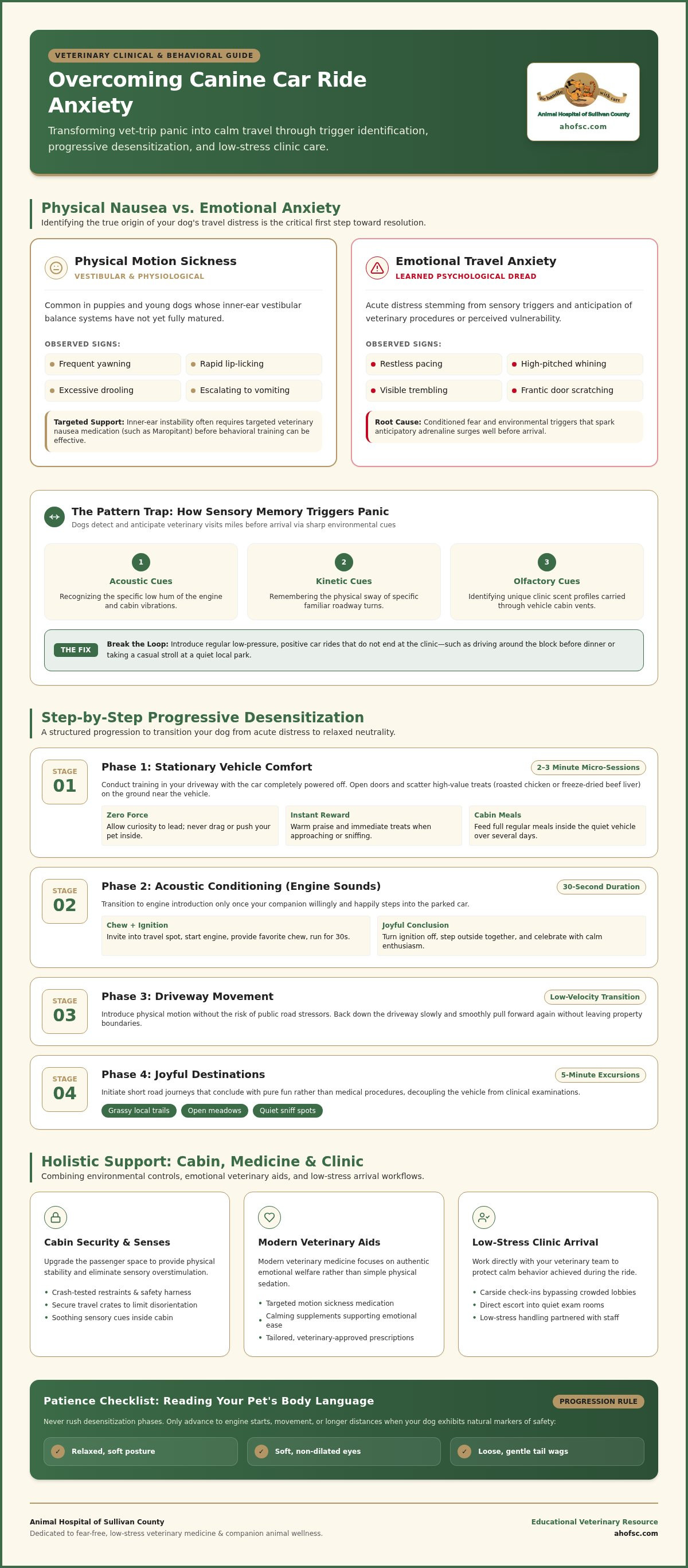
Car travel distress is rarely a single, isolated problem. For most companions, it is a complicated tangle of physical motion sickness and learned emotional fear. When you are focused on helping my dog with car ride anxiety to vet visits, understanding this exact distinction changes everything. Dogs possess incredible sensory memory. They recognize the low hum of the engine, the sway of familiar turns, and even the scent profiles carried through cabin vents miles before the clinic appears. Resolving this distress protects your pet's lifelong wellness by ensuring they receive routine preventive care without unnecessary trauma.
To better understand how your four-legged family member communicates discomfort during travel, watch this helpful guide on canine stress signals:
Physical Nausea vs Emotional Anxiety: Spotting the Triggers
Many pet parents mistake genuine motion sickness for simple behavioral panic. Puppies and young dogs are especially vulnerable because their inner-ear vestibular balance systems haven't fully matured. Physical nausea usually presents with subtle physical clues first, such as frequent yawning, rapid lip-licking, and excessive drooling, before escalating to vomiting.
Emotional panic looks distinctly different. Pacing, high-pitched whining, trembling, and frantic door scratching reflect acute psychological dread rather than stomach upset. When inner-ear instability is the primary driver, your veterinarian might prescribe a targeted medication for motion sickness to eliminate nausea so behavioral modification can actually take root.
The Pattern Trap: When Cars Only Mean the Clinic
Dogs are brilliant pattern detectives. If your car only starts up for medical procedures, your dog quickly learns that transit equals vulnerability. Even familiar sights along the highway can trigger an immediate rush of anticipatory adrenaline.
Breaking this negative loop means introducing low-pressure, joyful journeys into your weekly routine. Gentle trips that end with a casual stroll in a quiet park, or simply circling the block and returning home for dinner, teach your pet that the car doesn't guarantee an exam table. Dedicating time to helping my dog with car ride anxiety to vet appointments begins by rewriting what vehicle rides mean every day.
Step-by-Step Training: Retraining Your Dog's Travel Experience
Reversing deep-seated travel fears requires patience, structure, and emotional empathy. When helping my dog with car ride anxiety to vet appointments becomes your top priority, gradual desensitization offers the clearest path forward. The goal is simple: shift your companion's emotional state from sheer panic to relaxed neutrality. Never rush through these stages. Let your dog's relaxed posture, soft eyes, and loose tail wags dictate when it is time to move forward.
Phase 1: Stationary Car Comfort and Positive Associations
Begin training entirely in your driveway with the car turned off. Sit near the open car doors and scatter high-value treats like roasted chicken or freeze-dried beef liver on the ground. Do not force your dog inside! Allow curiosity to take the lead. If your companion steps closer to sniff the floorboard, praise them warmly and reward them instantly. Over several days, transition to feeding regular meals inside the quiet, stationary cabin. Conclude each micro-session after two or three minutes so the experience always ends on a joyful, positive note.
Phase 2: Engine Sounds, Short Distances, and Fun Destinations
Once your pet happily enters a parked vehicle, introduce vehicular sounds. Invite your dog into their secured travel spot, start the ignition, deliver a favorite chew, and turn the engine off after thirty seconds. Step outside together and celebrate!
Next, progress to backing down your driveway and smoothly pulling forward again without leaving your property. When your dog remains completely calm during driveway movement, introduce brief road journeys that conclude with pure fun. Drive five minutes to a local grassy trail, an open meadow, or a favorite sniff spot. By decoupling the vehicle from clinical procedures, your pet learns that car rides lead to joyful adventures.
If severe panic makes basic training feel impossible, pairing behavioral steps with professional guidance and Veterinary-Approved Calming Aids can lower their baseline stress enough to facilitate learning. Our compassionate preventive care team is always here to support your journey with personalized advice. Remember, true progress in helping my dog with car ride anxiety to vet visits is built on trust, consistency, and celebrating tiny victories together.
Vehicle Cabin Setup: Creating a Calming Sensory Environment
A dog sliding across slick leather seats cannot feel safe. When your four-legged companion loses their footing around a curve, their body activates an immediate vestibular panic reflex. Physical instability magnifies emotional dread in seconds! Creating a secure, den-like space inside your vehicle is one of the most effective steps in helping my dog with car ride anxiety to vet visits.
Physical Stability: Harnesses, Crates, and Hammocks
Restraint is essential for both peace of mind and physical protection. While less than 20% of pet parents routinely use safety restraints in transit, securing your pet prevents dangerous distractions and stabilizes their body during unexpected stops. You have several great setup options to choose from:
- Crash-tested travel harnesses: These secure directly into your car's seatbelt buckle, keeping your dog upright and centered on the seat cushion.
- Secured, airline-style crates: Strapped firmly into the cargo area or back seat with non-skid rubber mats inside, a sturdy carrier provides an enclosed sensory refuge.
- Backseat hammocks: A durable hammock bridges the gap between front and rear seats, preventing frightening falls into floorboards while providing traction.
Blocking the view out side windows can also prevent nausea. Rapidly passing telephone poles and scenery often induce visual motion sickness and trigger territorial barking at outside distractions.
Soothing Senses: Pheromones, Ventilation, and Sound
Once your dog is physically stable, adjust the cabin's atmosphere to calm their acute senses. A dog's sense of smell and hearing are astonishingly sharp, meaning road vibration and stuffy cabin air can quickly overwhelm their nervous system.
Begin by misting synthetic dog-appeasing pheromones onto seat blankets or crate bedding fifteen minutes before loading. This allows the alcohol base to evaporate, leaving behind soothing maternal scent markers. Next, crack the windows an inch or two. Fresh airflow balances internal cabin pressure and introduces cooling breezes that keep panting dogs comfortable. Finally, swap loud talk radio for psychoacoustically arranged classical music or soft reggae. These steady, gentle rhythms mask jarring road rumble and road tire friction. Transforming the car into a quiet, grounded retreat is crucial when helping my dog with car ride anxiety to vet appointments.
Veterinary-Approved Calming Aids: From Supplements to Prescriptions
Modern veterinary medicine views anxiety management as an essential pillar of animal welfare, never as mere chemical restraint. When a beloved pet experiences genuine panic, their brain is flooded with stress hormones that shut down their ability to learn. In these moments, thoughtful medical support isn't giving up; it is an act of pure compassion! If you need assistance helping my dog with car ride anxiety to vet checkups, safe pharmaceutical tools can lower your dog's emotional threshold so positive training can actually succeed. Always speak with your veterinary team before introducing any supplements or human remedies.
Gentle Supplements and Over-the-Counter Calming Tools
Mild to moderate travel apprehension often responds well to gentle, non-sedating nutritional aids. Ingredients like L-theanine (an amino acid naturally present in green tea) and alpha-casozepine (a bioactive milk protein) encourage relaxed brainwave activity without dulling your dog's joyful personality. Pairing these with a snug compression wrap can work wonders by providing steady torso pressure that releases calming endorphins. You can explore trusted, hospital-grade items through veterinary clinic retail supplies to ensure every chew or wrap you select meets strict safety standards.
Prescription Solutions for Acute Travel Distress
Severe panic calls for targeted, clinically proven medicine. If your dog suffers from intense vestibular nausea, an anti-emetic like maropitant citrate directly targets the brainstem vomiting center. It stops vehicle sickness in its tracks without causing drowsiness or disorientation.
For deep psychological dread, veterinarians frequently recommend fast-acting situational anxiolytics. Medications such as trazodone or gabapentin are typically administered a few hours before travel to prevent the nervous system from spiraling into an adrenaline surge. These tools keep your companion clear-headed while softening the sharp edges of clinic fear. Every dog's physiology is unique, so schedule an anxiety consultation with our team to find the exact, tailored relief your canine companion deserves. With the right medical partnership, helping my dog with car ride anxiety to vet visits becomes an achievable, peaceful reality.
Stress-Free Arrival: How to Partner with Your Vet Clinic
Your veterinary clinic should never feel like an adversary in your pet's wellness journey; they are your greatest ally. Reaching the parking lot is only half the battle when helping my dog with car ride anxiety to vet visits. The sights, smells, and chaotic energy of a busy lobby can instantly undo all the calm you carefully nurtured during the drive. Partnering with a compassionate veterinary hospital in Sullivan County ensures your dog's mental well-being is prioritized from the second you pull into a parking bay.
Bypassing the Waiting Room: The Carside Protocol
Waiting rooms are packed with sensory triggers: barking companions, unfamiliar feline scents, and nervous energy. Bypassing this bottleneck protects your pet's emotional battery. When you schedule an exam, ask the team for carside check-in protocols:
- Call upon arrival: Stay comfortably seated inside your climate-controlled car with the music playing and phone the front desk.
- Direct-to-room escort: Wait for a technician to text or wave you in, allowing you to walk straight past the reception desk directly into a sanitized exam room.
- High-value focal points: Bring along a silicone lick mat spread with squeeze cheese or dog-safe peanut butter to anchor your dog's attention while the medical team enters.
Victory Visits: Building Lifelong Clinic Trust
Do you only take your dog to the hospital when shots, blood draws, or thermometers are involved? Smart animals remember that imbalance. Scheduling "victory visits" rewrites that narrative entirely.
A victory visit takes less than five minutes. Pull into the clinic parking lot, walk inside the lobby, let the veterinary technicians shower your companion with treats and warm affection, step onto the scale, and walk straight back to the car! No stethoscopes, no needles, and no discomfort. These joyful, low-stakes exposures teach your dog that the building itself is a safe harbor. For aging companions experiencing cognitive decline or arthritic stiffness during travel, tailored senior pet care accommodations make these check-ins especially comforting. Consistent teamwork with your veterinary staff transforms helping my dog with car ride anxiety to vet trips into a collaborative, stress-free success story.
Embracing Calmer Journeys and Happier Vet Visits
Restoring calm to your travel routine takes patience, but every thoughtful adjustment matters. By separating vestibular motion sickness from clinic dread, creating a secure cabin environment, and celebrating small training milestones, helping my dog with car ride anxiety to vet visits becomes an uplifting journey rather than a dreaded chore.
Since 1953, our dedicated veterinary team, founded by Dr. Barbara Bodolosky, has proudly served Sullivan County families with compassionate, low-stress handling. As a full-service animal hospital, we provide personalized care ranging from preventive wellness to urgent medical treatment, keeping your companion's emotional comfort at the center of everything we do. You don't have to tackle travel distress alone! Contact our compassionate team to discuss gentle travel solutions and low-stress wellness care for your beloved pet. With kindness, time, and dedicated teamwork, peaceful rides and happy clinic arrivals are completely within reach.
Frequently Asked Questions
Why does my dog only shake and whine in the car when going to the vet?
Dogs recognize specific routes, road sounds, and physical turns using an incredible cognitive map. If you only travel along certain regional highways to visit the clinic, your pet quickly connects the vehicle's direction with past medical experiences. Their shaking and whining stem from anticipatory stress rather than car movement itself. Introducing neutral car rides to nearby parks helps dismantle this learned expectation.
Can motion sickness cause car ride anxiety in dogs even without vomiting?
Yes, silent nausea is a frequent underlying cause of vehicular distress. Dogs often experience vestibular dizziness and low-grade stomach churn without actually throwing up. Subtle physical clues include repetitive lip-licking, heavy salivation, restless shifting, and frequent yawning. When assisting families with helping my dog with car ride anxiety to vet appointments, addressing hidden inner-ear discomfort is frequently the first step to unlocking peaceful journeys.
What can I give my dog naturally to calm them down before a car ride?
Natural calming options include nutritional supplements formulated with L-theanine, chamomile, or alpha-casozepine, alongside synthetic dog-appeasing pheromone sprays applied to vehicle bedding. Snug compression wraps also provide soothing, gentle pressure across your companion's torso. Always check with your family veterinarian before administering any over-the-counter chews or herbal remedies to ensure they don't interact with your dog's ongoing medical care or underlying health conditions.
Is it safe to give human motion sickness pills like Dramamine to my dog?
While certain over-the-counter human medications like dimenhydrinate can be used for dogs, you must never administer them without explicit veterinary dosage instructions. Some human formulations contain artificial sweeteners like xylitol, which is highly toxic to dogs. In addition, human antihistamines often cause unwanted drowsiness or agitation. Your veterinarian can prescribe modern, veterinary-specific anti-nausea treatments that safely target motion sickness without causing disorientation.
How long does it take to train a dog to enjoy riding in the car?
Reconditioning travel habits typically takes several weeks to a few months of slow, consistent training. Progress depends heavily on how deeply ingrained your dog's panic has become. Moving through micro-sessions in the driveway and taking short, joyful trips to familiar local spots builds lasting confidence. Rushing the process often triggers setbacks, so advance only when your companion displays genuinely relaxed body posture.
What should I do if my dog panics and tries to jump into my lap while driving?
Pull over safely as soon as possible and never attempt to physically wrestle your pet while steering. Lap-climbing poses immediate collision hazards and violates distracted-driving laws across New York, New Jersey, and neighboring states. To prevent this dangerous reflex, secure your dog using a crash-tested harness buckled into the rear seat, or place them in a secured, non-skid travel crate before you ever turn the key.
Can my veterinarian prescribe medication just for travel anxiety and vet visits?
Yes, veterinarians frequently prescribe targeted, short-acting anxiolytics specifically for acute travel fear. When helping my dog with car ride anxiety to vet visits feels overwhelming, situational medications like trazodone or gabapentin can temporarily balance brain chemistry. These gentle therapies keep pets calm during transit and clinical examinations without knocking them out, allowing owners and veterinary teams to provide safe, stress-free medical care.


