

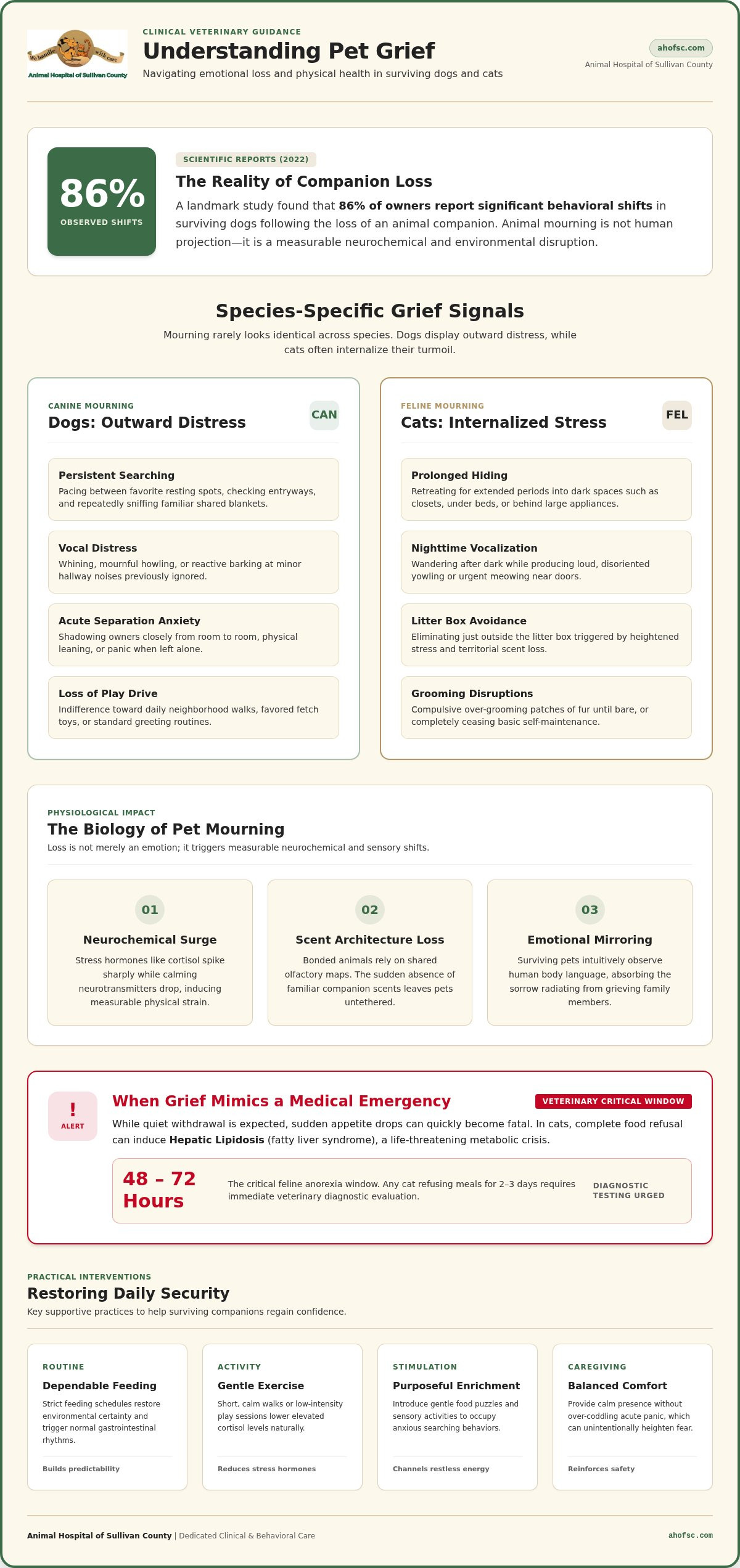
According to a 2022 study published in Scientific Reports, 86% of owners notice significant behavioral shifts in their surviving dog after losing an animal companion. Watching your dog or cat wander through empty rooms, vocalize at the door, or ignore their food bowl is profoundly heartbreaking, especially while you're carrying your own heavy grief. If you are wondering how to help a grieving pet find peace again, know that your companion's distress is real, valid, and deeply felt.
You aren't alone in feeling overwhelmed by their sorrow, and you don't have to navigate this delicate balance through guesswork. In this guide, you will learn how to recognize grief in surviving dogs and cats, provide comforting daily routines, and know when clinical veterinary support is needed. We will explore practical ways to restore security to your household, safely evaluate sudden health changes like appetite loss, and gently guide your furry family member back to a place of comfort.
Key Takeaways
- Spot the subtle behavioral signs of animal mourning, such as vocalization, restlessness, and searching, to understand what your surviving companion is experiencing.
- Discover practical daily strategies on how to help a grieving pet regain confidence through dependable feeding schedules, gentle exercise, and purposeful enrichment.
- Identify the difference between healthy emotional reassurance and well-intentioned caretaking habits that can accidentally heighten your pet's anxiety.
- Recognize critical physical warning signs, like sudden appetite loss or deep lethargy, that require in-clinic diagnostic testing to rule out medical issues.
- Create a calm, predictable home environment that allows your entire family to heal together gently without rushing major decisions.
Recognizing Grief in Pets: Common Signs in Dogs and Cats
When a bonded companion passes away, the silence left behind reverberates through the entire home. Companion animals develop complex social attachments, and modern scientific evidence for animal emotions confirms that dogs and cats experience genuine mourning when those bonds break. They don't simply reflect our human sadness; they feel the physical absence of their partner. Understanding how to help a grieving pet starts with recognizing that mourning rarely looks the same across species, or even between two animals in the same living room.
Grief often disrupts the core rhythms of daily life. You might observe heavy lethargy, restless pacing, or wandering from room to room. Surviving pets frequently inspect favorite resting spots, nudge sleeping blankets, or wait quietly by exterior doors. Appetite patterns frequently shift, ranging from picking at kibble to leaving meals entirely untouched. Daily sleep routines can become fragmented, with some pets napping excessively while others pace restlessly through the night. Noticing these nuanced shifts allows you to offer comfort before secondary health complications emerge.
How Dogs Express Loss and Loneliness
Canine mourning is often outward and communicative. Because dogs are cooperative pack animals, the sudden disappearance of a companion disrupts their daily security. Common signs include:
- Persistent searching: Pacing between favorite shared beds, checking entryways, or sniffing familiar resting spots repeatedly.
- Vocal distress: Whining, mournful howling, or barking at minor hallway noises that were previously ignored.
- Separation anxiety: Shadowing you closely from room to room, leaning against your legs, or showing sudden panic when left alone.
- Loss of play drive: Showing complete indifference toward neighborhood walks, favored fetch toys, or familiar greeting games.
How Cats Show Emotional Distress After Loss
Feline grief is frequently internalized, making it easier to overlook. Cats rely heavily on territorial stability and established scent profiles, meaning the loss of a housemate upends their environmental confidence. When considering how to help a grieving pet of the feline persuasion, watch for these distinct markers:
- Prolonged hiding: Retreating into quiet, dark spaces like closets, under beds, or behind appliances for extended periods.
- Nighttime vocalization: Wandering the home after dark while producing loud, disoriented yowling or urgent meowing near doors.
- Litter box avoidance: Urinating or defecating just outside the box due to heightened environmental stress and territorial uncertainty.
- Grooming disruptions: Over-grooming specific patches of fur until bare, or refusing self-maintenance entirely.
The Science of Pet Mourning: Emotional Loss Versus Physical Illness
Grief is never just an emotional state; it is a profound physiological event. When companion animals lose a bonded partner, their neurochemical balance shifts dramatically. Stress hormones like cortisol surge, while comforting neurotransmitters decline. Because our animals are intuitive observers of human body language, they also absorb the sorrow radiating from their human family members, compounding their internal turmoil. Discovering how to help a grieving pet requires recognizing that their quiet sorrow has real, biological impacts on the body.
Understanding the Social Bond Between Household Animals
Pets build an invisible architecture of security within a shared home. Bonded pairs synchronize their sleeping areas, establish gentle grooming rituals, and rely on subtle olfactory signals that confirm safety and belonging. When that sensory environment abruptly disappears, the surviving pet loses their emotional grounding. When familiar daily routines suddenly collapse, an animal's nervous system responds with measurable physiological shock. This scent loss and structural disruption leave surviving pets feeling untethered in their own territory.
When Grief Mimics Medical Emergencies
While subdued behavior is a natural reaction to loss, prolonged withdrawal can quickly cross into life-threatening territory. Feline companions face unique dangers when mourning; cats who refuse food risk developing hepatic lipidosis, a severe and potentially fatal liver condition that can trigger within just 48 to 72 hours of anorexia. Similarly, deep lethargy can easily be mistaken for heartbreak when it actually reflects metabolic disorders like diabetes, pancreatitis, or early renal decline.
Aging companions are especially vulnerable to compounding stress. If you are already managing senior pet care in Sullivan County, you know that severe emotional distress can swiftly accelerate dormant, age-related illnesses. Trusted clinical resources on Helping Your Grieving Pet emphasize that clinical causes must always be ruled out before assuming symptoms are purely behavioral. When appetite drops or extreme fatigue sets in, partnering with dedicated medical care for in-house bloodwork provides immediate peace of mind, ensuring your surviving friend stays physically protected while they heal.
Supporting Your Companion: Comforting Actions and Mistakes to Avoid
When our own hearts are aching, our natural instinct is to shower surviving animals with constant, emotional affection. Yet true healing requires emotional steadiness. Discovering how to help a grieving pet often means creating an anchor of calm certainty, giving your animal companion permission to process their loss without absorbing frantic human worry. When possible, allowing a surviving pet a brief, supervised opportunity to sniff and view their deceased companion offers closure. This natural sensory process helps prevent weeks of disoriented searching by confirming that their friend is truly gone.
Helpful Comfort Techniques That Reassure Grieving Pets
Gentle, intentional adjustments to your home environment can dramatically soften the weight of absence without fostering unhealthy separation anxiety. Focus on quiet reassurance:
- Provide grounded companionship: Sit quietly in the same room while reading or working. Calm proximity offers comfort without the frantic energy of hovering.
- Preserve familiar scents: Keep unwashed blankets or bedding carrying the deceased companion's scent in resting areas for several weeks, gradually phasing them out as healing begins.
- Soften household silence: Play soft acoustic music, white noise, or leave a quiet radio playing. Diffusing species-appropriate synthetic pheromones can also ease territorial tension.
Common Well-Intentioned Mistakes Owners Should Avoid
In the desire to soothe a suffering animal, families often adopt habits that accidentally heighten stress. Knowing how to help a grieving pet also means avoiding these well-meaning missteps:
- Rewarding distress vocalizations: Rushing over with treats or high-pitched consoling when your pet whines or howls teaches them that vocal distress is the only way to earn reassurance. Instead, wait for a quiet, settled posture before offering affection.
- Rushing into sudden adoptions: Bringing home a bouncy puppy or energetic kitten to fill the empty space can overwhelm a grieving animal. Surviving companions need emotional space to recover before accepting a brand-new social dynamic.
- Rearranging living spaces: Redecorating rooms, moving furniture, or tossing out all familiar items removes the sensory landmarks that provide security. Keep the home layout predictable while emotions stabilize.
A 5-Step Daily Routine to Restore Your Pet's Sense of Security
Predictability is the ultimate antidote to animal grief. When surviving pets lose the social structure their companion provided, an intentional daily schedule acts as an emotional safety net. Knowing how to help a grieving pet succeed begins with establishing dependable anchors throughout the day, reassuring them that their world remains safe, stable, and loving.
Step 1 and Step 2: Consistent Timing and Tempting Nourishment
Step 1: Lock in a strict feeding schedule. Serve meals at the exact same hour every morning and evening. Predictable meal times trigger healthy digestive anticipation and establish daily milestones your pet can rely on.
Step 2: Stimulate reluctant appetites safely. Grief often suppresses hunger. Warm canned food slightly to unlock enticing aromas, or add a splash of warm, low-sodium broth over dry kibble. Carefully monitor daily intake and document any consecutive missed meals. If your animal refuses sustenance entirely, schedule an exam with our veterinary team so we can safely support their nutritional needs.
Step 3 and Step 4: Daily Physical Exercise and Interactive Mental Play
Step 3: Re-engage the body with gentle movement. Physical activity stimulates mood-boosting endorphins and encourages restful sleep. Take dogs on quiet "sniffari" strolls along peaceful Sullivan County trails, letting them pause to explore novel scents at their own pace.
Step 4: Spark curious minds with interactive enrichment. Sensory enrichment serves as a grounding anchor for mourning pets, gently lifting their focus away from an empty room and back into the present moment! Bring out feather wands or slow-release treat puzzles for cats during dusk hours, rekindling natural instincts and breaking cycles of anxious pacing.
Step 5: Dedicated One-on-One Quiet Bonding Time
Step 5: Provide quiet, focused affection. Dedicate fifteen distraction-free minutes each day solely to your companion. Sit together on the floor for gentle brushing or light therapeutic massage. Keep your voice soft and your household atmosphere calm to soothe an overstimulated nervous system. Celebrate small victories along the way, whether it's a soft purr, an inquisitive head tilt, or a tentative tail wag. These subtle moments prove that your pet is slowly rediscovering joy.
When to Involve Your Veterinarian: Medical Interventions and Healing
Home comfort measures and predictable daily rhythms are powerful tools, but they cannot replace clinical assessment when an animal's body begins to struggle. A crucial part of learning how to help a grieving pet is knowing when silent sorrow crosses the line into acute physical danger. Your family veterinary team serves as an essential partner during this tender transition, offering both medical expertise and compassionate empathy to keep your surviving companion safe.
Clinical Red Flags That Require Immediate Medical Evaluation
Grief should never come at the expense of vital organ function. If your animal displays any of the following symptoms during mourning, seek professional medical care promptly:
- Prolonged anorexia: Complete refusal of food for more than 24 hours in cats or 48 hours in dogs requires urgent daytime medical evaluation.
- Severe gastrointestinal distress: Repeated vomiting, black or bloody stools, or persistent diarrhea that quickly triggers dehydration.
- Systemic warning signs: Sudden refusal to drink water, labored breathing, or severe collapse where your pet cannot stand.
Comprehensive in-house blood panels, urinalysis, and thorough physical exams quickly determine whether symptoms stem from emotional stress or an emerging medical condition. If diagnostic tests come back clear, your veterinarian can prescribe temporary medical interventions. Short-term appetite stimulants, soothing nutraceuticals, or targeted situational anti-anxiety medications can gently lift an animal out of an acute panic spiral, restoring their appetite while they adjust. For families who recently navigated compassionate pet end-of-life care in Sullivan County, staying vigilant about the surviving pet's physical stability brings tremendous reassurance.
How Sullivan County Families Can Find Peace and Ongoing Support
Healing unfolds in gentle stages, and no family should carry that burden in isolation. Finding closure often begins with honoring the companion who has passed. Having access to dignified, peaceful aftercare through dedicated pet crematorium services in Sullivan County provides comfort and closure for the entire household.
At the Animal Hospital of Sullivan County, Dr. Barbara Bodolosky and our caring veterinary team believe that family includes every surviving pet in your home. Through Animal Hospital of Sullivan County lifelong pet care, we walk beside you through every season of pet companionship. If your surviving dog or cat is struggling to regain their footing after a loss, please reach out to our team today. We are always here to listen, examine, and help your pet rediscover their comfort and peace.
Guiding Your Surviving Pet Toward Healing and Peace
Navigating the quiet rooms of your home after pet loss is a tender, shared journey. While true healing doesn't happen overnight, establishing predictable daily routines, offering grounded reassurance, and monitoring your animal's physical health gives them the security they need. Understanding how to help a grieving pet is ultimately an act of patience, listening closely to their subtle signals and giving your entire household the grace to heal together.
You don't have to carry this transition by yourself. Caring for Sullivan County families and their cherished animal companions since 1953, our dedicated veterinary team provides thoughtful medical evaluations, in-house diagnostics, and dignified onsite cremation services. If your surviving dog or cat is struggling with appetite loss, lethargy, or behavioral changes, schedule a compassionate wellness consultation with Animal Hospital of Sullivan County today. With gentle patience and heart-first care, your faithful friend can rediscover their daily joy!
Frequently Asked Questions
Do dogs and cats really grieve the loss of another pet?
Yes, dogs and cats form deep social attachments and experience genuine grief when an animal companion dies. Household pets share daily routines, resting spots, and scent profiles. When a partner goes missing, surviving animals experience neurochemical shifts that manifest as searching, lethargy, or altered vocal patterns. Learning how to help a grieving pet begins by acknowledging that their emotional bond and resulting sense of loss are biologically real.
How long does pet grief typically last in surviving animals?
Most surviving pets display behavioral mourning symptoms for two to six months following the death of a companion. While initial signs like restlessness or clinginess often peak during the first few weeks, emotional healing remains a gradual process. Every animal adjusts at an individual pace based on their bond and household stability. If severe withdrawal persists beyond several months without improvement, an evaluation by your family veterinarian can help assess their overall wellness.
Should I let my surviving pet see the body of their deceased companion?
Yes, allowing your surviving pet a calm, supervised opportunity to view and sniff the body of a deceased companion is often very helpful. Animals process the world through scent and direct observation. A brief investigation helps them understand that their friend has passed, which reduces prolonged searching, door-watching, and anxious pacing around the home. Keep the interaction quiet and unforced, letting your pet investigate at their own speed.
What should I do if my grieving dog or cat stops eating completely?
You should contact your veterinarian immediately if a cat refuses food for 24 hours or a dog fasts for 48 hours. While minor appetite dips are common, complete anorexia causes serious metabolic consequences like feline hepatic lipidosis. You can try warming wet food or offering low-sodium broth as a short-term incentive. If they still refuse nourishment, prompt daytime medical evaluation and in-house diagnostic testing are essential to protect organ function.
Can a veterinarian prescribe medication to help my pet cope with severe grief?
Yes, veterinarians can prescribe temporary medications or calming nutraceuticals to support pets experiencing debilitating situational grief. If your dog or cat suffers from severe panic, non-stop vocalization, or prolonged anorexia, medical intervention can provide immediate relief. Short-term appetite stimulants, mild sedatives, or situational anti-anxiety medications help reset an overstimulated nervous system. These remedies work best alongside predictable routines, giving your pet the stability they need to heal.
Is it a good idea to adopt a new pet right away to comfort my grieving companion?
No, adopting a new pet immediately is rarely recommended while your surviving companion is actively mourning. Introducing a new dog or cat introduces territorial stress, social competition, and altered routines to an already overwhelmed animal. Focus first on discovering how to help a grieving pet through consistent daily attention and gentle routines. Give your pet and your family several months to stabilize before welcoming another animal into your home.
How can I tell the difference between normal animal sadness and a serious medical illness?
Normal grief typically manifests as quiet lethargy, while medical illness involves physical symptoms like vomiting, fever, labored breathing, or severe dehydration. A mourning pet may sleep more or eat slightly less, but they should still respond to favorite sights and basic needs. If your pet exhibits sudden collapse, digestive distress, or rapid weight loss, do not assume it is just sadness. Schedule a clinical examination and diagnostic bloodwork to identify underlying disease promptly.


