

Are pets a luxury, or can a family make room for the care they need? It depends on planning. Navigating pet care costs as a family means budgeting for routine veterinary care and everyday essentials while preparing for unexpected needs. Prioritize preventive care, then plan for food, supplies, and emergencies in a way that fits your household.
Balancing a beloved pet’s needs with other family expenses can feel challenging. This guide helps you decide what to prioritize, compare pet insurance with setting money aside, and plan how to share costs. You’ll also learn how preventive care, including vaccinations, fits into a practical budget, so your family can make thoughtful decisions with greater confidence.
Key Takeaways
- Prioritize routine veterinary care and preventive needs when setting your family’s pet budget.
- Plan food and treats around your pet’s needs, and look for practical ways to manage recurring purchases.
- Build an emergency fund and agree in advance on how family members will share unexpected costs.
- Compare insurance with personal savings by considering ongoing premiums, coverage, and the expenses your household could manage on its own.
- Keep vaccinations and other preventive care in your plan to support your pet’s health over time.
1. Financial priorities in veterinary care
A practical approach to navigating pet care costs as a family starts with essential health needs. Prioritize routine examinations, vaccinations, parasite prevention, and evaluation of new symptoms over optional purchases. A written annual plan helps distinguish health needs from flexible spending and gives each family member a clear view of what needs attention and when.
Preventive care includes examinations and other measures suited to your pet’s age, health, and lifestyle. Keep a calendar of recommended care and update it as needs change. A puppy’s early care plan, for example, differs from an adult dog’s routine. Ask your veterinarian which preventive steps are appropriate instead of skipping care without understanding its purpose.
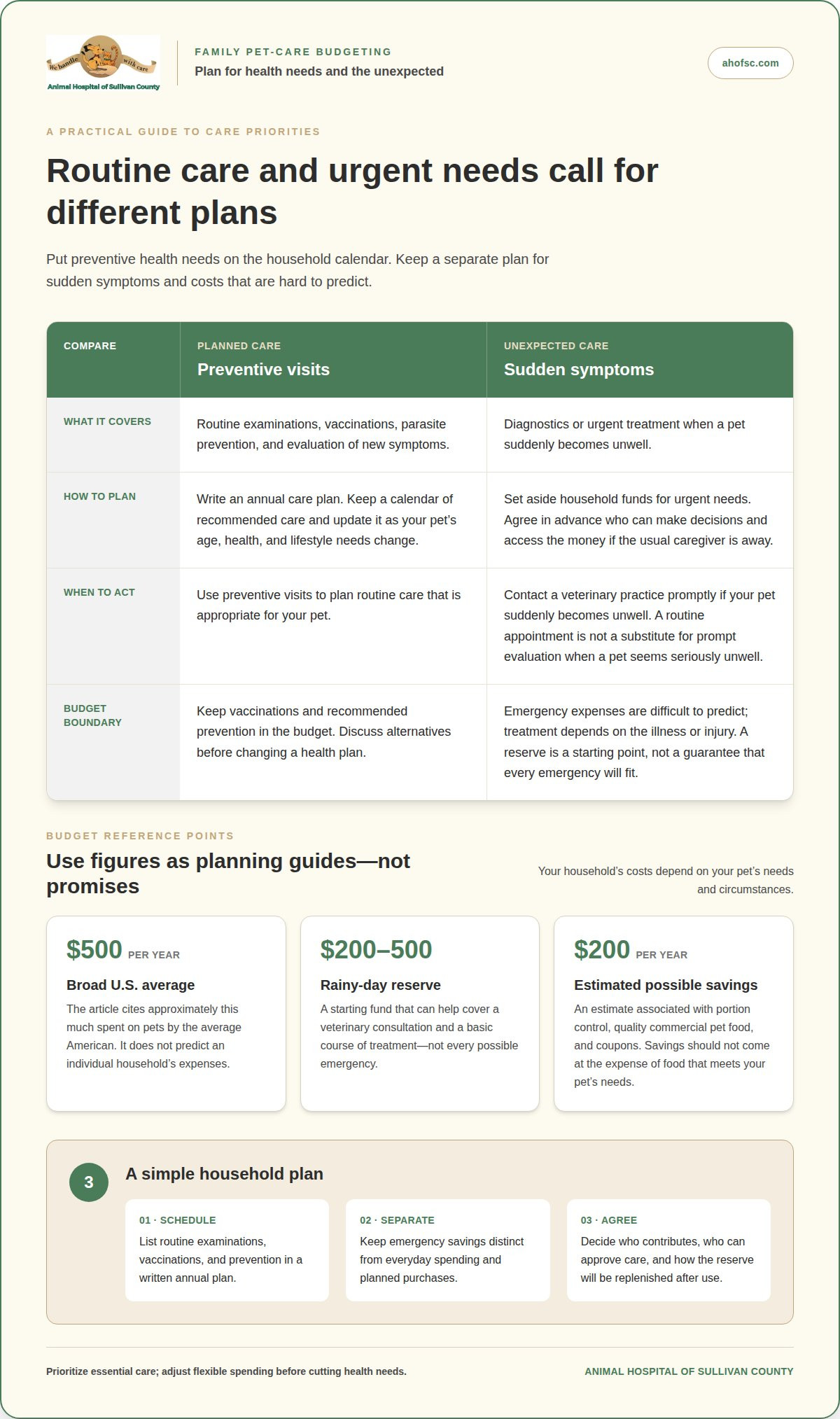
When comparing veterinary options, match the appointment to your pet’s needs. Preventive visits help plan routine care, while sudden symptoms may require diagnostics or urgent treatment. A routine appointment is not a substitute for prompt evaluation when a pet seems seriously unwell. Navigating pet care costs as a family also means choosing the right type of care, rather than treating preventive services as a substitute for urgent attention.
Emergency expenses are difficult to predict because treatment depends on the illness or injury. Decide in advance which household funds could cover urgent care and who can make decisions if the usual caregiver is away. If your pet suddenly becomes unwell, contact a veterinary practice promptly. Delaying care to avoid spending can put your pet’s welfare at risk.
Upfront adoption or purchase expenses depend on the pet and the arrangement. Include more than the initial payment in your plan: account for an initial veterinary examination, vaccinations, supplies, and known care needs. A family adopting an adult cat, for instance, can budget for setup essentials and an early health assessment. This gives the household a more realistic starting point than focusing on the adoption fee alone.
Costs also vary by pet type, breed-related health needs, age, and location. An older dog may need more frequent visits, medication, or a specialized diet; a young pet may have different needs. The average American spends approximately $500 per year on pets, but this broad figure doesn’t predict an individual household’s expenses. Track your own recurring needs to make the plan more useful.
Adjust flexible spending before cutting essential care. Compare suitable food options, measure portions, and choose durable toys instead of replacing them frequently. Keep vaccinations and recommended prevention in the budget, and discuss alternatives before changing a health plan. These choices can help your family manage expenses while keeping your pet’s well-being at the center.
Annual food and treat costs
Food is a recurring expense, so estimate it separately from treats and other supplies. These figures are budgeting examples, not a guaranteed total for every household.
To estimate your dog’s food budget, start with the daily portion recommended for that food and your dog. Use the package cost and how long it is expected to last to estimate the recurring expense. Then account for changes in appetite, growth, activity, and health. A growing puppy, for example, may need a different feeding plan from an adult dog, so adjust the household budget as the dog matures.
For a cat or dog, yearly ownership costs include more than food and treats. Add each expense category separately instead of treating the food estimate as the full annual cost.
Portion control can help avoid buying more food than your pet needs. Measure meals consistently, store food according to its packaging, and compare the cost per serving across suitable options. Coupons and planned shopping may also help: an estimate suggests portion control, quality commercial pet food, and coupons can save $200 per year on pet care. Savings should not come at the expense of a food that meets your pet’s needs.
Give treats their own budget line. Set a weekly amount, use small portions, and include treats in the day’s overall feeding plan. Choose ingredients that are safe for your pet, and avoid foods unsuitable for dogs or cats. Treats may be a small part of the routine, but repeated purchases add up.
Make shopping more predictable by tracking food purchases for a few weeks, then using that pattern to plan future orders. Compare package sizes by unit cost, but buy larger quantities only if you can store them properly and use them before quality declines.
Keep your pet’s comfort at the center of each decision. If a food change affects appetite or wellbeing, make the next step a veterinary conversation rather than continued cost-cutting. For a practical look at available pet care products, consider which items fit your household’s routine and your animal’s needs.
3. Emergency funds and cost-sharing agreements
Families can prepare for unexpected veterinary needs by setting aside money regularly and agreeing on who contributes. A rainy-day fund of $200-500 can help cover a veterinary consultation and a basic course of treatment. Treat it as a starting reserve, not a promise that every emergency will fit within it.
Choose a contribution that fits your household budget, then make it automatic if possible. One simple approach is putting loose change and $1 bills into a jar each week. Move the money into a separate savings account if keeping cash at home makes it harder to track.
Give your emergency fund a clear purpose: use it for urgent veterinary needs, not routine food, toys, or other planned purchases. If you use money for an emergency, include replenishing the reserve in your next household budget. For example, your family could resume weekly contributions after paying for an unexpected examination.
How can families budget for unexpected veterinary emergencies? Set a recurring contribution, keep the reserve separate from everyday spending, and agree in advance how family members will share costs. Decide who can approve care and access the funds if the usual caregiver is away.
Shared responsibility works best when the agreement is specific. Families can choose one of several approaches:
- Equal shares: Each participating family member contributes the same amount.
- Expense categories: One person covers food, while another handles veterinary expenses.
- Rotating months: Different people take responsibility for bills in assigned months.
Write down the chosen arrangement, who pays first, and how everyone will record contributions. A shared note or household budget can prevent confusion when an urgent bill arrives. Review the agreement if a family member’s circumstances change or the pet joins a different household.
If your pet may be more likely to develop costly health problems, consider whether a modest reserve is enough for your family. For breeds frequently affected by expensive health problems, the guidance recommends pet insurance or a significantly higher emergency fund. The right decision depends on your household’s ability to manage uncovered expenses while maintaining savings.
Keep the plan practical. A fund that grows steadily is more useful than a large target that strains the monthly budget. If an urgent health concern arises, timely treatment may be needed. A shared savings agreement can help everyone focus on decisions about care rather than debating payment responsibilities.
4. Pet insurance and savings accounts
Pet insurance and personal savings handle veterinary expenses differently. Insurance involves recurring premiums, while savings require building a reserve before costs arise. Compare ongoing premiums with the amount your household can set aside without disrupting essential expenses.
Premiums are only one part of an insurance policy’s cost. Read the policy terms for covered conditions, exclusions, reimbursement rules, and any deductible. A policy may help with eligible treatment but still leave the family responsible for some expenses. Pet insurance policies typically cover 80% of surgical procedures, according to the article’s estimate. Treat that figure as a starting point for understanding coverage, not as a guarantee for every policy or procedure.
Compare both options using the same example, such as a covered surgery. For insurance, consider annual premiums and the share of eligible costs the policy leaves to you. For savings, consider how much you can contribute and how long it may take to build a reserve. Budget for routine needs, such as grooming, separately so they do not quietly drain emergency savings.
A savings account gives your family direct access to money set aside for your pet. That can help with smaller expenses, but a reserve built gradually may not cover a large bill at first. Keep the account separate from everyday spending, and review contributions as household circumstances change.
For families buying a dog from a breeder, one recommendation is to set aside a treatment fund of at least twice the dog’s purchase cost. This ties the reserve to the initial purchase, but does not predict future medical needs. Consider the dog’s age, health risks, and your family’s ability to continue adding to savings.
Credit can help manage a bill, but borrowed money must be repaid. Before relying on credit, compare repayment terms with your household budget and consider whether monthly payments could compete with food, housing, or other essentials. Available credit is not a substitute for understanding the treatment plan or what your family can afford.
Choose an approach that fits your risk tolerance and cash flow. Some households may prefer predictable premiums; others may favor savings or a combination of both. Write down the monthly premium, planned savings contribution, and emergency access plan. This comparison helps family members make a shared decision before an unexpected veterinary expense arrives.
5. Vaccinations and preventative care
Vaccinations and preventive care belong in the family budget because they support your pet’s health. A practical plan includes vaccinations, parasite control, and spaying or neutering. Rather than treating these as optional extras, list them alongside routine care and revisit the plan as your pet’s needs change.
Start with a veterinary examination and discuss which vaccinations suit your pet. Age, health history, lifestyle, and exposure to other animals can shape the recommendation. A pet that spends time outdoors, for example, may have different preventive needs from an indoor-only companion. Use a calendar to track due dates and follow-up doses.
Ask whether a 3-year vaccination schedule is appropriate instead of annual vaccination when possible. This isn’t a blanket substitute for every vaccine or pet. The right schedule depends on the specific vaccine and your animal’s health needs. Keep a record of each dose, its date, and the next recommended step, so caregivers can follow one consistent plan.
Parasite control is another ongoing part of prevention. The product and schedule should fit your pet, its environment, and its routine. A dog that regularly explores wooded areas, for example, may have different exposure risks from an indoor cat. Discuss these details during preventive visits, then budget for the recommended plan rather than buying products without guidance.
Spaying or neutering also belongs in the family’s preventive-care conversation. Timing depends on the individual animal, so discuss the decision during an examination and consider it alongside other health needs. A written list of questions can help your family understand what is recommended now, what can be planned later, and how to organize each step.
Keep one shared record of appointments, vaccine dates, medications, and reminders to make preventive care easier to manage. If several family members care for the pet, a shared calendar can help prevent missed follow-ups. Review the record before each visit and update it afterward, giving everyone a clear view of upcoming care.
Costs depend on your pet’s needs, recommended vaccinations, and care plan. A quote for your pet’s situation can help you plan for the care being considered.
For guidance on a prevention plan and vaccination schedule, schedule preventive care.
Vaccination, parasite control, and desexing are core preventive healthcare needs to include in a pet-care budget. Planning for all three helps families account for routine prevention as a whole rather than focusing on a single service.
This estimate can help set expectations, but the veterinary plan should reflect your individual pet’s needs.
Animal Hospital of Sullivan County
Animal Hospital of Sullivan County can help families connect their pet’s health needs with thoughtful veterinary care. Preventive Care supports planned wellness needs, while Medical Care and Diagnostics address health concerns that may arise. Surgical Care is available when a pet’s condition calls for surgery.
Bring questions about your pet’s care priorities, recommended next steps, and ongoing needs. Clear conversations can help your family understand the care being considered and make informed decisions for a cherished companion.
Contact Animal Hospital of Sullivan County to discuss your pet’s veterinary care.
Make your family’s care plan work for the long term
A pet’s needs can change as they grow, age, or develop a health concern. Set a regular time to review your household plan, update who handles each responsibility, and adjust priorities as circumstances shift. This keeps care decisions connected to your family’s current routine rather than relying on an outdated budget.
Navigating pet care costs as a family also means raising questions before decisions feel urgent. Share your family’s priorities and concerns when discussing your pet’s care, so everyone understands the next step and can help support it. A shared plan can make it easier to act with care and confidence.
Animal Hospital of Sullivan County offers Preventive Care, Medical Care, Diagnostics, and Surgical Care to support pets’ health needs. Contact Animal Hospital of Sullivan County to discuss your pet’s care. With a thoughtful plan and caring support, your family can move forward together.
Frequently Asked Questions
Are Pets a Luxury?
Pets aren’t simply a luxury, but caring for one is a meaningful financial responsibility. Families need to plan for everyday essentials and health needs throughout a pet’s life. Before adopting, consider how your household would manage routine care, unexpected expenses, and changes such as aging or needing medication. A realistic plan helps you decide whether you can provide consistent care without neglecting other essential needs.
Is It Fair: Keeping a Pet if You Can’t Afford Their Care?
Financial hardship doesn’t automatically mean a family can’t care for its pet. Identify essential needs, what support the household can provide, and whether a veterinarian can help prioritize care. If your family cannot meet the pet’s basic needs despite adjusting its budget and seeking support, let the animal’s welfare guide the decision. This can be painful, but the pet’s comfort and safety matter most.
How Much Do Pet Food, Supplies, Grooming, and Boarding Typically Cost?
These are broad planning estimates, not a household-specific total. Pet size, needs, location, and care choices affect the budget.
What Low-Cost Veterinary Care and Pet Assistance Programs Are Available in the United States?
In the U.S., support options can include community veterinary clinics, charitable veterinary assistance funds, and programs run by animal welfare organizations. Some focus on preventive services, while others help eligible households manage urgent treatment. Availability and eligibility vary. Before discussing care priorities, possible treatment stages, and assistance options with a veterinary professional, prepare a concise summary of your pet’s needs and your family’s budget.
What are typical upfront costs for adopting or buying a pet?
Upfront costs vary by pet and arrangement. Budget for more than the adoption or purchase payment: include an initial veterinary examination, vaccinations, supplies, and any known care needs.


