

House training isn’t about punishing accidents; it’s about giving your puppy a steady routine and rewarding the right choice. Take your puppy outside every 20 minutes while awake and active, and use calm praise when they go in the right place. These are among the most important mistakes to avoid with a new puppy: expecting instant progress or relying on scolding instead of patient, consistent guidance.
It’s understandable to focus first on potty training while your new family member settles in. But early puppy care also means setting realistic expectations, choosing complete and balanced food, and understanding when a puppy is ready to leave their mother.
One small area that’s easy to overlook is dental care. Puppy teeth need attention, too, starting during teething. This guide covers practical house-training steps, gentle ways to build good habits, nutrition and timing, and how to begin caring for your puppy’s teeth. With patience and a plan that suits your puppy, you can help them feel safe while building healthy routines together.
Key Takeaways
- Build house training around frequent outdoor trips, a predictable routine, and rewards for getting it right.
- Introduce new experiences gently, and keep puppy socialization safe and controlled while vaccinations are underway.
- Keep training sessions short and consistent, using praise and clear boundaries to help good habits take root.
- Choose food labeled “complete and balanced” to support your puppy’s nutritional needs as they grow.
- Learn why puppies should stay with their mother until at least 8 weeks old, and how to begin caring for their teeth.
1. How do I house train my puppy effectively?
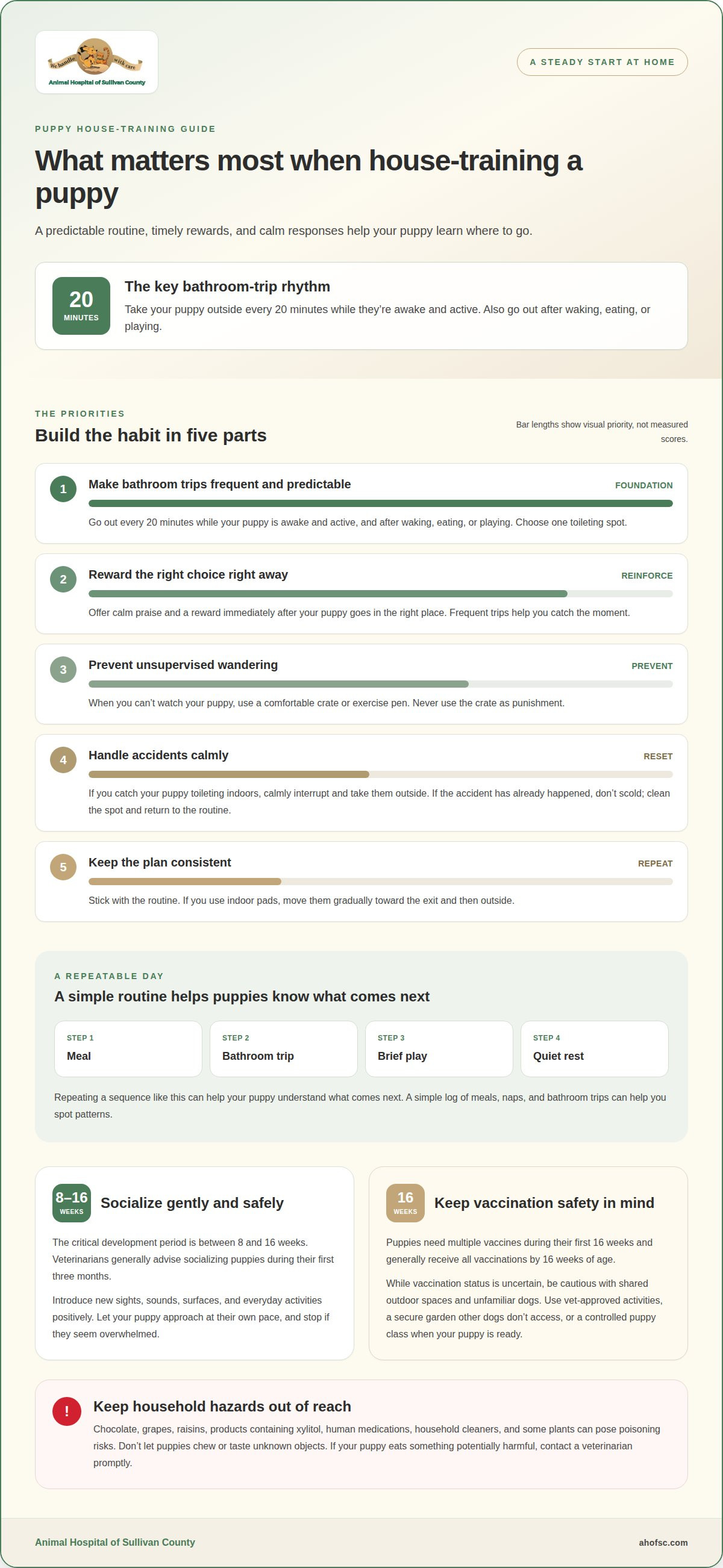
Start puppy training with a predictable bathroom routine from the first day at home. Take your puppy outside every 20 minutes while they’re awake and active, and after waking, eating, or playing. Choose one toileting spot, then offer calm praise and a reward immediately after they go. Frequent trips help you catch the right moment before an accident happens.
When you can’t watch your puppy, use a crate or exercise pen to prevent unsupervised wandering. Keep the crate comfortable and never use it as punishment. If you catch your puppy toileting indoors, calmly interrupt and take them outside. Don’t scold or punish an accident after it happens. Clean the spot and return to the routine. If you use indoor pads, move them gradually toward the exit and then outside.
House training and socialization both depend on patient, consistent practice. Puppies have a critical development period between 8 and 16 weeks old, and veterinarians generally advise socializing them during their first three months. Introduce new sights, sounds, surfaces, and everyday activities positively, such as calmly exploring a different room or hearing a household appliance from a comfortable distance. Let your puppy approach at their own pace, and stop if they seem overwhelmed.
Vaccination safety matters during these early experiences. Puppies need multiple vaccines during their first 16 weeks, and they generally receive all vaccinations by 16 weeks of age. Take a cautious approach to shared outdoor spaces and contact with unfamiliar dogs while your puppy’s vaccination status is uncertain. Instead, use vet-approved activities and a secure garden that other dogs don’t access. Once your puppy is ready, a controlled puppy class can offer safer introductions than an unpredictable gathering.
Keep hazards out of reach while your puppy explores. Chocolate, grapes, raisins, and products containing xylitol can be toxic to dogs. Human medications, household cleaners, and some plants can also pose poisoning risks. Store these items securely, and don’t let puppies chew or taste unknown objects. If your puppy eats something potentially harmful, contact a veterinarian promptly.
Keep each new experience short, gentle, and positive. A calm introduction to a visitor, car ride, or new floor surface can build confidence without forcing interaction. For dog-to-dog socialization, choose a suitable, supervised playmate rather than a chaotic free-for-all. Watch your puppy’s body language, give them room to retreat, and reward calm curiosity. Steady routines and safe exposure support reliable toileting habits and healthy early behaviors.
2. Setting realistic training expectations
Training starts on your puppy’s first day at home, but learning takes repetition. Puppies need time to connect actions with rewards and understand which rules apply in each room. One mistake to avoid with a new puppy is expecting a skill to stick after one practice. Focus on one behavior, such as sitting before meals, and practice in a quiet setting. Distraction may mean the environment is too exciting, not that your puppy is being stubborn.
Meal frequency and sleep needs vary with a puppy’s age, size, and routine. Serve meals consistently, follow the puppy-food package directions, and provide regular chances to rest. Take your puppy outside every 20 minutes while awake and active. Keeping a simple log of meals, naps, and bathroom trips can help you spot patterns and adjust the daily routine.
The Puppy Academy notes that puppies learn eating, sleeping, playing, training, and bathroom routines during the first six months of life. Build those habits with a steady sequence. For example, offer breakfast, a bathroom trip, brief play, and quiet rest in the same order each morning. Predictable steps help your companion understand what comes next and may ease anxiety.
Use positive reinforcement to show your puppy what to do. Say a cue once, such as “sit,” then reward the behavior with praise or a small training treat. Keep lessons brief; a 20- to 30-minute session can tire a puppy and interfere with focus. Several short practices fit more comfortably into a puppy’s day.
Firm training means clear, consistent boundaries, not frightening or hurting your puppy. Avoid yelling, physical punishment, and fear-based or dominance techniques. These can damage trust and hinder learning. If your puppy grabs a sock, trade it for an appropriate chew toy instead of chasing or scolding. When they choose their own toy, calmly praise them.
Chew toys provide an appropriate outlet for chewing, while treats can reinforce behaviors you want repeated. Supervise your puppy with chew items, and reward calm choices, such as settling on a mat. If your puppy jumps on a guest, ask for a sit and reward them for keeping all four paws on the floor. This teaches an alternative behavior rather than relying on repeated corrections.
Consistency across the household matters. Agree on cues and boundaries, such as whether your puppy may sit on the couch, and ask everyone to follow them. Mixed rules can confuse a puppy and make progress harder to see. Common mistakes to avoid with a new puppy include changing expectations from day to day or expecting adult-level self-control. Keep routines steady, reward small steps, and give your young dog time to learn.
3. Choosing nutritionally complete puppy food
Puppies usually keep growing until they reach one year of age, so choose food labeled for puppies rather than assuming adult food will meet their needs. Look for “complete and balanced” on the package. This label means the food is formulated to meet nutritional standards from the Association of American Feed Control Officials. It’s a useful starting point when comparing options.
Use the package’s feeding directions to guide portions, then make mealtimes predictable. Measure each serving instead of pouring food by eye, and keep track of any treats offered during the day. If you use kibble for training, take it from the puppy’s daily food allotment. For example, 50 pieces can be set aside to reward desired behaviors throughout the day, rather than added on top of regular meals.
Portions may need adjusting as your puppy grows. Keep a simple record of meal amounts, treats, and appetite changes, and bring it to routine veterinary visits. Your puppy’s growth and body condition help determine whether the current amount is suitable. Avoid changing portions abruptly based on one unusually hungry or quiet day. Look for a pattern and discuss ongoing concerns with a veterinarian.
Food habits matter beyond nutrition. Don’t put your hand in your puppy’s bowl to prevent resource guarding. This can make them feel their meal is threatened rather than teaching them to welcome people nearby. Instead, let them eat without interruption. During mealtime, calmly drop a treat near the bowl, then move away. This helps create a positive association with someone approaching.
Use the same calm approach when taking away an item. If your puppy has a toy or chew, trade it for a treat rather than grabbing it unexpectedly. Practicing simple trades helps build cooperative habits without making food or valued objects feel unsafe. Keep the reward close, offer it before reaching for the item, and return the toy when appropriate.
Vaccinations and food serve different purposes, so don’t change your puppy’s diet simply because a vaccination appointment is coming up. Keep familiar meal habits around routine visits and follow any specific feeding directions given for your puppy. If appetite changes continue after a meal, treat, or vaccination visit, note when they began and what your puppy ate. Those details help a veterinarian assess the situation.
Make food changes gradually when a different puppy formula is needed. Mixing the current food with the new food over several meals can help your puppy adjust to a new taste and texture. Keep the package information handy, including the life stage and feeding directions. A consistent plan helps you track what your puppy eats, use rewards thoughtfully, and support steady growth through the first year.
4. When can puppies leave their mother?
Puppies should ideally stay with their mother until they are at least 8 weeks old. That time supports early development before a puppy begins settling into a new home. Once your puppy arrives, provide close attention while also teaching them that calm, brief periods alone are safe. A gradual transition helps build confidence without making every moment apart feel unexpected.
Start with a quiet resting place, such as a crate or another safe area. Make it comfortable, then invite your puppy to explore with a treat or familiar toy. Stay nearby at first. As your puppy settles, step away briefly and return calmly. Repeat these short separations during everyday moments, such as preparing a meal. If your puppy becomes distressed, shorten the next practice rather than leaving them alone longer.
Crate training can provide a safe place to rest and help build independence. Keep the experience positive: praise your puppy for entering willingly, and never use the crate as punishment. A stuffed food puzzle or suitable chew can keep them occupied during quiet time. Stay within earshot, especially during early practice, so you can respond if your puppy becomes unsettled or needs a bathroom break.
Puppies need attention, play, rest, and gentle teaching throughout the day. Use short play sessions and simple games, such as inviting your puppy to follow a toy across the room. Pause when excitement rises, then reward calm behavior with praise. These small interactions strengthen your relationship and teach your puppy that play has gentle boundaries. Don’t expect a young puppy to entertain themselves for long stretches.
Supervise your puppy with toys and chews. Choose an appropriate item, watch how they use it, and take it away if it breaks or becomes unsafe. For example, redirect chewing from a household object to a puppy-safe chew, then praise the switch. Supervision helps you notice whether a toy causes frustration or excitement and keeps chewing within a safe, familiar activity.
Check your puppy’s collar regularly as they grow. It should allow one to two fingers between the collar and your puppy’s neck without slipping off easily. Recheck the fit as your puppy gets bigger and adjust it when needed. A collar that becomes too tight can be uncomfortable; one that is too loose may catch on nearby objects. Make checking the fit part of a routine, such as getting ready for a walk.
Good early care combines closeness with gradual independence. Brief separations, supervised chews, and regular collar-fit checks help you meet daily needs while teaching confidence. Follow your puppy’s cues, use positive reinforcement, and let their comfort guide each next step.
5. Puppy dental care
Make mouth care part of your puppy’s routine, not a task reserved for visible problems. Teething starts at about two weeks of age, and puppy teething continues until puppies are between eight and 10 weeks old. A gentle introduction to having their lips and mouth handled helps make later brushing familiar. Keep each practice calm and brief.
Begin by touching your puppy’s muzzle, then gently lift a lip for a quick look. Praise them and stop before they pull away. Repeat the steps gradually, working toward touching the teeth with a soft toothbrush and dog toothpaste. Never force the brush into a closed mouth. If your puppy resists, return to a step they accept comfortably.
During teething, offer suitable chew toys and supervise your puppy as they use them. A toy provides an appropriate item to mouth, but it doesn’t replace brushing. Check each chew for damage before offering it again, and remove it if pieces loosen or break. Avoid household objects that could splinter or be swallowed, such as damaged wood.
Look at your puppy’s mouth during calm moments, such as after play. Watch for changes such as bleeding, swelling, a broken tooth, or sudden reluctance to eat. Don’t treat signs of pain as a training problem or punish mouthing. Gently redirecting your puppy to a suitable chew is more helpful than scolding, just as calm guidance helps with toileting accidents.
Seek urgent veterinary care if your puppy has trouble breathing, collapses, has heavy bleeding, or appears to be in severe pain. Sudden swelling around the mouth or face also needs prompt attention. If your puppy swallows a potentially harmful object or product, contact a veterinarian promptly and describe what happened. These concerns need medical attention, not home dental care.
Common mistakes include waiting until your puppy’s breath smells unpleasant, brushing too forcefully, or assuming chew toys keep teeth clean. Instead, build a small routine at home: choose a quiet time, gently touch the muzzle, lift a lip, and reward calm cooperation. Short, positive practice gives your puppy time to become comfortable with each step.
Keep dental care comfortable and predictable. If you notice a mouth change that concerns you, or your puppy won’t tolerate gentle handling, ask for veterinary guidance rather than forcing the brush. For help with your puppy’s dental health, request a puppy dental evaluation and discuss the signs you’ve observed.
Animal Hospital of Sullivan County
Animal Hospital of Sullivan County can help turn puppy-care questions into a practical plan for your pet’s health. Preventive Care supports routine wellness, while Medical Care and Diagnostics help assess concerns such as appetite changes, mouth discomfort, or unexpected symptoms. Surgical Care is available when treatment calls for it.
Bring up your puppy’s food, growth, vaccination schedule, training concerns, and dental care during a veterinary visit. Specific examples, such as a change in eating or a damaged tooth, can help guide the conversation and next steps. You don’t have to wait until a concern feels serious to discuss your puppy’s care.
For guidance tailored to your puppy, contact Animal Hospital of Sullivan County.
Build a caring routine that grows with your puppy
Your puppy’s needs will change as they grow, and your relationship will grow with them. Notice what helps your young companion feel comfortable, from their response to new experiences to how they manage everyday care. If questions arise, write down what you’ve observed to explain your concerns and decide on a thoughtful next step.
Many mistakes to avoid with a new puppy can be addressed with patience, gentle consistency, and support suited to your puppy. You don’t have to figure out every new stage alone. A veterinary team can help you work through care questions as your puppy develops, so you can make informed choices with their well-being at heart.
For support as you care for your puppy, contact Animal Hospital of Sullivan County. Each small, caring step helps build a happier life together.
Frequently Asked Questions
How do I house train my puppy effectively?
House training works best when everyone in the home follows the same cues and routine. Choose one phrase, such as “go potty,” and use it consistently at the door and outside. Keep a simple note of meals, naps, and accidents to spot patterns. If accidents happen repeatedly in one room, limit access to that area and supervise more closely. Reward the behavior you want, and avoid scolding after the fact.
When can puppies leave their mother?
Puppies should ideally remain with their mother until they are at least 8 weeks old. After coming home, give a new puppy a quiet place to rest and time to adjust to unfamiliar people, sounds, and routines. Keep early interactions gentle, and let the puppy approach rather than passing them around. A calm first few days can help you notice their appetite, energy, and comfort as they settle in.
What are the most common mistakes new puppy owners make?
Common missteps include expecting a puppy to understand household rules without consistent practice, giving them too much freedom too soon, and overlooking rest or safe exploration. For example, if one family member allows the puppy on the couch while another discourages it, the puppy receives mixed signals. Agree on boundaries, supervise new situations, and reward wanted behavior. Look for patterns instead of labeling learning difficulties as defiance.
What is the best way to house-train a puppy, and what mistakes delay progress?
A steady routine, close supervision, and immediate rewards for toileting in the right place support house training. Progress can stall when bathroom trips are missed, household members follow different routines, or accidents lead to punishment. If setbacks begin, note when they happen and what came before, such as waking or play. The record may reveal a practical adjustment, such as closer supervision during a predictable busy period.
How should you socialize a puppy safely before full vaccination?
Before vaccinations are complete, build familiarity with everyday life without exposing your puppy to uncontrolled public settings. Let them observe household visitors, hear ordinary sounds, and explore clean surfaces at home. Keep introductions gentle and allow your puppy to move away. Ask a veterinarian which activities suit your puppy’s vaccination stage. Once cleared for broader contact, choose calm, supervised interactions rather than crowded or unpredictable dog gatherings.
When should puppies get vaccines, deworming, and veterinary checkups?
Puppies need multiple vaccines during their first 16 weeks, and they generally receive all vaccinations by 16 weeks of age. The timing of deworming and checkups depends on the puppy’s history, health, and care needs, so bring any records from the breeder, shelter, or previous caregiver to the first veterinary visit. A written plan helps you keep track of upcoming care and discuss questions as your puppy grows.
How do you crate-train a puppy without causing fear or separation anxiety?
Help your puppy see the crate as a comfortable resting spot, not a place for punishment. Leave the door open at first and encourage voluntary exploration with a familiar blanket or treat. Try closing the door briefly while you stay nearby, then open it before your puppy becomes distressed. Gradually practice stepping away during calm moments. If your puppy repeatedly panics, slow the process and discuss the behavior with a veterinarian.
How much exercise is safe for a puppy by age and breed?
Safe exercise depends on your puppy’s age, breed, health, and individual energy, so no single duration suits every puppy. Choose gentle play and short chances to explore, then allow time to rest. A small-breed puppy and a large-breed puppy may have different needs as they grow. Watch how your puppy responds during and after activity, and ask a veterinarian to help shape an age-appropriate plan.


