

A chronic diagnosis doesn’t mean your pet has to lose comfort or enjoyment of life. Managing chronic illness in pets usually means adapting care over time, with treatment shaped by the condition, your pet’s quality of life, and your family’s routine.
It’s natural to wonder what ongoing care involves, how treatment costs may vary, and whether medication will be needed for life. Chronic illnesses are long-lasting or recurrent conditions. Care often focuses on easing symptoms and supporting quality of life rather than curing the condition.
This guide explains common chronic illnesses in pets and how an individualized care plan can bring together medication, nutrition, monitoring, and follow-up visits. You’ll also learn what can affect treatment costs, why they vary from pet to pet, and how medication needs may change over time. A thoughtful approach to managing chronic illness in pets can help you make informed decisions for your cherished companion.
Key Takeaways
- Chronic conditions may be found during routine exams, even before a pet shows obvious signs, so ongoing monitoring can matter.
- Care plans can combine medication, nutrition, activity adjustments, and diagnostic testing based on your pet’s needs and quality of life.
- Medication may be lifelong for some conditions, while other treatment routines can change as symptoms and health needs evolve.
- Written estimates for diagnostics, treatment, and ongoing medication can help you understand the costs involved and plan ahead.
- Tracking changes in appetite, thirst, and activity at home can help you share useful updates during veterinary follow-ups.
What should I consider managing my pet’s chronic health condition?
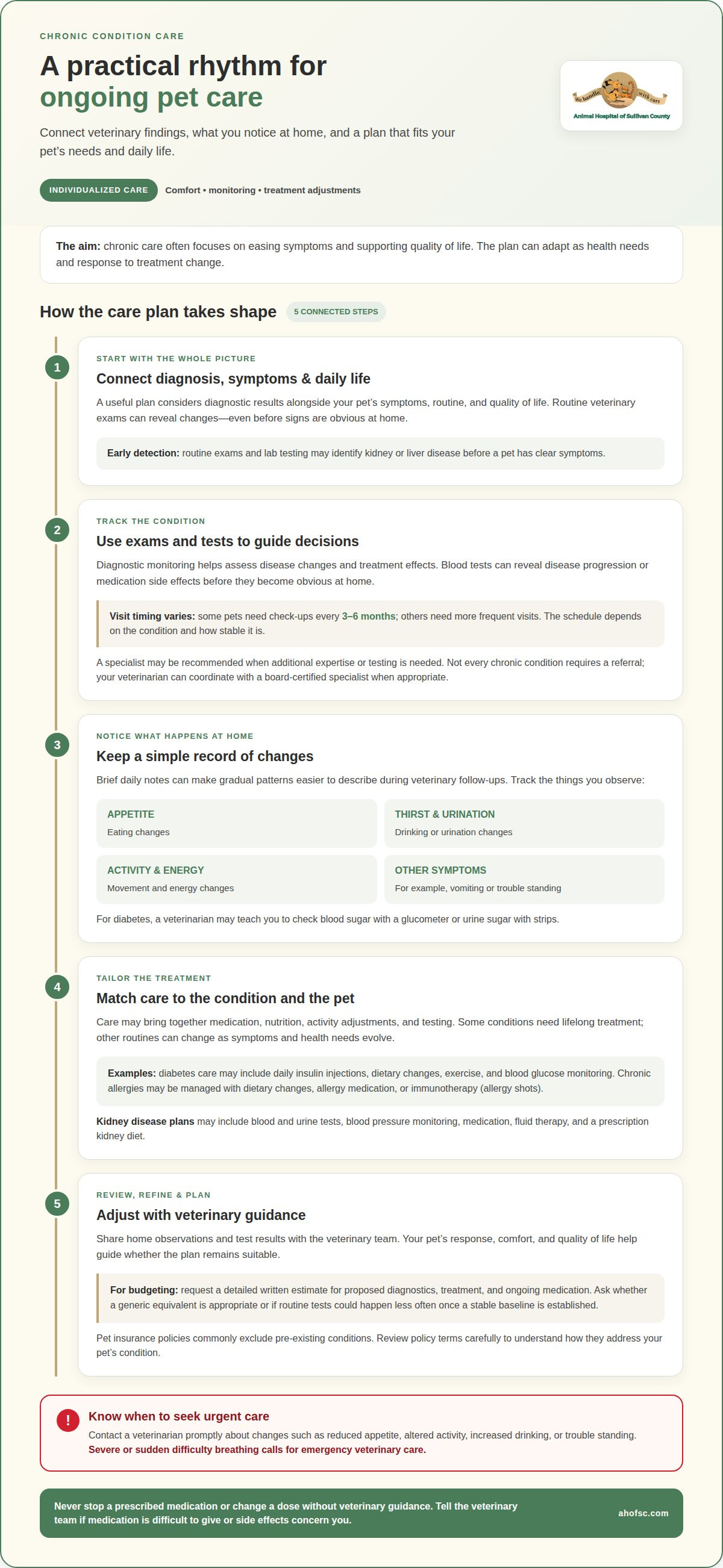
A useful plan connects diagnostic results with your pet’s symptoms, daily routine, and quality of life. Regular veterinary exams help identify changes and guide ongoing treatment.
Diagnostic Monitoring and Specialist Referrals
Diagnostic monitoring uses exams and tests to track a disease, assess treatment effects, and guide care adjustments. For example, blood tests can reveal disease progression or medication side effects before changes become obvious at home.
A veterinarian may recommend a specialist when a condition calls for additional expertise or testing. Your pet’s primary veterinarian and a board-certified specialist can collaborate, sharing findings to support a coordinated treatment plan. The decision depends on the diagnosis, test results, and response to current treatment. Not every chronic condition requires a referral.
Early Detection and Veterinary Exams
Early detection means identifying a health change before it becomes a more serious problem. Routine veterinary exams and lab testing can help detect kidney or liver disease, even when a pet has no clear symptoms.
Some pets with chronic conditions need check-ups every 3-6 months, while others require more frequent visits. The schedule depends on the condition and how stable it is. Contact a veterinarian promptly if you notice changes such as reduced appetite, altered activity, increased drinking, or trouble standing. Seek emergency veterinary care for severe or sudden difficulty breathing, which can signal an urgent problem.
Kidney Disease Monitoring and Treatment
Kidney disease monitoring tracks kidney function and related changes through blood and urine tests. A care plan may also include blood pressure monitoring, medication, fluid therapy, and a prescription kidney diet.
Because chronic kidney disease can progress, consistent follow-up helps show whether the plan remains appropriate. Share changes in drinking, urination, appetite, vomiting, or energy with the veterinary team. These observations don’t replace lab tests, but they connect what happens at home with test results and can help guide timely treatment adjustments.
Home Monitoring and Cost-Saving Measures
Home monitoring means tracking practical changes such as your pet’s appetite, thirst, activity, and symptoms. A brief daily note can help you describe patterns at veterinary visits, especially when changes happen gradually. For pets with diabetes, a veterinarian may teach owners to check blood sugar with a glucometer or urine sugar with strips. Never change insulin or other medication without veterinary guidance.
For budgeting, request a detailed written estimate for proposed diagnostics, treatments, and ongoing medication. Ask whether a generic equivalent is appropriate or whether routine tests can happen less often once a stable baseline is established. Pet insurance policies commonly exclude pre-existing conditions, so coverage obtained before a chronic diagnosis is important. Review policy terms carefully to understand how they address your pet’s condition.
Will my pet need medication forever?
Some chronic conditions need lifelong treatment, while others can be managed with medication, nutrition, and lifestyle changes. A pet’s needs may shift over time, so the plan should fit both the diagnosis and everyday life.
Daily Medication and Home-Care Routines
A daily care routine brings prescribed medication, meals, symptom awareness, and activity into a manageable pattern. Consistency makes care easier to follow and gives your veterinarian a clearer picture of how your pet responds.
Build the routine around your pet’s personality and your household schedule. A dog that resists pills may need a different approach from a cat that becomes anxious during handling. Discuss practical options with your veterinarian rather than skipping doses. Note missed medication, appetite changes, or unusual behavior, as these details can help the veterinary team decide whether the routine or treatment needs adjusting.
Home care can also include controlled exercise, mobility support, and weight management when recommended. For a pet with arthritis, for example, adjusting activity may help maintain movement without unnecessary strain. The right balance depends on the condition, comfort, and response to activity, not a one-size-fits-all schedule.
Medications and Specialized Treatments
Medication and specialized treatments address symptoms or help control a disease over time. Some diagnosed conditions require ongoing treatment, and medication doses may need adjustment as a pet’s health changes.
Diabetes care may involve daily insulin injections, dietary changes, regular exercise, and blood glucose monitoring. Chronic allergies may be managed with dietary changes, allergy medication, or immunotherapy, also called allergy shots. These examples show why treatment is tailored to the condition, not selected by diagnosis alone.
Never stop a prescribed medication or change a dose on your own. If treatment becomes difficult to give or side effects concern you, tell the veterinarian promptly. Your pet’s response, comfort, and quality of life all matter when deciding whether a treatment remains suitable.
Medication and Diet Considerations
A specialized diet can be part of treatment alongside medication and activity changes. For some pets, nutrition supports the goals of medical care; for others, medication remains the main ongoing treatment. The plan depends on the condition and the pet’s needs.
Keep feeding routines consistent if the veterinarian recommends a condition-specific diet. Tell the veterinary team about appetite changes or difficulty maintaining the routine, since these details may affect the care plan. A pet’s preferences, medication schedule, mobility, and your available time can all shape a practical approach. Veterinary medical care can help tailor treatment to your pet’s changing needs.
Treatment estimates and phased care plans
A treatment estimate can organize recommended care into immediate needs and later phases. Its details help you understand what each step addresses, what follow-up may involve, and how the plan fits your pet’s quality of life.
Thyroid and Adrenal Disease Treatment
Treatment for thyroid or adrenal disease is tailored to the diagnosis, symptoms, and test findings. These conditions can require different approaches, so a proposed plan should connect each recommended step with your pet’s specific needs.
At an appointment, ask how each diagnostic test informs treatment and which changes would prompt a reassessment. An estimate can separate the initial evaluation from ongoing care, making it easier to see how the plan may develop. Your pet’s comfort, response to treatment, and daily routine help shape decisions as care progresses.
Heart Disease Symptoms and Treatment
Heart disease care may include medication, routine monitoring, and lifestyle adjustments. Mild coughing, reduced activity, or difficulty breathing during exertion can be early signs. Coughing, exercise intolerance, and fluid retention can also occur.
These symptoms matter because changes can affect treatment priorities and daily comfort. A phased plan may begin with the recommended evaluation, then outline medication and follow-up monitoring. It can also describe activity or dietary adjustments to support heart function. Difficulty breathing needs prompt veterinary attention, especially if it appears suddenly or worsens.
Adjusting the Treatment Plan
Treatment-plan adjustments use new symptoms, diagnostic findings, and the pet’s response to decide whether care should change. A plan is not necessarily fixed: a veterinarian may recommend a different medication approach, additional testing, or a revised follow-up schedule.
For example, a pet whose activity declines or coughing increases may need reassessment rather than simply continuing the same routine. Estimates can distinguish current recommendations from possible later steps, helping families understand the purpose of each phase. At each appointment, discuss which signs the plan is intended to address and what would lead to a change.
Choosing Among Treatment Options
Choosing a treatment plan means balancing expected benefits with your pet’s quality of life and your household’s ability to maintain care. Your pet’s personality, available time, and family finances can all influence which option is workable.
Ask for a detailed written estimate that identifies proposed diagnostics, treatment, and ongoing medication. Consider how each option affects comfort, daily routines, and follow-up needs. A plan that looks manageable on paper should also fit your pet’s temperament. For instance, handling-intensive care may be challenging for an anxious animal.
A phased estimate can clarify immediate recommendations, follow-up appointments, and potential ongoing needs without treating every future step as certain. Review each item with the veterinary team, including what it aims to address and how it relates to your pet’s symptoms. This helps you prioritize care while keeping decisions connected to comfort and quality of life.
Individualized chronic-condition care plans
A chronic-condition plan should reflect the pet, not just the diagnosis. For a pet with arthritis, for example, care may need to balance comfort, mobility, daily routines, and the family’s ability to maintain treatment.
Dietary Management and Care Supplies
Dietary management uses nutrition suited to a pet’s health needs as part of a broader care plan. A veterinarian may recommend a condition-specific diet or activity adjustments, so changes should fit the diagnosis and the pet’s appetite.
Everyday supplies can make a plan easier to follow. A written feeding schedule, measuring cup, and medication chart can help household members keep routines consistent. If your pet refuses a new food or a feeding routine becomes difficult, note what changed and discuss it with the veterinary team. Practical details matter because a plan only works if it fits daily life.
Arthritis Care and Joint Support
Arthritis care aims to address pain, stiffness, and reduced mobility through options such as medication, physical therapy, and weight management. For an aging pet that hesitates on stairs or struggles to stand, these changes can affect everyday comfort.
A tailored plan considers which movements are difficult and how the pet responds to activity. The veterinarian may weigh medication alongside therapy and weight management rather than relying on one measure alone. Track changes in walking, standing, and willingness to move. These observations can help show whether the plan supports your pet’s quality of life.
Individual care also accounts for the pet’s personality and the household’s capacity. A nervous pet may find handling-intensive care difficult, while a family’s schedule can affect whether a routine is sustainable. Discuss these practical factors alongside your pet’s comfort and your family’s finances. That conversation helps shape a plan around both medical needs and everyday realities.
Keep the plan clear for everyone who cares for your pet. A shared written record can list feeding instructions, medication directions, activity guidance, and changes to watch for. If one family member handles meals and another gives medication, for example, a single record helps avoid confusion and supports consistent care.
Preventive care remains important for pets with chronic disease. Keeping vaccinations up to date can support overall wellness alongside condition-specific treatment. Ask how preventive needs fit with the existing plan, especially if your pet’s health or treatment routine changes. Recheck appointments and laboratory work can also help assess whether the overall approach remains appropriate.
Quality of life should remain a central measure as your pet’s needs evolve. If arthritis limits movement or a treatment routine becomes difficult to maintain, share those changes with the veterinarian. The care plan can then be reconsidered with your pet’s comfort, mobility, and household routine in view.
Definition and examples of chronic illness in pets
A chronic illness is a long-lasting or recurrent condition that often has no cure. Care focuses on managing symptoms and supporting quality of life. The distinction matters: a short-lived problem may resolve, while a chronic disease can call for ongoing decisions about treatment, monitoring, and daily care. For pets with chronic conditions, understanding the pattern helps families recognize when a change deserves attention.
Examples include diabetes, arthritis, kidney disease, heart conditions, allergies, Cushing’s disease, congestive heart failure, and cancer. These diagnoses affect different parts of an animal’s body, so “chronic” describes the course of the condition, not one shared symptom or treatment. Arthritis may make movement stiff or uncomfortable, while diabetes affects the body’s ability to regulate blood sugar. The diagnosis names the problem, but the pet’s individual signs guide care.
Diabetes can cause increased thirst, frequent urination, and unexpected weight loss, even when appetite seems normal. Those signs help explain why treatment may involve insulin, dietary adjustments, and monitoring. Chronic kidney or liver disease may bring appetite changes, increased drinking, vomiting, or lethargy. Symptoms can vary, and a veterinarian interprets them alongside examination and test findings.
Chronic allergies can appear in ways that seem unrelated at first. A dog may have skin irritation, repeated ear infections, or gastrointestinal problems. These varied signs show why recurring symptoms deserve attention rather than being treated as isolated inconveniences. Noting when itching or digestive changes occur, for example, can help describe the pattern during a veterinary appointment.
Some chronic diseases are found before a pet appears unwell. A routine physical or lab result can reveal a concern that has not yet caused obvious symptoms. This does not mean every abnormal result signals chronic illness; examination findings and testing add context to what families observe at home. Early recognition can help shape a suitable care plan before complications become harder to manage.
Think of the diagnosis as a starting point, not the whole story. Consider how the condition affects appetite, activity, comfort, and familiar routines, and what changes over time. Increased drinking in a pet with kidney disease is useful information to share, just as reduced mobility may matter for an animal with arthritis. Patterns help guide ongoing decisions.
Understanding the condition’s name and possible signs can make conversations about care clearer. If your pet has recurring symptoms or a chronic diagnosis, schedule a veterinary assessment to discuss what those changes may mean.
Animal Hospital of Sullivan County
Animal Hospital of Sullivan County can help turn a chronic diagnosis into a practical care plan for your pet. Medical care and diagnostics support evaluation and ongoing decisions as symptoms or test results change. Preventive care remains part of your pet’s overall wellness alongside condition-specific treatment.
Reach out when your pet has recurring symptoms, a new diagnosis, or changes in appetite, activity, or comfort. Bringing a list of medications and observations from home can make the discussion more useful. The veterinary team can assess your pet’s needs and discuss appropriate next steps, including surgical care when relevant to the condition.
Contact Animal Hospital of Sullivan County to discuss care for your pet.
Keep building a care plan that fits your pet
Living with a chronic condition is an ongoing partnership between your pet, your family, and the veterinary team. As your companion’s needs change, keep the conversation focused on comfort, daily routines, and the goals that matter most to your household. That shared perspective can make decisions about managing chronic illness in pets clearer and more personal.
Animal Hospital of Sullivan County provides medical, preventive, and surgical care to support pets through different health needs. If you’re ready to discuss a diagnosis, changing symptoms, or next steps for your companion, contact Animal Hospital of Sullivan County. A thoughtful conversation can help you move forward with care centered on the pet you love.
Frequently Asked Questions
What are chronic health issues in pets?
Chronic health issues are conditions that persist or return, such as diabetes, arthritis, kidney disease, and allergies. The diagnosis alone doesn’t show how much a condition affects an individual animal. One pet may show noticeable changes in appetite or movement, while another’s condition is first identified during an exam. Symptom patterns and their effect on everyday comfort help shape care.
Are regular blood tests necessary?
Blood tests are commonly used to monitor chronic disease, but the recommended schedule depends on the condition and treatment. Results can track changes in the disease, check for medication side effects, and show whether treatment remains suitable. A veterinarian may compare new results with earlier findings to understand a trend. Urine testing or other diagnostics may also be relevant, depending on the pet’s health needs.
Can pets still have a good quality of life?
Yes, pets with chronic conditions can have a good quality of life when care supports their comfort and daily needs. Notice whether your companion still enjoys familiar activities, eats comfortably, rests well, and moves as expected. A change, such as avoiding a favorite walk or struggling to stand, can guide a conversation about supportive care. Your veterinarian can help assess quality of life as needs evolve.
How often will my pet need check-ups?
Some pets with chronic conditions have check-ups every 3-6 months, while others need more frequent visits. The schedule depends on the disease, treatment, test results, and how stable the pet’s health remains. A visit may be brought forward if new symptoms appear or existing ones change. Keeping a record of changes between appointments can help the veterinary team decide whether the current follow-up timing still fits.
What are common chronic illnesses in dogs and cats?
Common chronic conditions in pets include arthritis and other joint conditions, diabetes, kidney disease, heart conditions, and allergies or skin disorders. Other examples include Cushing’s disease, congestive heart failure, and cancer. Signs vary: diabetes may involve increased thirst and urination, while allergies can appear as skin irritation or recurring ear problems. Similar symptoms can have different causes, so diagnosis matters.
How do vets diagnose and monitor chronic illness in pets?
Veterinarians combine a physical examination, the pet’s history, observed symptoms, and diagnostic test results. Depending on the concern, testing may include blood work or urinalysis. Monitoring compares findings over time and considers changes in appetite, activity, thirst, or weight. Describing when a symptom began and whether it is worsening gives the veterinary team useful context alongside test results.
What daily care routines help pets with chronic conditions?
Helpful routines follow the pet’s treatment plan and keep feeding, prescribed medication, and activity consistent. A simple household record can note doses given, meals eaten, and changes in behavior or comfort. Recording a missed meal alongside unusual tiredness, for instance, gives more context than remembering either detail alone. Follow prescribed instructions, and speak with your veterinarian before changing medication, diet, or exercise.
What medications are commonly used for chronic pet illnesses, and what are their side effects?
Medication depends on the condition. Diabetes treatment may include insulin, while chronic allergies may be treated with allergy medication or immunotherapy. Kidney disease care can also include medication as part of a broader plan. Side effects vary by drug and pet, and blood tests may help identify medication-related changes. Report new symptoms or behavior changes to your veterinarian, and don’t stop or adjust a prescribed dose without guidance.


