
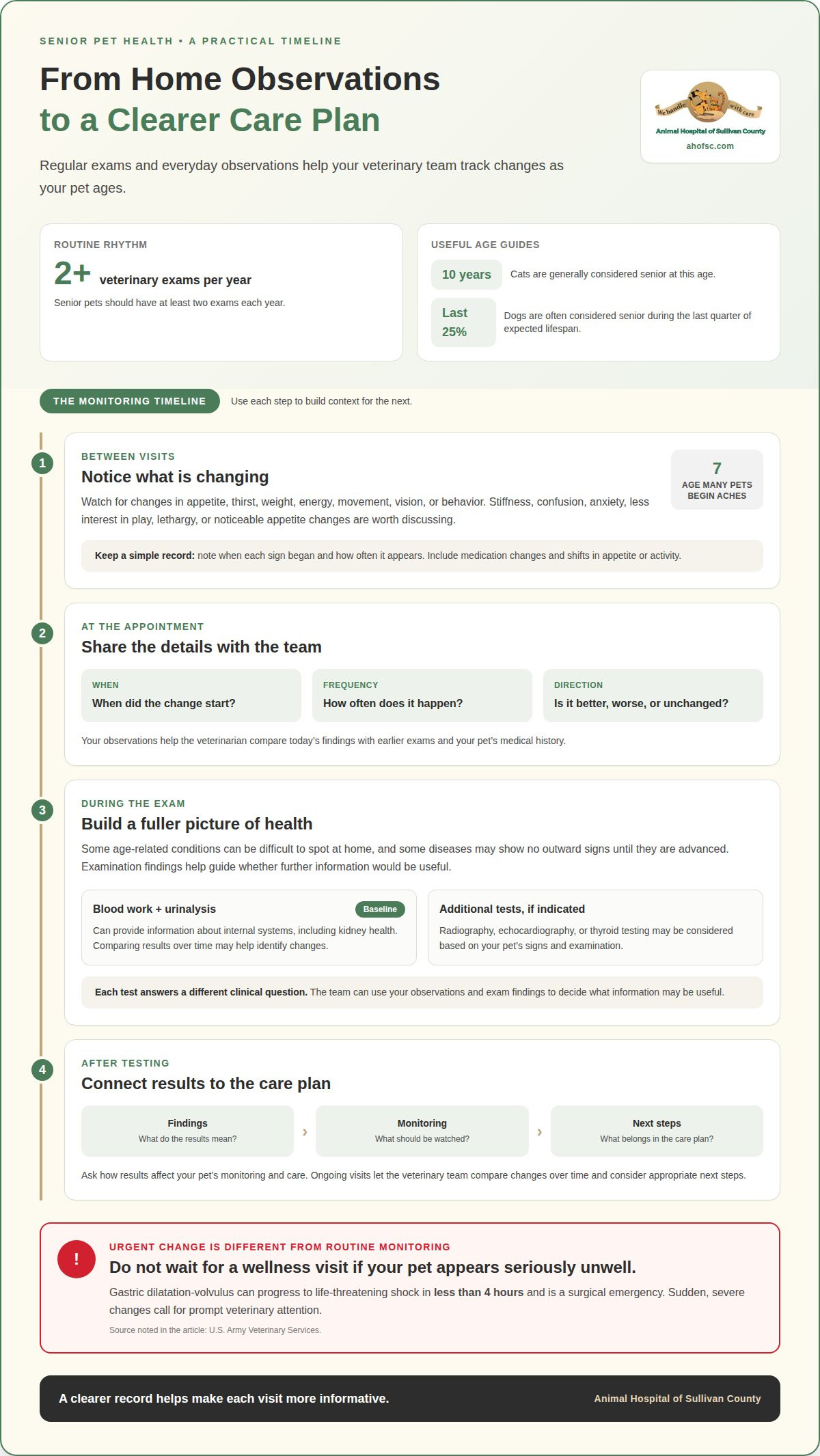
Senior pets should have at least two veterinary exams per year. Choosing a long-term vet for my pet’s life means having a familiar team monitor changes over time, rather than waiting until a problem becomes obvious. Regular visits can help identify concerns early and guide care as your pet ages.
It’s natural to want your companion to stay comfortable, active, and part of family life for as long as possible. This article explains why senior pets benefit from regular checkups, what changes to watch for between visits, and how veterinary exams and diagnostic testing can help assess their health.
You’ll also learn what an experienced veterinary team can consider when tailoring care to an older pet’s needs. With a thoughtful plan and ongoing attention, you can make informed decisions that support your pet’s comfort and well-being through every stage of aging.
Key Takeaways
- Plan at least two veterinary exams per year for a senior pet, and use each visit to discuss changes you’ve noticed at home.
- Changes in appetite, energy, mobility, weight, or behavior can help guide a conversation about your pet’s health.
- Learn how an exam and diagnostic tests can help a veterinary team look for concerns that may not be obvious yet.
- Compare clinics by the care they provide, how they explain next steps, and what factors shape treatment costs.
- Prepare questions about ongoing care and urgent treatment so you can make a more informed choice for your pet.
Early detection of health issues
Senior pets benefit from at least two veterinary exams per year. Cats are generally considered senior at 10 years, while dogs are often considered senior during the last 25 percent of their expected lifespan. These are useful guides, not substitutes for noticing changes in your own animal. A wellness visit gives the veterinary team a chance to compare current findings with earlier observations and discuss what has changed.
Between visits, note changes in appetite, thirst, weight, energy, movement, vision, or behavior. Stiffness when standing, for example, may point to arthritis, while confusion, anxiety, or less interest in play can signal a change worth discussing. Lethargy and noticeable appetite changes also deserve attention. Record when each sign began and how often it appears to help make the appointment more informative.
Some age-related conditions can be difficult to spot at home. Diabetes, cataracts, arthritis, hypothyroidism, and cancer may affect senior pets, and some diseases show no outward signs until they are advanced. Regular monitoring matters because a condition may develop before your pet appears unwell. Early detection gives the veterinary team more information to assess changes and consider appropriate next steps.
Blood work and urinalysis can provide baseline information about a pet’s internal systems, including kidney health. Comparing results over time may help identify changes that need attention. Depending on your pet’s signs and examination, additional testing could include radiography, echocardiography, or thyroid testing. Each test answers a different clinical question, so the veterinary team can use examination findings and your observations to decide what information would be useful.
- Before a visit: Write down new signs, changes in medications, and shifts in appetite or activity.
- During the exam: Share when each change started and whether it is getting better, worse, or staying the same.
- After testing: Ask what the results mean for your pet’s monitoring and care plan.
Early action also means recognizing emergencies, not just tracking gradual changes. Gastric dilatation-volvulus can progress to life-threatening shock in less than 4 hours and is a surgical emergency, according to U.S. Army Veterinary Services. Sudden, severe changes call for prompt veterinary attention. Do not wait for a routine wellness visit if your pet’s condition appears urgent.
Senior pet care is a shared process: regular visits provide a structured view of health, while your daily observations add context. A veterinary team can guide you on monitoring, diagnostic tests, and medications when needed. Keeping a clear record of changes and following recommended care can help support your pet’s comfort, safe exercise, and decisions suited to their individual needs.
Regular veterinary visits provide a way to keep observations in view as a pet’s needs change. Many pets begin feeling the aches and pains of aging by age seven. Regular monitoring and blood testing matter because senior-pet diseases can go unnoticed early and develop rapidly. Veterinarians can use blood work and urinalysis as baseline diagnostic tests to look for concerns in a pet’s internal systems. Clear observations help the veterinary team consider test findings alongside changes you have noticed at home.
Age-related signs that warrant veterinary care include confusion, lethargy, appetite changes, stiffness, vision loss, major weight changes, or behavior changes. Increased anxiety, unusual aggression, heightened reactions to unexpected noises, confusion, or reduced interest in play and exercise may indicate cognitive decline in pets. Describe these changes to the veterinary team, including whether they are new or changing over time. Some concerns may not be apparent from behavior alone, which is one reason monitoring and testing matter. After age 5, 60 percent of unneutered male dogs show evidence of prostate enlargement. This is another example of why observations at home and veterinary checks both contribute to a fuller picture of a senior pet’s health.
Veterinary team experience
Experience matters because a senior pet’s needs can change gradually and then become more complicated. A veterinary team familiar with aging animals can consider new concerns alongside the pet’s medical history, daily routine, and previous examination findings. That wider view makes each appointment more useful than addressing one symptom in isolation.
Credentials offer one concrete starting point. Dr. Carlos Gibbs earned his Doctorate of Veterinary Medicine from Texas A&M. A veterinary degree establishes professional training, while the appointment conversation helps you understand how the team applies its knowledge to your pet’s health concerns. Ask how examination findings shape recommendations for an older animal.
Good communication matters as much as technical knowledge. The team should explain what a finding could mean, what information supports that assessment, and which next steps are being considered. If a serious disease is suspected, ask what is known, what remains uncertain, and how the proposed care plan addresses your pet’s comfort. Clear explanations make difficult decisions easier to understand.
A practical way to understand a clinic’s approach is to notice how it handles three parts of care:
- History: The team reviews existing records, current medications, and changes to appetite, activity, or weight.
- Assessment: The veterinarian explains examination findings and why a particular follow-up step may be useful.
- Plan: You leave understanding the next step, what changes to watch for, and when to arrange another appointment.
These steps connect routine wellness exams with decisions about ongoing treatment. For example, if a senior pet’s weight has changed, the team can consider it alongside eating habits, mobility, and medical history. The goal is a care plan based on the whole animal, not a single number or isolated symptom.
Ask how the clinic organizes information between visits and who explains results or medication instructions. A clear handoff matters when more than one team member supports your pet’s care. You should know whom to contact about a new concern and how the clinic communicates recommended follow-up. These details show how thoughtfully the team manages continuity.
When should I seek emergency veterinary care instead of contacting my regular vet? Seek emergency veterinary care when a change is sudden, severe, or rapidly worsening, rather than waiting for a routine appointment. Gradual concerns can usually be discussed through regular care, while urgent needs call for prompt attention.
Some veterinarians offer telemedicine consultations or other plans for treating sick pets, according to the Centers for Disease Control and Prevention. This may be an option for discussing certain concerns, but it does not replace emergency care for an urgent condition. Ask how the clinic handles follow-up so you understand what to do after advice or treatment.
For urgent needs, learn about emergency treatment and the care available for pets. A team that explains its reasoning, listens to your observations, and gives clear next steps can help you make informed choices for your senior companion.
A useful discussion can also cover how age and activity affect everyday care. Longenbaugh Veterinary Hospital advises that senior dogs need fewer calories as they age and become less active. Ask the veterinary team how to assess your dog’s food intake and body condition as routines change, rather than adjusting food without guidance. A conversation about preventive care can clarify which concerns apply to your pet.
For example, Longenbaugh Veterinary Hospital says a neutered male dog cannot get testicular cancer. If you have questions about a health risk, ask the veterinarian how your pet’s history and circumstances shape the advice. Clear answers can help you distinguish general guidance from recommendations tailored to your pet and understand when a concern warrants follow-up.
How can I compare veterinary clinics, services, and prices?
Start with your senior pet’s needs, then consider how a clinic can support them over time. A cat with mobility changes may need a different discussion from a dog managing a chronic condition. Review available preventive, medical, diagnostic, and surgical care, then consider how it could meet your animal’s changing needs. Choosing a long-term vet for my pet's life means considering more than a single appointment.
Compare how a typical visit is handled. Ask how examination findings inform recommendations, what follow-up may involve, and how the clinic explains next steps. If an exam leads to diagnostic testing, for example, ask what question the test is meant to answer. These details help you compare the care itself, rather than relying on the name of a service alone.
For veterinary care, price depends on the case and is given after a quote request. Factors include the examination, tests, procedures, medications, and follow-up involved. Compare estimates for the same proposed care, since a routine examination and a visit involving diagnostic tests aren’t equivalent. Ask what each estimate includes and which steps are recommended now.
An itemized explanation can make a comparison clearer. If a veterinarian recommends testing before treatment, ask how the results could guide the next decision. Find out which parts of the plan are recommended now and which may depend on test findings. A long-term vet for my pet's life should help you understand how each proposed step relates to your companion’s care.
Continuity matters as your pet’s needs evolve. Ask how the clinic uses prior records, communicates results, and handles questions about medications or follow-up. If your pet has several appointments for one concern, clear communication helps you understand what has changed and what comes next. These details are useful when considering a clinic for ongoing care.
- Services: Compare available care with your pet’s current and likely needs.
- Communication: Notice whether explanations connect findings with recommended next steps.
- Estimates: Compare itemized estimates for the same proposed care.
- Continuity: Consider how the clinic handles records, results, and follow-up.
Practical fit matters, too. Consider the clinic’s location and how your household can manage planned appointments. For a senior pet who becomes unsettled during travel, the journey may affect how easily you can keep up with visits. Think through what getting to the clinic involves and how your pet responds, not just the appointment itself.
To compare your options, write down the care your companion needs and the questions you want answered. Use the same criteria for each clinic, including proposed services, communication, follow-up, and estimate details. This can help you choose a long-term vet for my pet's life with a clearer sense of what ongoing care may involve.
Request itemized estimates from nearby clinics for the same proposed care, and ask what each estimate includes and which steps are recommended now. This can help you compare costs, though the section provides no information about payment plans.
What questions should I ask a vet before choosing a clinic?
A focused conversation can show how a clinic will support your senior pet over time. Bring your pet’s current medications, known conditions, and a short list of concerns. Then ask questions that reveal how the veterinary team communicates, plans follow-up, and responds as your animal’s needs change.
Start with the care itself. Ask how the clinic approaches wellness visits for senior pets and tailors recommendations to an animal’s health history. If your pet has arthritis, for example, ask how the veterinarian assesses comfort and discusses care options. The answer should help you understand the reasoning behind the plan, not just the steps involved.
- How will you use my pet’s previous records? This clarifies how past diagnoses, medications, and test results inform future decisions.
- How do you explain test results? Ask who discusses findings and how you’ll understand the recommended next step.
- How should I report a change between appointments? Learn how the clinic handles new symptoms, medication questions, or changes in daily behavior.
- What follow-up should I expect after a treatment or test? This helps you understand what happens after your pet leaves the clinic.
Ask how the team discusses treatment choices when a condition needs ongoing attention. If a test suggests a chronic disease, for example, ask what the results mean, which options may be considered, and how your pet’s comfort will factor into the plan. You can also ask how medication instructions are explained and whom to contact with questions about a dose or change.
Communication matters during urgent situations, too. Ask what signs should prompt urgent veterinary attention and how the clinic guides pet owners when a problem cannot wait for a routine appointment. A clear answer should distinguish urgent concerns from issues appropriate for planned follow-up. Keep those instructions with your pet’s records so household members can find them quickly.
If travel is difficult for your senior pet, ask whether any care discussions can happen remotely. Some veterinarians offer telemedicine consultations or other plans for treating sick pets, according to the Centers for Disease Control and Prevention. Ask what concerns a remote consultation can address and when an in-person examination is needed. This helps clarify how the option fits your pet’s care.
Finally, ask how the clinic makes decisions with you. Questions such as “What are the options?” and “What should I watch for at home?” invite a useful explanation without requiring medical terminology. If your pet becomes unsettled during visits, mention it and ask how the team can make the appointment easier to manage.
Write down the answers that matter most, then consider whether they leave you clear about records, communication, follow-up, and urgent concerns. A thoughtful choice starts with a conversation centered on your companion. Plan your pet’s ongoing veterinary care with a team ready to discuss their needs.
Animal Hospital of Sullivan County
Animal Hospital of Sullivan County supports senior pets with care shaped around their condition and life stage. Preventive Care keeps wellness needs on the agenda, while Medical Care and Diagnostics can address health concerns as they arise. Surgical Care may be part of treatment when a condition calls for it.
Consider reaching out when your pet is due for a wellness visit, you’ve noticed a change, or you want to discuss an ongoing care plan. Bring a list of medications and recent changes to help make the conversation more useful. The veterinary team can discuss your concerns and appropriate next steps for your companion.
Contact Animal Hospital of Sullivan County to talk about your senior pet’s care.
Take the next step with confidence
Your senior companion’s needs may shift over time, and your questions may change with them. Keep the conversation open: share what you notice at home, ask what a recommendation means, and make sure the next step is clear. A long-term vet for my pet’s life can be a steady partner in those conversations, helping you make thoughtful choices as your pet ages.
You don’t need to have every answer before reaching out. Start with the concern that matters most today, whether it’s a new change, an ongoing condition, or planning future care. Animal Hospital of Sullivan County is here to discuss your pet’s needs and help you consider an appropriate next step.
Contact Animal Hospital of Sullivan County to begin a conversation about your senior pet’s care. With attentive support and a plan shaped around your companion, you can move forward with greater clarity and care.
Frequently Asked Questions
How do I find a veterinarian for my pet’s long-term care?
Choose a veterinarian who can support your pet as their needs change over time. For pet owners in New York, Connecticut, New Jersey, and Pennsylvania, start by considering travel distance and whether appointments fit your household’s routine. Bring a concise medical history to the first visit, including prior diagnoses, medications, and questions. Notice whether the veterinarian listens carefully and explains how your pet’s current needs may shape future care.
What should I look for when choosing a primary care veterinarian?
Look for clear communication, thoughtful attention to your pet’s history, and recommendations you can understand. If your cat takes medication or your dog has a recurring concern, for example, the veterinarian should discuss how that information affects care. Consider whether you feel comfortable asking questions and sharing changes at home. A primary care relationship works best when you know whom to contact about follow-up and how decisions are explained.
What are the risks of delaying routine veterinary care?
Delaying routine care can postpone assessment of a health change, including one that isn’t obvious at home. Some diseases may show no outward signs until advanced, and advanced disease can be harder to treat and less responsive than disease found early. A gradual change in appetite or movement, for instance, may be easy to dismiss. Keeping planned appointments gives the veterinarian a chance to evaluate concerns before they progress.


