
A payment option only helps when its repayment terms fit your situation. For pet owners in New York, Connecticut, New Jersey, and Pennsylvania, finding a local vet that offers payment plans means distinguishing a clinic’s own installment arrangement from third-party financing and other ways to pay. The right option depends on its specific terms.
It’s understandable to want a clear plan before agreeing to care for a cherished pet. Ask when payments are due, whether interest or fees apply, and what happens if a payment is late. Getting the terms in writing makes it easier to understand the full commitment and choose how to pay.
This guide explains which payment methods and installment options to ask about, how to confirm repayment terms, and how to consider other funding for a sick or injured pet. You’ll also learn how to plan a next step when your pet needs veterinary care and the cost feels difficult to manage.
Key Takeaways
- Learn how to distinguish a clinic’s payment arrangements from third-party financing and other ways to pay.
- Know which repayment details to review, including payment schedule, interest, fees, and late-payment terms.
- Understand what to clarify before relying on an interest-free installment offer.
- Explore how the Veterinary Assistance Program may help low-income Tennessee pet owners facing urgent veterinary costs.
- See how to identify nearby clinics that accept CareCredit or Scratchpay, and what to confirm about the payment option.
Accepted payment methods
First, distinguish payment at checkout from borrowing. Cash, a debit card, a credit card, or a check pays the veterinary hospital directly when accepted. A financing account creates a repayment obligation with its own provider. Ask which type each option is before deciding how to cover an exam, diagnostic test, or urgent treatment.
When arranging care, ask: “Which payment methods can I use for today’s visit?” Then name the method you plan to use, such as a credit card or check. For unexpected care, ask whether the same methods apply to both the examination and recommended treatment. This clarifies the payment options for the full bill, not just the first service.
Some payment routes involve a third party. With veterinary financing, a provider funds or supports the purchase, and you repay under its account terms. Pet insurance works differently: you may pay the hospital first, then submit eligible expenses to your insurer. Some insurers can approve claims quickly, including while an owner is at an emergency room. Claim timing and coverage depend on the policy and the insurer’s process.
- Direct payment: Ask whether debit cards, credit cards, cash, or checks are accepted.
- Financing: Identify the financing provider and whether you apply before checkout.
- Insurance: Ask what documents you’ll need for a claim after paying.
- Split payment: Ask whether more than one payment method can cover the same invoice.
Using more than one payment method may help when a card covers part of an urgent bill but not the rest. Ask specifically: “Can I pay part by debit card and the balance by credit card?” If so, ask how each payment will appear on the receipt. Separate records can help with budgeting, insurance paperwork, and account tracking.
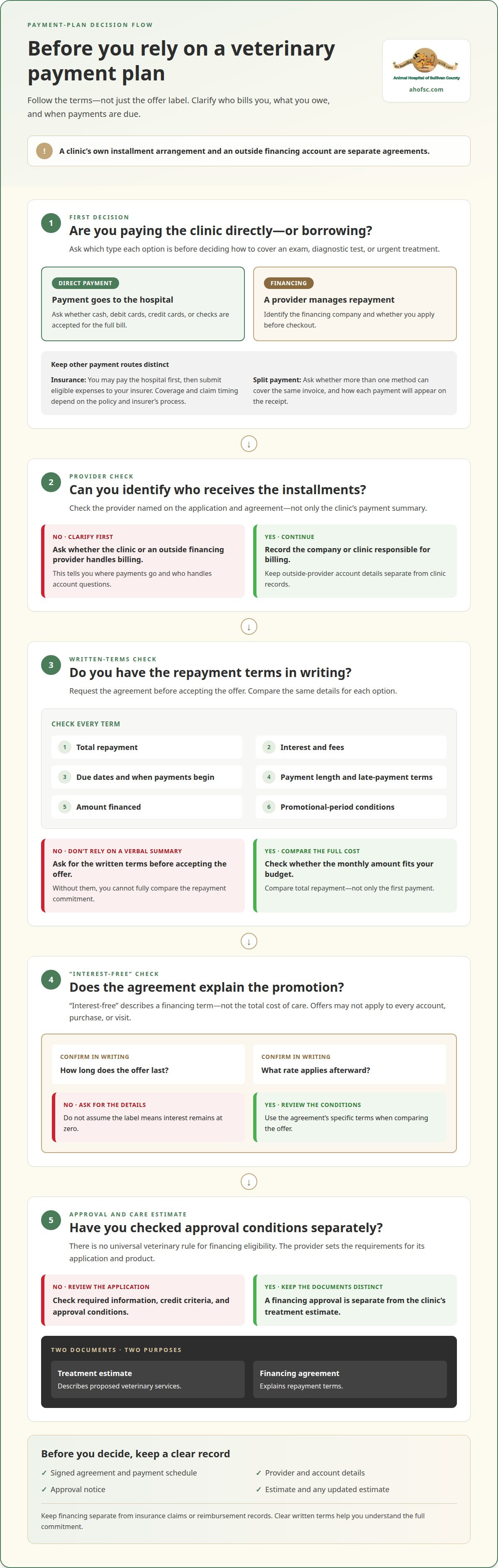
Before accepting an offer from a local vet that does payment plans, identify who receives each payment. A clinic’s own arrangement and an outside financing account are separate agreements. For example, a monthly charge could go to a lender rather than the veterinary hospital. This affects where you make payments and who handles billing questions.
For emergency treatment, first understand the care estimate and available payment routes. Ask for an itemized estimate, then match each amount to a payment method. If the treatment plan changes, request an updated estimate before deciding how to cover additional costs. This clarifies the immediate financial commitment without confusing payment choices with medical decisions.
Write down the accepted payment methods, who receives each payment, and any paperwork needed for an insurance claim. These details create a practical record of the visit and help you compare next steps.
Confirming payment provider and repayment terms
Before accepting financing, identify the company managing repayment. A clinic may arrange payments directly, or an outside provider may issue credit. This tells you where installments go and who handles account questions. Check the provider named on the application and agreement, not just the clinic’s payment summary.
How can I compare payment plans at nearby veterinary clinics? Compare the same details for each option: total repayment, interest, fees, due dates, payment length, and late-payment terms. Then check whether the monthly amount fits your budget instead of choosing based only on the first payment.
Request the repayment terms in writing before accepting an offer. Look for the amount financed, any promotional period, when payments begin, and what happens when a promotional term ends. For example, an offer described as “no interest” should explain in writing how long the offer lasts and what rate applies afterward. Rely on the agreement, not just a verbal summary.
Financing approval is separate from the clinic’s treatment estimate. A provider may request information through its application and decide based on its own approval criteria. Requirements depend on the provider and financing product. Read the eligibility details before applying, including any credit review or other conditions.
What are the eligibility requirements for veterinary payment plans? The financing provider sets them, and there is no universal veterinary rule. Review the application for required information, credit criteria, and approval conditions before relying on the plan.
- Provider: Record the company or clinic responsible for billing.
- Repayment: Compare interest, fees, schedule, and total amount due.
- Approval: Read eligibility criteria and application conditions.
- Insurance: Keep financing separate from any insurance claim or reimbursement process.
Keep copies of the signed agreement, payment schedule, and approval notice. If the provider’s name differs from the clinic’s, save its account details separately. Label the schedule with your pet’s visit date so you can match future charges to the right care. This helps distinguish a financing payment from a later insurance reimbursement.
If urgent care is involved, review the estimate and financing agreement as separate documents. The estimate describes proposed veterinary services; the agreement explains repayment. A clear understanding of both can support a calmer decision for your pet. Explore veterinary care options as you consider the care your pet needs.
Interest-free installment payments
“Interest-free” describes a financing term, not the total cost of care. The written agreement determines whether interest remains at zero and what conditions apply. Review the specific terms of any CareCredit promotion, for example. Don’t assume every account, purchase, or veterinary visit qualifies for the same offer.
What payment plan options do local vets offer for routine care and emergencies? Options may include third-party financing, a clinic’s own installment arrangement, or a credit card promotion. Availability depends on the clinic and payment provider, so distinguish an interest-free offer from a standard credit account.
Check the exact promotional period and how payments are applied. With deferred interest, an unpaid balance at the end of the promotional period can trigger interest under the contract. That differs from an offer that charges no interest during a stated period without later applying interest retroactively. Read the terms instead of relying on the phrase “no interest” alone.
Before accepting an installment plan, compare the due dates with your household budget. Check whether payments are fixed, whether automatic payments are required, and how the agreement handles missed or late payments. If the required payment changes after a promotion, mark that date in your calendar. A schedule is manageable only if its conditions work for you.
- Promotional terms: Find the start and end dates, plus any eligibility conditions.
- Payment allocation: See how payments apply when an account has multiple balances.
- Account charges: Review any fees and the consequence of late payment.
- Remaining balance: Understand what happens after the promotional period.
Compare an installment agreement with paying by credit card. A card’s introductory offer and a veterinary financing promotion may have different end dates, rates, and payment rules. For routine care, estimate whether you can pay off the balance within the offer period. For emergency care, use the itemized estimate to see which charges the financing arrangement covers.
Keep the approval notice and complete agreement together. Save the payment schedule, including the first due date and final scheduled payment. If the provider displays terms online, save or print the version tied to your approval. This record can help resolve later questions about promotional conditions or your account balance.
Interest-free installments can spread payments, but they don’t reduce the amount owed for care. Before signing, confirm the total repayment, due dates, and terms that apply when the promotion ends. If any part of the offer is unclear, ask the financing provider to explain it in writing before accepting.
Additional funding resources for sick or injured pets
If financing doesn’t cover an urgent veterinary bill, consider other ways to organize support. Pet insurance may help with eligible expenses under the policy, while a fundraiser can invite contributions from family, friends, or the wider community. These options work differently: insurance follows policy terms, while donations depend on contributors. Keep them separate when planning care for a pet in New York, Connecticut, New Jersey, or Pennsylvania.
Gather the records you’ll need to explain the situation. Keep the current veterinary estimate, relevant medical information, and insurance policy details together. If an application requests household or income information, prepare those documents as well. Keeping the estimate and visit notes in one folder, for example, helps you share consistent information when discussing possible assistance.
Clarify how support will be paid. Ask whether funds go directly to the veterinary provider or to you, and what documentation is required. If funds go directly to the provider, confirm how they apply to the estimate. If you receive them, keep receipts and follow the funding source’s instructions for documenting expenses.
- Pet insurance: Review policy coverage, claim steps, and required records.
- Financing: Separate borrowed funds from assistance that doesn’t require repayment.
- Community giving: Explain the need and intended use of contributions.
- Personal resources: Consider what you can contribute without overlooking ongoing pet-care needs.
A fundraiser can explain your pet’s situation, how donations will be used, and any changes to the care plan. State whether contributions are intended for diagnostics or treatment, for example, and update supporters if recommendations change. Record money received and expenses paid. Clear accounting helps you track available support without counting a contribution twice.
Don’t treat insurance reimbursement, financing, and donations as interchangeable. Insurance depends on policy coverage and claim handling; financing must be repaid under its agreement; donations aren’t loans, but the amount raised may vary. Record each source, its status, and whether repayment is required. This gives you a clearer picture before deciding on the next step in care.
For an urgent illness or injury, gather the estimate and medical records first. Then review your insurance process, organize any community fundraiser, and compare financing with the resources available to you. If you’re considering assistance in New York, Connecticut, New Jersey, or Pennsylvania, keep eligibility documents and payment records ready. Knowing what each source covers can help you focus on your pet’s needs.
Which nearby veterinary clinics accept CareCredit or Scratchpay?
For pet owners in New York, Connecticut, New Jersey, and Pennsylvania, search a directory using your town and state. Search CareCredit and Scratchpay separately, then note the clinic names and the financing provider shown in each result. This keeps local results relevant to your community instead of mixing listings from different states or regions.
A clinic’s appearance in a directory doesn’t mean your visit is approved for financing. A listing may identify a payment option, but approval and repayment terms belong to the financing provider. Match the clinic name and location to the provider shown, then review its application and agreement before relying on the option.
Use these steps to narrow results:
- Search each financing provider with your town and state.
- Record the clinic name and location shown in each result.
- Note whether the listing names CareCredit, Scratchpay, or both.
- Review the repayment agreement attached to each option.
- Consider whether the option fits the care you’re planning.
A nearby clinic may appear for one financing provider but not another. Search CareCredit and Scratchpay separately; they aren’t interchangeable. If a result names CareCredit, for example, don’t assume Scratchpay is also accepted. Use the provider named in the listing when reviewing terms and considering an application.
Consider the type of visit, too. A routine examination, diagnostic work, and urgent treatment may involve different services and estimates. Before choosing financing, compare the estimate for the planned care with the agreement’s eligible-purchase terms. This helps you determine whether the option applies to the expense you need to manage.
Keep a simple comparison record with the clinic name, location, provider, and application status. After reviewing an offer, add its repayment terms and payment schedule. This makes it easier to distinguish a directory listing from financing approval and to compare nearby options without confusion.
For an urgent visit, focus on clear information rather than search rankings. Record the clinic’s name, care estimate, and financing provider separately. If the provider’s terms don’t fit your budget, consider another payment method or funding resource before deciding. Reviewing the details can help you plan veterinary care around your pet’s needs.
To discuss the care your pet needs, explore veterinary care options and consider how the estimate fits your payment plan.
Animal Hospital of Sullivan County
Animal Hospital of Sullivan County provides veterinary care for pets whose families are planning for health needs and expenses. Preventive Care, Medical Care, Surgical Care, and Diagnostics address needs from routine wellness to illness or injury. A clear estimate for recommended care can help you consider how it fits with payment methods or outside funding.
Turn to Animal Hospital of Sullivan County when your pet needs veterinary attention and you want to understand the recommended care. The medical plan and financing agreement serve different purposes, so consider the estimate and repayment terms separately as you make decisions for your pet.
Contact Animal Hospital of Sullivan County to discuss your pet’s care needs.
Plan your pet’s next step with confidence
A payment decision is easier to manage as part of a broader plan for your pet’s well-being. Keep a simple record of upcoming care, insurance documents, and funding commitments. This can help you make thoughtful choices as your pet’s needs change, rather than deciding under pressure during an unexpected visit. Finding a local vet that offers payment plans matters, but so does understanding the care itself.
Animal Hospital of Sullivan County provides Preventive Care, Medical Care, and Surgical Care for pets. If you’re considering care for your companion, share what’s happening and discuss the next appropriate step with the team.
Contact Animal Hospital of Sullivan County to talk about your pet’s care. Each step forward can begin with a calm conversation focused on the family member who depends on you.
Frequently Asked Questions
How many veterinarians accepting payment plans are listed in our service areas?
Our veterinary directory searches cover our primary service regions across New York, Connecticut, New Jersey, and Pennsylvania, but the number of results varies by directory and search filters. Listings can differ depending on whether results include regional clinics or show financing-provider matches. Treat a displayed count as a search snapshot, not a guarantee that every listed clinic accepts the same financing option for every visit.
What local veterinarians offer payment plans near me?
When searching for a local vet that does payment plans, look for specific financing names such as CareCredit or Scratchpay at participating locations. Clinics may use a third-party provider rather than arrange installments directly. A listing can help identify a possible option, but it doesn’t establish approval or explain the terms for your pet’s appointment.
What deposits, interest rates, fees, and repayment terms do local vet plans have?
Deposits, interest, fees, and repayment schedules depend on the agreement and financing provider. Before accepting an offer, check the amount due at checkout, total repayment, payment dates, and any conditions tied to promotional terms. Compare the signed agreement with your account statement after the first charge, for example. This can help you spot differences early and direct questions to the right billing party.
Which nearby animal hospitals offer low-cost care or sliding-scale fees?
Low-cost and sliding-scale policies vary by clinic, and financing isn’t the same as a reduced fee. For urgent veterinary needs, various regional assistance programs offer small grants to low-income pet owners as separate funding resources rather than clinic payment policies. Review eligibility and application processes, and keep grant paperwork separate from treatment estimates and financing documents.
What should I ask a vet before signing up for a payment plan?
Ask who provides the financing, which care charges qualify, and when payments begin. Clarify how missed payments affect the agreement and whether promotional terms change later. If your pet’s treatment estimate changes after diagnostics, for example, ask how additional services affect the amount financed. Keep the answers with the written agreement to distinguish medical decisions from account terms.
What alternatives are available if I need urgent veterinary care and cannot pay upfront?
Consider pet insurance, financing, and assistance programs separately. Some pet insurers can approve claims quickly, including while an owner is at an emergency room. Local grants or charitable assistance programs may also offer small support funds to pet owners whose pets need urgent medical care. A fundraiser may additionally gather community support. Keep receipts and approval records for each funding source so you can track what it covers.


