

A change in your pet’s behavior is a message, not a verdict. If you’re wondering, “Is my pet’s behavior normal?” consider what changed, how suddenly it began, and whether your pet seems unwell or distressed. Loss of appetite lasting more than 24 hours is a reason to consult a veterinarian.
It’s understandable to worry when a familiar companion starts hiding, vocalizing more, chewing destructively, or acting differently around family. Some changes follow a move, a shift in routine, or a need for more activity and enrichment; others may point to pain or another health issue. This guide explains how health, household changes, and unmet needs can affect dogs and cats, which signs deserve attention, and when a veterinary evaluation can help you decide what to do next.
Key Takeaways
- Look at when a behavior change began and what shifted in your pet’s health, home, or daily routine.
- Sudden or severe changes, such as pain, trouble walking, or straining to eliminate, call for prompt veterinary attention.
- Steady routines, appropriate enrichment, and reward-based training can help address behavior linked to stress or boredom.
- Chewing may be part of puppy development, while destructive chewing in adult dogs can point to anxiety or unmet needs.
- A veterinary evaluation can help identify medical causes and guide the next steps for your pet’s care.
What Causes Behavior Changes in Pets?
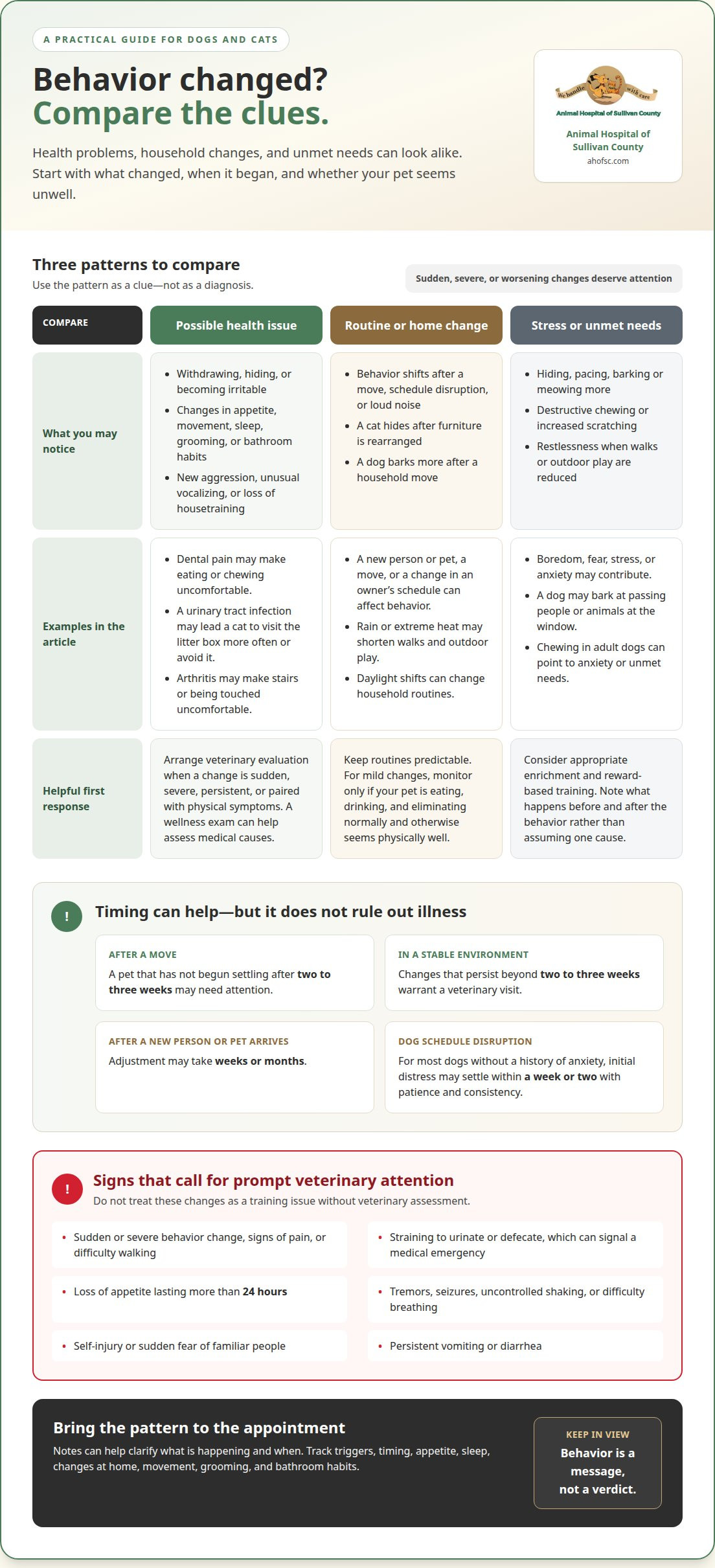
Behavior changes can follow a shift in routine, boredom, fear, or a new household member. They can also be an early sign of illness or pain. A normally playful dog that withdraws, or a cat that suddenly hides, may be responding to discomfort rather than simply “acting out.” New aggression, unusual vocalizing, loss of housetraining, and changes in appetite or interaction deserve attention, especially when they are out of character for your pet.
Seek veterinary care promptly when a change is sudden, severe, or paired with physical symptoms. A pet’s loss of appetite lasting more than 24 hours is a reason to consult a veterinarian. Tremors, seizures, uncontrolled shaking, difficulty breathing, self-injury, or a sudden fear of familiar people also call for urgent veterinary evaluation. Straining to urinate or defecate can signal a medical emergency. If your pet has difficulty walking, shows signs of pain, or persistently vomits or has diarrhea, contact a veterinarian.
Timing can help distinguish a short-lived adjustment from a problem that needs evaluation. Mild changes after a move or schedule disruption may be monitored if your pet is eating, drinking, and eliminating normally and otherwise seems physically well. Keep a stable routine and note when the behavior started, what changed, and whether it improves. A pet that has not begun settling two to three weeks after a move may need attention. Changes that persist beyond two to three weeks in a stable environment also warrant a veterinary visit. After a new person or pet arrives, adjustment may take weeks or months.
A veterinary wellness exam can help assess whether a health issue explains new behavior. Regular exams include a physical examination and assessment of overall health and weight. The veterinarian considers your pet’s age, breed, and lifestyle when screening for common conditions. Annual exams can help identify health issues early, including problems that may not be obvious at home. For example, arthritis can make movement uncomfortable and affect a pet’s activity or temperament. Excessive scratching, licking, or grooming also deserves veterinary attention.
For a behavior evaluation, the veterinarian may review your pet’s health history, perform a physical exam, and recommend diagnostic testing. These steps help identify or rule out medical causes before treating a behavior as a training issue. If dangerous aggression is present, a veterinary evaluation can assess possible medical contributors and whether behavioral counseling is appropriate. Behavior consultations may involve environmental enrichment, behavior modification, or medication when recommended by a veterinarian. Notes about triggers, timing, appetite, sleep, and changes at home can help clarify the pattern.
Medical causes of behavior changes
Illness can change how comfortable or energetic a pet feels, affecting their behavior. Dental disease can make a dog reluctant to eat or play with a chew toy. A urinary tract infection may cause a cat to visit the litter box more often or avoid it. Digestive discomfort can also affect appetite and interaction. These changes can look behavioral, even when an underlying health problem is driving them.
Pain often changes a pet’s usual responses. A dog with arthritis may hesitate before climbing stairs, resist being touched, or become irritable during handling. Dental pain can make eating uncomfortable, while an injury may lead a normally active pet to rest or hide. Cats may also withdraw when they feel unwell. Notice what changes alongside the behavior, including appetite, movement, sleep, grooming, and bathroom habits.
Age and body systems matter, too. Hyperthyroidism in cats can contribute to hyperactivity or anxiety, while hormonal imbalances may alter energy or temperament. Older pets with cognitive dysfunction may become disoriented, pace, forget familiar routines, or vocalize at night. Neurological conditions can also cause confusion or aggression. A sudden change deserves particular attention if it comes with coordination problems, unusual movements, or a clear difference in awareness.
Seasonal shifts and weather can change a pet’s daily experience without causing illness on their own. Rain or extreme heat may shorten walks and outdoor play, leaving a dog with fewer outlets for activity. Changes in daylight can also shift household routines. If reduced activity coincides with new restlessness, barking, or destructive behavior, consider whether boredom or anxiety may contribute. A sudden or persistent change still merits veterinary attention, since timing alone cannot rule out illness.
An owner’s schedule can affect pets who rely on predictable meals, walks, play, or company. A new work schedule may leave a dog alone at a different time or disrupt a cat’s usual feeding routine. For most dogs without a history of anxiety, initial distress after a schedule change settles within a week or two with patience and consistency. If distress persists, worsens, or appears alongside physical symptoms, a veterinary assessment can help distinguish anxiety from discomfort.
Moves, loud noises, new people, and changes to a cat’s environment can trigger temporary anxiety. A cat may hide after furniture is rearranged, while a dog may bark more after a household move. Keep daily routines predictable and note when the behavior began, what changed, and whether it improves. When discomfort or illness may be involved, veterinary Medical Care can help assess possible health causes.
Behavior modification and environmental enrichment
Stress, anxiety, fear, and boredom can show up as hiding, pacing, excessive barking or meowing, destructive chewing, and increased scratching. A pet may also avoid the litter box or withdraw from family, but those changes can signal illness, too. Look at the pattern and context rather than assuming a behavior has just one cause.
Start by identifying what happens before and after the behavior. A dog that barks when left alone may be reacting to separation, while barking at the window may follow passing people or animals. A cat that hides when visitors arrive may need a quiet retreat. Brief notes about the trigger, setting, and response can reveal patterns and give a veterinarian or behavior professional useful context.
Enrichment gives pets appropriate ways to explore, play, and use natural behaviors. For dogs, food puzzles, scent games, safe chew toys, and play can offer mental activity alongside walks. Cats benefit from play that encourages stalking and chasing, scratching surfaces, and comfortable places to climb or hide. Match activities to your pet’s age, mobility, and preferences, and introduce unfamiliar toys or games gradually.
Consistent routines can make environmental changes easier to manage. Keep meals, walks, play, and rest predictable where possible. During loud household activity, offer a dog a calm resting area or let a cat retreat to a quiet room. If a pet startles at a specific sound, gradual desensitization can pair the sound, at a tolerable level, with a positive experience. Do not force an anxious pet closer to a trigger.
Reward-based training encourages desired behavior by rewarding the response you want to see. For example, praise a dog for settling calmly instead of barking at a visitor, then gradually practice around the trigger. Punishment can increase fear and make the underlying cause harder to recognize. Serious aggression, including growling or biting, needs careful assessment; different forms of aggression may require different approaches. Avoid provoking or punishing your pet, and seek professional guidance.
Environmental changes should not be treated as the explanation for every behavioral shift. A cat scratching furniture may need suitable scratching surfaces, while a dog digging out of boredom may need more engaging activity. But excessive scratching, sudden litter box avoidance, or a sharp increase in barking can also have health causes. A wellness exam can help distinguish a medical sign from a behavior issue before a modification plan begins.
Progress depends on the trigger, your pet’s health, and how consistently the household responds. Track which activities help and which situations make the behavior worse. If changes persist despite a stable routine and enrichment, or if your pet may hurt someone, veterinary guidance can help shape safer behavior modification and next steps.
How routine disruptions affect dogs and cats
Changes in schedules, surroundings, and developmental needs can alter familiar habits. Noting what changed and when can help distinguish an adjustment from a behavior problem.
Routine Changes and Pet Behavior
A disrupted routine changes the cues dogs and cats use to anticipate meals, rest, play, and company. Moving, household changes, loud noises, or an owner’s new schedule can trigger stress and unusual behavior. Dogs without a history of anxiety may settle after schedule changes within a week or two when owners provide patience and consistency. Cats may hide for several days after a move and take weeks to settle into a new home.
Keep daily activities predictable where possible, especially feeding and quiet time. A dog that becomes hypervigilant after moving may need time to explore at its own pace. A cat adjusting to a new home can benefit from a calm, familiar space. If a behavior continues or worsens after the surroundings stabilize, consider whether another cause may be involved.
Behavior Across Age and Development
Normal behavior shifts as pets grow, learn, and age. Puppies explore with their mouths and may nip during play as they learn household boundaries. Young animals also need opportunities for movement and mental stimulation. Consistent training helps shape early habits without treating every playful nip as aggression.
Adult dogs may still mouth people or objects, but owners can teach gentler interaction and redirect chewing toward appropriate items. In older pets, new nighttime restlessness or confusion may reflect cognitive changes, pain, or sensory decline rather than a simple change in temperament. A clear difference from a pet’s established habits matters more than age alone.
Play, Mouthing, and Chewing
Play often involves loose, bouncy movement and pauses, while concerning aggression may involve stiff posture, escalating bites, or difficulty interrupting the interaction. Watch how the dog responds when play stops and whether anyone is hurt. Mouthing that continues beyond puppyhood or becomes harmful needs attention, not dismissal as ordinary play.
Puppies commonly chew while teething and exploring. Adult dogs may chew destructively because of boredom, anxiety, separation distress, or unmet exercise and mental stimulation needs. Many dogs also become destructive when left alone. Offer appropriate chew toys and note when the chewing occurs. A pattern tied to being alone may point to a different cause than chewing during quiet periods.
Barking, Meowing, and Scratching
Dogs bark to alert, express excitement or fear, seek attention, or respond to boredom and anxiety. The trigger matters: barking at a visitor differs from barking when left alone. Identify the cause before choosing a response, since excessive barking can also accompany discomfort.
Excessive meowing can reflect stress or a medical issue, so a marked change deserves attention. Cats scratch naturally to maintain their claws and mark territory; furniture scratching may call for an appropriate outlet. Chewing, scratching, barking, or vocalizing that becomes persistent, intense, or disruptive is a reason to reassess your pet’s environment, routine, and wellbeing.
Destructive chewing
Chewing is a normal way for dogs to explore and use their mouths, but chewing household items can become destructive. The cause often depends on the dog’s age and situation. Puppies may chew while teething or exploring, while adult dogs may chew because of boredom, anxiety, or unmet exercise and mental stimulation needs. A sudden change in chewing habits also deserves attention, especially if other signs of discomfort appear.
Look at the pattern before deciding what the behavior means. A dog that chews furniture only when left alone may be showing distress related to separation. Chewing during long, inactive stretches may instead point to boredom or too little activity. Note which objects are targeted, when chewing happens, and whether it occurs in your presence. These details can help distinguish a recurring trigger from occasional exploration.
Puppies need clear, consistent guidance about what they can chew. Young dogs explore the world with their mouths, so redirecting them to an appropriate chew toy gives that behavior an acceptable outlet. Rewarding the puppy for choosing the toy helps build the habit. Keep your response calm and consistent across household members so the puppy gets the same message about which items are appropriate.
Adult dogs also need suitable outlets for chewing. If a dog targets shoes or furniture, offer an appropriate chew toy and activities that engage the mind and body. Exercise, play, and food-based enrichment can help address unmet needs. Many dogs become destructive or disruptive when left alone, so toys alone may not address the underlying cause if chewing reliably starts during absences.
Chewing on a person’s hands or clothing calls for a different response than chewing an object. Adult dogs can inadvertently injure someone with their mouths, and owners can teach them to be gentle. Pause interaction when mouthing becomes rough, then resume when the dog is calmer. If biting continues beyond puppyhood, becomes harmful, or escalates, treat it as a behavior concern rather than ordinary play.
A new or intense chewing pattern may warrant a veterinary appointment, particularly if it appears alongside changes in eating, appetite, or comfort. Dental disease and other painful conditions can affect how a pet uses its mouth. A veterinary assessment can help determine whether a health issue contributes to the behavior before you focus only on training or enrichment.
Addressing destructive chewing starts with identifying its timing and likely cause, then matching the response to the dog’s needs. If chewing is sudden, persistent, or paired with signs of pain, arrange a veterinary appointment to discuss your dog’s health and behavior.
Animal Hospital of Sullivan County
Animal Hospital of Sullivan County can help when a behavior change is sudden, persistent, or paired with signs of discomfort. A veterinary evaluation considers your pet’s health history and physical condition, with diagnostic testing when appropriate to investigate possible medical causes. This can help distinguish behavior linked to illness or pain from changes related to routine, stress, or boredom.
Preventive Care supports ongoing wellness, while Medical Care addresses health concerns that may affect behavior. If an evaluation identifies a condition requiring further treatment, Surgical Care may also be part of your pet’s care. Sharing when the change began and what else you have noticed can help guide the discussion. If you are concerned about your pet’s behavior, contact Animal Hospital of Sullivan County to discuss next steps.
Take the Next Step for Your Pet
If you are still asking yourself, “Is my pet’s behavior normal?” remember that you do not have to interpret a change alone. Noticing what is different and sharing those observations can help start a clearer conversation about your pet’s needs. A professional assessment can help determine whether health, stress, or another factor may be involved and what support makes sense next.
Animal Hospital of Sullivan County can help you consider your pet’s behavior in the context of their overall wellbeing. Reach out when a change concerns you or persists, and discuss what you have observed with the veterinary team.
Contact Animal Hospital of Sullivan County to discuss your pet’s behavior. Taking that first step can help you move forward with greater confidence and care for the companion who depends on you.
Frequently Asked Questions
Dog Behavior: What is Normal?
Normal dog behavior includes sniffing, barking, digging, and chewing, though context matters. A dog may bark to alert the household or dig to make a resting spot. Chasing can reflect interest in movement, but it may put the dog or others at risk. If you are wondering whether your pet’s behavior is normal, compare it with your dog’s usual habits and consider whether it disrupts daily life or causes harm.
Spotting the Signs: What Does Abnormal Pet Behavior Look Like?
Abnormal behavior is often a clear departure from a pet’s familiar patterns, especially if it persists, escalates, or creates danger. Examples include a previously social dog repeatedly avoiding family, a cat suddenly eliminating outside the litter box, or a pet damaging itself. Consider the behavior alongside changes in sleep, appetite, movement, or interaction. A single unusual moment may differ from a repeated pattern that affects your household.
The Root of the Problem: Why the Change in Behavior?
A behavior shift may reflect pain or illness, but it can also follow a change at home. A new family member, a move, loud sounds, or the loss of an animal companion can affect how a pet responds. The same behavior can have different causes: a dog’s barking might follow a visitor, loneliness, or discomfort. The trigger and timing provide useful clues, but behavior alone cannot confirm the cause.
Understanding Pet Behavior Changes: What Should You Look For?
Notice what happens before, during, and after a behavior. For example, record whether a cat hides only when guests arrive or also when the home is quiet. Note changes in appetite, bathroom habits, sleep, movement, and interest in play. A short video can help capture an episode that does not happen during an appointment. These observations give a veterinarian a clearer picture than a general description such as “acting strange.”
When Is It a Health Issue?
A health issue is more likely when a behavior change appears with physical signs or affects ordinary activities. A dog that suddenly avoids stairs may be uncomfortable, while a cat that stops eating or withdraws may be unwell. Pain, dental disease, infections, and thyroid problems can all affect behavior. Do not assume a pet is being stubborn or disobedient when a familiar activity suddenly becomes difficult.
What pet behaviors are normal for dogs, cats, birds, and small animals?
Normal behavior depends on species, age, and the individual animal. Dogs commonly sniff, bark, play, and chew; cats scratch to maintain their claws and mark territory. Birds may vocalize, but excessive screaming, feather plucking, or biting can point to stress or illness. For small animals, interpret hiding or changes in activity in their species-specific context, since behavior that seems unusual to a dog owner may be typical for another animal.
What sudden behavior changes in pets can signal illness or pain?
Sudden withdrawal, unexplained aggression, reduced appetite, loss of housetraining, or reluctance to move can signal pain or illness. A normally playful pet that avoids touch or play may be uncomfortable. Confusion, loss of coordination, tremors, or seizures also need prompt attention. These signs do not identify a specific condition by themselves, but a sudden change paired with physical symptoms is a reason to seek veterinary guidance.
When should I contact a veterinarian about my pet’s behavior?
Contact a veterinarian if behavior changes are sudden, severe, or continue beyond a day or two. Seek urgent attention for trouble breathing, seizures, self-injury, or straining to urinate or defecate. A pet that hasn’t eaten for more than 24 hours should also be evaluated. If a change is mild and has a clear trigger, keep track of it, but arrange an exam if it persists or worsens.


