
Imagine watching your once-energetic retriever hesitate at the porch steps or noticing your cat no longer jumps to her favorite sunlit windowsill. It's a quiet, heavy realization when you start to wonder if your best friend is struggling with more than just a little gray hair. We understand that this transition is deeply personal because your animal is a cherished member of your family! Finding reliable senior pet care Sullivan County families can trust is the first step in honoring that sacred bond.
It is completely natural to feel anxious when your companion reaches those golden years, which typically begins around age seven. You might worry about the necessity of diagnostic testing or feel confused by new, subtle symptoms. We agree that you deserve a partner who prioritizes your pet's comfort and your peace of mind. This guide will teach you how to support your aging pet’s health, manage chronic conditions, and ensure comfort with expert guidance tailored for our community. We will look at the specific symptoms of aging, discuss regional risks like the high historical incidence of Lyme disease in Sullivan County, and show you how a compassionate local partner can help your pet enjoy a happy, dignified life.
Key Takeaways
- Learn why the "senior" phase is a biological shift that requires closer monitoring once your pet reaches 75% of their expected lifespan.
- Understand the medical logic behind six-month checkups and how they help catch chronic conditions like heart disease or arthritis early.
- Discover how to differentiate between normal aging and treatable chronic pain so your companion can stay mobile and comfortable.
- Identify the specific environmental risks affecting senior pet care Sullivan County, including how tick-borne illnesses impact aging immune systems.
- Gain clarity on navigating difficult end-of-life decisions with a partner dedicated to dignity and your family's emotional well-being.
When Does a Pet Become a Senior? Understanding the Aging Process
Reaching the "senior" years isn't just about a number on a calendar. It is a profound biological shift where your pet's body begins to process nutrients, repair cells, and manage energy differently. In the context of senior pet care Sullivan County families rely on, we view this milestone as a transition into a new chapter of life that requires specialized attention and a heart-first approach. Your pet is a cherished family member, and their golden years should be defined by comfort and dignity rather than just decline.
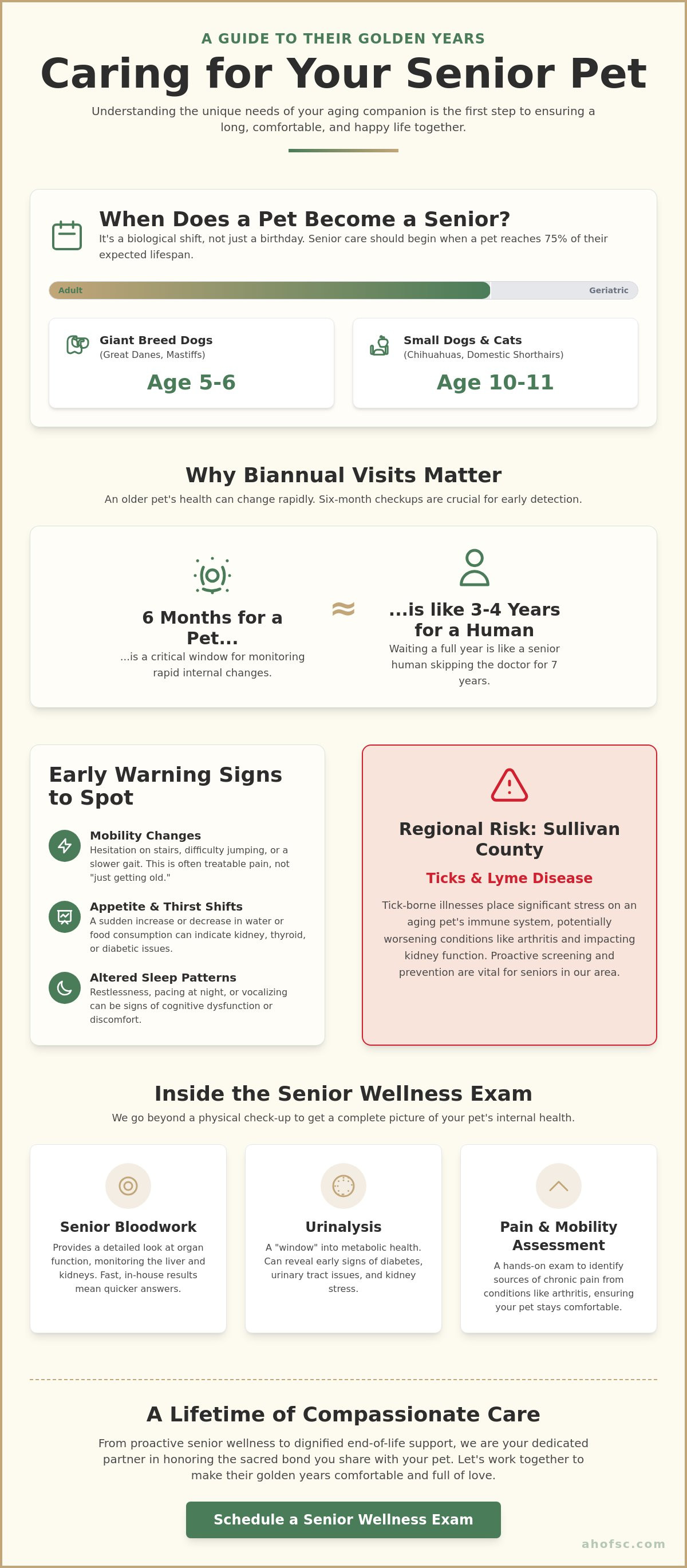
Veterinary experts generally recommend increased monitoring once a pet reaches 75% of their expected lifespan. This is because physiological changes often occur deep within the internal organs long before you notice a single gray hair on their muzzle or a slower gait. Understanding the aging process in dogs and cats helps us stay ahead of these quiet shifts. By catching metabolic changes early, we can protect the sacred bond you share with your companion and ensure they remain a vibrant part of your household for as long as possible!
Breed-Specific Aging: Large vs. Small Pets
Size plays a massive role in how quickly a pet's body ages. It is a biological reality that larger frames often wear out faster. Consider these general timelines:
- Giant Breed Dogs: Breeds like Great Danes or Mastiffs may be considered seniors as early as age 5 or 6.
- Small Breed Dogs and Cats: These smaller companions often don't enter their golden years until they reach age 10 or 11.
- Feline Metabolism: Aging cats undergo unique metabolic shifts that can affect how they process protein and maintain muscle mass, requiring specific nutritional adjustments.
Early Warning Signs You Can Spot at Home
You know your pet better than anyone else! Subtle changes in their daily routine often tell a big story about their internal health. You might notice your cat vocalizing more at night or your dog shifting their sleep patterns to unusual hours. Shifts in appetite or a sudden increase in water consumption are frequently early indicators of kidney or thyroid health issues that require professional diagnostics. Catching these signs in the comfort of your home is a core part of effective senior pet care Sullivan County. For a clear medical baseline, a pet is considered "geriatric" once they have reached the final 25% of their predicted lifespan and are at a significantly higher risk for multi-organ dysfunction.
The Senior Wellness Exam: Why Biannual Visits Matter
As your pet enters their senior years, their internal clock begins to tick much faster than ours. It is a common rule of thumb that one pet year is roughly equivalent to seven human years. This means that a lot can change in just twelve months! Waiting a full year between checkups for an older dog or cat is like a human senior skipping the doctor for seven years. By moving to a biannual schedule, we can monitor these rapid changes and catch health concerns before they become crises. Consistent, gentle medical care is the cornerstone of effective senior pet care Sullivan County families can rely on.
These six-month visits are about more than just vaccinations. They are a dedicated time for us to sit down with you and discuss the subtle shifts you've noticed at home. We believe in building a foundation of trust where you feel heard and your pet feels safe. To make managing these frequent visits easier, we encourage our families to use the PetDesk app. It’s a wonderful tool for scheduling appointments and keeping your companion’s medical records right at your fingertips! If you have questions about your pet's current health status, you can reach out to our team to discuss a wellness plan.
Comprehensive Diagnostics for Aging Pets
Our goal is to see what the naked eye cannot. Senior bloodwork is a vital tool that allows us to monitor liver and kidney function with precision. Because we utilize in-house laboratory testing at our Ferndale location, we can provide fast and accurate results. This means less waiting and faster relief for your pet! We also view urinalysis as a "window" into your pet’s metabolic health. It can reveal early signs of diabetes or urinary tract issues that might otherwise go unnoticed. This proactive approach is especially important when considering regional risks like Lyme disease in dogs, which can place extra stress on an aging animal's system.
Physical Exams: More Than Just a Heartbeat
During a senior wellness exam, our team performs a "nose-to-tail" assessment. We carefully check for new lumps, bumps, or skin changes that might be more than just signs of age. We also pay close attention to dental health. Periodontal disease isn't just about bad breath; it can lead to systemic infections that affect the heart and kidneys. If you aren't sure if your pet's recent behavior warrants a visit, read our guide on Signs Your Pet Needs a Vet: A Compassionate Guide for Sullivan County Pet Parents. Every exam is an opportunity to ensure your companion is living their most comfortable life!
Managing Mobility and Pain: It Isn’t "Just Getting Old"
It's heartbreaking to see a once-vibrant dog struggle to get up from their bed or move more slowly on your morning walks. Many families assume this is just an inevitable part of aging. However, being "old and slow" is often a sign of manageable discomfort! Differentiating between normal aging and treatable chronic pain is a cornerstone of high-quality senior pet care Sullivan County families deserve. When we address pain, we aren't just helping them walk better; we're restoring their joy and enthusiasm for life.
At the Animal Hospital of Sullivan County, we utilize a multi-modal approach to pain management. This means we don't rely on just one solution. Instead, we combine different treatments, such as specialized medications and nutritional support, to create a customized plan for your pet's specific needs. Maintaining mobility directly correlates to a longer, happier life. It allows your companion to stay engaged with the family, maintain a healthy weight, and keep their spirits high! We believe every senior pet should have the chance to move comfortably through their golden years.
Arthritis and Joint Support Strategies
Cats are especially skilled at hiding their discomfort. You might notice they hesitate before jumping onto a favorite chair or spend more time on the floor than they used to. These are subtle cues of "hidden" joint pain that are easy to miss. We often recommend therapeutic diets and high-quality supplements rich in omega-3 fatty acids to support joint health from the inside out. Modern veterinary medicine manages osteoarthritis through a combination of targeted pharmaceuticals, biological therapies, and specialized nutrition to reduce inflammation and improve joint function.
Environmental Modifications for Sullivan County Homes
Our local environment presents unique challenges for aging joints. Those long, cold Catskills winters can be especially tough on pets with arthritis! Providing warm, orthopedic bedding helps soothe aching joints during the freezing months and protects them from the chill of the floor. Inside your home, you can make a world of difference by placing rugs over slippery hardwood floors or using ramps for steep porch stairs. It's also helpful to adjust exercise routines to match your pet's current stamina. Shorter, more frequent walks are often much better for their joints than one long, taxing hike. Small changes like these ensure your home remains a sanctuary of comfort for your senior companion!
Regional Risks: Ticks, Lyme, and the Aging Immune System
Sullivan County is a beautiful place to live, but our local landscape presents specific challenges for aging animals. In our region, senior pets are notably more vulnerable to tick-borne illnesses because their immune systems aren't as robust as they once were. This is why senior pet care Sullivan County requires a vigilant, year-round approach to parasite prevention. Even if your older dog only spends a few minutes in the backyard, they're still at risk from the black-legged ticks that are common in our woods and tall grasses.
Lyme disease is particularly dangerous for seniors because of its specific impact on the kidneys. Since aging kidneys are already working harder to filter toxins, the inflammation caused by a tick-borne infection can be life-threatening. Additionally, while we discussed winter comfort earlier, our humid Catskills summers can also make joint pain feel much worse for older pets. Managing these regional environmental factors is a key part of keeping your companion comfortable and safe! You can contact our team to ensure your pet's preventive coverage is up to date.
Tick Prevention in the Catskills
Keeping your yard "tick-safe" is a great first step for protecting your senior. This involves keeping grass short and clearing away leaf litter where ticks love to hide. However, environmental management isn't enough on its own. We strongly recommend choosing the right preventive products from our prescription pet store rather than relying on over-the-counter options. Many "natural" remedies often fall short in high-risk areas like Ferndale and Monticello. Our prescription-strength preventatives are rigorously tested for safety and efficacy, providing the reliable protection your cherished family member needs.
Vaccinations and the Senior Immune System
As pets age, their immune response changes. We don't believe in a "one-size-fits-all" approach to vaccinations for older animals. Instead, we tailor the vaccine schedule to your pet's specific lifestyle and regional risk factors. We prioritize core protections while being mindful of an older pet's potential sensitivity to certain shots. It's all about finding that delicate balance between protection and comfort. For more information on how we support your pet through every stage, check out our guide: Animal Hospital of Sullivan County: A Guide to Compassionate, Lifelong Pet Care. Our goal is to ensure your pet remains healthy and protected without overwhelming their system.
A Lifetime of Compassion: Senior and End-of-Life Support
The journey you share with your companion is a sacred one. As your pet enters their final years, our dedication to "heart-first" care remains as strong as the day you first walked through our doors! We understand that navigating the end of a pet's life is one of the most difficult experiences a family can face. Our team is here to support you in making these heavy decisions with the dignity and empathy you both deserve. Comprehensive senior pet care Sullivan County families trust isn't just about medical treatments. It is about providing emotional strength and clear guidance when you need it most.
We often use quality-of-life assessments, such as the Hearthstone framework, to help you understand your pet's daily experience more clearly. These tools allow us to look at objective factors like mobility, hygiene, and appetite alongside the joy your pet still finds in their favorite activities. By integrating our medical expertise with deep emotional support, we help you find the right path for your unique family. You aren't alone in this. We are your partners in ensuring your pet's golden years remain truly golden!
Hospice and Palliative Care
Palliative care focuses on comfort, nutrition, and precise pain management. Our goal is to ensure your pet's final months are filled with peace and affection rather than struggle. We use our advanced diagnostic tools to monitor internal comfort levels, allowing us to adjust medications or diets as your pet's needs shift. This isn't about finding a cure; it is about maintaining the highest possible quality of life in the comfort of your own home. We want every tail wag and every purr to be as comfortable as possible.
Dignified End-of-Life Services in Ferndale
When the time comes to say goodbye, we provide a seamless and respectful transition for your cherished family member. One of the ways we honor the bond between Sullivan County families and their pets is through our onsite crematorium in Ferndale. This unique benefit allows your pet to remain in our gentle, local care throughout the entire process. It provides a sense of peace knowing they never leave our sight. To learn more about how we handle these delicate moments, please read our guide on Compassionate Pet End-of-Life Care in Sullivan County: A Guide to Dignity and Comfort. We are here to help you celebrate a lifetime of love with the respect it deserves.
Embracing the Journey Ahead with Your Senior Companion
Your pet's golden years are a time for deep connection and gentle care. By understanding their unique aging process and prioritizing biannual wellness visits, you can ensure they remain comfortable and happy! We've explored how proactive pain management and vigilant protection against regional risks like Lyme disease make a world of difference. Providing high-quality senior pet care Sullivan County families can depend on has been our mission since 1953. Our heart-first approach ensures that your animal is always treated like the cherished family member they are.
As an AAHA Accredited hospital, we maintain the highest standards of medical excellence to give you complete peace of mind. Whether it is through our advanced onsite diagnostics or our compassionate end-of-life support, we offer full-spectrum care for every stage of life. You don't have to navigate these changes alone! Our team is ready to be your trusted partner and neighborly guide. Schedule a Compassionate Senior Wellness Exam for Your Pet today to support your best friend's health and happiness.
Frequently Asked Questions
At what age is a dog or cat officially considered a senior pet?
Most pets are officially considered seniors when they reach the final 25 percent of their expected lifespan, which typically begins around age seven. However, this milestone varies significantly by breed and size! Large breed dogs may be considered seniors as early as age five or six, while smaller dogs and cats often don't enter their golden years until they reach age ten or eleven.
Why does my senior pet need bloodwork if they seem healthy?
Senior bloodwork is essential because it allows us to see what is happening inside your pet's body before they show outward symptoms. Many age-related conditions, such as kidney or liver disease, develop quietly and are much easier to manage when caught early. Proactive diagnostic testing is a cornerstone of the senior pet care Sullivan County families trust to keep their cherished companions thriving!
How can I tell if my older dog is in pain or just tired?
Signs of pain in older pets are often very subtle and can be easily mistaken for just "slowing down." You should look for changes like restlessness, panting, or a new hesitation before they climb stairs or jump onto the couch. While it is natural for seniors to have less energy, persistent stiffness or difficulty standing up usually indicates treatable discomfort rather than just simple tiredness.
Is it safe for my senior pet to undergo dental cleaning or surgery?
Yes, age is not a disease, and many senior pets safely undergo necessary procedures every day! We take extra precautions by performing thorough pre-anesthetic bloodwork and using advanced monitoring equipment to ensure your pet's safety during surgical or dental care. Keeping your pet's mouth healthy is actually a vital part of protecting their heart and kidneys from systemic infections as they age.
What are the best ways to keep my senior pet comfortable in the winter?
Keeping your senior pet warm is the best way to help them through a cold Catskills winter. We recommend providing orthopedic bedding to support aching joints and using rugs to cover slippery floors that might cause a fall. Since cold weather can increase arthritic stiffness, keeping your pet indoors as much as possible and using ramps for porch steps will help them stay cozy and mobile.
How often should I bring my senior pet to the Animal Hospital of Sullivan County?
We recommend that senior pets visit us for a wellness exam every six months. Because one pet year is roughly equal to seven human years, a lot of biological change can happen in just a short amount of time! These biannual visits allow us to monitor your pet's health closely and make small adjustments to their care plan that significantly improve their quality of life.
Can I still protect my senior pet from ticks and Lyme disease?
You can and definitely should continue tick protection, as senior pets have more vulnerable immune systems. Sullivan County remains a high-risk area for Lyme disease, which can be especially hard on aging kidneys. We provide prescription-strength preventatives that are safe for older animals and offer much more reliable protection than over-the-counter or "natural" remedies in our specific regional environment.
What happens during a senior pet wellness exam in Ferndale?
During a senior wellness exam at our Ferndale location, we perform a comprehensive "nose-to-tail" physical assessment to check for lumps, dental issues, or joint pain. We also spend time discussing your pet's appetite, thirst, and behavior at home to catch any subtle changes. This thorough process often includes diagnostic bloodwork or urinalysis to ensure we have a complete and accurate picture of your pet's internal health.


