
Imagine you are enjoying a quiet morning in the Town of Thompson when you notice your senior dog isn't quite himself. He is skipping his favorite treat, and you find yourself wondering if he is just having an "off" day or if something is truly wrong. It's a heavy feeling that every pet parent knows well. You want to protect that sacred bond you share, but the anxiety of making the wrong choice can be paralyzing. Understanding the subtle signs your pet needs a vet is the first step toward reclaiming your peace of mind and ensuring your companion feels their best.
We know you only want the best for your cherished family member; it's completely normal to feel a mix of confusion and guilt when their health seems to shift. You shouldn't have to guess whether a change is just a part of aging or a signal of pain. This guide will help you recognize both urgent red flags and the quiet whispers of illness so you can provide the care they deserve. We will walk through clear symptoms, discuss local risks like the high prevalence of Lyme disease in the Northeast, and show you exactly when to reach out for medical care or professional diagnostics.
Key Takeaways
- Discover how to establish your pet’s unique "baseline" behavior to easily spot the subtle masks they use to hide discomfort.
- Identify critical physical indicators, including breathing difficulties and digestive warnings, that require immediate medical attention.
- Learn why changes in mobility or energy in older companions are often more than just normal aging and how to monitor them closely.
- Protect your family from local Sullivan County environmental risks like ticks and seasonal hazards through proactive awareness.
- Gain the confidence to recognize the signs your pet needs a vet so you can seek onsite diagnostic testing for faster, more accurate answers.
Understanding the Language of Your Pet: Subtle vs. Urgent Signs
Our pets speak a silent language, often communicating their needs through soft shifts in behavior rather than loud cries for help. Because their ancestors had to appear strong to survive in the wild, modern dogs and cats are masters at masking discomfort. By the time they show obvious distress, a condition might already be advanced. This stoicism makes it vital for you to act as their advocate. A veterinary emergency is any sudden change in vital functions or severe pain. Beyond these clear crises, identifying the subtle signs your pet needs a vet requires a deep understanding of their daily rhythm.
The Importance of Knowing Your Pet’s "Normal"
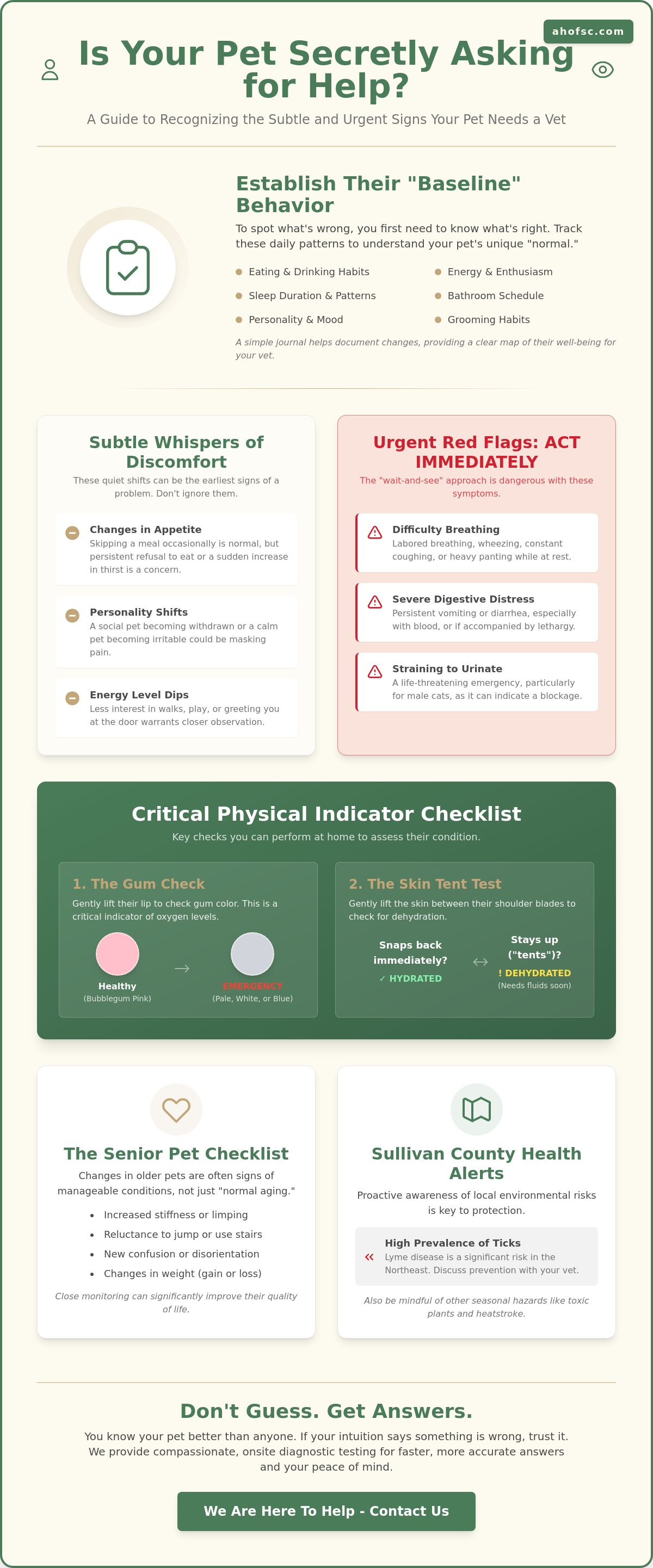
Your pet’s "baseline" is the unique set of habits that define their healthy self. This includes how much they eat, their enthusiasm for walks, and even their typical bathroom schedule. We encourage families to track daily patterns like water intake and sleep duration. A sudden increase in thirst or a new tendency to hide under the bed can be early indicators of common pet health concerns that aren't yet visible to the naked eye. Personality shifts are just as telling. If your usually cuddly cat becomes irritable or your playful dog stops greeting you at the door, they may be experiencing physical pain. Keeping a simple pet health journal helps you document these changes, giving your veterinarian a clear map of their well-being during a checkup.
When "Wait-and-See" is No Longer an Option
It is natural to hope that a slight limp or a skipped meal will resolve itself overnight. However, the "wait-and-see" trap often allows a manageable issue to spiral into a major health crisis. Falling into this cycle can lead to immense guilt and anxiety for pet parents who want to do the right thing. Prioritizing your pet’s comfort means recognizing certain red flags that demand an immediate phone call. These include persistent vomiting, difficulty breathing, or a sudden loss of balance. These are clear signs your pet needs a vet right away! Don't let the fear of overreacting stop you from seeking help. Calling your veterinary team is always the safest first step for your peace of mind. We are here to help you determine if an appointment is necessary, ensuring your furry family member remains safe and protected.
Critical Physical Indicators: From Digestive Distress to Respiratory Red Flags
While behavior shifts tell one story, physical symptoms often signal that the body is struggling to maintain its delicate balance. These visible markers are often the most stressful for pet parents to witness. You might find yourself staring at your companion, wondering if that cough is just a tickle or something more serious. Understanding these common signs of illness can replace that fear with a clear plan of action. By learning the physical signs your pet needs a vet, you can act quickly when their health is on the line.
Respiratory and Cardiac Warning Signs
Breathing should be effortless for your pet. If you notice labored breathing, wheezing, or a persistent, "honking" cough, it's time to take a closer look. One of the most critical checks you can perform is looking at their gums. Healthy gums are bubblegum pink. If they appear pale or blue, this indicates a lack of oxygen and is a major red flag. Heavy panting while your pet is resting or in a cool environment is another signal that their heart or lungs are under strain. In these moments, seeking pet emergency treatment Sullivan County is the kindest and most responsible step you can take. We are here to provide the immediate care your family needs!
Digestive and Urinary Health Red Flags
Every pet has the occasional "bad meal" that leads to an upset stomach. However, chronic vomiting or diarrhea is a different story. If the vomiting is frequent, contains blood, or is accompanied by lethargy, it is one of the clear signs your pet needs a vet. These symptoms can quickly lead to dehydration, which you can check by gently lifting the skin between their shoulder blades. If the skin doesn't snap back immediately, it's called a "skin tent," and it means they need fluids.
Urinary habits are equally important for your pet's comfort. Straining to urinate is a serious medical crisis, particularly for male cats, as it can indicate a life-threatening blockage. We also watch for sensory changes, such as cloudy eyes or a sudden loss of hearing, which can impact their sense of safety. Even unexplained weight changes, whether a sudden gain or loss, warrant diagnostic testing to rule out underlying conditions. If you feel uneasy about your pet's physical state, please reach out to us for medical care to ensure they stay happy and healthy.
The Senior Pet Health Checklist: Monitoring Aging and Mobility Changes
Caring for a senior pet is a privilege that requires a special kind of attentiveness. As our companions enter their golden years, the signs your pet needs a vet often become more subtle and frequent. It is a common misconception that "slowing down" is simply a part of getting older. While energy levels might naturally dip, many changes we attribute to age are actually manageable health conditions. Staying ahead of these shifts ensures your pet enjoys a high quality of life for as long as possible! Your role as a dedicated pet parent is to notice the quiet whispers of change before they become loud cries for help.
Mobility and Joint Health in Aging Pets
It can be heartbreaking to watch a once-energetic dog hesitate at the bottom of the stairs or struggle to rise after a long nap. These are classic markers of arthritic pain rather than just a lack of stamina. You might notice a stiff gait or even "knuckling," where a pet accidentally drags the top of their paw on the ground. This knuckling often indicates a neurological decline or spinal issue rather than a simple joint problem. Comprehensive senior pet care Sullivan County focuses on identifying these differences early through physical exams and diagnostics. We want to help you distinguish between normal aging and active pain so your pet can stay mobile and happy.
Cognitive and Behavioral Shifts in Seniors
Sometimes the most distressing changes aren't physical at all. Cognitive dysfunction, which is essentially pet dementia, can cause a senior animal to feel lost in their own home. You might notice your cat staring into corners, your dog vocalizing loudly in the middle of the night, or a sudden "forgetting" of house training. These behavioral shifts are frequently among the most overlooked signs your pet needs a vet. Disrupted sleep-wake cycles or an increased irritability often signal that your pet is feeling confused or uncomfortable. We are here to help you navigate these transitions with both medical expertise and neighborly empathy.
Don't ignore the appearance of new lumps and bumps on your senior's skin. While many growths in older pets are harmless fatty tumors, every new mass should be professionally aspirated. This simple diagnostic test allows us to get fast answers and ensures we aren't leaving a potentially serious growth untreated. By monitoring these changes closely, you are providing the protection and comfort your senior pet deserves during their most precious years!
Sullivan County Health Alerts: Environmental Risks and Seasonal Signs
Living in the heart of the Catskills offers a beautiful life for our pets, but our unique landscape brings specific environmental challenges. Our senior companions often have more sensitive immune systems. This makes them more vulnerable to local risks that younger animals might shrug off. Identifying the environmental signs your pet needs a vet is a vital skill for every neighbor in our community! From the deep woods of Callicoon to the lakeside trails in Bethel, staying aware of local health alerts is part of being a protective pet parent.
Tick-Borne Illnesses and Lyme Disease
The Northeast remains a high-risk area for vector-borne diseases, and Sullivan County is no exception. Ticks can become active as soon as temperatures reach 40°F, meaning the threat isn't just a summer concern. We frequently see the impact of ticks on dogs Sullivan County, which can lead to Lyme disease, Anaplasmosis, or Ehrlichia. A classic indicator of Lyme is "shifting leg lameness," where your pet appears to limp on one leg one day and a different leg the next. You might also notice a sudden fever or a profound sense of lethargy. Because these symptoms can be subtle in seniors, we recommend flea tick prevention Sullivan County year-round to keep your cherished family members safe from these invisible threats.
Seasonal and Environmental Hazards
Our local wildlife also plays a role in your pet's safety. Sullivan County averages 4 to 5 animals testing positive for rabies each year, typically in raccoons, foxes, or bats. Recent alerts in Bethel and Callicoon remind us that even a backyard encounter can be serious. If your pet has a run-in with local fauna, watch for unusual aggression, staggering, or excessive drooling. Beyond wildlife, our seasons bring their own red flags. The humid New York summer increases the risk of heatstroke and toxic blue-green algae in our lakes. In contrast, winter brings the danger of rock salt and de-icers that can irritate sensitive senior paws.
Wooded areas in the Hudson Valley are also home to toxic plants and wild mushrooms that can cause sudden digestive distress if ingested. If you notice your pet panting excessively in the heat or licking their paws incessantly after a winter walk, these are signs your pet needs a vet to ensure no lasting damage has occurred. We believe that proactive protection is the best gift you can give your companion. Please reach out to us to schedule preventive care so we can build a personalized safety plan for your pet's specific lifestyle!
Compassionate Diagnostic Support at Animal Hospital of Sullivan County
For over seven decades, our team has been a steady, calming presence for the families of Ferndale and the surrounding community. Since 1953, we have treated every animal that walks through our doors as a cherished member of our own family. We understand that the relationship you share with your pet is a sacred bond; it requires both technical skill and neighborly empathy to protect. Our "heart-first" philosophy ensures that your pet's emotional well-being is prioritized right alongside their physical health during every visit.
Recognizing the signs your pet needs a vet is only the first step in your journey of care. Proactive pet wellness exams Sullivan County play a critical role in catching those subtle health signals before they escalate into serious issues. We believe in being a dedicated partner for the long term. Whether you are visiting for a routine checkup or a complex medical concern, we are here to provide the dedicated support and peace of mind you deserve.
Advanced Diagnostics for Peace of Mind
When your pet is feeling unwell, waiting days for lab results can be agonizing. Our hospital utilizes onsite pet diagnostic testing Sullivan County to provide faster answers and reduce the stress on both you and your companion. With digital X-rays and onsite lab work, we can gain immediate clarity on internal health issues. Under the expert guidance of Dr. B, our team focuses on maintaining the highest quality of life through gentle, precise care. Our deep community roots mean we aren't just your veterinarians; we are your neighbors who are personally invested in your pet’s longevity and happiness!
Next Steps: Scheduling Your Visit
If you have noticed any of the red flags or behavioral shifts discussed in this guide, please don't hesitate to reach out. Preparing for your visit is a great way to help us provide the best care possible. We suggest bringing any previous medical records and a list of the specific symptoms you have observed at home. During a sick pet appointment, we perform a thorough evaluation to determine the best path forward for your companion's comfort and recovery.
Contact us today to schedule a compassionate evaluation for your pet. We are ready to help you navigate your pet's health journey with kindness, patience, and professional expertise!
Protecting Your Pet’s Health with Confidence and Care
You are now equipped with the knowledge to act as a powerful advocate for your companion's well-being. By understanding their unique baseline and staying alert to the environmental risks in our beautiful Catskills region, you can replace anxiety with a clear plan of action. Recognizing the subtle signs your pet needs a vet is a gift of protection you give to your cherished family member every day! Whether you are managing the shifting needs of a senior pet or monitoring for local seasonal hazards, your attentiveness makes all the difference in their quality of life.
Animal Hospital of Sullivan County has been a dedicated partner for local pet parents since 1953. Our team, led by Dr. Barbara Bodolosky, combines professional medical authority with a heart-first approach to every patient. We provide onsite diagnostics and a full laboratory to ensure you get fast, accurate results right when you need them most. You don't have to navigate these health concerns alone! Please schedule a compassionate wellness exam for your pet today to ensure they continue to live a happy, vibrant life. We look forward to welcoming you and your furry family members into our care!
Frequently Asked Questions
How do I know if my pet’s situation is a true emergency?
A true emergency involves sudden distress such as difficulty breathing, seizures, or uncontrollable bleeding. If your pet's gums appear pale or blue, or if they are unable to stand, they need immediate medical intervention. Trust your instincts as a pet parent! We are here to help during our business hours to provide the urgent medical care your family deserves.
Why has my dog suddenly stopped eating for over 24 hours?
A dog skipping meals for over a day is often a signal of underlying discomfort, nausea, or systemic illness. While it might be a simple upset stomach, it could also indicate dental issues or metabolic changes. Because dogs are generally motivated by food, this shift is one of the most reliable signs your pet needs a vet for a thorough evaluation.
Are there specific signs of pain I should look for in my senior cat?
Cats are incredibly stoic, so pain often manifests as withdrawal or changes in grooming habits. You might notice your senior friend hiding in unusual places or developing a scruffy coat because it hurts to reach certain spots. Hesitating before jumping onto a favorite windowsill is another quiet signal that they may be struggling with joint discomfort or arthritis.
What should I do if I find a tick on my pet in Sullivan County?
Use fine-tipped tweezers to grasp the tick as close to the skin as possible and pull upward with steady pressure. Once removed, clean the area with rubbing alcohol and monitor your pet for the next few weeks. Watch for lethargy or the shifting leg lameness common in our region. We recommend regular diagnostic testing to ensure no tick-borne illnesses were transmitted to your companion.
Can a change in behavior really mean my pet is sick?
Yes, a sudden shift in personality is frequently the first sign of an internal health struggle. A gentle dog who becomes snappy or a social cat who starts hiding is likely communicating physical distress. These behavioral changes are important signs your pet needs a vet to rule out pain, metabolic issues, or cognitive decline before they become serious crises.
How often should my senior pet see a vet if they seem healthy?
We recommend that senior pets have wellness exams every six months, even if they appear perfectly healthy. Aging happens much faster in animals than in humans, and their health status can change significantly in a short window of time. These regular visits allow us to catch subtle shifts in blood work or physical condition early, ensuring a higher quality of life.
What are the signs of heartworm disease in dogs and cats?
Early heartworm disease often has no symptoms, but it can progress to a persistent cough and exercise intolerance. You might notice your pet getting tired easily during a simple walk or losing weight without a change in their diet. Since the Hudson Valley has a high risk for mosquitoes, year-round preventive care is the kindest way to protect their heart health.
Is it normal for my older pet to start having accidents in the house?
House soiling in an older pet is not a normal part of aging and should always be investigated by a professional. It can be caused by urinary tract infections, kidney disease, or even mobility issues that make it hard for them to reach the door. We use onsite diagnostics to get fast answers so we can help your pet feel comfortable and confident in their home again.


