
You have just brought your sweet girl home from her surgery, and as she looks up at you with those wide, slightly dazed eyes, your heart might sink just a little. Is she in pain? Why is she already trying to leap onto the kitchen counter? It's completely natural to feel a wave of anxiety the moment the carrier door opens at home. You want her to be comfortable and safe, but managing a successful cat spay recovery Sullivan County style often feels like a balancing act between medical care and feline personality. We understand that your cat isn't just a patient; she is a cherished member of your family.
We agree that the post-operative period can feel overwhelming, especially when you are trying to decipher "normal" healing from a potential emergency. This guide will provide you with the professional expertise and neighborly support you need to ensure a stress-free ten day recovery. You will learn exactly how to manage medications, monitor her incision, and keep even the most active kitty calm. With the right preparation and the support of your trusted Ferndale veterinary team, you can trade your worry for peace of mind and focus on the lifetime of health ahead for your feline friend!
Key Takeaways
- Create a soothing, warm sanctuary for your cat during the first 24 hours to help her transition comfortably from surgery back to her home environment.
- Set up a dedicated recovery suite that eliminates jumping hazards and keeps your feline family member safe while her incision heals.
- Master the 10 to 14 day healing timeline and learn how to distinguish between normal recovery and symptoms that require a call to our Ferndale team.
- Ensure a smooth cat spay recovery Sullivan County pet owners can feel confident about by learning the right way to manage pain and restrict activity.
- Prepare for your pet's future health by understanding how spaying prevents serious illnesses and why a simple diet adjustment might be necessary.
The First 24 Hours: Bringing Your Cat Home to Sullivan County
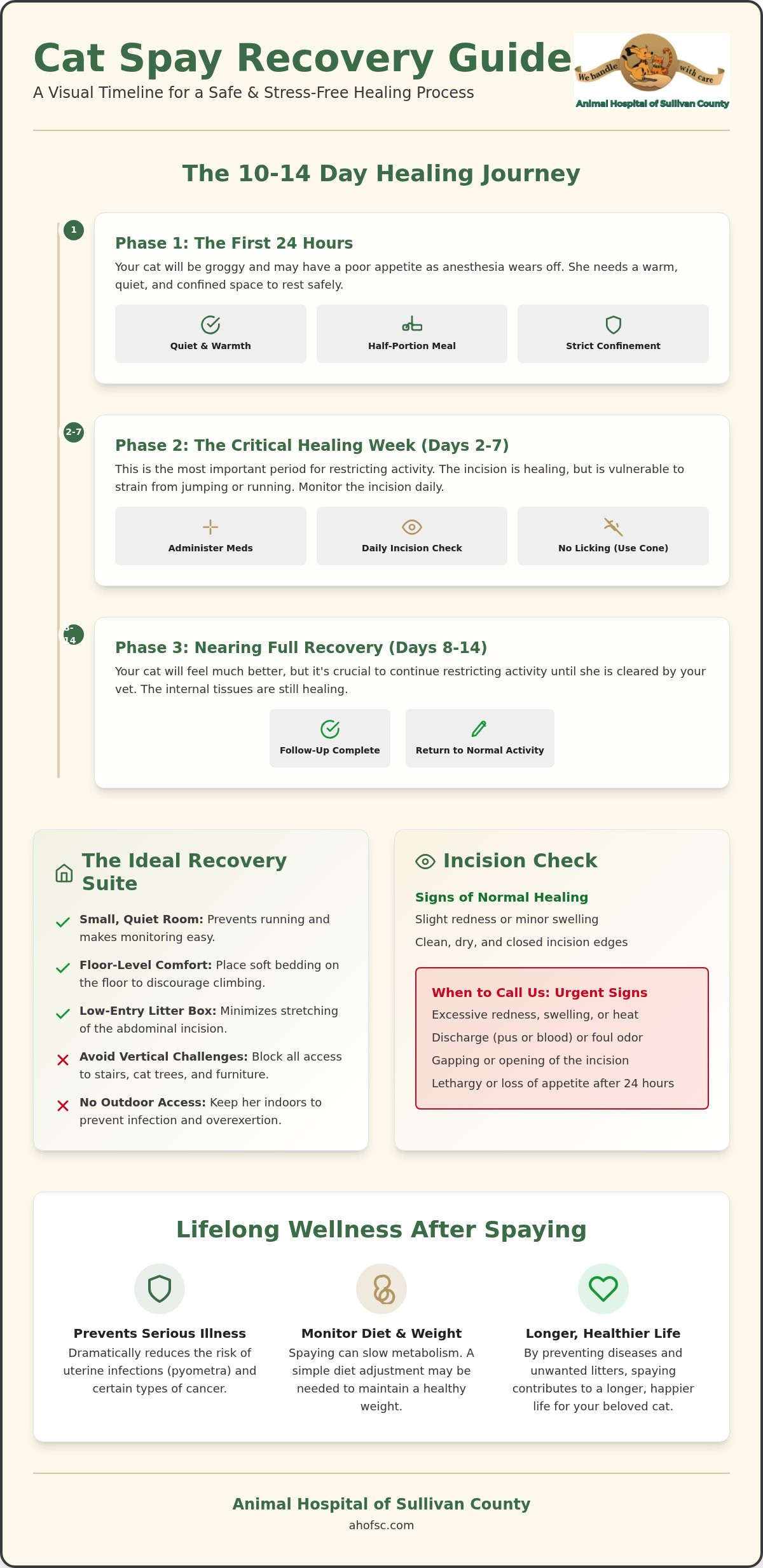
The journey home from our Ferndale clinic is the first step in a successful cat spay recovery Sullivan County pet parents manage. While the clinical procedure, known as an Ovariohysterectomy, is a routine part of our surgical care, the first 24 hours at home require your full attention and a gentle touch. Your cat will likely feel groggy, confused, and perhaps a bit chilly as the anesthesia wears off. Because we live in the heart of the Catskills, it's vital to remember that post-operative cats struggle to regulate their body temperature. Keep your home cozy and provide a soft bed away from any drafts or cold floors. Immediate confinement in a small, safe space isn't a punishment. It's the most loving way to prevent her from overexerting herself before she's ready.
Setting Up the Transport and Entry
When you leave our clinic, use a secure carrier and cover it with a thick towel. This simple act reduces sensory overload from the sights and sounds of the road. Once you arrive, place the carrier in a low-traffic area where she won't be disturbed by children or loud noises. It's best to keep other household pets in a separate room for the first night. Even the closest feline friends can have a tense reunion if one smells like a hospital and is acting strangely. A smooth cat spay recovery Sullivan County residents expect starts with these quiet, intentional moments of peace.
Post-Op Feeding and Hydration
Wait until your cat is fully alert and walking steadily before offering small amounts of water. Nausea is a common side effect of anesthesia, so it's better to go slow. For her first evening meal, offer only a half-portion of her regular food. This prevents her stomach from becoming overwhelmed while she is still recovering. If she doesn't have an appetite right away, don't panic. Many cats aren't interested in eating until the following morning. However, if she continues to refuse food or water for more than 12 hours after returning home, please contact us. Our team is here to support you during this delicate transition and ensure your family member is staying hydrated and comfortable.
Creating a "Recovery Suite" in Your Catskills Home
Many homes in our beautiful region feature open floor plans, lofted spaces, and winding stairs. While these are lovely for us, they present significant risks for a cat in the middle of her cat spay recovery Sullivan County timeline. The kindest thing you can do for your feline family member is to prepare a "recovery suite" before you even pick her up from our Ferndale clinic. A small, controlled environment like a guest bathroom or a cozy laundry room is ideal. It keeps her movements limited and makes it much easier for you to monitor her progress without searching the whole house for her hiding spot.
Eliminating Vertical Challenges
Your cat's natural instinct is to seek out high ground, especially when she feels a bit vulnerable. However, jumping onto a kitchen counter or leaping up a flight of stairs can put immense strain on her abdominal incision. For at least the first seven days, you should block access to any vertical surfaces. Move her favorite plush bedding to floor level so she doesn't feel the need to climb. It's also helpful to provide a low-entry litter box. This minimizes the stretching of the surgical site every time she needs to use the bathroom. If you're worried about her comfort, our staff at the Animal Hospital of Sullivan County can suggest specific ways to modify your home layout.
Environmental Enrichment Without Overexertion
Resting doesn't have to mean boredom. You can keep your cat's mind engaged without encouraging vigorous play. Using pheromone diffusers or playing soft, classical music can create a soothing atmosphere that lowers her stress levels. Interaction should be gentle and stationary; think of it as "quiet time" together rather than a session with a feather wand. Staying indoors is absolutely non-negotiable during this period. Even the most adventurous Sullivan County cats need to stay inside to avoid dirt, moisture, and the risk of overexertion in the rugged Catskills terrain. Following the AVMA guidelines on spaying helps ensure she stays safe and avoids the common complications that come from too much activity too soon.
Your presence is a powerful source of comfort during this time. The relationship you share is a sacred bond, and sitting quietly with her on the floor provides the emotional security she needs while she heals. New York nights can get quite chilly, so keep her suite at a steady, warm temperature. A post-operative cat can't regulate her body heat as effectively as she normally would, so a few extra blankets can make a world of difference in her comfort and peace of mind.
Monitoring the Incision: What is Normal vs. Urgent?
Once your cat is settled into her recovery suite, your primary role shifts to that of a watchful guardian. Performing a daily "compassionate check" is the best way to ensure her healing stays on track. During this time, the surgical site is undergoing a complex biological process; while the skin may look closed within a few days, the deeper layers of tissue require the full 10 to 14 days to regain their strength. Maintaining a successful cat spay recovery Sullivan County families can feel confident about means keeping the Elizabethan collar, often called the "cone of shame," on at all times. It might be tempting to remove it when she gives you those pleading eyes, but it only takes a few seconds of licking to cause significant self-trauma or introduce bacteria to the wound.
The Anatomy of a Healing Incision
As you inspect the site, don't be alarmed by a small amount of redness or minor bruising in the first few days. You may also notice a firm, non-painful "healing ridge" under the skin. This is a normal part of the body's inflammatory response as it knits the tissue back together. It's vital that you never apply ointments, creams, or hydrogen peroxide to the area without a direct request from Dr. B. These substances can actually break down the surgical glue or sutures and irritate the delicate skin. If she seems obsessed with her bandages or the cone, try gently distracting her with a special treat or a quiet conversation to shift her focus.
Red Flags: When to Seek Daytime Urgent Care
While most recoveries are smooth, you should stay alert for specific "red flags" that indicate a need for professional attention. If you notice any of the following, please reach out to us during our regular business hours for daytime emergency treatment:
- Signs of Infection: Look for active bleeding, thick discharge (yellow or green), or a foul odor coming from the site.
- Incision Opening: If the edges of the wound appear to be pulling apart, this is known as dehiscence and requires immediate care.
- Systemic Distress: Keep an eye out for extreme lethargy, repeated vomiting, or gums that appear pale rather than a healthy bubblegum pink.
Our Ferndale clinic is equipped with advanced onsite diagnostics to quickly assess any concerns you might have. We believe in a "heart-first" approach to care, which means we are here to provide both the technical skill and the emotional support you need during this period. Your peace of mind is just as important to us as your cat's physical health; don't hesitate to call if something doesn't feel quite right with her cat spay recovery Sullivan County progress.
Managing Pain and Activity: The Middle Recovery Phase
By the fourth or fifth day, your feline friend might start acting like her old self again. She may chirp for breakfast or try to initiate a game of chase. While this is a heartening sign of progress, don't let her enthusiasm fool you. Internal healing takes much longer than the surface of the skin. Managing this middle phase of cat spay recovery Sullivan County families encounter is about finding the balance between her growing energy and her need for physical rest. For a deeper look at our clinical standards and the care that goes into every procedure, explore our guide on finding a Veterinary Surgeon Sullivan County.
Medication Safety and Tips
Patience is key when administering post-operative medications. Always stick strictly to the schedule and dosage prescribed by Dr. B. It's vital to remember that human medications are never safe for your pet. Common over-the-counter relievers like Tylenol or ibuprofen are toxic to cats and can be fatal. If your cat is a difficult piller, try wrapping her gently in a soft towel to keep her paws tucked away. You can also hide medications in a small amount of pill paste or high-value wet food. We recommend keeping a simple log on your refrigerator. This prevents any confusion between family members and ensures your cat never misses a dose of her necessary comfort medicine.
The "Quiet Play" Transition
As she regains her spirit, you can begin to offer mental stimulation that doesn't involve jumping or running. Puzzle feeders are excellent tools for this. They keep her mind busy while her body stays still. You might also try supervised room time in a larger area of your home as a reward for her calm behavior. However, keep these sessions short. If you see her start to zoom around or attempt a leap, it's time to guide her back to her quiet suite. If you ever feel she is experiencing breakthrough pain or if she seems unusually restless, remember that our Ferndale team is available for daytime emergency treatment. We want to ensure her comfort is maintained every single step of the way. If you have questions about your pet's recovery, contact the Animal Hospital of Sullivan County today.
Lifelong Wellness After the Spay: Your Next Steps in Ferndale
Once the ten-day mark passes and her incision has fully healed, you've reached a beautiful milestone in your journey together. The immediate cat spay recovery Sullivan County process is complete, but the benefits of this choice will last for her entire life. By spaying your cat, you've protected her from serious health risks that could have impacted her later years. You have drastically reduced the likelihood of mammary tumors and entirely removed the risk of pyometra, a dangerous uterine infection. This is a profound gift of longevity for your feline family member.
Nutritional Adjustments for Spayed Cats
After sterilization, your cat's metabolism will naturally slow down. This metabolic shift is a normal physiological change, but it often means she requires fewer calories than she did before her surgery. It's quite common for spayed cats to gain weight if their diet isn't adjusted to match this new metabolic rate. We recommend monitoring her weight closely over the months following the cat spay recovery Sullivan County period. Our team can help you choose a high-quality life-stage diet that provides the right balance of nutrients without unnecessary calories. Keeping her at an ideal weight is one of the best ways to ensure she stays active and happy in the Catskills for years to come.
Building a Long-Term Health Partnership
Our relationship with your family doesn't end when the sutures come out. Since 1953, the Animal Hospital of Sullivan County has been a steady, calming presence in Ferndale. We provide a "heart-first" approach to every pet we see, treating each animal as a cherished member of the household. This surgery is just one chapter in her lifelong health story. It's essential to stay consistent with follow-up vaccinations and parasite prevention to protect her from local environmental threats. Our onsite lab allows us to monitor her long-term wellness with clinical precision and speed.
When you are ready to look ahead, you can plan your next pet wellness exam in Sullivan County to ensure she stays on the path of vibrant health. We are honored to be your partner in this journey of care. Our 70-year history in this community is built on trust and a deep love for the animals we serve. If you ever have a concern about her progress or her future needs, our dedicated team is always just a phone call away.
Embracing a Vibrant Future with Your Feline Friend
Navigating the path of cat spay recovery Sullivan County requires a blend of clinical vigilance and gentle patience. By creating a quiet sanctuary and staying alert to the subtle signs of healing, you have already given your companion a wonderful start. Remember that the "cone of shame" and restricted activity are temporary measures that pave the way for a lifetime of comfort. You've successfully protected her from future illnesses, and now it's time to focus on the many years of purrs and play ahead in your Catskills home.
Since 1953, our team has been honored to serve Sullivan County families with comprehensive surgical care and a neighborly touch. Whether you need daytime emergency support or simply have a quick question about her progress, we are always here to help. We invite you to schedule a post-op check or surgical consultation with our compassionate team to ensure she is meeting every recovery milestone. Your pet's well-being is a sacred bond we are proud to share with you. We look forward to seeing your feline family member thrive for years to come!
Frequently Asked Questions
How long does it take for a cat to fully recover from a spay?
A cat typically takes 10 to 14 days to fully recover from the surgical procedure. During this time, the internal and external layers of tissue are knitting back together. While she might act like herself after just a few days, it's vital to maintain restrictions until the full healing period is over. This ensures a successful cat spay recovery Sullivan County residents can feel good about, preventing any setbacks or complications.
My cat is very active; how can I keep her quiet after surgery?
Keeping an active cat still requires strict confinement in a small area without furniture to jump on. You can use pheromone diffusers or calming sprays to help lower her energy levels naturally. Mental stimulation, like food puzzles or slow-moving visual toys, can keep her occupied without physical strain. If she remains dangerously overactive, please contact our team to discuss mild sedative options that can help her stay safe during her healing.
Is it normal for my cat to have a lump at the incision site?
It is very common to feel a firm, non-painful "healing ridge" along the incision line. This is the body's natural way of repairing the surgical site. However, if you notice a soft, fluid-filled bulge or a lump that seems to be growing, it could be a seroma or a minor reaction to the suture material. If the area looks red or feels hot to the touch, please bring her in for a quick check.
When can my cat start eating and drinking normally again?
Most cats return to their normal eating and drinking habits within 24 to 48 hours after returning home. While the first night involves small, half-portions to prevent nausea, she should be interested in her regular diet by the following morning. If your cat refuses to eat or drink for more than 24 hours, it's a sign she might be feeling unwell or experiencing discomfort that needs professional attention from our Ferndale team.
What should I do if my cat takes off her E-collar?
If your cat manages to wiggle out of her collar, put it back on immediately and check her incision for any signs of licking or redness. Even a few minutes of grooming can cause the site to open or become infected. If she is an escape artist, ensure the collar is snug enough that you can only fit two fingers underneath. We can also discuss recovery onesies as a more comfortable alternative for stubborn cats.
Can I leave my cat alone the day after her spay surgery?
You can leave your cat alone for short periods once she is fully alert and stable, provided she is in a completely safe, "cat-proofed" room. Ensure there are no hazards she can jump on or get stuck behind while you are away. For the first few days, it's best to check on her every few hours to ensure she is resting comfortably and hasn't bothered her bandages or collar while her body heals.
Why is my cat hiding or acting differently after her spay?
Hiding is a natural instinct for cats when they feel vulnerable or are recovering from a stressful event. The lingering effects of anesthesia, combined with the unfamiliar smells of the clinic, can make her feel a bit "off" for a day or two. Give her space and keep her environment quiet. She will likely seek out your company again once she feels stronger and more secure in her familiar home surroundings.
Does a spay surgery change a cat’s personality?
Spaying does not change your cat's fundamental personality or her unique spirit. It does, however, eliminate behaviors driven by reproductive hormones, such as roaming, loud yowling during heat cycles, and territorial marking. Many owners find their cats become even more affectionate and relaxed once the stress of heat cycles is removed. She will still be the same cherished family member you know and love, just with fewer hormonal distractions.


