
Imagine sitting on the living room rug in your Ferndale home, gently stroking your old friend's ears and wondering if their quietness is just old age or something deeper. It is a heavy, silent moment that every devoted pet parent in Sullivan County eventually faces! You want to ensure their final days are filled with the same love they gave you for a lifetime. Identifying the end of life care for dogs at home signs is the first step in honoring that sacred bond. It's completely natural to feel a mix of deep love and paralyzing anxiety when your dog's health begins to fade.
We know you want to make the right choice at the right time without the weight of guilt. This guide will help you recognize the subtle physical and behavioral changes that signal your dog is nearing the end. You'll find practical ways to increase their comfort right in your own living room and learn about the local support available through Dr. B and our dedicated team. From recognizing pain to understanding how our onsite crematorium ensures your pet never leaves our compassionate care, we are here to walk this path with you. Let's look at the signs to watch for and how to provide the peaceful transition your cherished family member deserves.
Key Takeaways
- Identify critical physical indicators like respiratory changes and loss of appetite to help you provide the right support during difficult times.
- Understand the emotional shifts, such as social withdrawal or confusion, that characterize the end of life care for dogs at home signs.
- Master the "Good Days vs. Bad Days" framework and the Five Freedoms to make informed, compassionate decisions about your pet's quality of life.
- Discover practical ways to set up a home "comfort station" using orthopedic bedding and hygiene management to ensure your dog feels safe and loved.
- Learn how our Sullivan County team and onsite crematorium provide a continuous circle of care, ensuring your cherished friend stays in gentle hands.
End of Life Signs in Dogs: What to Watch for at Home
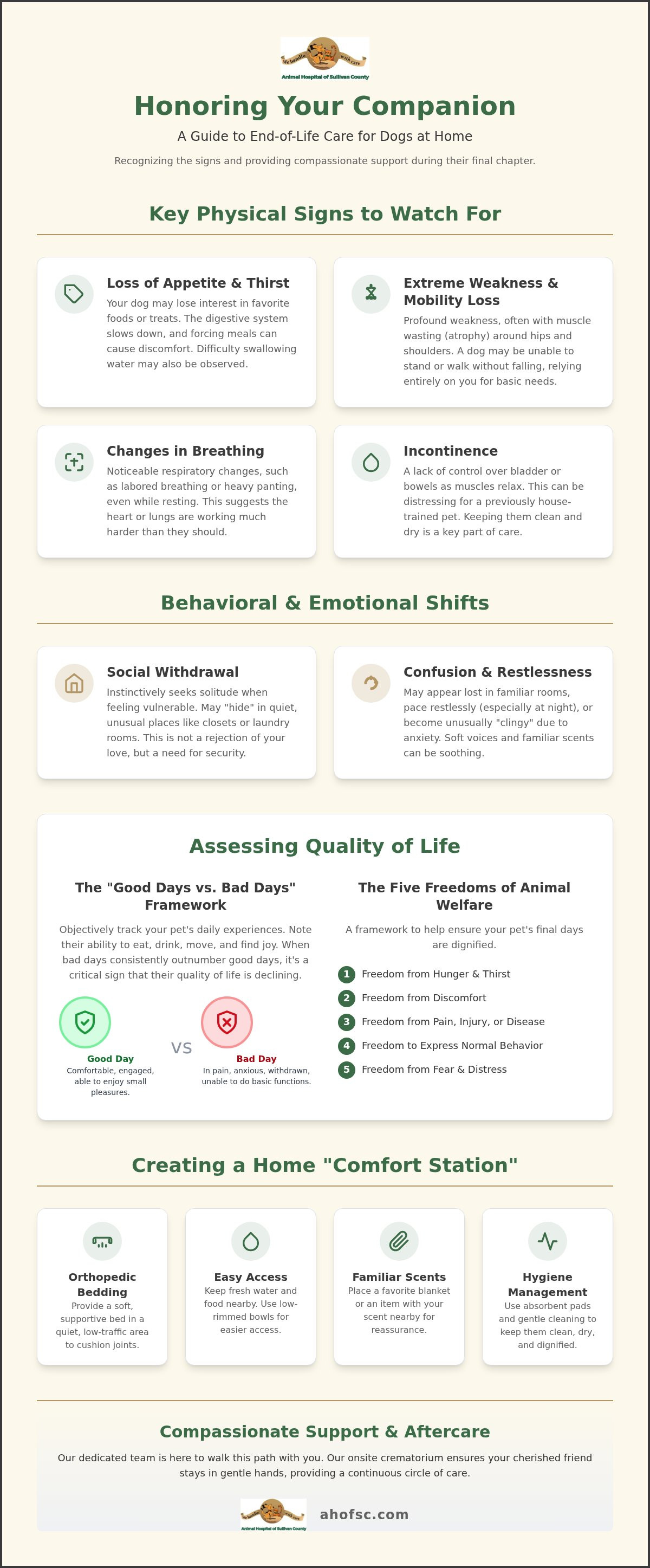
Watching your companion grow old is a journey of deep love and quiet observation. When you begin looking for end of life care for dogs at home signs, you're essentially learning a new, silent language of your pet's needs. These physical changes aren't always dramatic; often, they are subtle shifts in how your dog interacts with their world. Recognizing these indicators early allows you to focus on comfort and dignity during their final chapter.
Understanding Changes in Appetite and Hydration
As the body prepares for its final transition, the digestive system often slows down or stops processing nutrients efficiently. You might notice your dog losing interest in even their most cherished treats. This happens because the internal organs no longer require the same energy to function. Some pets display subtle signs like "tongue clicking" or visible difficulty when trying to swallow water. While you can offer high-value foods like plain chicken, it is vital to respect their lack of hunger. Forcing a meal can cause discomfort or nausea during this delicate time.
Mobility Challenges and Physical Weakness
It's easy to confuse the slow movements of arthritis with the profound weakness of a dog's final days. While arthritis often improves with warmth and gentle movement, end-of-life weakness is usually accompanied by significant muscle wasting, or atrophy, where the hips and shoulders look hollow. Loss of equilibrium is a late-stage neurological sign that often results in a dog being unable to stand or walk without falling. Recognizing the difference between these end of life care for dogs at home signs and standard aging is crucial for your peace of mind. When mobility fails, your dog relies entirely on you for their basic needs and safety.
Beyond movement and food, pay close attention to how your dog breathes while they are resting. Significant respiratory changes, such as labored breathing or heavy panting while lying still, suggest the heart or lungs are working much harder than they should. Additionally, a lack of control over bodily functions, known as incontinence, often occurs as muscles relax. This can be distressing for a dog who has been house-trained their whole life. These combined signs often lead families to research Animal euthanasia as a compassionate way to prevent further distress. Keeping your pet clean, dry, and comfortable becomes the most important way to show your love during these quiet hours.
Behavioral and Emotional Shifts in Your Dog's Final Days
While the physical changes discussed earlier are significant, the emotional shifts in your companion often tell an even deeper story. These behavioral end of life care for dogs at home signs can be difficult to witness, yet they provide vital clues about your pet's comfort and mental well-being. Your dog might suddenly lose interest in their favorite squeaky toy or stop greeting you at the door with their usual enthusiasm. These shifts are a natural part of their journey, reflecting a quiet internal focus as they begin to detach from the world around them.
The Emotional Withdrawal: Why Dogs Seek Solitude
Many families notice their pets starting to "hide" in unusual places, such as a laundry room or a dark corner of the basement. This isn't a rejection of your love. Instinctively, animals often seek solitude when they feel vulnerable or weak. You may also observe your dog staring into space for long periods, appearing to have "mentally checked out" from their surroundings. Respecting their need for space while staying nearby offers them a sense of security without the pressure to interact. For more guidance on these transitions, you can review the ASPCA on End of Life Care.
Cognitive Decline and Restlessness
On the other end of the spectrum, some dogs become intensely "clingy," seeking constant physical contact or reassurance. This anxiety often stems from confusion. Canine cognitive dysfunction can lead to irritability or a reversal of sleep patterns, often called "sundowning." You might see your dog pacing restlessly at night or appearing lost in a familiar room. Distinguishing between pain-related pacing and cognitive confusion is a key part of monitoring end of life care for dogs at home signs. Soft voices and familiar scents, like an old t-shirt you've worn, can help soothe this agitation. Recognizing these behavioral changes allows you to adjust your home environment to meet their changing emotional needs. If you are feeling overwhelmed by these changes, our team at the Animal Hospital of Sullivan County is always here to listen and offer a calming perspective.
Your dog's personality may seem to shift during this time. A once-patient dog might grow irritable when touched, or a social dog might stop seeking family interactions entirely. It's important to remember that these aren't choices your dog is making; they are symptoms of a body and mind that are tired. By observing these shifts with patience and kindness, you honor the sacred bond you've built over the years. Your steady, calming presence is the greatest gift you can offer them right now.
Assessing Quality of Life: The 'Good Days vs. Bad Days' Framework
Deciding "when it's time" is perhaps the most selfless act of love you'll ever perform for your companion. While you've been watching for physical end of life care for dogs at home signs, it's equally important to look at the overall picture of their daily joy. We often use the "Five Freedoms" of animal welfare as our guiding light! This baseline ensures your pet is free from hunger, discomfort, pain, fear, and the inability to express their natural personality. If these freedoms are consistently compromised, it's time to take a closer look at their quality of life.
Many families wait for whimpering or crying as a sign of pain, but dogs are incredibly stoic. Pain often manifests as quiet changes; look for a faster heart rate, shallow breathing, or a refusal to settle down at night. Recognizing these subtle end of life care for dogs at home signs helps you understand if their comfort is truly being maintained. Your dog relies on you to be their voice when they can no longer speak for themselves.
The HHHHHMM Scale Simplified
This tool helps you objectively score different areas of your dog's life. It stands for Hurt, Hunger, Hydration, Hygiene, Happiness, Mobility, and More. Quality of Life is a balance between physical comfort and emotional joy. Happiness is just as vital as hydration! Does your dog still wag their tail when you walk in the room? Do they still lift their head for a scratch behind the ears? If the "spark" in their eyes has faded, it's a significant indicator that their internal world has changed. By looking at these categories individually, you can avoid feeling overwhelmed by the weight of the "big" decision.
When the 'Bad Days' Outnumber the 'Good'
A simple yet powerful way to track decline is by using a physical calendar. Mark each day with a "smiley face" or a "sad face" based on your dog's energy, appetite, and comfort. When you look back at the month and see that the bad days have begun to outnumber the good, you've reached a significant tipping point. This visualization removes the guesswork and provides a clear, loving roadmap for your family. It helps you make a choice based on the reality of your dog's experience rather than your own hopes.
You don't have to carry this emotional burden alone. A professional exam at our animal hospital in Sullivan County provides the medical clarity you need during this difficult time. Dr. B and our team can help assess pain levels that might not be obvious to the naked eye. This partnership empowers you to make a decision rooted in deep love and medical facts, ensuring your pet's dignity remains the top priority.
Providing Palliative and Hospice Care at Home
Once you have identified the end of life care for dogs at home signs, your focus shifts from curative treatment to compassionate hospice care. This phase is about preserving the sacred bond you share by ensuring every moment is as peaceful as possible. Palliative care isn't about giving up; it is about prioritizing your dog's comfort and emotional well-being above all else. By creating a supportive environment, you can manage their symptoms with the dignity they deserve.
Setting Up the Ideal Comfort Zone
Your dog's physical world needs to shrink to accommodate their fading strength. Create a "comfort station" in a quiet, climate-controlled area of your home where they can still feel like part of the family without being overwhelmed. Orthopedic bedding is essential to protect thinning skin and sore joints from pressure sores. Ensure their favorite spot remains accessible by removing obstacles or using low-profile ramps. You can also use calming pheromones or soft classical music to help alleviate the anxiety that often accompanies cognitive decline.
Palliative Care and Pain Management
Effective senior pet care during this stage relies on a strict medication schedule to stay ahead of pain. Don't wait for your dog to show distress before giving prescribed treatments! Beyond medicine, gentle massage and regular grooming provide immense non-medical comfort. These simple acts of touch reassure your pet that they are safe and loved. Understanding these end of life care for dogs at home signs allows you to act as a steady guide for your companion through their final weeks or days.
Managing hygiene for incontinent dogs is also a priority; using absorbent pads and performing "waterless" baths ensures they stay dry and comfortable without the stress of a full tub visit. Maintaining a calm and predictable routine reduces the mental load on a senior dog. When they know what to expect, their anxiety levels drop significantly! If you need help tailoring a specific comfort plan for your pet's unique needs, please reach out to us at the Animal Hospital of Sullivan County. We are here to support you in providing the most compassionate environment possible. Every small adjustment you make at home helps honor the lifetime of loyalty they've given you.
Compassionate Support and Aftercare in Sullivan County
Deciding to say goodbye is the most difficult part of the journey you've shared with your pet. While recognizing the end of life care for dogs at home signs helps you prepare, the final transition requires a different kind of strength. You don't have to carry this heavy burden alone! Having a trusted partner who understands the deep history of your bond makes all the difference during these quiet, final moments. We believe that every pet deserves a transition marked by the same love and respect they received throughout their life.
The Animal Hospital of Sullivan County Difference
Our hospital has been a steady part of the Ferndale community since 1953. Led by the compassionate Dr. B, our team focuses on supporting the entire family during this emotional time. We understand that end-of-life needs don't always follow a schedule. That is why we offer daytime emergency treatment for urgent situations, ensuring you have access to professional care when it matters most. Our legacy is built on a "heart-first" approach where your pet is treated like a cherished member of our own family.
When the time comes for a euthanasia appointment, we prioritize peace and privacy. We explain every step of the process beforehand to alleviate any anxiety you may feel. The procedure is very gentle, much like falling into a deep, painless sleep. You are welcome to stay with your companion throughout the entire visit, holding their paw and whispering your final goodbyes. This unhurried atmosphere allows you to focus entirely on honoring the sacred bond you've shared for so many years.
Dignity Through Our Onsite Crematorium
One of the most comforting aspects of our care is our unique onsite crematorium. Many families find great peace of mind knowing that their pet never leaves our facility or our gentle care. Our pet crematorium services are handled with the highest level of dignity and transparency. We offer various options for memorials and keepsakes, from simple urns to personalized tributes that help you cherish their memory forever.
Choosing a local partner means you have a community of support even after you leave our office. Grief is a natural response to losing a best friend, and we are here to offer resources and a listening ear as you navigate your loss. By observing the end of life care for dogs at home signs and choosing a path of compassion, you have given your dog the ultimate gift of a peaceful goodbye. Your love has been their constant guide, and we are honored to stand beside you in this final act of devotion.
Honoring Your Dog’s Journey with Compassion and Dignity
Navigating your pet's final chapter is a journey of profound love. By learning to identify the physical and behavioral end of life care for dogs at home signs, you've taken a vital step toward protecting your friend's comfort. You now have the tools to track their "good days" and create a peaceful sanctuary right in your living room. This process isn't just about managing symptoms; it's about honoring the sacred bond you've shared for years.
You don't have to walk this difficult path alone. Since 1953, the Animal Hospital of Sullivan County has served local families with a heart-first approach. Our compassionate senior pet specialists, led by Dr. B, focus on your dog's quality of life until the very end. With our unique onsite crematorium, we provide full-spectrum care so your cherished friend stays in trusted hands. Please speak with Dr. B and our compassionate team about end-of-life care to discuss how we can support your family. You've given your dog a lifetime of happiness, and we are here to help you provide a peaceful goodbye.
Frequently Asked Questions
What are the first signs that a dog is entering the end-of-life stage?
The first signs usually include a noticeable decrease in appetite, lower energy levels, and a lack of interest in social interaction. Your dog might stop greeting you at the door or refuse their favorite treats. These changes indicate that the body is beginning to slow down. By observing these subtle end of life care for dogs at home signs early, you can start discussing comfort options with Dr. B to ensure your pet remains peaceful.
How can I tell if my dog is in pain if they aren't crying?
Dogs often hide their discomfort, so look for increased panting, restlessness, or a faster heart rate while they are resting. You might notice them struggling to get comfortable or showing a glazed look in their eyes. Whimpering is actually less common than these quiet behavioral shifts. If your companion seems unable to settle down at night or resists being touched in certain areas, they are likely experiencing pain that needs professional management.
Is it better to let a dog pass away naturally at home?
While passing at home sounds peaceful, a "natural" death can sometimes involve prolonged periods of respiratory distress or discomfort. Euthanasia literally means "good death" and provides a painless, controlled transition that prevents unnecessary suffering. Choosing this path allows you to say goodbye while your pet is still relatively comfortable. Our team in Ferndale is here to help you weigh these options based on your dog's specific medical condition and quality of life.
How do I know when it's time to consider euthanasia?
It is often time to consider euthanasia when your dog's "bad days" consistently outnumber their "good days." Use the HHHHHMM scale to evaluate their hunger, hygiene, and happiness. If they can no longer experience joy or perform basic functions without distress, making the decision is a final act of love. Dr. B and our staff can provide a professional assessment to help remove the heavy burden of guessing from your shoulders.
What can I do to make my dog more comfortable in their final days?
You can increase comfort by creating a dedicated "comfort station" with thick orthopedic bedding and easy access to water. Keep their environment quiet and predictable to reduce anxiety. Using soft music or familiar scents can help soothe a confused senior dog. Additionally, maintaining a strict medication schedule for pain management is one of the most effective ways to support your companion through their final days in your Sullivan County home.
Does Animal Hospital of Sullivan County offer emergency end-of-life care?
Animal Hospital of Sullivan County offers emergency treatment for end-of-life needs during our regular business hours. If your pet experiences a sudden decline or acute distress, please call us immediately so we can prioritize your visit. While we don't provide 24/7 emergency care, we are dedicated to being here for our neighbors in Ferndale and the surrounding Tri-State area whenever an urgent situation arises during our clinical day.
What happens to my dog's body after they pass away at the clinic?
Your pet remains in our gentle care through our unique onsite crematorium. This ensures that your companion never leaves our facility, providing you with peace of mind during a difficult time. We handle every aftercare detail with the highest level of dignity and respect. You can choose from several memorial options, including private cremation, so you can bring your friend back home to their favorite spot in Sullivan County.
How do I explain my dog's decline to my children?
Use honest, age-appropriate language and avoid confusing phrases like "going to sleep," which can cause fear of bedtime. Explain that the dog's body stopped working and the doctors couldn't fix it anymore. It's okay to let your children see you grieve, as it teaches them that it's natural to feel sad when losing a family member. Sharing favorite stories about your pet can help the whole family honor the sacred bond you shared.


