
When you walked through your front door today, the silence likely felt heavier than usual. You may have expected the familiar rhythm of a wagging tail or a soft purr, but instead, you were met with a profound, aching emptiness that's difficult to put into words. It's exhausting to carry this weight, especially when it feels like the world around you expects you to move on quickly. You might be struggling with "grief brain," feeling physically drained, or wrestling with the painful "what ifs" surrounding a difficult final decision.
Please know that your heartbreak is entirely valid. The bond you shared was a sacred one, and your grief is a powerful testament to that deep love. This guide is here to provide the emotional support for pet loss NY families need to find their footing again. We'll explore practical coping strategies for the early days of mourning, offer ways to honor your companion's memory, and connect you with local New York resources designed to help you heal. From meaningful memorialization to finding a community that truly understands, you're in safe hands as you navigate this journey.
Key Takeaways
- Recognize that your pain is a valid response to the loss of a family member, deeply rooted in the biological bond you shared.
- Learn to identify and manage the physical symptoms of mourning, such as "grief brain" and exhaustion, with gentle self-care strategies.
- Connect with dedicated local resources and virtual communities that provide specialized emotional support for pet loss NY families.
- Discover healing ways to honor your companion's legacy through meaningful rituals and memorialization ideas local to Sullivan County.
- Understand the peace of mind that comes from continuity of care and keeping your pet in the hands of a team that knew and loved them.
Validating Your Grief: Why the Loss of a Pet Hits So Hard
When you lose a pet, the pain can feel as sharp and enduring as the loss of any human family member. It hurts because it was real. This is often called disenfranchised grief, a term used to describe a loss that isn't always recognized or validated by the culture around us. While you are mourning a soul who shared your bed, your meals, and your quietest moments, others might offer well-meaning but hollow phrases like "it was just a dog" or "you can always get another one." These comments ignore the profound reality that your pet was a cherished household member, not a piece of property.
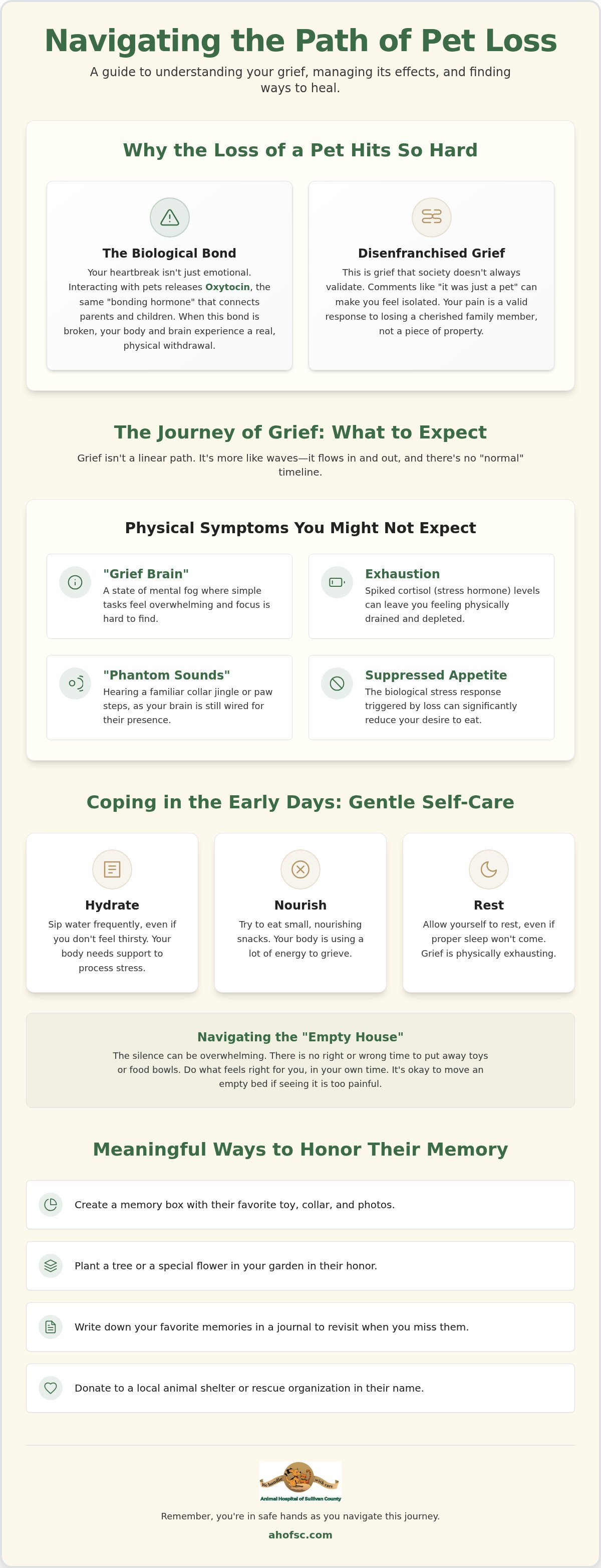
Science tells us that your heartbreak isn't just in your head. Research shows that interacting with our pets releases oxytocin, the same "bonding hormone" that helps human parents connect with their children. When that bond is severed, your brain and body undergo a physical withdrawal. You aren't just missing a companion; you are losing a daily witness to your life. Your routines, from the morning walk to the evening feeding, are suddenly gone, leaving behind a void that can make you feel like you've lost a part of your own identity.
The Unique Nature of the Human-Animal Bond
Our pets provide a rare form of unconditional love that serves as a foundation for our mental health. They don't judge our mistakes or demand that we be anything other than ourselves. They are the silent observers of our private lives, standing by us through career changes, breakups, and health struggles. The bond we share with our animal companions is a sacred relationship that requires both professional skill and deep emotional sensitivity to honor. This connection is built on years of shared experiences and mutual trust, making the eventual goodbye feel like the end of a long, beautiful chapter.
Challenging the Stigma of Grieving an Animal
Society often lacks a formal script for pet loss, which can make you feel isolated in your sorrow. You have full permission to take bereavement time and prioritize your mental health as you process this transition. If someone makes an insensitive comment, remember that their lack of understanding doesn't diminish your love. It's vital to find "your people," those who lead with a heart-first approach and recognize the depth of your sacrifice. Seeking out specialized emotional support for pet loss NY can help you bridge the gap between your internal pain and the outside world. Connecting with a community that validates your experience is a crucial step toward finding peace and lasting comfort.
The Grieving Process: Navigating Emotional and Physical Responses
Grief is rarely a tidy, predictable process. It's more like the tide, flowing in and out in waves that can catch you off guard just when you think the waters have calmed. You might find yourself moving through stages of denial, anger, bargaining, or deep depression. These aren't milestones to check off a list. They are complex emotional states that can overlap or repeat. One day you may feel a sense of peace, only to be hit by a sharp pang of sorrow the next. Understanding that there's no "normal" timeline for missing a friend is the first step toward healing. Your journey is unique, and it's okay to take all the time you need.
When you are looking for emotional support for pet loss NY, it's helpful to remember that your body is grieving just as much as your heart. The stress of loss triggers a biological response, often leaving you feeling physically depleted. This is a natural reaction to the bond you've lost, and acknowledging these symptoms can help you manage the day-to-day challenges of mourning.
Physical Symptoms You Might Not Expect
Many people experience "grief brain," a state of mental fog where simple tasks feel overwhelming and focus becomes elusive. You might also experience "phantom sounds," such as hearing a familiar jingle of a collar or a soft pawprint on the hardwood. This happens because your brain is wired to expect your companion's presence. During this time, your cortisol levels spike, which can lead to exhaustion or a suppressed appetite. In the first 72 hours, prioritize gentle self-care. Sip water frequently, try to eat small, nourishing snacks, and allow yourself to rest even if sleep won't come easily.
Navigating the "Empty House" Syndrome
The silence of a home once filled with life can feel like a physical weight. You may look at their favorite toy or an empty food bowl and feel a fresh surge of pain. There is no right or wrong time to put these items away. Some find comfort in keeping things exactly as they were, while others need to clear the space to begin processing the change. If the sight of an empty bed is too difficult, it's okay to move it to another room.
Establishing new routines can help fill the gaps in your day. If you usually walked at 6:00 PM, consider stepping outside for a short breath of fresh air anyway to maintain the rhythm of movement. Don't forget that surviving pets also experience loss. They may search for their friend or act more clingy than usual. Giving them extra affection can be healing for both of you. If you need a steady, compassionate presence during this transition, the team at the Animal Hospital of Sullivan County is here to offer a listening ear and neighborly empathy.
Finding Pet Loss Support Groups and Resources in New York
One of the hardest parts of losing a pet is the feeling that you are grieving alone. While your neighbors or coworkers might offer a polite nod, they may not understand why you are still struggling weeks later. This is where community resources become vital. Connecting with others who have walked this path can break the heavy cycle of isolation. Group therapy provides a space where your feelings are the norm, not the exception. Finding specialized emotional support for pet loss NY can be the bridge that leads you from isolation back into a community of care.
New York Based Hotlines and Virtual Circles
New York residents have access to some of the most respected veterinary resources in the country. The Cornell University Pet Loss Support Hotline is a wonderful resource staffed by compassionate volunteers who understand the unique pain of losing a companion. For those who prefer a face-to-face connection from the comfort of home, national organizations like Lap of Love offer virtual support circles that are frequently attended by families across the state. These sessions allow you to share your story with people who truly value the sacred bond between humans and animals.
If you are nervous about your first meeting, remember that you aren't required to speak. Many people find comfort simply by listening to others share their stories. It's helpful to have a quiet space, a glass of water, and some tissues nearby. These circles are designed to be safe harbors, not places of judgment. They provide the specific emotional support for pet loss NY families need to feel seen and heard during their darkest hours.
One-on-One Grief Coaching vs. Community Groups
While groups are excellent for validation, some situations require more personalized care. You might consider one-on-one coaching if you find that your grief is "complicated." This can happen if the loss was sudden, traumatic, or if you are struggling with intense guilt. A pet loss specialist is often more effective than a general grief counselor because they understand the specific nuances of the human-animal bond. They won't minimize your experience or suggest you "move on" before you are ready. A specialist understands that your pet was a family member, and they will treat your sorrow with the professional respect it deserves.
For those currently caring for an aging animal and feeling the weight of what's to come, you aren't alone. Many families experience anticipatory grief long before the final goodbye. Learning about senior pet care in Sullivan County can help you feel more prepared and empowered during your companion's golden years. Knowing how to support your pet's comfort today can sometimes ease the emotional burden of tomorrow.
Meaningful Ways to Memorialize Your Companion in Sullivan County
Healing isn't just about the passage of time; it's about what you do with that time. Creating a personal ritual can help anchor your grief and give it a place to live outside of your own heart. In our corner of New York, we're surrounded by natural beauty that offers a peaceful backdrop for these tributes. You might consider planting a memorial tree in the Catskills, allowing a living thing to grow in honor of the life that was lost. This act of planting can be a powerful form of emotional support for pet loss NY families, turning a site of sorrow into one of quiet reflection.
Digital spaces also offer a unique form of comfort. You can create an online gallery or a social media tribute to share your favorite memories with friends and family. This allows those who knew your pet to offer their own stories, reinforcing that your companion's life had a wide and meaningful impact. Whether it's a physical site or a digital one, having a dedicated space for your memories helps ensure that your pet's presence is never truly forgotten.
Physical Tributes and Keepsakes
Tangible items often provide the most immediate comfort during the early days of loss. Holding a paw print, a nose print, or a small lock of fur can make your pet feel close when the house feels too empty. Many families choose customized urns or jewelry that incorporates a portion of their pet's ashes, keeping their memory close to their heart. If you're looking for local options, understanding the role of pet crematorium services in Sullivan County can help you decide how to best preserve your companion's physical legacy. These keepsakes serve as gentle, daily reminders of a bond that remains unbroken.
Honoring Their Memory Through Action
Sometimes, the best way to heal is to give back to the community that supported you both. You might volunteer a few hours at a local Sullivan County shelter or make a donation in your pet's name to help another animal receive medical care. Another beautiful project is creating a high-quality photo book specifically dedicated to your favorite "Sullivan County adventures," from hikes in the woods to sunny afternoons in the yard. Active memorialization transforms your internal pain into a lasting tribute that celebrates a life well-lived. If you need guidance on these final steps or want to learn more about our onsite care, please reach out to the Animal Hospital of Sullivan County today.
Continuity of Care: How Animal Hospital of Sullivan County Supports Your Family
When you face the final chapter of your companion's life, there's a unique comfort in being surrounded by people who truly knew them. It's different from visiting a large corporate hospital where you might be just another number on a chart. At our clinic, we remember the first time your pet came in for a puppy checkup or that time they recovered from a difficult surgery. This long-term relationship creates a foundation of trust that's essential during such a vulnerable time. We believe that providing emotional support for pet loss NY families starts with this deep, personal connection. You aren't just a client; you're a neighbor, and your pet is a cherished member of our extended family.
Dr. Barbara Bodolosky, known affectionately as Dr. B, leads our team with a heart-first approach. She understands that medical care is only one part of the journey. The emotional well-being of the family is just as important as the physical comfort of the animal. During end-of-life consultations, she provides a steady, calming presence. She'll walk you through your options with patience and kindness, ensuring you feel empowered rather than overwhelmed. This level of dedication helps alleviate the anxiety often associated with these difficult decisions.
The Animal Hospital of Sullivan County Onsite Crematorium
One of the most significant ways we offer continuity of care is through our onsite crematorium in Ferndale. For many local families, the thought of their pet being transported to a distant, third-party facility is deeply unsettling. We ensure that your companion never leaves our compassionate care. From the moment they pass until their remains are returned to you, they are treated with the highest standards of dignity and respect. Our goal is to provide the steady emotional support for pet loss NY residents need to feel secure during their time of mourning. This immediate aftercare provides a sense of peace, knowing they are in the hands of the same people who cared for them throughout their life. If you want to learn more about our process, you can read our guide on pet end of life care Sullivan County.
A Legacy of Care Since 1953
Our roots in Sullivan County go back over 70 years. Since 1953, we've been a reliable institution for families throughout the region. This longevity isn't just about time; it's about the thousands of sacred bonds we've helped protect and honor. We've seen generations of families walk through our doors, and we've stood by them through every high and low. We are personally invested in the lives of our clients and their charges. If you are struggling with the weight of a recent loss or a difficult diagnosis, reach out to our compassionate team for support. We are here to be your partner in this journey, offering the professional expertise and neighborly empathy you deserve.
Moving Forward with Love and Support
Healing from the loss of a pet is a personal journey that requires immense patience with yourself. You've seen that your grief is a valid reflection of a sacred bond, and that navigating the "waves" of emotion is a natural part of the process. Whether you choose to plant a memorial tree or join a virtual circle, finding the right emotional support for pet loss NY families need is a vital step toward peace. You don't have to carry this heavy burden alone.
At the Animal Hospital of Sullivan County, we've been a trusted community advocate since 1953. Our family-owned practice is dedicated to a heart-first approach, treating every patient as a cherished family member. With our onsite crematorium in Ferndale, we provide dignified aftercare so your companion never leaves the hands of people who knew them. We are here to guide you through these difficult moments with the same compassion we've shared for over 70 years. Contact our compassionate team for end-of-life support today. You deserve a partner who understands that your pet's legacy is worth honoring with kindness and sincerity.
Frequently Asked Questions
Is it normal to feel depressed after losing a pet?
It is entirely normal to feel a deep sense of depression or sadness after losing a pet. These animals are cherished household members, and their absence leaves a significant void in your daily life. You might find that your usual activities feel meaningless or that you have little energy for social interaction. This emotional weight is a natural response to the loss of a sacred bond that provided unconditional love and companionship for years.
How do I explain pet loss to my children?
You should use honest and age-appropriate language when explaining pet loss to children. It's best to avoid confusing euphemisms like "went to sleep," as young children may become afraid of bedtime. Instead, explain that the pet's body stopped working and they can't feel pain anymore. Encourage your children to share their favorite memories or draw pictures to help them process their feelings in a healthy, supportive environment.
Where can I find a pet loss support group in Sullivan County, NY?
Residents seeking emotional support for pet loss NY can access several local and virtual resources. While physical meetings in Sullivan County vary, the Cornell University Pet Loss Support Hotline is an excellent resource for New York families. Additionally, virtual support circles through organizations like Lap of Love provide a safe space to connect with others. Our team can also provide information on regional counselors who specialize in the human-animal bond.
What are the physical signs of grief in humans after losing an animal?
Physical signs of grief often include extreme fatigue, changes in appetite, and a mental fog frequently called "grief brain." You may also experience chest tightness or a literal heartache due to the stress of the loss. These symptoms are your body's biological response to the disruption of your daily routine and the sudden drop in bonding hormones like oxytocin. Prioritizing rest and hydration is crucial during the first few weeks of mourning.
Should I get another pet right away to help with the grief?
There is no universal right time to bring a new pet into your home. Some people find that the routine of a new companion helps them heal, while others need months or even years to process their loss. It's important to ensure you aren't trying to replace your previous friend. Wait until you feel ready to love a new animal for their own unique personality rather than using them to mask your pain.
How does an onsite crematorium differ from third-party services?
An onsite crematorium ensures that your pet never leaves the care of the people who knew and loved them. Many third-party services require transporting your companion to a distant facility, which can be unsettling for grieving families. By keeping the process in-house at our Ferndale facility, we provide a higher level of dignity and immediate aftercare. This continuity of care offers significant peace of mind during a very difficult emotional transition.
Can other pets in the house experience grief?
Yes, surviving pets definitely experience grief when a companion passes away. They may search the house for their friend, lose interest in toys, or experience changes in their sleeping patterns. Some animals may become more clingy or vocal as they navigate the shift in the household hierarchy. Giving your surviving pets extra affection and maintaining their usual routine can help them feel secure as they process the loss alongside you.
What is anticipatory grief and how do I manage it?
Anticipatory grief is the pain you feel when you know a loss is imminent, often occurring during a pet's terminal illness. You can manage this by focusing on your pet's current quality of life and creating meaningful final memories together. Seeking emotional support for pet loss NY early in the process can help you prepare for the eventual goodbye. Our team provides compassionate end-of-life consultations to help families navigate these complex feelings with dignity.


