
What if the most important thing you bring to your first vet visit isn't your pet's medical records, but your own set of values? It's a deeply personal choice to trust someone with your animal's life. We know you want a partner who sees your pet as a cherished family member, not just another appointment on a busy schedule. Finding that connection starts with knowing the right ethical questions to ask a new vet before a crisis occurs.
It's completely normal to feel a bit of anxiety about potential costs or the weight of future medical decisions. You deserve to feel confident that your vet respects your perspective and prioritizes your pet's quality of life above all else. In this article, you'll discover how to align your personal values with your pet's medical care by asking these critical ethical questions. We'll provide a clear framework for making difficult health decisions and help you build a relationship rooted in transparency and genuine compassion.
Key Takeaways
- Learn how to evaluate medical and surgical recommendations to ensure every diagnostic test or procedure is truly in your pet's best interest.
- Understand the essential ethical questions to ask a new vet to ensure their philosophy on palliative care and pain management matches your own.
- Discover how to assess a clinic’s culture through staff longevity and their commitment to low-stress, heart-first handling.
- Gain a clear framework for discussing difficult end-of-life decisions, ensuring your pet’s dignity and quality of life are always protected.
- Find out why a trusted community advocate with an onsite crematorium can provide the ethical continuity your family needs during emotional times.
What Does Ethical Veterinary Care Look Like?
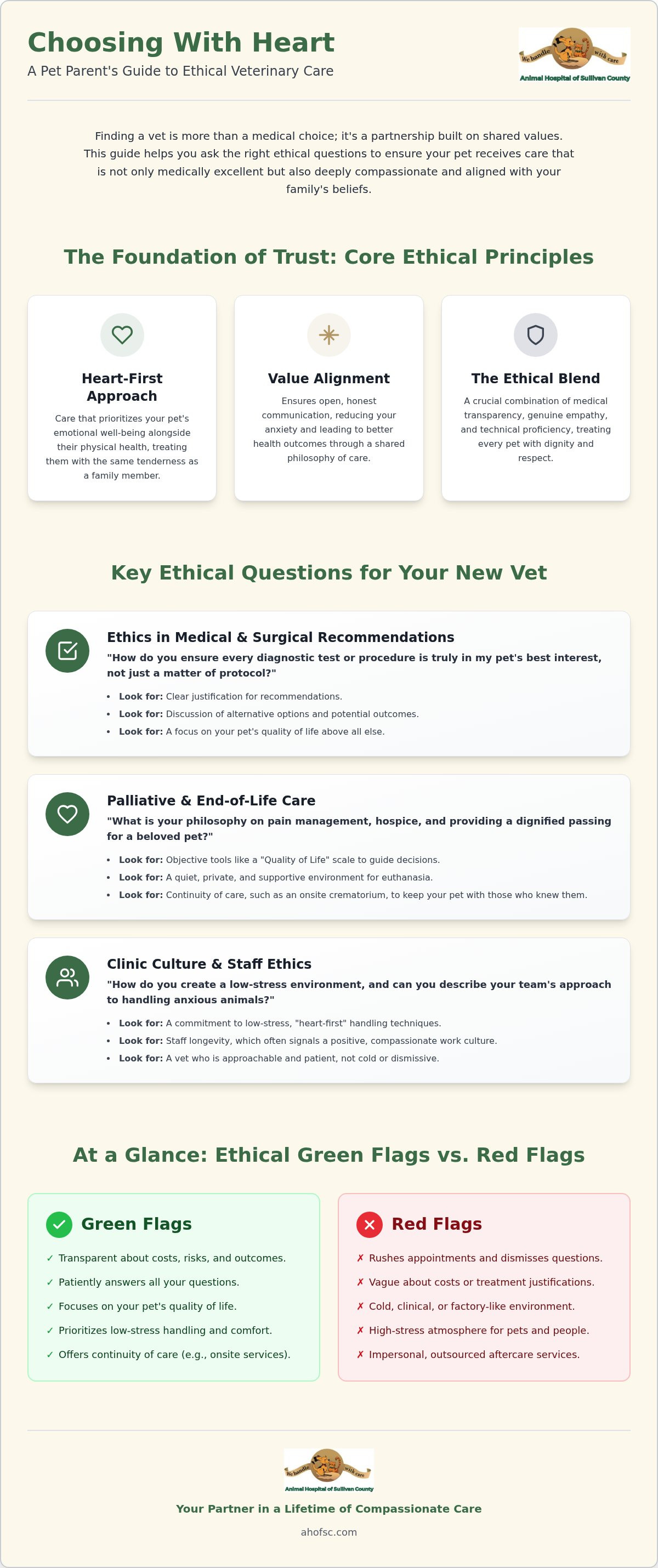
Ethics in the veterinary world isn't just a dry list of rules or professional codes. It's the beautiful point where high-level medical skill meets a deeply compassionate heart. When you're considering the right ethical questions to ask a new vet, you're really looking for a partner who understands that your pet is a cherished member of your family. This Veterinary Ethics Overview highlights that the field involves complex decisions that balance animal welfare with the human-animal bond. It's a sacred trust that requires more than just a white coat and a stethoscope.
A "heart-first" approach is the cornerstone of any family-oriented practice. It means your vet treats your pet with the same tenderness they'd give their own. To provide truly ethical care, a clinic must offer a blend of medical transparency, genuine empathy, and technical proficiency. It's about the sincerity behind every treatment plan. You don't want a clinical environment that feels like a factory. You want a sanctuary where your pet's emotional well-being is prioritized alongside their physical health.
The Importance of Value Alignment
Your vet shouldn't just be a service provider. They should feel like a dedicated partner in your pet’s lifelong journey. When your values align with your vet's, you'll notice a significant drop in your own anxiety. You'll know that every recommendation is made with your pet's best interest in mind. In a close-knit community like Sullivan County, neighborly empathy is the bedrock of trust. It ensures you aren't just a number in a database, but a neighbor whose family matters. Shared values lead to better health outcomes because communication remains open, honest, and frequent.
Medical Authority vs. Neighborly Empathy
The best veterinarians strike a delicate balance. They command respect through their professional expertise but remain approachable with a warm bedside manner. Clinical detachment can often feel cold or dismissive; for many pet owners, it's a major red flag. You want a guide who is technically proficient but also possesses a gentle touch. This balance ensures that while the medicine is precise, the delivery is kind. True ethical care involves several key traits:
- Transparency: Being open about costs, risks, and expected outcomes.
- Patience: Taking the time to answer every question without rushing.
- Dignity: Treating every animal with respect, regardless of their age or condition.
Ethical veterinary care is a commitment to both medical excellence and emotional support.
Questions Regarding End-of-Life and Palliative Care
Thinking about the final chapters of your pet's life is never easy. It's often the most emotional part of being a pet parent. When you're considering ethical questions to ask a new vet, their approach to senior care and end-of-life transitions is a vital indicator of their character. A compassionate vet acts as a steady guide. They help you navigate these moments with grace and clarity. This alignment with the AVMA Code of Ethics ensures that your veterinarian's primary responsibility remains the health and welfare of your animal companion.
The Ethics of Dignity and Comfort
A vet should provide you with objective tools to measure your pet’s well-being. Many ethical practices use a "Quality of Life" scale. This tool helps you look past your own heartbreak to see how your pet is actually feeling. It's about monitoring pain levels, mobility, and the ability to enjoy daily rituals. For those with aging companions, specialized senior pet care in Sullivan County focuses on maintaining dignity through every stage of the golden years. Ethical care also means providing continuity. Having onsite aftercare, like a crematorium, allows your pet to stay in the care of people who knew and loved them. This avoids the cold, clinical feel of a third-party service. It offers true closure for your family.
Navigating the Hardest Decisions
You need to know how a vet handles the sensitive topic of hospice and euthanasia. Do they offer a quiet, private space? Will they explain every step of the process to ensure you feel supported? An ethical partner treats your pet as a cherished family member until the very last second. They should prioritize pain management and emotional comfort, never making you feel like just another appointment. If you're feeling overwhelmed, resources like pet end of life care in Sullivan County can help guide you through the grieving process. We're here to help you make these choices with a "heart-first" mindset. If you're looking for a clinic that values this sacred bond, consider how a dedicated veterinary partner can support your pet's entire life cycle.
Ethics in Medical and Surgical Recommendations
When your pet needs medical attention, the flood of information can feel overwhelming. You want to know that every test and procedure is truly necessary for your animal's well-being. This is why knowing the right ethical questions to ask a new vet is so helpful. It ensures that medical decisions are based on your pet's specific needs rather than a standard corporate protocol. The Principles of Veterinary Medical Ethics emphasize that veterinarians must always prioritize the health of the patient and the needs of the client.
An ethical vet provides a clear cost-benefit analysis for any complex procedure. They'll explain what a diagnostic test will reveal and how it changes the treatment plan. If a test won't change the outcome or improve your pet's quality of life, a compassionate partner will tell you that. Pain management is another critical ethical pillar. You should ask about their protocols for keeping your pet comfortable before, during, and after any surgical intervention. A "heart-first" practice never treats pain management as an optional add-on; it's a fundamental part of humane medical care.
Transparency in Diagnostics and Surgery
Your veterinarian has an ethical duty to explain the reasoning behind every recommendation. This transparency builds the foundation of trust you need during stressful times. We believe in ensuring informed consent through clear, accessible language that avoids confusing jargon. For example, a trusted veterinary surgeon in Sullivan County will walk you through the surgical standards and recovery expectations before you ever sign a consent form. You deserve to know exactly what to expect so you can make the best decision for your family member.
Referral Ethics and Specialist Partnerships
True ethical care involves knowing clinical limits. Sometimes, doing what's best for your pet means sending them to a specialist who has advanced equipment or training for a specific condition. An ethical vet maintains primary care oversight while coordinating with these experts to ensure a seamless journey for your pet. They won't let ego or clinic revenue get in the way of a life-saving referral. They act as your pet's advocate, ensuring they receive the highest level of care available. An ethical vet prioritizes the pet’s recovery over clinic revenue.
Evaluating the Clinic’s Culture and Staff Ethics
The atmosphere of a veterinary clinic tells a story about the care your pet will receive. When considering ethical questions to ask a new vet, it is important to look beyond the medical equipment and focus on the people. A calm and welcoming environment isn't just a luxury for the owners. It directly affects your pet's stress levels and their overall health during a visit. If a clinic feels frantic or overly clinical, it might be a sign that the team is too overwhelmed to provide the heart-first attention your animal deserves.
Staff Longevity and Compassion Fatigue
Staff turnover is a significant indicator of a clinic's ethical health. Veterinary medicine is a demanding field, and compassion fatigue can take a toll on even the most dedicated professionals. A practice that prioritizes its team's well-being fosters a group of happy, supported individuals who can offer better care to your pet. When you find a team that has been together for years, you find a family that is ready to welcome yours. This stability means your pet will see familiar faces who understand their unique personality and medical history. A compassionate expert knows that a gentle touch and a patient spirit are essential for a positive medical experience.
Community Advocacy and Local Roots
There is a profound sense of accountability that comes with being a long-standing community advocate. Our roots in the region stretch back to 1953, and this legacy of trust is something we cherish. Being a local Animal Hospital of Sullivan County families have trusted for generations means we view our clients as neighbors. This connection fosters a sincere commitment to the quality of life for every animal in our care. We aren't just a corporate branch; we are your partners in care.
You should also ask about the clinic’s philosophy on low-stress handling. Do they prioritize "fear-free" techniques to help keep your pet calm? An ethical clinic will always put your pet's emotional well-being at the forefront of every visit. If you are looking for a partner who treats your pet like family, we encourage you to discover the difference a compassionate team makes at our clinic.
Choosing a Partner in Sullivan County
Finding the right fit for your family means looking for a practice that treats your animal as a cherished household member. At the Animal Hospital of Sullivan County, we've spent over 70 years building a legacy of sincerity and medical excellence. Since 1953, our clinic has been a steady presence for local families. Under the leadership of Dr. Barbara Bodolosky, known affectionately as Dr. B, we continue to prioritize a "heart-first" approach in everything we do. This commitment ensures that when you bring your ethical questions to ask a new vet to us, you'll find answers rooted in compassion and transparency.
Our full-spectrum care covers every stage of your pet's life. We provide everything from preventive diagnostics and surgical care to a unique onsite crematorium. This allows for ethical continuity that most corporate practices simply cannot offer. Your pet stays in the care of people who know them, from their first wellness visit to their final, dignified transition. We invite you to experience this level of dedication during our business hours, where we focus exclusively on the specialized needs of small animals.
Why Our Heart-First Approach Matters
We believe that veterinary medicine is a partnership of values. Our mission is to alleviate the anxiety often associated with medical care by providing a reassuring and welcoming environment. When we talk about a "heart-first" approach, we mean that your pet’s emotional well-being is just as important as their physical health. We treat every animal with the tenderness they deserve, ensuring they feel safe and loved. This focus on the sacred bond between you and your pet is what makes us a trusted community advocate. It's about providing peace of mind for the owner while ensuring the highest quality of life for the pet.
Your Next Steps for Peace of Mind
If you're ready to find a medical partner who aligns with your personal values, the best first step is to schedule a wellness exam. This visit is the perfect time to discuss your ethical questions to ask a new vet in a calm, unhurried setting. We can walk you through our surgical standards, pain management protocols, and long-term wellness plans. For holistic support between visits, you can also explore our pet store products veterinary clinic guide to find high-quality items we trust. Trusting a practice with over seven decades of local history gives you the confidence that your pet is in the most capable and kind hands.
Building a Lifelong Partnership of Trust
Choosing a veterinarian is about more than finding a clinic; it's about finding a partner who honors the sacred bond you share with your pet. By preparing your ethical questions to ask a new vet, you ensure that your animal's medical journey is guided by transparency, dignity, and genuine empathy. You've learned how to evaluate everything from surgical standards to the importance of onsite aftercare. These steps give you the peace of mind that your cherished family member is always in capable and kind hands.
Since 1953, we've served Sullivan County families with a heart-first approach that prioritizes quality of life above all else. Led by Dr. Barbara Bodolosky, our team provides seamless care through our onsite diagnostic lab and unique onsite crematorium. We treat every patient with the same tenderness we'd give our own. Join our family of care; schedule your first visit to the Animal Hospital of Sullivan County today. We look forward to becoming your trusted advocate and walking alongside you in this journey of care.
Frequently Asked Questions
Is it rude to ask a vet about their ethical philosophy?
It isn't rude at all to discuss values with a medical professional. In fact, a compassionate veterinarian will appreciate your dedication to your pet's well-being. Asking these ethical questions to ask a new vet helps establish a foundation of trust and transparency from the very first appointment. We believe that open communication is the key to a healthy partnership. If a provider seems dismissive of your concerns, it might be a sign that their bedside manner isn't the right fit for your family.
How do I know if a vet is recommending too many tests?
Transparency is the best indicator of medical necessity. An ethical veterinarian will always explain the specific goal of every diagnostic test and how the results will change your pet's treatment plan. If a test is recommended, ask if the outcome will improve your pet's quality of life or lead to a different medical path. A trusted partner will provide a clear cost-benefit analysis and won't pressure you into procedures that don't offer a tangible benefit to your animal companion.
What should I do if my vet’s values don’t match mine?
If you feel a disconnect between your personal values and your vet's medical approach, it is perfectly acceptable to seek a second opinion. Your pet's care is a collaborative journey, and you deserve to work with someone who respects your perspective. Finding a "heart-first" practice where you feel heard is vital for your peace of mind. Don't be afraid to move on to a clinic that feels like a better fit for your family's unique needs and beliefs.
Does an ethical vet always recommend the most expensive treatment?
No, an ethical veterinarian focuses on the most effective treatment for your pet's specific condition and quality of life. Expensive doesn't always mean better. A compassionate expert will offer a range of options, discussing the pros and cons of each with complete honesty. They prioritize the animal's recovery and comfort over clinic revenue. This ensures you can make informed decisions that align with both your budget and your pet's health requirements.
What is the most important ethical question to ask during a first visit?
One of the most critical ethical questions to ask a new vet involves their philosophy on quality of life and pain management. Understanding how they assess an animal's well-being during senior years or chronic illness tells you a lot about their core values. You want to know if they prioritize comfort and dignity as much as you do. This conversation sets the tone for the entire relationship and ensures you are on the same page before a crisis occurs.
How can I tell if a vet clinic has a high staff turnover?
You can often gauge staff stability by observing the team's interactions and asking how long the core staff has been with the practice. In a healthy, ethical work environment, you will see familiar faces year after year. High turnover can sometimes indicate a stressful or unsupportive culture, which can eventually impact the quality of patient care. A long-standing team, like the one we've fostered since 1953, suggests a stable environment where everyone is deeply invested in their patients.
Why is onsite cremation considered an ethical choice?
Onsite cremation provides ethical continuity by ensuring your pet stays in the care of people who knew them throughout their life. It removes the need for third-party transport and offers families a greater sense of dignity and peace of mind during a difficult transition. This "heart-first" approach ensures that your pet is treated as a cherished family member until the very end. It allows for a more personal, compassionate experience that honors the sacred bond you shared.
What happens if my pet has an emergency outside of business hours?
Our clinic provides emergency treatment for urgent pet health needs during our standard business hours. If your pet experiences a medical crisis while we are closed, you should contact a local 24/7 emergency veterinary hospital immediately. While we focus on providing consistent, high-quality care throughout the day, we want to ensure your pet has access to medical help at any hour. Always keep the contact information for the nearest after-hours facility in a visible place for quick access.


