
What if the most courageous medical decision you ever make for your pet isn't about finding a cure, but about choosing a peaceful goodbye? When your cherished family member is facing a terminal diagnosis, the weight of every choice can feel overwhelming. It's completely natural to feel a mix of guilt over stopping aggressive treatments and a deep fear that your companion might be in pain. We understand that this journey is incredibly personal. Our goal is to help you explore the various end of life options for pets with cancer with professional medical guidance and a compassionate, heart-first approach.
You want what's best for your pet, and sometimes that means prioritizing dignity over duration. This guide provides a clear framework for measuring your pet's quality of life so you can make decisions with confidence. We'll explain the differences between palliative care and curative treatment, and walk you through the euthanasia process with the gentleness your pet deserves. Finally, we'll discuss how our onsite crematorium ensures your companion stays in our trusted care every step of the way, giving you the peace of mind you need during this difficult time.
Key Takeaways
- Learn how to shift your focus from curative treatments to comfort-focused hospice care to prioritize your pet's daily happiness.
- Discover objective ways to measure your companion's well-being using the HHHHHMM scale and the "Good Days vs. Bad Days" calendar method.
- Understand how professional pain management and palliative care can help manage the specific symptoms associated with different types of pet cancer.
- Explore the various end of life options for pets with cancer to ensure your pet experiences a peaceful, dignified, and entirely pain-free transition.
- Find comfort in a full circle of care that includes onsite crematorium services, ensuring your cherished pet remains in trusted hands from start to finish.
Navigating the Path Forward After a Pet Cancer Diagnosis
Hearing the word "cancer" during a veterinary appointment is a life-altering moment. It brings an immediate emotional weight that can feel impossible to carry. You might find yourself cycling through shock, grief, and a desperate desire to fix everything. We want you to know that these feelings are a testament to the love you have for your companion. Cancer progression in pets presents unique challenges, often affecting their energy levels and personality before their physical health visibly declines. Understanding the various end of life options for pets with cancer is the first step in regaining your footing and advocating for your pet's comfort.
When 'Cure' Is No Longer the Goal
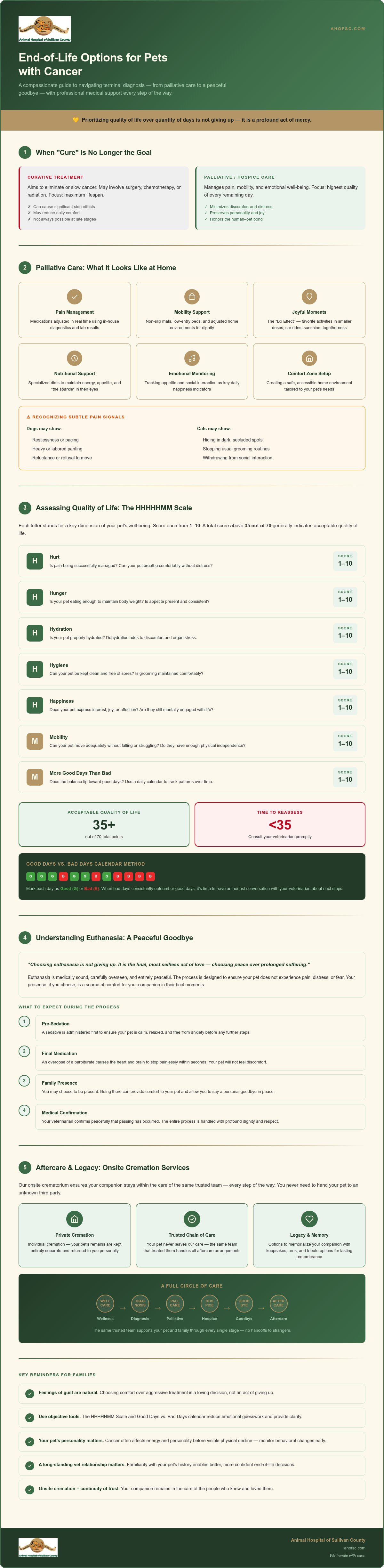
In veterinary medicine, there is a distinct shift that happens when we move from trying to cure a disease to focusing entirely on comfort. This transition isn't a sign of giving up. It is a profound act of mercy. It means we are choosing to prioritize the quality of your pet's days over the sheer quantity of them. Our team at Animal Hospital of Sullivan County uses our in-house laboratory to get immediate diagnostic results, which helps us monitor how the cancer is progressing. These facts allow us to help you set realistic expectations for your pet's daily routine. We'll help you recognize when a favorite activity is becoming a struggle and how to adjust your home environment to keep them feeling safe and cherished.
The Role of Compassionate Medical Authority
Making difficult choices is easier when you have a trusted partner by your side. A long-standing relationship with a veterinarian like Dr. B provides the medical authority you need to feel confident in your path. We believe in balancing clinical data with the emotional realities your family is facing. If the journey leads toward Animal euthanasia, we are here to ensure the process is peaceful and medically sound. The relationship between a human and their pet is a sacred bond that deserves to be honored with both technical excellence and a gentle heart. By discussing end of life options for pets with cancer now, you are ensuring that your pet remains in the care of the same team that has supported their wellness for years.
Palliative Care and Hospice: Keeping Your Pet Comfortable
When a cancer diagnosis becomes terminal, the focus of medical care shifts from finding a cure to ensuring a peaceful journey. Veterinary hospice isn't just a destination; it's a dedicated philosophy of care that prioritizes your companion's comfort and emotional well-being. By exploring end of life options for pets with cancer, you can create a supportive environment that honors the bond you share. This phase of life is about making every moment count while minimizing distress and pain. It's a way to give back to the animals who have given us so much.
Managing Pain and Mobility
Pain in our animal companions can be incredibly subtle. Dogs may exhibit restlessness, heavy panting, or a reluctance to move. Cats often hide in dark corners or stop their usual grooming routines. For common cancers like bone cancer or lymphoma, managing this discomfort requires a proactive and personalized approach. We utilize the pet diagnostics Sullivan County pet parents rely on to monitor internal changes and adjust medications in real time. Creating a "comfort zone" at home is another essential step. You can help by placing non-slip mats on slippery floors or providing low-entry beds to help your pet move with dignity and ease.
The 'Bo Effect': Prioritizing Joyful Moments
Palliative care is the art of managing the day-to-day. While medical management is crucial, the emotional health of your pet is just as important. We encourage families to embrace the "Bo Effect" by finding ways to incorporate their pet's favorite activities in smaller, manageable doses. Perhaps it's a slow car ride with the windows down or simply sitting together in the sun. Nutritional support also plays a role in maintaining energy. We can suggest specialized diets to keep them interested in their meals and keep "the sparkle" in their eyes. Monitoring their appetite and desire for social interaction helps you gauge their daily happiness. The ASPCA notes in their resources on End of Life Care for Pets that these indicators are vital for assessing quality of life. If you have questions about how to best support your pet, our team is here to offer a gentle consultation to help you navigate these end of life options for pets with cancer with confidence.
Assessing Quality of Life: How to Know When It's Time
The most frequent question families ask us is how they will know when the time is right. When you are navigating end of life options for pets with cancer, the "right" time can feel like a moving target. It is a heavy emotional burden to carry alone, and it's completely normal to feel conflicted. We believe that involving your whole family in this decision-making process is vital. It allows everyone to share their observations and find collective peace. By using objective tools, we can move away from guesswork and focus on the reality of your companion's daily experience.
Objective Tools for a Subjective Decision
The HHHHHMM scale is a reliable way for Sullivan County families to evaluate their pet's well-being across seven key categories: Hurt, Hunger, Hydration, Hygiene, Happiness, Mobility, and More good days than bad. Scoring these areas helps you see a clearer picture of your pet's physical and mental state. We also recommend the "Good Days vs. Bad Days" calendar method. Simply mark a happy or sad face on each day of the month. If the sad days consistently outnumber the happy ones, it is often a sign that the cancer is progressing toward a point of no return. Many owners worry about waiting too long, but these metrics provide the clarity needed to manage that fear. Our team is always available to provide a professional second opinion on these scores to ensure you feel confident in your path.
Listening to Your Pet's Cues
Sometimes the most telling signs aren't found on a checklist. You know your pet's unique spirit better than anyone else. Watch for subtle shifts in personality, such as a social dog withdrawing to a quiet corner or a cat no longer seeking out your lap. We often suggest the "three favorite things" test. Think of three activities that have always defined your pet's joy, like playing with a specific toy, eating a favorite treat, or watching birds from the window. When they can no longer enjoy these things, it indicates a significant decline in their mental well-being. This transition is a natural part of the aging process, which we discuss further in our guide to Senior pet care Sullivan County. When the time eventually comes to say goodbye, we strictly adhere to the AVMA Euthanasia Guidelines to guarantee a medically sound and compassionate transition. Discussing end of life options for pets with cancer early ensures your final choices are rooted in love rather than a moment of medical crisis.
Understanding Euthanasia: A Peaceful and Dignified Goodbye
Choosing to say goodbye is perhaps the most difficult decision you'll ever make as a pet parent. It is a selfless act of love that prioritizes your companion's need for peace over your own desire to keep them near. When you explore end of life options for pets with cancer, understanding the euthanasia process can help replace fear with a sense of calm. Our goal is to ensure that your pet's final moments are filled with the same dignity and affection that defined their entire life. We handle every detail with neighborly empathy, ensuring you feel supported by a team that truly cares.
The Clinical Process Step-by-Step
Demystifying the medical steps can alleviate much of the anxiety surrounding this procedure. We believe in a gentle, multi-step approach to guarantee total comfort. First, we administer a sedative that induces a state of deep relaxation and sleep. This ensures your pet feels no pain or distress. Once they are resting comfortably, we provide the final injection, which is a concentrated anesthetic that allows the heart to stop peacefully. It's common to see a few deep breaths or minor muscle reflexes after the injection. These are involuntary physical responses and don't indicate any awareness or discomfort. Finally, our medical team will quietly confirm the passing, allowing you all the time you need for a private farewell.
Creating a Soothing Environment
We want our clinic to feel like a safe haven for your family. You are welcome to bring favorite blankets, cherished toys, or even play soft music that your pet finds comforting. Some families choose to be present for the entire process, while others prefer to say their goodbyes beforehand. Both choices are valid and respected. Our Ferndale staff is here to facilitate whichever path feels right for you, providing a steady and calming presence throughout the visit. If you're looking for more guidance on how we personalize these moments, please view our resources on Compassionate pet end-of-life care Sullivan County.
Knowing your end of life options for pets with cancer allows you to plan a transition that honors your pet's legacy. Whether you need to discuss the timeline or simply want to understand the logistics better, we are here to listen. Please contact our compassionate team today to discuss how we can support your family during this time.
Aftercare and Legacy: Our Onsite Crematorium Services
The journey with your companion doesn't end the moment they take their final breath. For many families, the "chain of custody" regarding their pet's remains is a source of significant anxiety. They want to know exactly where their cherished family member is and who is looking after them. At Animal Hospital of Sullivan County, we believe in a "Full Circle of Care" that honors your pet's life from their very first wellness visit to their final rest. By providing comprehensive end of life options for pets with cancer, we ensure that your companion remains in the hands of the team they have known and trusted for years.
Why Onsite Cremation Matters
Most veterinary clinics use third-party services for aftercare, which means your pet's remains are transported to an offsite facility. We chose a different path to better serve our community. Our facility in Ferndale features a unique onsite crematorium, allowing us to provide immediate care and total privacy. This eliminates the need for outside transport and ensures that your companion never leaves our supervision. It's a level of security that brings immense peace of mind to grieving families during a vulnerable time. If you are looking for more details on these specific arrangements, our guide to Pet crematorium services Sullivan County offers a deeper look at the process.
When choosing between cremation types, we offer two primary paths to honor your pet's memory. Private cremation ensures that your pet is cremated alone, and their ashes are returned to you in a memorial urn. This is often the preferred choice for those who wish to keep a physical reminder of their bond at home. Communal cremation is a dignified option where several pets are cremated together. While ashes are not returned in this instance, you can rest assured that the process is handled with the same reverence and medical professionalism as every other service we provide. These end of life options for pets with cancer are designed to meet your family's emotional and practical needs with total transparency.
Honoring the Sacred Bond
Creating a lasting legacy is a vital part of the healing process. Our onsite pet store offers a variety of memorial products, including specialized urns and keepsakes that help you celebrate the joy your pet brought into your home. Beyond physical memorials, we are committed to supporting your emotional health. We can connect families in the Tri-State area with local grief support resources to help navigate the complex feelings that follow a loss. We are dedicated to providing your companion with unwavering dignity from wellness to rest.
Honoring Your Journey Together
Facing a terminal diagnosis is never easy, but you don't have to navigate this path alone. By focusing on quality of life and utilizing objective tools like the HHHHHMM scale, you can ensure your companion's final days are filled with comfort rather than pain. Transitioning to palliative care allows you to cherish the "sparkle" in their eyes while prioritizing their dignity above all else. Choosing the right end of life options for pets with cancer is a final, profound act of devotion that honors the sacred bond you share.
Since 1953, the Animal Hospital of Sullivan County has stood by local families with a heart-first approach. Led by Dr. B, our dedicated staff provides professional medical authority paired with neighborly empathy. We offer a full circle of care, including our unique onsite crematorium, so your pet never leaves our trusted hands. Whether you need help managing pain or are ready to discuss a peaceful goodbye, we are here to support you with kindness and patience. Please speak with our compassionate team about your pet's needs today. You've provided a lifetime of love; let us help you provide a peaceful rest.
Frequently Asked Questions
How do I know if my pet with cancer is in pain?
Pets are experts at hiding discomfort, so you must look for subtle behavioral shifts. Common signs include heavy panting, restlessness, or a social pet suddenly withdrawing to a quiet corner. Since cancer often affects internal organs, pain might manifest as a loss of appetite rather than a visible limp. Using objective tools like the HHHHHMM scale helps you track these changes. We recommend keeping a daily log to monitor their comfort alongside our diagnostic check-ups.
What is the difference between palliative care and hospice for pets?
Palliative care focuses on comfort and can be used alongside curative treatments to manage side effects. Hospice care begins when the goal shifts entirely away from a cure toward a peaceful journey's end. Both prioritize quality of life, but hospice is specifically for terminal cases. Discussing end of life options for pets with cancer early helps you decide which phase of care best fits your companion's needs during their final months.
Can I stay with my pet during the euthanasia procedure?
Yes, you are absolutely welcome to stay with your pet. Many families find comfort in being the last thing their companion sees and feels. If you prefer to say your goodbyes beforehand, our staff will provide the same gentle care and presence. This is a deeply personal choice, and there is no wrong way to honor your bond. We support whichever decision brings your family the most peace and emotional security.
What are the benefits of an onsite crematorium for pets?
An onsite crematorium ensures your pet remains in the care of the team they've known since they were young. Most clinics transport remains to third-party facilities, but our "Full Circle of Care" keeps your companion in Ferndale. This provides a higher level of privacy and ensures your pet is handled with the reverence they deserve. It offers significant peace of mind knowing the "chain of custody" never leaves our trusted hands or our dedicated supervision.
How long does the pet cremation process take at your facility?
We prioritize every aftercare request with the highest level of respect and sincerity. While the exact timing can vary depending on whether you choose private or communal cremation, our local team in Sullivan County manages the entire process onsite. This allows us to maintain a steady, comforting rhythm for families. We work diligently to ensure your pet's remains are handled promptly so you can focus on honoring their legacy and finding your own path toward healing.
Is it better to euthanize at home or at the veterinary clinic?
Both options have benefits depending on your family's needs. A clinic setting like ours in Ferndale provides immediate access to medical resources and a dedicated, quiet space designed for comfort. Some families prefer the controlled environment where our professional staff can manage every clinical detail with precision. Others may seek home services for a familiar setting. We recommend choosing the environment where you and your pet feel the most secure and supported during the transition.
What should I tell my children about our pet's cancer and end-of-life?
Honesty is usually the best approach when talking to children. Use clear, age-appropriate language and avoid euphemisms like "going to sleep," which can cause confusion or fear of bedtime. Explain that the pet's body has stopped working and they won't feel any more pain from the cancer. Focusing on the love you shared and the peaceful nature of the transition helps children process their grief. It allows them to say goodbye in a healthy and supportive way.
How much does pet euthanasia and cremation cost in Sullivan County?
Costs for these services in Sullivan County depend on several factors, including the size of your pet and your chosen aftercare. Private cremation, where ashes are returned to you, differs from communal options. Because every situation is unique, we encourage you to contact our office for a personal consultation. This allows us to discuss your specific end of life options for pets with cancer and provide clear information tailored to your family's needs and wishes.


