
It is late in the evening, and as you settle in on the couch, you notice your cherished household member’s chest is rising and falling much faster than usual. We know that sudden, heavy pit in your stomach when you aren't sure if your dog is just tired from a walk or facing a medical crisis! It is completely natural to feel a wave of anxiety when your pet's breathing seems off, and we understand the worry that comes with deciding if an urgent vet visit is truly necessary.
Your bond with your animal is a sacred one, and your instinct to protect them is your greatest strength. This guide will help you understand exactly what to look for when your dog breathing fast what to do, giving you the professional tools to assess their health with confidence and calm. We are here to provide the steady, compassionate guidance you need during these uncertain moments. Our goal is to replace that fear with a clear plan of action.
You will learn how to accurately measure a resting respiratory rate, identify the specific red flag symptoms that require immediate attention, and discover how onsite diagnostics can provide the fast answers your family deserves. Let's take a deep breath together and walk through the steps to keep your pet safe and comfortable.
Key Takeaways
- Learn how to calculate your dog's Resting Respiratory Rate (RRR) while they sleep to distinguish between normal panting and a potential health concern.
- Discover the immediate steps for a dog breathing fast what to do, including how to create a calm, cool environment to lower their stress levels.
- Identify critical "red flag" symptoms like blue or pale gums and excessive drooling that signal your cherished family member needs urgent medical care.
- Understand how advanced onsite diagnostics like X-rays and bloodwork can provide the fast, accurate answers needed to treat respiratory distress effectively.
Understanding Your Dog's Breathing: Normal vs. Abnormal
Seeing your cherished household member struggle for air is one of the most frightening experiences a pet parent can face. We believe that knowledge is the best way to calm those fears. When your pet breathes rapidly, it is clinically known as Tachypnea. While this can be a normal response to a game of fetch or a warm summer day in Ferndale, it can also be a quiet whisper from their body that something is wrong. Understanding the baseline for your dog's health is the first step in being their best advocate and ensuring their long term well-being.
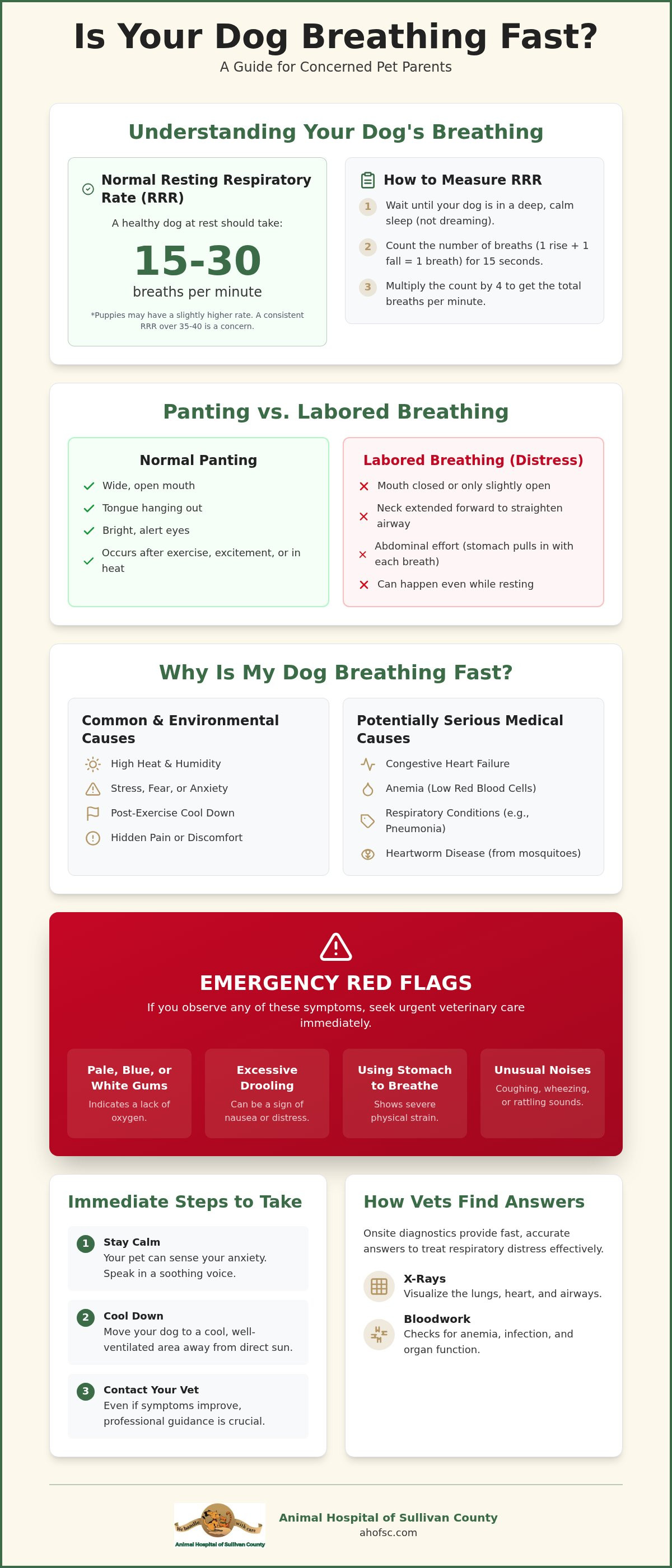
A healthy dog at rest typically takes between 15 and 30 breaths every minute. Puppies often have a slightly higher rate because their little bodies are growing fast, while seniors might have a slower, deeper rhythm. If you are wondering about your dog breathing fast what to do, the most important thing is to establish what is normal for them before a crisis occurs. This baseline allows you to spot subtle changes that others might miss.
How to Calculate Your Dog's Resting Respiratory Rate
The best time to check your pet's breathing is when they are fast asleep or completely relaxed. This is what we call the Resting Respiratory Rate (RRR). Counting while they are active or excited won't give us the clear, accurate picture we need to assess their internal health. It's a simple process that you can do right at home to gain peace of mind.
- Wait until your pet is sleeping soundly and is not dreaming or "running" in their sleep.
- Watch the rise and fall of their chest; one rise and one fall equals one single breath.
- Use the 15 second trick: Count the breaths for exactly 15 seconds.
- Multiply that number by four to get the total breaths per minute.
If you consistently count a rate over 35 to 40 breaths per minute while your dog is resting, it is a sign that their heart or lungs might be working too hard. This is a moment to reach out for professional guidance to ensure your pet stays safe and comfortable.
Panting vs. Labored Breathing
It is helpful to distinguish between a happy pant and true respiratory distress. Normal panting usually involves a wide, open mouth, a long tongue, and bright, alert eyes. It is how dogs naturally cool themselves down after a walk or a play session. Labored breathing, on the other hand, looks very different. Your dog might keep their mouth closed or only partially open while their neck is extended forward as if they are trying to straighten their airway to get more air.
One of the most serious signs is abdominal effort, which is where the stomach hitches or pulls inward with every single breath. This shows that your pet is using their whole body just to get enough oxygen. If you see this kind of physical strain, it is time to seek help immediately.
Why Is My Dog Breathing Fast? Common and Serious Causes
When you notice your dog's breathing is faster than normal, it's hard not to let your mind race with worry. There are many reasons why this might happen. Some are simple environmental issues, while others are serious medical emergencies that require our immediate attention. Recognizing respiratory distress is the first step in being a hero for your pet. Conditions like pneumonia or anemia, where the blood carries less oxygen, often force the body to breathe faster to compensate. Congestive heart failure is another major cause, as a weakened heart cannot pump blood effectively, leading to fluid accumulation in the lungs.
High heat and humidity are common triggers, especially during our New York summers. Since dogs don't sweat like we do, they rely on breathing to cool down. If the air is stagnant or the room is too warm, they can quickly become overwhelmed. Emotional triggers like fireworks or a loud thunderstorm can also cause a spike in their respiratory rate. Even hidden physical pain from an internal injury or a sore joint can cause a dog to breathe rapidly as they try to cope with the stress. If you are unsure about your dog breathing fast what to do, start by checking their environment for these stressors and moving them to a cooler space.
Respiratory Risks in Sullivan County
Living in our beautiful part of the state comes with specific risks that every pet parent should know. Heartworm disease, spread by local mosquitoes, can lead to permanent lung scarring and severe breathing issues. This makes it much harder for your cherished household member to get the oxygen they need. Lyme disease is also a significant concern in our community. A dog suffering from the systemic joint pain associated with Lyme might breathe heavily just from the physical effort of moving around. For more on protecting your pet from these local threats, read our guide to ticks on dogs Sullivan County. Staying ahead of these parasites is a vital part of their long term health.
Breed-Specific Concerns
Some of our furry friends are born with physical traits that make breathing more of a challenge. Brachycephalic breeds like Pugs, Bulldogs, and Boxers often struggle with airway obstructions due to their short snouts and narrow nostrils. These pets are much more sensitive to heat and exercise. Small breeds, such as Cavalier King Charles Spaniels or Chihuahuas, are more prone to mitral valve disease, which can cause fluid to build up in the lungs and lead to rapid breathing. Senior dogs are naturally more prone to congestive heart failure as their organs age and lose efficiency over time. If you notice your older pet breathing fast what to do, it is often a sign that their heart needs a little extra support from our medical team.
A Step-by-Step Guide: What to Do When You Notice Rapid Breathing
When you first realize your cherished household member is struggling, your instinct to act is your most powerful tool. Staying calm is essential, as your pet looks to you for a sense of security. If you are unsure about your dog breathing fast what to do, following a structured plan can help you stabilize the situation while you determine the next steps. We are here to guide you through this process with a heart-first approach that prioritizes your pet's safety and your peace of mind.
- Step 1: Seek a Cool Sanctuary. Immediately move your dog to a quiet, well-ventilated area with air conditioning or a gentle fan. Since a reliable cooling system is vital for your pet's safety, you can discover First Choice Plus Plumbing & Air for expert insights into maintaining a comfortable and safe indoor climate. If they are outside in the Sullivan County humidity, bring them indoors right away. Heat is a major stressor for the respiratory system.
- Step 2: Minimize Stress. Gently lead other pets, active children, or loud noises away from the room. A peaceful environment lowers your dog’s heart rate and reduces their body’s demand for oxygen.
- Step 3: Perform a Visual Assessment. Look at their posture and gum color without causing them further distress. This quick check provides vital clues about their internal oxygen levels.
- Step 4: Record a Video. Use your phone to take a 30-second video of their chest movements and facial expression. This recording is incredibly helpful for our medical team to see exactly how they were behaving before you arrived at the clinic.
- Step 5: Call for Triage. Contact your veterinarian or a local emergency facility. Describe what you see, share the resting respiratory rate you calculated, and ask for professional guidance on whether to come in immediately.
The 60-Second Home Health Check
A quick look at your pet's gums can tell you a lot about their circulation. Healthy gums should be a vibrant, bubblegum pink. If they appear pale, blue, or a dark brick red, your pet needs medical attention. You can also test their capillary refill time by gently pressing your finger against the gum until it turns white. When you let go, the pink color should return in under two seconds. Another sign of distress is orthopnea, where a dog refuses to lie down or stands with their elbows flared out and neck extended to make breathing easier. This posture is a clear signal that they are working hard to stay comfortable.
When to Wait and When to Drive
Deciding when to seek urgent care can be a difficult choice. If your dog’s breathing returns to a normal, relaxed state within 10 minutes of moving to a cool room, they may have simply been overexerted. However, we follow a strict "No-Wait" rule for certain symptoms. If your pet's tongue is blue, if they collapse, or if they are gasping with their mouth wide open, leave for the vet immediately. When transporting a pet in distress, keep the car cool and avoid using a muzzle. A muzzle can restrict their ability to pant and worsen a respiratory crisis. Your goal is a smooth, quiet journey to professional help.
Recognizing the Signs of a Veterinary Emergency
While some rapid breathing is a temporary reaction to excitement, other signs are clear signals that your pet's life may be in danger. Knowing these "red flags" helps you move past the initial panic and take decisive action. If you see your dog breathing fast what to do becomes much clearer when you can identify a true medical crisis. These symptoms suggest that your pet's body is no longer able to compensate for a lack of oxygen or a rising internal temperature. We want you to feel empowered to recognize these moments so you can get your cherished household member the help they need right away.
- Excessive Drooling or Foaming: If your dog is panting heavily and producing thick saliva or foam, it is often an early warning of heatstroke.
- Discolored Gums: Gums that appear blue, purple, or extremely pale are a sign that oxygen is not reaching the tissues. This is a critical emergency.
- Collapse or Stumbling: Extreme weakness or an inability to stand shows that the respiratory or cardiovascular system is failing.
- Heavy Abdominal Effort: As we mentioned earlier, when the stomach muscles are visibly heaving to pull in air, your dog is in significant distress.
- Refusal to Eat or Drink: When a dog is so focused on breathing that they ignore their favorite treats or water, their condition is severe.
Heatstroke: A Summer Emergency in the Tri-State
The humidity here in Sullivan County can be just as dangerous as the actual temperature. High moisture in the air prevents your dog from cooling down effectively through panting. If you suspect heatstroke, immediate first aid is vital. Gently douse your pet with cool water, but never use ice-cold water or an ice bath. Extreme cold can cause the blood vessels to constrict, which actually traps heat inside the body and makes the situation worse. Use a fan to help with evaporative cooling while you prepare to transport them to our clinic.
Heart Failure and Fluid in the Lungs
A "wet" sounding cough combined with rapid breathing is a major red flag for congestive heart failure. This happens when the heart can no longer pump efficiently, causing fluid to leak into the lung tissue. This condition is especially common in our older companions. For more information on monitoring your pet's health as they age, please visit our guide on senior pet care Sullivan County. It is heartening to know that heart failure is often manageable for a long time if it's caught early. If you notice these signs during our business hours, please contact us immediately for emergency treatment.
Compassionate Respiratory Care at Animal Hospital of Sullivan County
At the Animal Hospital of Sullivan County, we treat every pet like a member of our own family. When you are faced with a dog breathing fast what to do, our Ferndale clinic is ready to provide immediate, daytime emergency treatment during our regular business hours. We know that these moments are filled with worry. Our goal is to offer a steady, calming presence for both you and your pet. Dr. B’s heart-first approach ensures that medical expertise is always delivered with a gentle touch, helping to lower the stress levels of your cherished household member while we work to find a solution.
Finding the cause of a breathing issue quickly is our top priority. Our hospital has been an established part of the community since 1953, and we continue to invest in advanced technology to serve you better. With onsite diagnostics, we don't have to wait days for results from an outside laboratory. This speed is vital when every breath counts. We are your dedicated partner in this journey of care, focusing on the longevity and happiness of your animal companion.
Diagnostic Tools for Breathing Issues
Our facility is equipped with the tools needed to get answers fast. Digital radiography allows us to get a clear, detailed look at your pet's heart and lungs within minutes. This helps us identify fluid buildup, enlarged hearts, or signs of pneumonia immediately. Our in-house lab testing can quickly check for anemia, infection, or heartworm markers that might be causing respiratory distress. For pets in severe crisis, we utilize oxygen therapy to stabilize them and help them breathe more comfortably while we finalize a treatment plan.
Partnering in Your Pet's Long-Term Health
Beyond the initial emergency, we are dedicated to your pet's long-term quality of life. Managing chronic conditions like heart disease or asthma requires a partner who understands the unique needs of your animal. Regular wellness exams are the most effective way to catch subtle changes before they become a crisis. In some cases, a breathing issue might require soft tissue intervention; our veterinary surgeon Sullivan County can guide you through the surgical options available for your pet. We are here to support you through every stage of your journey together, including providing compassionate end-of-life care when the time comes. Your pet's comfort and dignity are always at the center of everything we do.
Protecting Your Pet's Every Breath
Your pet is a cherished member of your family, and their comfort is our highest priority. By learning to measure a resting respiratory rate and recognizing the critical red flags of distress, you're already providing them with a vital layer of protection. We've discussed how quick home assessments and environmental cooling can stabilize your pet, but we also know that some moments require a professional "heart-first" hand. Truly understanding your dog breathing fast what to do means knowing when to trust your instincts and seek expert medical help.
Since 1953, we've been a steady and reliable presence for the Sullivan County community. Dr. Barbara Bodolosky and our dedicated team combine medical expertise with deep compassion to ensure your animal is always in capable hands. With our onsite X-ray and laboratory diagnostics, we can find the cause of your pet's breathing trouble quickly and accurately during our business hours. If your pet is struggling to breathe right now, please call us immediately at (845) 292-6711 or visit our Ferndale clinic for daytime emergency care. We're here to guide you toward peace of mind and a long, happy life for your best friend!
Frequently Asked Questions
Is it normal for a dog to breathe fast while sleeping?
It is not usually normal for a dog to breathe rapidly while they are sound asleep. While some pets might have short bursts of fast breathing during a vivid dream, their respiratory rate should return to a calm, steady rhythm once the dream passes. If your pet's chest is constantly heaving while they rest, it is a sign that their body is working too hard to get oxygen.
How many breaths per minute is too many for a resting dog?
Any rate consistently above 35 breaths per minute while your dog is resting or sleeping is considered too high. A healthy, relaxed animal typically takes between 15 and 30 breaths every minute. If you count more than 35 breaths, we recommend reaching out to a professional for guidance. Keeping a log of these numbers can help us track your pet's health over time.
Can anxiety cause a dog to breathe fast even when it's cool?
Yes, emotional stress and anxiety can trigger rapid breathing even in a perfectly cool room. When a dog feels scared or overwhelmed, their body releases adrenaline, which naturally increases their heart and respiratory rates. If you are wondering about your dog breathing fast what to do in these cases, try to identify and remove the stressor while offering gentle, quiet comfort to help them settle.
What should I do if my dog is breathing fast but acting normal?
You should move your pet to a cool, quiet space and carefully count their resting respiratory rate. Even if they seem bright and alert, a high breathing rate can be an early warning sign of an underlying medical issue like anemia or heart disease. Monitoring them closely for a few hours is important. If the rate does not drop below 30 breaths per minute after resting, it is time to call for a professional evaluation.
When is fast breathing a sign of heart failure in dogs?
Fast breathing often indicates heart failure when it is paired with a persistent cough or a decrease in energy levels. This happens because the heart is struggling to circulate blood, leading to fluid accumulation in the lungs. You might notice your pet gets tired more easily during walks or has trouble finding a comfortable position to sleep. Early intervention is key to managing these heart conditions effectively. For those interested in the broader importance of cardiac wellness, Surabhi Heart Care Hospital offers a look at the standards of comprehensive heart checkups.
Does Sullivan County have a high risk for heartworm-related breathing issues?
Yes, our local environment in Sullivan County supports a significant mosquito population, which is the primary carrier of heartworm disease. Because heartworms live in the heart and the arteries of the lungs, they cause physical damage that leads to chronic breathing difficulties. We see many cases where pets without consistent prevention develop these serious respiratory issues. Regular testing and monthly prevention are the best ways to keep your animal safe.
How can I tell if my dog is having a heatstroke?
Heatstroke is characterized by frantic panting, bright red or purple gums, and a thick, ropey drool. Your pet might also appear glazed over or struggle to walk straight. This is a life threatening emergency that requires immediate cooling with room temperature water and urgent veterinary care. Never wait to see if they "cool down on their own" if you see these intense physical signs.
Should I give my dog water if they are breathing heavily?
You can offer your dog small amounts of cool water, but you should never force them to drink. If a pet is in severe respiratory distress, they may accidentally inhale water into their lungs, which can lead to aspiration pneumonia. Let them lap up small laps of water at their own pace. If they are too distressed to drink, focus on getting them to a cool environment and seeking medical help instead.


