
You're enjoying a quiet afternoon in Ferndale when you realize your pup just swallowed something dangerous, like a dropped chocolate bar or a stray bottle of vitamins. That instant surge of fear is overwhelming because your dog isn't just a pet; they're a cherished member of your family. When you're frantically searching for dog ate something toxic what to do, the most important thing is to stay calm and follow a proven plan to keep them safe.
We understand the deep bond you share with your animal, and we know that uncertainty only adds to the stress of a potential poisoning. With the ASPCA Animal Poison Control Center handling over 376,000 cases in 2025, you're certainly not alone in this scary moment. This article provides a clear emergency checklist designed to help you manage the crisis and determine the severity of the ingestion. We'll show you how to stabilize your dog immediately, which local Sullivan County resources to contact, and how our compassionate team uses onsite diagnostics to provide the fast, expert care your companion deserves during our regular business hours.
Key Takeaways
- Learn how to safely remove your pet from danger and assess their vitals during the critical first ten minutes of a toxicity crisis.
- Identify common Sullivan County hazards, ranging from hidden kitchen killers like xylitol to local garden threats like lilies and cocoa mulch.
- Discover the specific neurological and gastrointestinal symptoms that signal a life-threatening emergency for your cherished companion.
- Understand why you should avoid common home myths and why knowing dog ate something toxic what to do involves seeking professional guidance before attempting to induce vomiting.
- Learn how rapid onsite diagnostics in Ferndale can identify organ stress and help stabilize your pet during business hours.
Immediate Emergency Checklist: First 10 Minutes
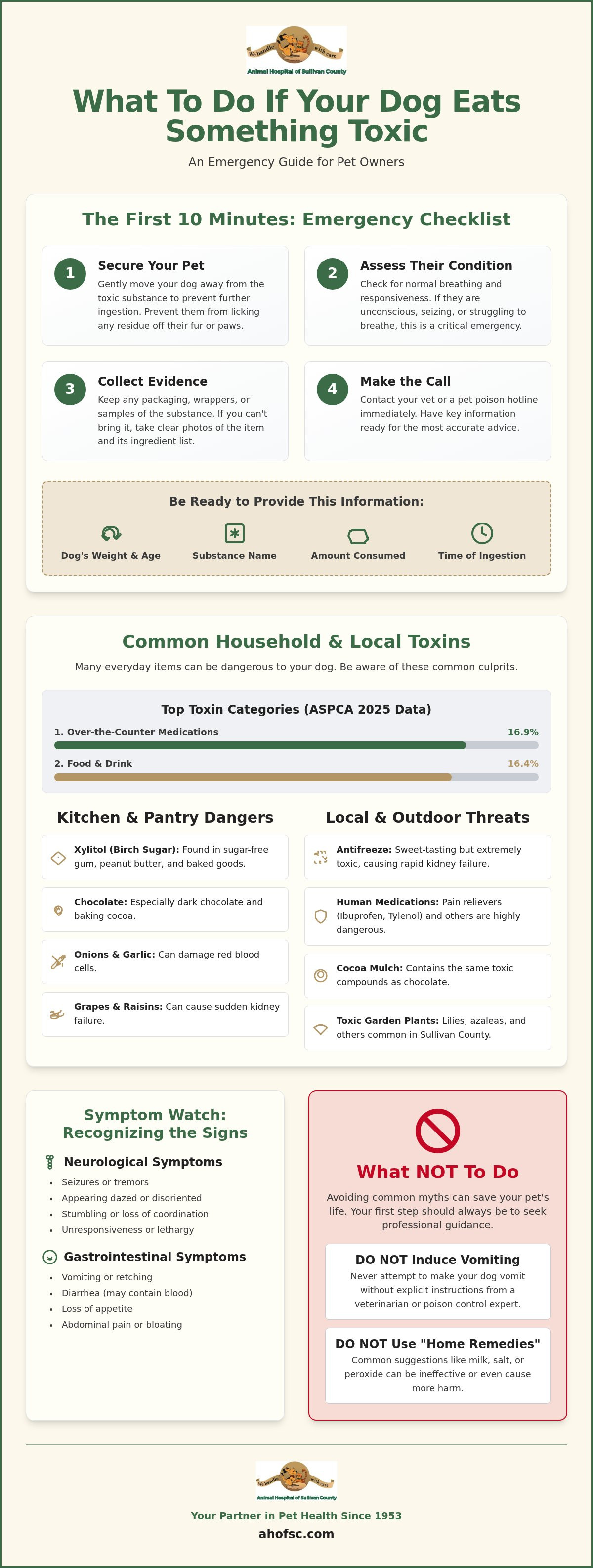
When you realize your companion has ingested something dangerous, your heart probably skips a beat. Take a deep breath. In those first ten minutes, knowing exactly dog ate something toxic what to do can make all the difference in their recovery. Start by gently but firmly moving your dog away from the area to prevent them from eating any more of the substance. If they have powder or liquid on their paws or fur, try to keep them from licking themselves until you get professional guidance.
Next, quickly assess your dog's physical state. Are they breathing normally? Are they alert and responsive, or do they seem dazed? If your pet is unconscious, having a seizure, or struggling to breathe, they need immediate medical intervention. If they seem stable, you have a brief window to gather the information that will help us save their life.
Securing the Scene and the Sample
Please resist the urge to throw away the evidence. Even a chewed up, slobbery wrapper contains vital clues about the concentration of a toxin. For example, if your pup got into the pantry, having the packaging helps us calculate the risk of chocolate poisoning in dogs based on the exact type of cocoa used. If you are dealing with unknown garden plants or chemicals, wear gloves to protect yourself. If you can't bring the source with you, snap several clear photos of the substance and any ingredient lists. This visual data helps our Ferndale team identify the threat much faster than a verbal description.
Placing the Emergency Call
- Your dog's approximate weight and age
- The exact name of the substance ingested
- The estimated amount they consumed
- How long ago the ingestion happened
Having these facts ready ensures the experts can give you the most accurate advice. Our heart-first approach means we want to be prepared the moment you walk through our doors, ensuring your cherished family member receives the swift, steady care they need. We've been a part of this community since 1953, and we are here to guide you through these stressful moments with neighborly empathy and professional skill.
Identifying the Culprit: Common Household and Local Toxins
Identifying exactly what your pup got into is the next crucial step in their care. Our kitchens and gardens often hide items that seem harmless to us but are incredibly dangerous for our animals. If you find yourself wondering dog ate something toxic what to do, knowing these common culprits can save precious time during triage. We treat every patient with the same dedication we'd give our own pets, so providing us with the name of the substance helps us act with precision.
The 'Kitchen Cabinet' Danger List
Many owners are surprised to learn that sugar-free gum or certain brands of peanut butter contain Xylitol, also known as birch sugar. Even a small amount can cause a life-threatening drop in blood sugar or liver failure. While most people know about chocolate, the danger level varies wildly. Dark chocolate and baking cocoa are much more toxic than milk chocolate. Food and drink were the second most common category of pet toxins reported to the ASPCA in 2025, accounting for 16.4% of cases. Grapes, raisins, and onions are also silent threats that can lead to kidney damage or red blood cell destruction. To keep your pup safe while still offering a reward, consider looking into pet store products that are veterinarian-approved for safe snacking.
Human medications are another major concern. In 2025, over-the-counter medications and supplements were the most frequent toxins reported, making up 16.9% of cases. Common household staples like Ibuprofen, Tylenol, and even ADHD medications can be fatal if ingested by a dog. Always keep your medicine cabinet securely locked. Dogs are often surprisingly clever at finding "treats" in plastic bottles.
Regional Threats in Sullivan County
Living in the Catskills brings unique seasonal risks. During our cold Tri-State winters, antifreeze is a major hazard. It has a sweet taste that dogs find irresistible, but even a few licks from a puddle in the driveway can cause rapid kidney failure. In the spring and summer, Sullivan County gardens may host toxic plants like lilies or hydrangeas. Cocoa mulch contains the same toxins as chocolate and should be avoided in pet-friendly yards. If you suspect your dog has nibbled on a local plant or chemical, reviewing emergency first-aid for dog poisoning from experts like Cornell can provide additional peace of mind while you prepare to head to our clinic. Our team in Ferndale is always ready to help you navigate these scares with the neighborly empathy you expect from a local partner.
Symptom Watch: Recognizing the Signs of Poisoning
Sometimes you don't actually see your pet swallow something dangerous. You might simply walk into the room and realize your cherished family member is acting strangely. If you suspect a problem but aren't sure, knowing dog ate something toxic what to do starts with a careful observation of their physical state. Symptoms can appear within minutes or take hours to develop, depending on the substance and your dog's size. We treat every concern with neighborly empathy, so never feel like you're overreacting when you notice a change in your pup's behavior.
Gastrointestinal distress is often the first visible sign of a crisis. Sudden, severe vomiting or diarrhea can indicate the body is trying to purge a toxin. Pay close attention to the appearance of these fluids. If you see bright red blood or material that looks like dark coffee grounds, it's a sign of internal irritation or bleeding. These symptoms are often accompanied by excessive drooling or a complete loss of appetite. While a single bout of upset stomach might be minor, a rapid onset of these signs after being outdoors or in the garage is a major red flag.
Neurological and physical changes are even more urgent. You might notice your dog stumbling as if they're intoxicated, a condition known as ataxia. Muscle tremors, seizures, or extreme lethargy where the dog won't lift their head are all signs that the toxin is affecting the central nervous system. Check your dog's gums; they should be a healthy bubblegum pink. If they appear pale, white, or blue, your pet could be experiencing shock or oxygen deprivation. Labored breathing or sudden jaundice, which is a yellowing of the eyes or skin, suggests that the liver or kidneys are under immense stress.
The Difference Between 'Wait and See' and 'Go Now'
Pet owners often want to wait and see if a symptom passes, but with toxicity, time is your enemy. Subtle behavioral changes like hiding in a dark corner or sudden aggression are often a dog's way of expressing intense pain. Some toxins, like certain rodenticides, cause internal damage that doesn't show outward signs for days. This is why we rely on advanced Pet Diagnostics at our Ferndale clinic. Our onsite lab allows us to look beneath the surface and identify organ stress before it becomes irreversible.
Critical Warning Signs That Require Immediate Triage
Certain situations demand that you skip the phone call and head straight to a medical facility. If your dog collapses, loses consciousness, or begins having a full-body seizure, they require immediate stabilization to prevent brain damage or heart failure. Blue or purple-tinged gums are another sign of a dire emergency, indicating that the toxin is interfering with their ability to circulate oxygen. Acute toxicity is a rapid, life-threatening reaction to a poisonous substance that triggers sudden, severe organ failure or systemic collapse.
What NOT to Do: Avoiding Dangerous Home Remedies
When panic sets in, your first instinct is to do anything possible to help. You might have heard old wives' tales or read internet forums suggesting home remedies to neutralize a poison. However, taking the wrong step at home can actually make a bad situation much worse. If you are searching for dog ate something toxic what to do, the safest choice is always to avoid DIY treatments and call a professional first. We understand that you want to be a hero for your pet, but some "cures" are more dangerous than the toxin itself.
One of the biggest misconceptions we see is the "Milk Myth." Many people believe that giving a dog a bowl of milk will coat the stomach or neutralize chemicals. In reality, milk does not help with most poisons. Because many dogs are lactose intolerant, it can actually cause severe gastrointestinal distress or even trigger a painful bout of pancreatitis. Similarly, human stomach medications like Pepto-Bismol contain salicylates, which are chemically related to aspirin and can be toxic to dogs in certain doses. Never reach for your own medicine cabinet to treat your pet's emergency without expert approval.
The Dangers of Hydrogen Peroxide
While some sources suggest using hydrogen peroxide to induce vomiting, this is a risky procedure that should never be done without a veterinarian's direct order. If your dog swallowed something caustic, such as an acidic cleaner or an alkaline battery, bringing it back up can cause severe burns to the throat and mouth. There is also a significant risk of aspiration pneumonia. This happens when a dog accidentally inhales the vomit into their lungs, leading to a life-threatening infection. At our clinic in Ferndale, we use professional-grade medications to induce emesis in a controlled environment. This is much more effective and far less traumatic for your pet's delicate system.
Why 'Waiting it Out' Is the Most Dangerous Choice
The most critical mistake an owner can make is waiting for symptoms to appear before seeking help. We often talk about the "Golden Hour" in toxicity cases. This is the narrow window where decontamination, such as stomach pumping or administering activated charcoal, is most effective at preventing the toxin from entering the bloodstream. Once a toxin is absorbed, treatment becomes much more complex and expensive. Toxins like grapes or raisins are especially deceptive. They cause silent, rapid kidney failure that doesn't show outward signs until the organs are already failing. If you find yourself wondering dog ate something toxic what to do, remember that early intervention is the key to a positive outcome.
This sense of urgency is even more vital for older dogs who may have pre-existing health conditions. We often discuss the unique needs of older companions in our guide to Senior Pet Care. Their organs simply don't process toxins as efficiently as a younger dog's would. If you suspect an ingestion, don't wait for a sign of trouble. Contact the Animal Hospital of Sullivan County immediately during our business hours so we can start life-saving triage.
Professional Emergency Care at AHOSC in Ferndale
Our team at the Animal Hospital of Sullivan County has been a steady, calming presence for local families since 1953. We understand that a toxicity crisis is one of the most frightening experiences a pet owner can face. When you are frantically wondering dog ate something toxic what to do, our Ferndale clinic is ready to provide immediate, heart-first triage during our regular business hours. We prioritize these life-threatening cases because we know that every second counts when a toxin is moving through your dog's system.
Once you arrive, our medical team uses an advanced onsite diagnostic laboratory to get fast, accurate results. This allows us to identify specific markers of organ stress or failure that aren't visible to the naked eye. We use a variety of compassionate stabilization techniques, including IV fluid therapy to flush the kidneys, activated charcoal to bind remaining toxins, and specific antidotes when available. Our goal is to move from a state of panic to a clear, methodical path toward recovery as quickly as possible.
What Happens When You Arrive at Our Hospital
When you bring your dog to our facility, they may be taken to our treatment area immediately. This triage process allows us to stabilize their vitals and start life-saving care while we gather more information from you. If the "toxin" was actually a solid object, such as a lead weight or a medication bottle, we may utilize advanced imaging or discuss Veterinary Surgery to remove the threat. Throughout the entire process, we keep you informed and supported, treating your pet with the same tenderness we would show our own companions.
Preparing for Future Emergencies
The best time to prepare for a crisis is before one happens. We recommend building a pet-specific first aid kit that includes our contact information and a list of local emergency resources. Ensuring your pet's safety also means making sure they can be identified if they ever wander off during a stressful event. We highly recommend Pet Microchipping as a permanent safety net for your best friend. Having this information ready helps you stay focused when you're worried about what to do after a dog eats something toxic. For any questions about your dog's health or to schedule a preventive visit, please Contact Animal Hospital of Sullivan County today. We are here to be your dedicated partner in care for years to come!
Protecting Your Pet's Future in Sullivan County
Your companion's safety is our highest priority, and being prepared is the best gift you can give your cherished family member. Remember that the "Golden Hour" after an ingestion is the most critical time for medical intervention. By keeping common kitchen and garden toxins out of reach and knowing the early warning signs of distress, you are already one step ahead. When you're faced with a crisis and need to know exactly dog ate something toxic what to do, trust in the expertise of a team that has served Sullivan County families since 1953.
Our onsite diagnostic laboratory is ready to provide immediate results, ensuring that Dr. Barbara Bodolosky and our dedicated staff can act quickly to stabilize your pet. We are committed to providing the compassionate, heart-first care your companion deserves during every daytime emergency. Keep our contact information in a visible place so you can act without hesitation. You don't have to face these scary moments alone; we are here to support you and your best friend every step of the way!
Call us immediately at (845) 292-6711 for emergency triage in Sullivan County
Frequently Asked Questions
How do I induce vomiting in my dog safely at home?
You should never attempt to induce vomiting at home unless a veterinarian or poison control expert specifically instructs you to do so. Forced vomiting can cause severe caustic burns to the throat if the ingested substance was acidic or alkaline. There is also a high risk of aspiration pneumonia, which occurs if your dog accidentally inhales vomit into their lungs. If you are worried about dog ate something toxic what to do, your first step is always professional triage.
Can I give my dog milk if they ate something toxic?
No, milk is not an effective antidote for poisoning and can actually make the situation worse for your pet. Most dogs are lactose intolerant, and the high fat content in milk can trigger a painful bout of pancreatitis. Milk does not neutralize chemicals or medications in the stomach. Stick to the instructions provided by your medical team and avoid any kitchen remedies that haven't been professionally approved.
How long does it take for signs of poisoning to show in dogs?
Symptoms can appear within minutes or take several days to manifest, depending on the specific toxin and the amount ingested. For example, some human medications cause an immediate physical reaction, while rodenticides may cause silent internal bleeding that isn't visible for nearly a week. This variability is why we emphasize seeking care immediately after a suspected ingestion rather than waiting for your cherished companion to show signs of illness.
Is there a free pet poison control hotline I can call?
What should I bring with me to the emergency vet?
Please bring the product packaging, the remaining substance, or a clear photo of the ingredient list and concentration levels. If your dog ate a plant, bring a sample of the leaves or flowers if possible. Having the physical evidence allows our team to calculate the exact toxicity risk for your dog's weight. This information is essential for our onsite diagnostic lab to determine the most effective treatment plan for your family member.
My dog ate a small amount of chocolate; do I need to rush to the vet?
Yes, you should call a professional immediately because the danger depends entirely on the type of chocolate and your dog's size. Dark chocolate and baking cocoa are significantly more toxic than milk chocolate due to higher concentrations of theobromine. Since chocolate ingestion accounted for 13.6% of ASPCA poison cases in 2025, we treat these calls with great urgency. We will help you determine if your pet needs immediate stabilization or monitoring.
What are the signs that my dog’s kidneys are failing from a toxin?
Signs of kidney stress or failure include extreme lethargy, frequent vomiting, and sudden changes in how much your dog drinks or urinates. You might notice your pet is unusually thirsty or, in severe cases, stops producing urine entirely. Common Sullivan County threats like grapes, raisins, and lilies are notorious for causing rapid kidney damage. Our onsite diagnostics can identify these issues early, providing a better chance for a successful recovery.
Will my pet insurance cover emergency toxicity treatment?
Most comprehensive pet insurance policies cover emergency treatment for accidental poisonings, but you should verify your specific coverage limits and deductibles. Accidental ingestion is typically a standard covered event because it is an unexpected injury. Having a policy in place can provide peace of mind when you are focused on dog ate something toxic what to do in a crisis. Our team is happy to provide the necessary documentation for your insurance claim.


