Imagine the sudden, heavy silence of a home after a curious pup slips through a gate or a startled cat disappears into the brush. It's a moment that stops your heart; it's a fear every dedicated pet parent in our community understands deeply. While collars and tags are a wonderful first step, they can easily break or get lost during an unexpected adventure. That's why pet microchipping Sullivan County is such a vital part of your family's safety plan. It is more than just a piece of technology. It is a permanent, invisible bridge that connects your best friend back to you, no matter where their paws might lead.
We know you want to protect the sacred bond you share with your animal, and we agree that their safety should never be left to chance. You might feel anxious about the procedure or wonder if a GPS tracker is a better fit, but we're here to provide the clarity you need. You'll discover how a simple microchip provides a lifetime of security and why our local Sullivan County recovery network makes this the most effective way to bring a lost pet home. We will walk you through the quick process, explain how to keep your registration current, and help you find the lasting peace of mind you deserve!
Key Takeaways
- Understand how a tiny, rice-sized chip acts as a permanent ID that can't be lost or broken like a traditional collar.
- Learn why pet microchipping Sullivan County is a quick and gentle process that provides a lifetime of protection in just seconds.
- Discover the crucial difference between passive microchips and active GPS trackers to choose the right safety tools for your beloved companion.
- Get clear steps on how to register and update your contact information so the "invisible thread" always leads back to your front door.
- See how Sullivan County's local law enforcement and shelters work together using scanners to create a dedicated safety net for our community's animals.
What is Pet Microchipping and Why Does Your Family Member Need It?
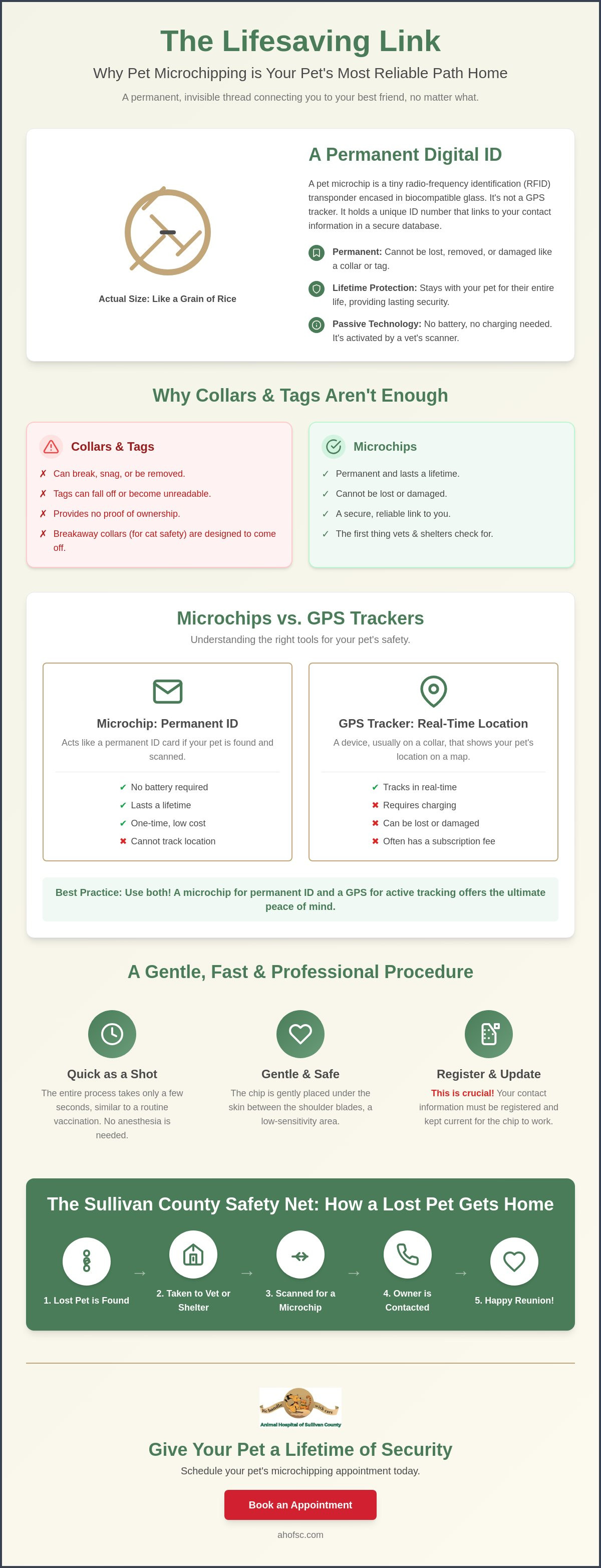
Your pet isn't just an animal; they're a cherished member of the family. Keeping them safe is a top priority for every pet owner in our community. Choosing pet microchipping Sullivan County is one of the most proactive steps you can take to ensure their security. A microchip is a tiny, biocompatible RFID transponder. It's about the size of a single grain of rice. We like to think of it as an "invisible thread." This thread links your lost pet back to your family through a unique ID number. For a comprehensive overview of pet microchipping, you can see how this technology has become a global standard for animal safety. In the vast, beautiful terrain of our region, permanent ID is essential. Our pets love to explore the rolling hills and wooded trails! This simple step is a core part of the compassionate preventive care we offer at our animal hospital Sullivan County.
The Silent Promise: Why Collars and Tags Aren’t Enough
Collars are a wonderful first line of defense, but they aren't perfect. Breakaway collars are specifically designed to snap off for safety, which means they can easily be left behind in the brush if your cat or dog gets snagged. Traditional metal ID tags often become scratched or weathered until the phone number is unreadable. This is where pet microchipping Sullivan County offers a different kind of security. A microchip is the only form of identification that cannot be lost, removed, or damaged. It stays safely under the skin for your pet's entire life. For families living in the Ferndale and Catskills region, this provides immense peace of mind! You can enjoy your time outdoors knowing your best friend carries their home with them wherever they go.
How Microchips Bridge the Gap During Emergencies
Emergencies happen when we least expect them. While we are always ready to provide urgent pet care Sullivan County, a microchip is often the very first tool used when a lost pet is brought through our doors. When a shelter or a veterinarian finds a chip on an unidentified animal, the relief in the room is palpable. It’s a moment of pure hope! The chip acts as your pet's "voice" when they are far from home and can't tell anyone where they belong. It bridges the gap between being a "stray" and being a beloved family member again. This little device ensures that even in a crisis, the path back to your front door remains clear. It is a steady, reliable promise that you are never truly disconnected from the animals you love.
The Microchipping Procedure: Gentle, Fast, and Professional
We understand that any medical procedure, no matter how small, can cause a little bit of worry for a devoted pet parent. It's completely natural to feel protective of your furry family member! However, the process of pet microchipping Sullivan County is remarkably straightforward and stress-free. We treat every animal as if they were our own, ensuring a calming environment from the moment you walk through our doors. This procedure is designed to be as quick and simple as a routine vaccination. There's no need for anesthesia, hospital stays, or surgery. In fact, many owners are surprised by how fast the appointment goes. It truly is a minor moment that yields a lifetime of security.
A Compassionate Approach to the "Pinch"
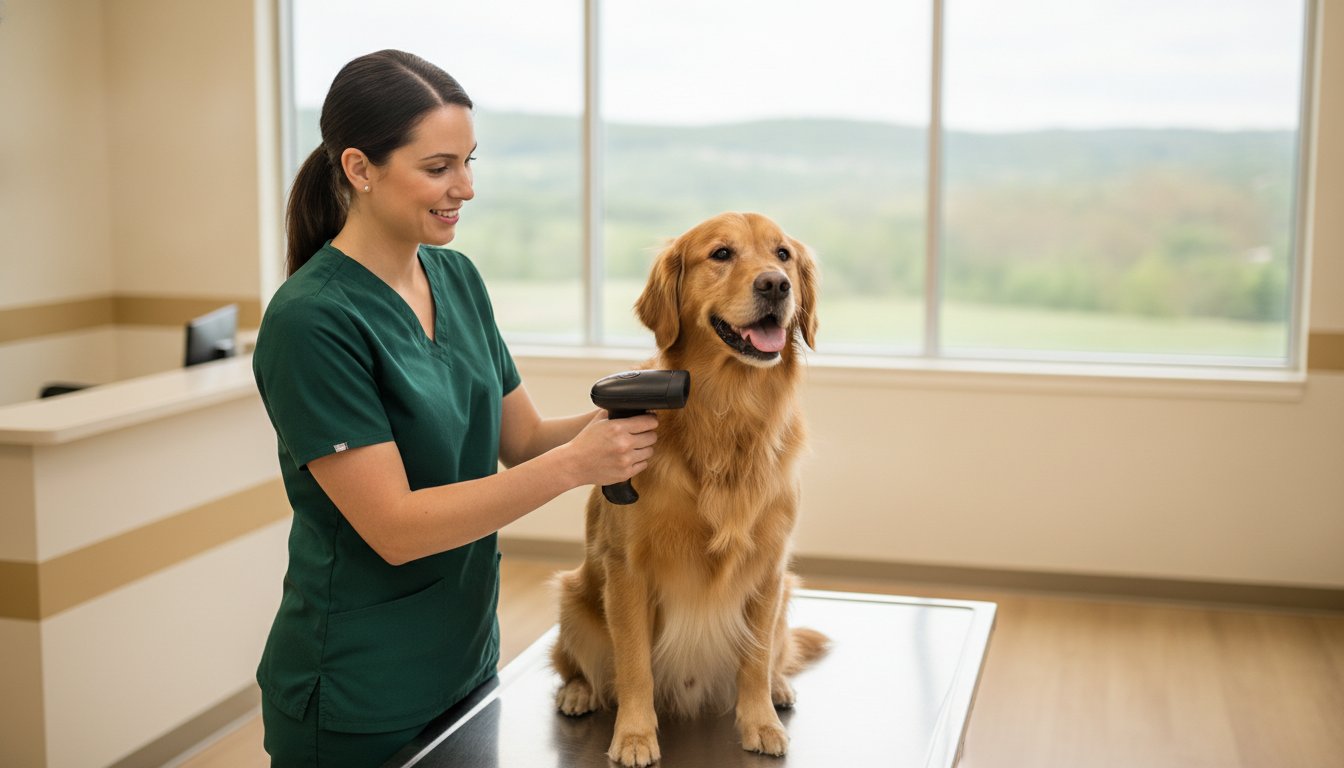
Dr. B and our dedicated team believe in a "heart-first" approach to every patient. We use gentle distraction techniques, like a favorite treat or a soft ear scratch, to make sure your pet feels safe and loved throughout the visit. Whether we're seeing your companion for a routine check-up or a sick pet appointment Sullivan County, we always prioritize their emotional well-being. Most animals don't even notice the tiny "pinch" of the insertion! The chip is placed just under the skin, typically between the shoulder blades, where it stays securely. This placement is chosen specifically because it's a low-sensitivity area that doesn't interfere with collars or harnesses.
Safety and Biocompatibility Standards
You might wonder what exactly is being placed in your best friend's body. Modern microchips are marvels of safety and engineering, making pet microchipping Sullivan County a worry-free experience for local families. They're encased in biocompatible glass or specialized polymers that are designed to live harmoniously within the body for decades. According to the American Veterinary Medical Association, these devices are a reliable and proven way to reunite families. There are no batteries to replace or moving parts to wear out. The chip is "passive," meaning it only activates when a handheld scanner passes over it. We use high-quality, ISO-standard chips that are recognized by shelters and clinics throughout the Tri-state area and across the country.
This tiny device is a silent guardian that never sleeps. It's a permanent safety net that grows with your pet from their first puppy or kitten visit through their golden years. We want you to feel confident and informed about every aspect of your pet's health. If you have any questions about how this fits into your friend's long-term wellness plan, we'd love to chat with you. You can always reach out to our friendly team to learn more about our medical care options and how we can support your family.
Microchips vs. GPS Trackers: Understanding the Differences
One of the most frequent questions we hear at our clinic is whether a microchip can track a pet's live location. It's a very common misunderstanding! While technology has come a long way, it's vital to clarify that a microchip is not a GPS tracker. It cannot "ping" your pet's location or show them as a moving dot on a smartphone map. Instead, pet microchipping Sullivan County relies on Radio Frequency Identification (RFID) technology. This is a "passive" system. The chip has no internal battery and remains dormant until it is activated by a handheld scanner at a shelter or vet office. In contrast, GPS trackers are "active" devices. They require a constant power source and a clear line of sight to satellites to function. Both tools have their place, but they serve very different roles in your pet's safety plan.
The Limitations of GPS in Rural New York
Living in the beautiful, wooded areas of Sullivan County presents unique challenges for electronic devices. GPS collars are fantastic tools for real-time monitoring, but they have distinct limitations that every owner should consider. Battery life is a major concern; if your pet is missing for more than a day or two, the tracker might die just when you need it most. Additionally, GPS signals can struggle in deep valleys or under the heavy forest canopies common in the Catskills. Most importantly, a collar can snag on a branch and fall off during an adventure. When that happens, you're tracking a piece of plastic on the ground, not your best friend. A microchip is the reliable "fail-safe" that stays with your pet no matter what. It doesn't need a signal, a charge, or even a collar to work. This is why pet microchipping Sullivan County is the gold standard for permanent identification.
Why Legal Proof of Ownership Matters
Beyond the hope of a quick reunion, a microchip serves a very practical legal purpose. It acts like a digital deed for your animal. If a dispute ever arises regarding who a pet belongs to, a registered chip provides undeniable, tamper-proof proof of ownership. This is a crucial part of our compassionate vet near me philosophy. We want to protect the sacred bond you share with your companion and ensure they always return to their rightful home. A registered chip ensures that your pet is legally tied to your household, providing a sense of security that a simple collar tag cannot match. For the best protection, we suggest a "belt and suspenders" approach: use a GPS collar for immediate tracking, but always rely on the microchip as the permanent, lifelong backup that can never be lost.
The Most Important Step: Registering and Maintaining the Chip
A microchip is a powerful tool, but it doesn't work by magic. It's heart-wrenching to imagine a lost pet being scanned at a shelter only for the staff to find an empty profile or a disconnected phone number. For pet microchipping Sullivan County to be truly effective, the registration process must be completed and kept current. Think of the chip as a locked door; your registered contact information is the only key that can open it. This digital link is what allows a veterinarian or shelter worker to call you the moment your best friend is found. Without your up to date details in the database, the chip is simply a piece of silent technology.
Life moves fast, and it's easy to forget about a registration you filled out years ago. If you move to a new home in the Ferndale area or get a new cell phone number, updating your pet's record should be at the top of your to-do list. These national recovery databases work across state lines, so even if your pet wanders far from home, the "invisible thread" remains intact. We see the bond between you and your animal as a sacred commitment, and keeping this information fresh is a small but vital way to honor that relationship.
Step-by-Step: How to Register Your Pet’s ID
The process is simpler than you might think! Once the chip is implanted, we will provide you with a unique 15-digit ID number. Here is how you ensure it works for you:
- Find your number: Keep the paperwork we provide in a safe, accessible place.
- Visit the registry: Go to the manufacturer’s website or use a universal tool like the AHAA’s LookUp service to find where your chip is registered.
- Provide multiple contacts: Don't just list your own cell phone. Include a secondary number and an emergency contact, like a trusted neighbor or relative.
The "Annual Check-Up" for Your Chip
We believe in thorough, heart-first medical care, which is why we recommend a "scan and check" during every annual wellness visit. This is especially important during senior pet care Sullivan County exams. Older pets can sometimes become disoriented, making a functional chip even more critical. During the exam, we’ll pass a scanner over your pet to ensure the chip is still easily readable and hasn't migrated from its original position. This 10-second check provides an extra layer of security for your peace of mind. If you aren't sure if your pet's information is current, please schedule a wellness visit with our team so we can verify their safety net together!
Sullivan County’s Lost Pet Network: Why Local Matters
Sullivan County is a place where neighbors look out for one another, and that care extends to our four-legged residents as well. When a pet goes missing here, a broad network of local heroes springs into action. This is why pet microchipping Sullivan County is so effective; it connects your pet to a community that is actively looking for them. Local law enforcement officers and deputies are now frequently equipped with handheld scanners. This means the very first person to find your wandering friend might have the tools to identify them instantly! It changes the entire dynamic of a lost pet situation from a frantic search to a coordinated recovery.
Our local shelters and the team at Animal Hospital of Sullivan County (AHOSC) work in harmony to create a "safety web" that spans from Ferndale to the surrounding towns. We've been a part of this community since 1953, and we understand the specific geography that makes our region so special. We know the trails, the neighborhoods, and the people. This local expertise ensures that when a chip is scanned, the recovery process is fast, efficient, and handled with the neighborly empathy you expect from a long-standing institution. We are personally invested in the lives of our clients and their animals, ensuring no pet is ever just a number in a database.
From the Sheriff to the Vet: The Recovery Journey
Imagine a scenario where your pup slips their collar and heads toward the main road. Instead of a long, stressful night at a shelter, a Sullivan County deputy spots them and pulls over. Because they carry a scanner right in their patrol car, they can check for a chip immediately. That tiny "ping" from the device provides your unique ID number, leading to a phone call that ends your family's nightmare before it even truly begins! This is the power of a modern, local recovery journey. Having a local partner like Dr. B ensures that your pet's information is part of a system that our local heroes know how to use. It turns a potential tragedy into a quick, heart-warming reunion that brings a beloved family member back where they belong.
Joining the AHOSC Family of Protected Pets
We invite you to make this simple, life-saving appointment a priority for your furry companion. At AHOSC, we don't just see patients; we welcome cherished household members into our extended family. Our "heart-first" approach means we handle the microchipping process with the same dedication and sincerity we've provided for over seven decades. Securing your pet's future takes only a few minutes, but the peace of mind it provides lasts a lifetime! We are proud to be your trusted community advocate and partner in care. Protect your pet today with a microchip at Animal Hospital of Sullivan County. It's the most loving gift of security you can give your best friend!
Give Your Companion a Lifelong Safety Net
Your pet's security is a sacred bond that we are honored to protect alongside you. By investing in pet microchipping Sullivan County, you ensure your best friend carries a permanent form of identification that outlasts any collar or tag. This simple procedure creates a reliable link to our local recovery network. It gives your family the best chance at a happy reunion if the unthinkable happens. Remember that a microchip is a silent guardian that stays with your pet for life, providing a fail-safe that batteries and satellites simply cannot match.
Since 1953, we have been a steady presence for local families, offering Dr. Barbara Bodolosky’s compassionate "heart-first" care. Our hospital is equipped with onsite diagnostic tools and emergency support to handle any situation with technical skill and neighborly empathy. We treat every animal as a cherished household member, prioritizing their emotional well-being at every visit. We are more than just a medical facility; we are your dedicated partners in a long, happy journey with your animals.
Schedule your pet’s microchipping appointment at AHOSC to secure their future today. We are here to guide you through registration and maintenance so you can focus on making memories with the animals you love. Your companion deserves the protection of a permanent ID, and we can't wait to help you provide it!
Frequently Asked Questions
Does pet microchipping hurt my dog or cat?
Microchipping feels like a quick pinch, very similar to receiving a routine vaccination. We use gentle distraction techniques and plenty of praise to ensure your pet stays comfortable and calm during the process. Most animals don't even flinch! Because the needle is only slightly larger than a standard vaccine needle, no anesthesia or recovery time is needed. It's a fast way to provide a lifetime of safety for your cherished family member.
How much does it cost to microchip a pet in Sullivan County?
The cost for pet microchipping Sullivan County can vary depending on the provider and whether the initial registration fee is included in the service. While we don't list specific pricing here, many local clinics and shelters offer this service as an affordable part of preventive care. We recommend calling your veterinarian directly to get an accurate estimate for your pet's specific needs. It's a small, one-time investment for permanent peace of mind!
Can I track my pet’s location with a microchip?
You cannot track your pet's live location with a microchip because it does not contain a GPS transmitter. It is a passive device that only provides a unique ID number when scanned by a professional at a clinic or shelter. Think of it as a permanent, digital ID card rather than a tracking device. To get the best protection, we suggest using a GPS collar for real-time tracking alongside a microchip for permanent identification.
What happens if I find a lost pet in Sullivan County?
If you find a lost animal, the best first step is to bring them to a local veterinarian or animal shelter to be scanned for a chip. Our local deputies are also increasingly equipped with scanners to help in these situations! If a chip is found, the unique ID will allow the facility to contact the owner through a national database. This simple act of kindness is the fastest way to reunite a frightened pet with their family.
Do I need to renew my pet’s microchip registration every year?
You do not need to renew the microchip itself, as it is designed to last for your pet's entire life. However, you should check your registration annually to ensure your contact information is still correct. Some registries may offer premium memberships for extra services, but the basic life-saving link between your pet's ID and your phone number should never expire. Just log in once a year to confirm your details are current!
Can a microchip ever fail or stop working?
It is very rare for a microchip to fail because they have no moving parts or batteries to wear out. Occasionally, a chip might migrate slightly from its original position between the shoulder blades, which is why we recommend a "scan and check" during yearly exams. By scanning the chip at every wellness visit, we can ensure it is still easily detectable and functioning exactly as it should to protect your best friend.
Will a microchip interfere with my pet’s other medical treatments?
A microchip will not interfere with other medical treatments, including X-rays, MRIs, or routine blood work. The materials used are biocompatible and specifically designed to be safe within your pet's body for decades. It doesn't emit any signals or radiation on its own. It simply sits quietly under the skin until a scanner is used, making it a perfectly safe addition to your pet's long-term health and safety plan.
What should I do if I move to a different town in the Tri-state area?
If you move, you must update your contact information with the microchip registry as soon as possible. Your pet's chip is recognized nationally, so it will still work perfectly in your new town! Simply log into the manufacturer's website or the universal registry where you first signed up. Keeping your address and phone number current ensures that the "invisible thread" always leads back to your new front door, no matter where you live.


