
Imagine walking through your front door to find your usually bouncy companion staring blankly at their water bowl, still a little wobbly and confused from their procedure. It is a moment that can make any pet parent's heart sink with worry! You want nothing more than to see that tail wagging again, but seeing them hesitant to eat or acting out of sorts is incredibly stressful. It is completely normal to feel anxious as you begin the journey of dog dental extraction recovery, especially when you are worried about "dry sockets" or potential infections.
We understand that your pet is a cherished member of your family, and we believe their comfort is a sacred priority. You are not alone in this; we are here to support you through every stage of the healing process. This guide will teach you exactly how to manage your dog's medications, transition them to a safe soft food diet, and recognize the signs of a healthy, healing mouth. We will walk you through what is normal and what requires a call to the vet. By the time you finish reading, you will have the peace of mind needed to help your companion return to their happy, pain-free self!
Key Takeaways
- Understand why your companion might seem "out of it" after surgery and how to provide a calm, safe environment for their first 24 hours.
- Learn the essential 7-to-14 day "Soft Food Rule" to protect sensitive gum tissue while ensuring your pet receives the nutrition they need.
- Discover the "Stay Ahead of the Pain" philosophy and how the right timing for medications makes all the difference in their comfort.
- Gain confidence in dog dental extraction recovery by identifying normal healing signs versus red flags that require a call to our team.
- Explore the "New Dog" phenomenon and how removing dental pain can transform your pet’s energy levels and overall happiness.
The First 24 Hours: Managing the Immediate Post-Op Period
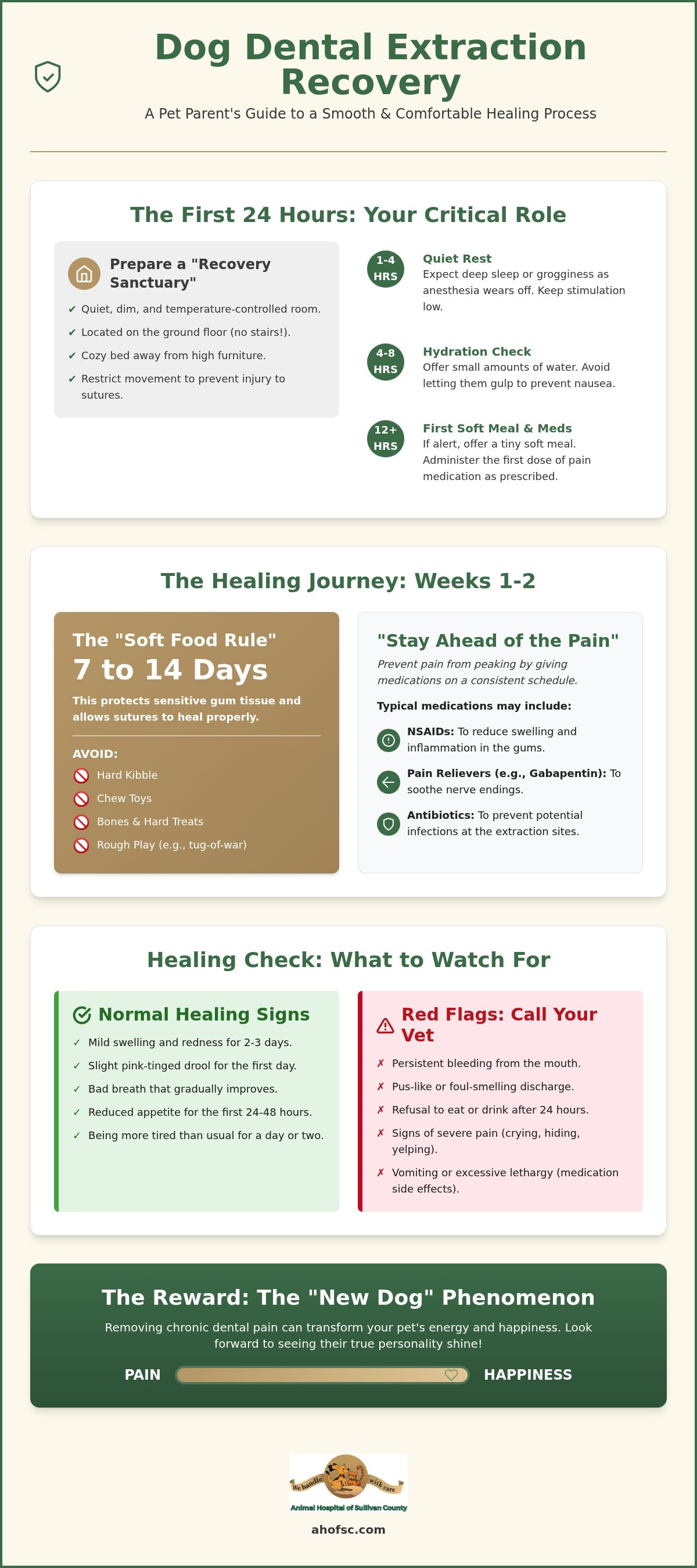
Your dog's journey through dog dental extraction recovery begins the moment we place them back into your loving arms at our Sullivan County clinic. It's often a bit jarring to see your vibrant, tail-wagging friend looking so sleepy and fragile. Please don't worry! This grogginess is a standard part of the process as the anesthesia wears off. You might notice your pet "talking" to you through whines or howls. This vocalization usually isn't a cry of pain; it's a symptom of "emergence delirium," a temporary state of confusion as their brain wakes back up. We've monitored them closely during their time in Veterinary dentistry care, and now they need your steady, calming presence to feel safe again.
To help you visualize what this first day looks like at home, watch this helpful video of a fellow pet parent's experience:
Before you even get home, prepare a "Recovery Sanctuary." This should be a quiet, dim, and temperature-controlled area on the ground floor. Avoid rooms with stairs or high furniture, as their coordination will be poor for several hours. Restricting their movement is vital! A sudden jump or a slip can cause accidental injury or put unnecessary stress on their fresh oral sutures. Keep them tucked in a cozy bed with their favorite blanket, and stay nearby to offer gentle reassurances.
A Step-by-Step Timeline for the First Night
Success in dog dental extraction recovery often comes down to a methodical approach during the first few hours. Here is what your night will likely look like:
- Hour 1-4: Focus on quiet rest. Keep your pet in their sanctuary. Don't be surprised if they sleep deeply or stare blankly at the wall. Keep the lights low and the TV volume down.
- Hour 4-8: Offer small amounts of water, just a few laps at a time. Anesthesia can sometimes cause nausea, so don't let them gulp down a whole bowl. If they keep the water down, they're doing great!
- Hour 12+: If they're alert and steady on their feet, you can offer a very small, light meal of soft food. This is also the time when you'll likely administer their first dose of prescribed pain medication to keep them comfortable through the night.
Safety Precautions and Supervision
While you want to shower your pet with affection, it's best to avoid over-stimulating them. Keep the household calm. If you have other pets, keep them in a separate room for the first 24 hours. Even the most friendly "nurse" dog might accidentally bump into the surgical site or cause stress. Use an E-collar, often called the "cone of shame," if you notice your dog trying to paw at their face. It might look silly, but it's a vital tool to protect those delicate oral incisions from sharp claws. Your vigilance tonight ensures a much smoother path to healing tomorrow!
Pain Management and Medication Protocols
Ensuring your companion remains comfortable is the most important part of dog dental extraction recovery. At the Animal Hospital of Sullivan County, we follow a "Stay Ahead of the Pain" philosophy. This means we want to prevent pain from peaking rather than trying to treat it after your dog is already hurting. By keeping a consistent schedule with medications, you ensure that the healing process is a peaceful one. Most pets will require support for several days, typically involving a combination of anti-inflammatories and specialized pain relievers.
You'll likely receive a few different types of medication. Non-steroidal anti-inflammatory drugs (NSAIDs) help reduce swelling in the gums. Gabapentin is often used to soothe nerve endings around the extraction site, while antibiotics may be prescribed to prevent infection. As noted by Cornell University's College of Veterinary Medicine, modern veterinary dentistry relies on these multi-modal approaches to ensure the best possible outcomes for oral health. While these meds are safe, keep a close eye out for side effects like vomiting, excessive lethargy, or a total loss of appetite. If you notice anything unusual, please reach out to our team immediately.
Tips for Medicating a Reluctant Pet
Administering pills to a dog with a sore mouth requires a very gentle touch. Never force their jaws open, as this can cause sharp pain or damage sutures. Instead, use soft "pill pockets" or hide the medication in a small teaspoon of vet-approved canned food. If you're using liquid medication, gently slide the dropper into the "cheek pouch" at the side of their mouth. This allows them to swallow naturally without you having to touch the sensitive extraction area. If your dog spits out their dose, don't double up; call us for advice on how to proceed.
Special Considerations for Senior Dogs
We believe every senior pet deserves a life free from dental pain, but we also know that older companions require extra care. Because senior dogs may have pre-existing kidney or liver concerns, we use pre-surgical bloodwork to tailor a medication plan that's perfectly safe for their specific needs. This personalized approach is a core part of our senior pet care Sullivan County standards. We focus on gentle protocols that prioritize their comfort while protecting their long-term health. If you're ever worried about how your older friend is handling their meds, our surgical care team is always here to provide a steady, calming presence and answer your questions.
Nutrition and Feeding: The Soft Food Transition
Feeding your dog after surgery feels like a delicate dance. You want them to eat to regain their strength, but you're likely scared of hurting their sensitive mouth! For a successful dog dental extraction recovery, we recommend following the 7-to-14 day "Soft Food Rule." This specific window allows the delicate gum tissue to knit back together and protects the sutures from being poked or torn by sharp edges. It is a temporary change that makes a world of difference in their comfort levels!
According to the American Veterinary Medical Association, providing the right nutrition and texture during this time is essential for healing and maintaining long-term oral health. If your dog usually eats dry kibble and turns their nose up at canned options, don't worry. You can easily soften their favorite dry food by soaking it in warm water or low-sodium chicken broth for about 20 to 30 minutes. Wait until it reaches a "mushy" consistency that requires absolutely zero chewing before offering it to your pet.
For those extra picky eaters who may feel a bit nauseous after anesthesia, try some high-value "temptation" foods. Meat-based baby food is often a hit, just be sure to check the label and ensure it contains no onion or garlic powder! Plain, boiled chicken shredded into tiny, soft pieces can also encourage a hesitant eater. To keep them hydrated, offer ice chips to lick or add a splash of tuna water to their bowl to make drinking more appealing.
Feeding Techniques to Protect Sutures
How you serve the food is just as important as what you serve. Shallow bowls are your best friend during this time. They prevent your dog's muzzle from rubbing against the sides, which can be irritating. Some pets feel more confident with gentle hand-feeding during the first few days. It's a beautiful way to offer extra comfort and monitor exactly how much they are consuming! Please strictly avoid all hard treats, crunchy biscuits, and rawhides during this recovery window. If you notice your dog "pawing at the mouth" after eating, it may indicate food is stuck or the area is sensitive; stay calm and give us a call for guidance.
Gradual Return to Normal Diet
Once the initial 14-day window has passed and the gums look healthy and pink, you can begin the "Mix-in" method. Start by adding a small handful of dry food back into their soft meals. Slowly increase the ratio of crunchy kibble over a period of 3 to 4 days while watching for any signs of hesitation. If your pet had a more complex procedure or is a senior, it's always best to consult our Sullivan County veterinary surgeon for a final clearance before returning to their standard diet. We want to ensure that every bite they take is completely pain-free!
Normal Healing vs. Red Flags: When to Call the Vet
Watching your cherished companion heal can be an emotional rollercoaster for any pet parent. You're likely hovering nearby, watching every breath and wondering if that little whine is normal. During dog dental extraction recovery, your pet's body is working hard to repair tissue and close surgical sites. It's helpful to know that some symptoms, while they might look scary, are actually a standard part of the healing process. For example, you might see pink-tinged saliva in their water bowl or on their bedding for the first 24 to 48 hours. This is common! It's simply a small amount of blood mixing with natural fluids, much like a minor scrape that oozes slightly before it scabs over.
You should also expect your pet to be extra sleepy. Between the lingering effects of anesthesia and the soothing nature of their pain medications, they'll likely nap more than usual. When they are awake, you can perform a gentle visual check. Carefully lift the side of their lip with one finger to inspect the gum line. Healthy healing tissue should look pink and moist. You might notice a slight metallic smell near their mouth, which is normal. However, if you encounter a pungent, rotting odor, this is the "bad breath" factor that usually indicates an infection. If you're ever in doubt, our team at the Animal Hospital of Sullivan County is here to provide a steady, calming presence and expert emergency treatment during our regular office hours.
Warning Signs That Require Immediate Attention
While most recoveries are smooth, some situations require a quick response. Please call our Ferndale clinic immediately if you notice heavy, bright red bleeding that doesn't stop or seems to be pooling in their mouth. Active dripping is very different from the pink-tinged saliva mentioned earlier! You should also watch for excessive swelling that seems to be getting worse rather than better after the first two days. Any yellow or green discharge, which is pus, is a definite red flag. Finally, if your dog completely refuses to eat or drink for more than 24 hours, they need professional triage to ensure they stay hydrated and nourished.
The Role of Post-Operative Follow-Ups
We typically schedule a re-check appointment to ensure the dog dental extraction recovery is staying on track. These visits are vital for your peace of mind! During this check, we'll verify that the sutures are holding properly. Most oral sutures are dissolvable and should last about 7 to 14 days. if they happen to dissolve or come out within the first 48 hours, it can leave the extraction site vulnerable to food particles and infection. A professional validation of healing ensures that your pet's journey toward a pain-free life is a total success. If you have concerns about a fresh incision, don't hesitate to contact us for surgical care support.
Long-Term Quality of Life and Preventive Care
Once the initial stages of dog dental extraction recovery are behind you, you'll likely witness what we call the "New Dog" phenomenon. It's one of the most rewarding parts of our work! Many pet parents worry that losing teeth will slow their companion down, but the opposite is almost always true. Chronic dental pain is a heavy burden for a dog to carry. When those sources of infection and discomfort are finally removed, pets often experience a dramatic surge in energy. You might see your senior dog playing with toys they haven't touched in years or acting with a renewed sense of joy at mealtime.
The goal now is to look forward and ensure your pet never has to go through another major oral surgery. Transitioning to a preventive dental routine is the best way to protect their remaining teeth. This starts with selecting the right dental toys and treats that are safe for Sullivan County pets. Look for products that are firm enough to provide a mechanical cleaning action but not so hard that they risk fracturing a tooth. Annual wellness exams at our clinic serve as your first line of defense; they allow us to catch minor plaque buildup before it turns into a serious problem.
The Animal Hospital of Sullivan County Difference
Choosing the right partner for your pet's health makes all the difference in their longevity and happiness. We take a "heart-first" approach to our animal hospital Sullivan County services. Since 1953, our team has been a steady, calming presence for families in Ferndale and the surrounding Tri-State area. This 70 plus year history informs our compassionate surgical standards and our dedication to treating every animal as a cherished family member. We're honored to support local families through every stage of their companion's health journey, providing both technical excellence and neighborly empathy.
Building a Home Dental Care Routine
A Future Full of Happy Tail Wags
Helping your pet through dog dental extraction recovery is a journey that requires patience and a heart-first approach. By managing their immediate post-op comfort and carefully transitioning to a soft food diet, you're giving them the gift of a pain-free life. Those first groggy hours are just a small step toward a much brighter, more energetic future for your cherished family member. You'll soon see that "New Dog" energy return as they realize their mouth no longer hurts!
At the Animal Hospital of Sullivan County, we've provided trusted care in Ferndale since 1953. Our team combines compassionate surgical expertise with advanced onsite diagnostics to ensure the highest level of safety for every patient. We're dedicated to being your steady, calming presence from the first checkup through every stage of healing. If you're ready to improve your companion's quality of life and protect their long-term health, we're honored to walk that path with you. Schedule a Dental Consultation at Animal Hospital of Sullivan County today and help your pet rediscover the joy of a healthy smile!
Frequently Asked Questions
How long does it take for a dog to fully recover from a tooth extraction?
Most dogs feel significantly better within 48 to 72 hours, but complete tissue healing typically takes about 14 days. During this two-week window, the gums are knitting back together and sutures are slowly dissolving. You'll need to maintain a soft food diet and restricted activity throughout this period to ensure the site remains protected and free from infection.
Is it normal for my dog to whine or pace after dental surgery?
Yes, vocalizing and pacing are very common during the first 24 hours as the anesthesia wears off. This behavior is often a result of "emergence delirium," where your pet feels a bit confused or disoriented by the lingering medications. It doesn't necessarily mean they are in pain, especially if they are on a regular medication schedule, but providing a quiet, dim environment will help them settle down.
When can my dog eat dry food again after having teeth pulled?
Your dog can typically return to dry kibble 10 to 14 days after their procedure. We recommend a gradual transition using a mix of soft and hard food to ensure their gums are fully ready for the crunch. Always wait for clear signs that the pink gum tissue has completely closed over the extraction site before offering hard treats or standard dry food.
What should a healing dog gum look like after an extraction?
A healthy healing gum should look pink, moist, and clean. In the first few days of dog dental extraction recovery, you might see small, dark red blood clots or tiny dissolvable sutures at the site. As the area heals, the "hole" where the tooth was will gradually fill in with smooth, pink tissue. Any white, gray, or yellow film should be reported to our team immediately.
Can my dog still play with toys during dental recovery?
How do I know if my dog is in pain if they aren’t crying?
Dogs are experts at hiding discomfort, so look for subtle behavioral changes like lip licking, heavy panting, or hiding in unusual spots. You might also notice them "dropping" food or tilting their head to one side while trying to eat. Staying consistent with your dog dental extraction recovery medication schedule is the best way to prevent these signs before they even start.
Are there specific risks for senior dogs undergoing dental extractions?
Senior dogs are often more sensitive to anesthesia and may have slightly slower healing times due to age-related changes. However, the risk of leaving a painful, infected tooth in their mouth is usually much higher than the risk of the procedure itself. We use advanced onsite diagnostics and tailored medical protocols to ensure our older patients remain safe and stable throughout the entire process.
What if my dog won’t take their prescribed pain medication?
If your pet refuses pills, try hiding them in a small amount of high-value soft food or using a specialized "pill pocket." Never force their mouth open, as this can cause sharp pain at the surgical site and damage the healing tissue. If they are still being stubborn, contact us right away; we can often provide liquid alternatives or different flavors to ensure they stay comfortable.


