
Last Tuesday, Sarah was enjoying a quiet evening of belly rubs when she felt a small, firm knot under her dog's fur. It's a moment that makes every pet parent's heart sink! Your mind immediately jumps to the worst-case scenario, and the anxiety about what this might mean for your family's future can feel overwhelming. You want to protect your companion, but you aren't sure if you should rush to the clinic or wait and see.
When you realize your dog has a lump what to do becomes the most important question on your mind, but you don't have to face that uncertainty alone. We believe the bond you share with your pet is sacred and deserves both technical skill and emotional sensitivity. This guide will help you identify different types of bumps, explain how to monitor changes, and walk you through the simple diagnostic steps used to find answers. You'll gain a clear plan of action so you can replace fear with the peace of mind that comes from being a well-informed advocate for your dog's health!
Key Takeaways
- Learn how to distinguish between common, harmless bumps and signs that a growth might require more immediate medical attention.
- Discover the essential "look but don't touch" protocol for when your dog has a lump what to do at home before your appointment.
- Understand how onsite diagnostics can quickly replace your anxiety with a clear, professional plan of action for your pet.
- Explore the different treatment pathways available, ranging from simple observation to compassionate surgical care.
- Find peace of mind by partnering with a dedicated veterinary team that prioritizes your family's emotional well-being and your pet's quality of life.
Identifying Your Dog's Lump: Types and Common Causes
A "lump" is essentially any abnormal mass or bump found on or under your dog's skin. It’s often through those quiet moments of affection, like grooming or petting, that you first notice something feels different. This early detection is a beautiful testament to the bond you share. You know your pet better than anyone else, and your hands are often the first line of defense in their healthcare journey. When you realize your dog has a lump what to do next depends on understanding that while many growths are harmless, others require a swift response.
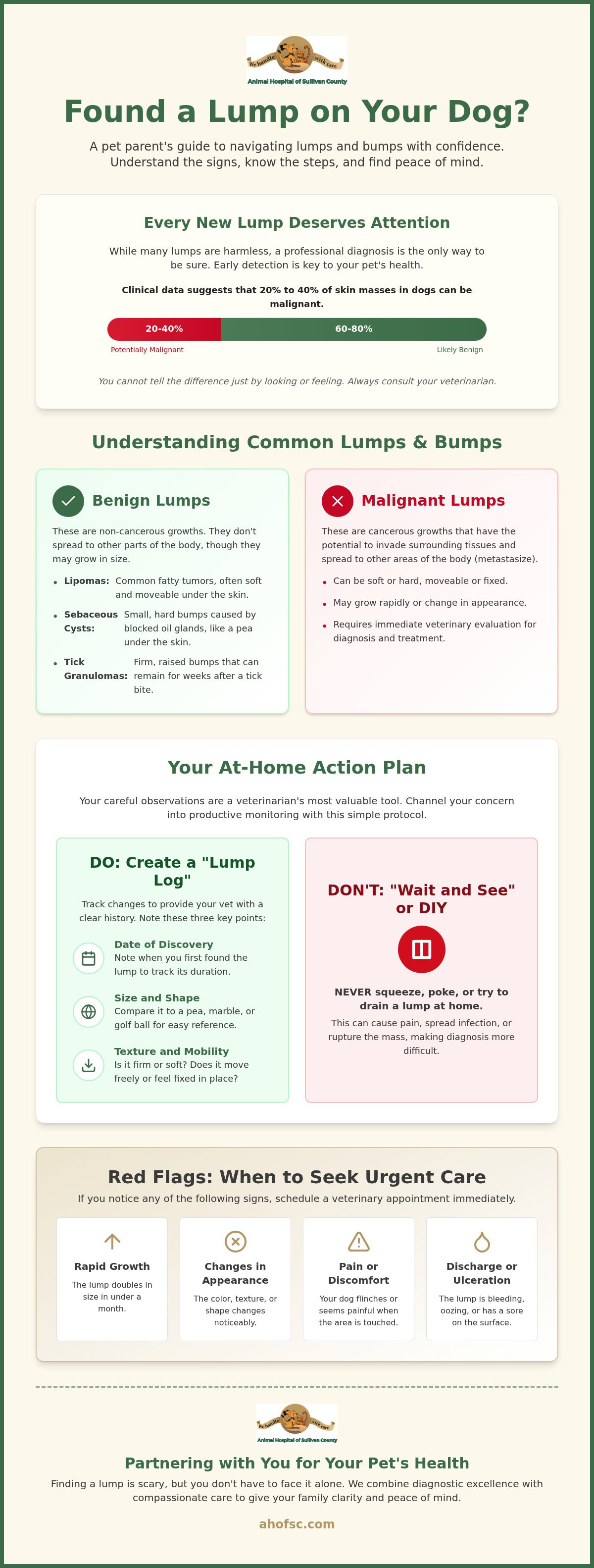
Finding a bump is naturally scary, but many are completely benign. However, clinical data suggests that roughly 20% to 40% of skin masses in dogs can be cancerous. Because Cancer in dogs is a significant health concern, especially as our companions age, every new growth deserves professional attention. Texture and location can provide some clues, but they are never a substitute for a definitive medical diagnosis.
Benign vs. Malignant: What’s the Difference?
Benign lumps are non-spreading growths. They might grow larger in one spot, but they don't invade nearby tissues or travel to other parts of the body. Lipomas and certain cysts fall into this category. Malignant lumps are different. These are cancerous masses that can invade local tissue or spread to distant organs. Here is the tricky part: you cannot tell the difference just by looking at the skin or feeling the texture. Even a soft, squishy bump that feels like a harmless fatty tumor could be a more aggressive growth. This is why we never rely on "the feel test" alone to determine safety.
Common Lumps: Lipomas, Cysts, and Sullivan County Ticks
Many of the bumps we see in our Ferndale clinic are benign. Lipomas are incredibly common, especially in older or slightly overweight dogs. These are just collections of fat cells under the skin. They usually feel soft and move easily when you touch them. Sebaceous cysts are another frequent finding. These occur when an oil gland becomes blocked, often feeling like a small, hard pea. They might occasionally rupture or become inflamed, but they aren't cancerous.
The Home Monitoring Protocol: Tracking Changes Safely
Finding a new growth on your pet can feel like your heart has skipped a beat. It's a moment filled with questions and, quite often, a bit of fear. Instead of letting that anxiety take over, we encourage you to channel it into a productive monitoring routine. Your observations are the most helpful tool we have! We always recommend a "look but don't touch" approach. Please don't ever try to squeeze or lance a bump at home. This can cause significant pain and may lead to a serious infection or cause common types of skin lumps in dogs to rupture internally.
When you discover your dog has a lump what to do next is start a weekly habit of checking their body. This is a wonderful way to bond while staying on top of their health, particularly for senior dogs. Sunday mornings during a relaxed petting session are a perfect time for this. If you stay consistent, you'll know exactly what is normal for your pet and what is new. If you're ever in doubt, our team is always here to provide a compassionate medical evaluation to ensure your pet stays happy and healthy.
The 'Lump Log': What Details to Record
Think of yourself as a dedicated partner in your pet's healthcare. Keeping a "Lump Log" in a notebook or on your phone helps us tremendously during an exam. By recording specific details, you take the guesswork out of the diagnostic process. Please make sure to track these three key points:
- Date of discovery: Note exactly when you first felt the mass so we can track its duration.
- Size and Shape: Use familiar household objects for comparison. Is it the size of a pea, a marble, or a golf ball?
- Texture and Mobility: Does it feel firm like a knuckle or soft like a grape? Note if it slides freely under the skin or feels "fixed" to the tissue underneath.
Red Flags: When a Lump Becomes an Urgent Concern
While many lumps stay the same for years, some require faster intervention. Rapid growth is a major red flag. If a growth doubles in size over just a few weeks, it's time to seek professional care. You should also watch for changes in appearance. Redness, discharge, or ulceration (an open sore) are signs that the lump is becoming irritated or aggressive. Finally, watch your dog's behavior. If they are constantly licking or chewing at the spot, or if they pull away in pain when you touch it, they're telling you that the lump is more than just a cosmetic issue.
Diagnostic Excellence: How Your Veterinarian Investigates
When you walk through our doors, we know your heart is heavy with questions. Your pet isn't just a patient; they are a cherished member of your family. Our primary mission is to transform that heavy feeling of "I don't know" into a clear, actionable plan for your pet's well-being. We approach every exam with a "heart-first" philosophy. This means we take the time to soothe your nervous companion with gentle touches and a calm voice before we ever begin our medical assessment. Diagnostics are the first step toward healing, providing the clarity you need to make the best decisions for your friend's future.
We believe in being a dedicated partner in your pet's journey. When a dog has a lump what to do next involves moving beyond the "feel test" to look at the cellular level. By using our onsite tools, we can often provide answers quickly, reducing the time you spend waiting and worrying. Our clinic has been a steady presence in the Sullivan County community since 1953, and we continue to invest in technology that prioritizes your pet's comfort and safety.
Fine Needle Aspirates (FNA) and Cytology
The most common first step is a Fine Needle Aspirate. This is a simple and relatively painless procedure where we use a small needle to collect a tiny sample of cells from the lump. Most pets tolerate this beautifully during a standard office visit! We then examine these cells under a microscope in our in-house lab. This process, called cytology, allows us to look for immediate clues like infection, inflammation, or specific tumor types. While we can identify many growths right here, some samples are sent to a specialized veterinary pathologist. These experts provide a second layer of certainty for more complex cases.
Advanced Diagnostics: Biopsies and Imaging
Sometimes a needle sample doesn't tell the whole story. In these instances, we may recommend a surgical biopsy. This involves removing a small piece of the mass, or sometimes the entire growth, to be analyzed. For a complete picture of your pet's health, we utilize Advanced Pet Diagnostics in Sullivan County. This may include X-rays or ultrasounds to see if a lump has internal connections or if it has affected other areas of the body. Before any procedure involving sedation or surgery, we always perform Pet Bloodwork. This ensures your pet's internal organs are functioning safely, giving us the confidence to proceed with the highest level of care.
Treatment Pathways: From Monitoring to Surgical Removal
Once we have gathered the facts from our diagnostic tests, we can map out a journey that prioritizes your pet's comfort and longevity. It is helpful to remember that not every bump requires a trip to the operating room. Our goal is to balance medical necessity with the daily happiness of your companion. Quality of life is the primary metric for every decision we make together. We believe in treating your pet with the same care and consideration we would give our own family members, ensuring that any chosen path is both effective and gentle.
If you are feeling anxious about the next steps, please know that you are not alone in this process. When a dog has a lump what to do often depends on the specific nature of the growth and how it affects your pet's routine. We are here to guide you through these options with the patience and expertise our Ferndale community has trusted since 1953. Whether the answer is a simple "wait and see" or a more proactive approach, we remain your dedicated partner in care.
Watchful Waiting and Non-Invasive Management
For many slow-growing, benign growths like lipomas, "doing nothing" is a perfectly valid medical choice. If a lump is non-painful and doesn't interfere with your pet's ability to walk, run, or play, we may recommend simple observation. This is where Pet Wellness Exams become so important. During these routine visits, we check the size and texture against your personal records to ensure nothing has changed. If your dog has a lump what to do often comes down to patient observation and regular checkups. Cysts are managed similarly; unless they become infected or bother your pet, they are often best left alone to avoid unnecessary procedures.
Surgical Removal and Post-Operative Care
If a lump is growing quickly or diagnostics suggest it could be harmful, surgical removal is often the safest path forward. We view Veterinary Surgery in Sullivan County as a proactive way to protect your pet's future. For potentially cancerous growths, we focus on obtaining "wide margins." This means removing a small amount of healthy tissue around the lump to ensure no stray cells are left behind. This technique is vital for preventing the growth from returning.
Recovery is a time for extra affection and quiet rest at home. We provide comprehensive pain management plans to keep your pet comfortable during the healing process. You will need to restrict their activity for a short period, typically ten to fourteen days, to allow the incision to heal perfectly. Beyond the physical benefits, there is a profound sense of emotional relief for you as an owner. Removing a "worry lump" allows you to return your focus to the joy and companionship your pet brings to your life every day.
If you have noticed a new growth and want a professional opinion, schedule a consultation with our compassionate team today.
Choosing Compassionate Care at Animal Hospital of Sullivan County
For over 70 years, our clinic has been a steady, calming presence for families throughout Ferndale and the surrounding Sullivan County area. Since 1953, we've dedicated ourselves to the health and happiness of your companions, treating every pet with the technical skill and emotional sensitivity they deserve. Dr. Barbara Bodolosky leads our team with a "heart-first" approach. This means we prioritize your pet's emotional well-being just as much as their physical recovery. When you find yourself worried because your dog has a lump what to do next shouldn't feel like a burden you carry alone. We are your dedicated partners in this journey of care.
Our long-standing community presence is built on trust and a deep respect for the sacred bond between humans and animals. We understand that a new growth can cause significant anxiety, especially in our aging friends. For these special companions, we offer Senior Pet Care that is specifically designed to manage the unique needs of their golden years. Whether your pet is a playful puppy or a dignified senior, we provide a welcoming environment where you can feel heard and supported.
Full-Spectrum Support: From Diagnosis to Dignity
We believe that high-quality medical care should be accessible and comforting. Our facility is equipped with onsite diagnostics, which allow us to provide rapid answers when every minute of waiting feels like an hour. By getting results in-house, we can move quickly from uncertainty to an actionable treatment plan. If surgery is required, our team provides compassionate care in a warm, neighborly setting that avoids the cold, clinical feel of larger hospitals. We focus on the quality of life for every patient, ensuring they remain comfortable and happy throughout their treatment.
Our commitment to your pet extends through their entire life journey. We take great pride in offering an onsite crematorium, providing a path for end-of-life dignity right here at the hospital you trust. This full-spectrum support ensures that your pet is handled with the utmost respect and affection at every stage. From that very first diagnostic exam to the final goodbye, you can take comfort in knowing your companion is in capable, loving hands.
Schedule a Peace-of-Mind Exam Today
The best way to handle the worry of a new lump is to replace it with facts. You don't need to spend another night searching for answers online or wondering about "what ifs." Getting started is as simple as a friendly consultation where we can assess your pet's needs and provide the education you need to feel confident. We're here to help you move forward with a clear plan and the peace of mind that comes from professional guidance. Contact us to schedule a lump evaluation for your dog.
Finding Clarity and Confidence for Your Pet's Future
Navigating the discovery of a new growth is a journey you don't have to walk alone. By establishing a consistent home monitoring routine and understanding the difference between various types of bumps, you've already taken the first vital steps toward protecting your companion. Remember that diagnostics are simply the tools we use to replace uncertainty with a clear, professional plan. Whether the answer is watchful waiting or proactive treatment, the primary goal is always to preserve the high quality of life your pet enjoys every day.
When you realize your dog has a lump what to do is lean on the support of a team that has served the Sullivan County community since 1953. Our onsite diagnostic laboratory ensures you get the fast answers you need to calm your mind without unnecessary delays. Led by experienced veterinarians who prioritize a heart-first approach, we are here to provide the steady, calming presence your family deserves. We are ready to be your dedicated partner in this journey of care and healing! Schedule a Compassionate Lump Evaluation at Animal Hospital of Sullivan County and let us help you move forward with peace of mind.
Frequently Asked Questions
Can I tell if a lump is cancerous just by feeling it?
No, it's impossible to determine if a growth is malignant just by touch. While texture and mobility provide some clues, many aggressive tumors feel soft and movable, while some benign cysts can feel quite hard. We always recommend a fine needle aspirate to look at the cells under a microscope. This is the only way to move from guesswork to a certain diagnosis and a clear care plan.
How much does it cost to have a lump on a dog tested?
Testing costs vary depending on the type of diagnostic procedure required for your pet's specific situation. A fine needle aspirate is typically the most accessible first step, while a full surgical biopsy involves additional laboratory fees for a specialized pathologist's review. When your dog has a lump what to do is discuss these options with us during an exam. We'll provide a clear, honest estimate based on the size and location of the growth.
Should I worry if my dog's lump is hard or soft?
You should seek a professional opinion regardless of whether a lump feels hard or soft. Soft lumps are frequently fatty lipomas, but certain types of mast cell tumors can also feel squishy to the touch. Hard lumps might be simple cysts or something more involved. Because texture isn't a reliable indicator of health, we treat every new growth with the same level of diagnostic care to ensure your pet's safety.
Can a dog lump disappear on its own?
Most true tumors or cysts don't disappear, though some "lumps" caused by insect bites, hives, or small abscesses may resolve as the inflammation goes down. However, you shouldn't wait more than a few days to see if a growth vanishes. If a lump persists or shows signs of irritation, it's important to have it evaluated to rule out more serious underlying conditions that require medical intervention.
Is it normal for senior dogs to get more lumps and bumps?
Yes, it's very common for senior pets to develop various skin growths as they enter their golden years. Many of these are harmless "old dog warts" or fatty tumors, but the risk of malignancy also increases with age. This is why we emphasize regular senior wellness exams. Tracking these changes helps us maintain your companion's comfort and quality of life as they age alongside you; if you are also managing care for senior relatives and need placement assistance, you can check out Senior Housing Locator for expert support.
What should I do if a lump on my dog starts bleeding?
You should schedule a veterinary appointment immediately if a lump begins to bleed, ooze, or ulcerate. Bleeding often indicates that the growth is fragile, infected, or growing rapidly enough to break the surface of the skin. When your dog has a lump what to do in this situation is keep the area clean and prevent your pet from licking it until our team can assess the cause and provide relief.
How long does it take to get biopsy results back?
The timeline for results depends on the specific test performed. We use our onsite diagnostic laboratory for immediate cytology results, often providing answers during your initial visit. If a sample must be sent to an outside specialist for a formal pathology report, it typically takes between three to seven business days. We'll stay in close contact with you throughout this period to provide support and next steps.
Can a tick bite cause a permanent lump on my dog?
Yes, tick bites can sometimes leave behind a small, firm lump called a granuloma that may persist for months or even become permanent. These are especially common here in the Sullivan County region. While these reactions are usually harmless, they can look identical to more concerning skin tumors. We can perform a quick, gentle check to confirm it's just a local reaction to a past bite rather than a new growth.


