
You notice your senior cat spending more time at the water bowl lately, and you wonder if it's just a sign of getting older or something more serious. It's easy to dismiss small changes in behavior, but identifying cat diabetes symptoms Sullivan County pet owners often see is the first step in protecting your furry family member. That sudden increase in thirst or a change in appetite can feel overwhelming. It's natural to feel anxious when you suspect your companion might be facing a lifelong illness.
We understand that your cat is a cherished member of your household, and the thought of them being unwell is deeply stressful. At Animal Hospital of Sullivan County, we believe that a diabetes diagnosis isn't a shadow over your cat's future. It's simply a new chapter of care that we'll navigate together. This guide will help you recognize the early warning signs of feline diabetes and explain how our Ferndale-based team uses onsite diagnostics to provide clear answers. You'll learn how manageable this condition truly is and how our compassionate experts support you every step of the way.
Key Takeaways
- Spot the subtle signs like excessive thirst and more frequent litter box visits, which are key cat diabetes symptoms Sullivan County families need to recognize early.
- Learn why maintaining a healthy weight is the most impactful way to protect your senior cat from endocrine complications.
- Gain peace of mind by understanding the difference between insulin deficiency and resistance, and how both are treatable.
- Find out how our Ferndale team uses onsite diagnostics to quickly move from uncertainty to a clear, compassionate care plan.
- Embrace a partnership based on decades of experience that prioritizes your cat's happiness and your family's emotional well-being.
Feline Diabetes Guide for Sullivan County Families
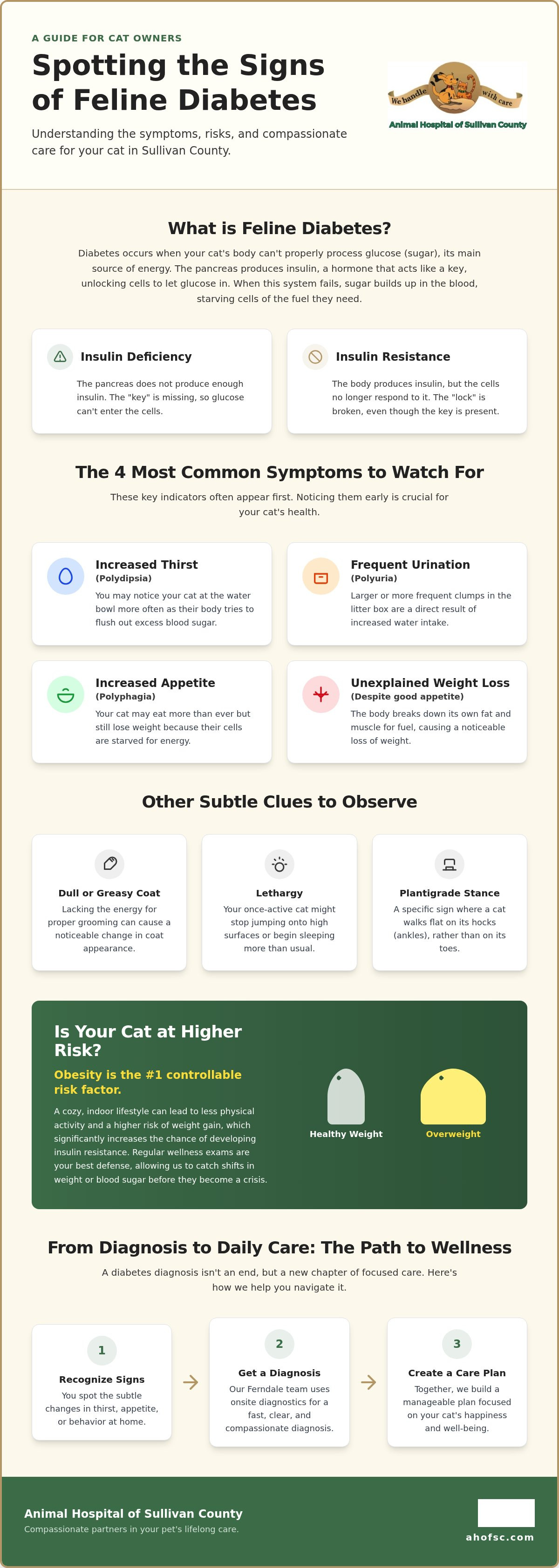
When your cat is a cherished member of your family, any change in their health feels deeply personal. Feline diabetes is a condition of the endocrine system that might sound overwhelming at first, but it's actually a very manageable part of your pet's life! This condition occurs when the body can't properly process glucose, which is the primary source of energy for your cat's cells. For some cats, the issue is insulin deficiency, where the pancreas simply doesn't produce enough of this vital hormone. For others, it's insulin resistance, meaning the body has insulin but no longer responds to it effectively. You can learn more about these biological processes in this comprehensive guide to feline diabetes. Early detection is the absolute key to ensuring your companion enjoys a high quality of life for years to come. Think of a diagnosis not as a frightening end, but as a new chapter of focused, compassionate care where we work together to keep your cat happy and comfortable.
How Diabetes Affects Your Cat’s Body
The pancreas is a small but mighty organ that produces insulin. Think of insulin as a special key that unlocks your cat's cells so energy can get inside, allowing them to pounce, play, and purr. When this process fails, sugar builds up in the bloodstream instead of fueling the body's muscles and organs. This leads to a state known as hyperglycemia. Hyperglycemia means there is way too much sugar floating in the blood because it can't get into the tiny cells to help them work. Without that energy, your cat's body starts looking for other fuel sources, like fat and muscle, which is why you might notice weight loss even if your cat is eating more than usual. Our team in Ferndale is here to help you understand these changes with patience and clarity.
Why Local Sullivan County Cats Are Susceptible
In our beautiful corner of New York, many of our feline friends enjoy a cozy, strictly indoor lifestyle. While this keeps them safe from the elements and local wildlife, it often leads to less physical activity and a higher risk of weight gain. Feline obesity is the leading controllable risk factor for insulin resistance in our local pets. Because these health shifts often happen slowly, identifying cat diabetes symptoms Sullivan County owners might overlook is a vital part of your role as a pet parent. This is why regular pet wellness exams in Sullivan County are your first and best line of defense! These checkups allow Dr. B and our dedicated team to catch tiny shifts in blood sugar or weight before they turn into a crisis. We treat every patient like family, ensuring that the sacred bond you share with your cat remains strong and healthy through every stage of their life.
The 4 Most Common Cat Diabetes Symptoms to Watch For
Your cat’s daily routine is a window into their physical well-being. While some health changes are obvious, many are quite subtle and develop slowly over time. Recognizing cat diabetes symptoms Sullivan County families might see at home is the first step in getting your pet the help they need. When we catch these signs early, we can work together to create a plan that keeps your companion feeling their best.
There are four primary indicators that often appear first. Keep a close eye on these specific changes:
- Increased Thirst (Polydipsia): You might notice your cat lingering by the water bowl or even begging at the kitchen faucet. This happens because the body is trying to flush out excess blood sugar.
- Frequent Urination (Polyuria): If you are scooping larger or more frequent clumps from the litter box, take note. This is a direct result of the body trying to manage hydration levels.
- Increased Appetite (Polyphagia): It feels strange when a cat eats more than ever but continues to lose weight. Because their cells can't access glucose for energy, their body sends signals that it is still hungry.
- Unexplained Weight Loss: A cat that was once "fluffy" may start feeling boney along their spine or ribs. This weight loss occurs because the body is breaking down fat and muscle for fuel.
Subtle Behavioral Changes to Note
Beyond the "Big 4," there are other physical clues to watch for. You might notice your cat’s coat looking dull, dry, or even greasy because they lack the energy to groom properly. Lethargy is another common sign; your cat might stop jumping onto high counters or start sleeping in unusual, low spots. One very specific symptom is the "plantigrade stance." This is when a cat walks flat on their hocks (the back part of the leg) instead of their toes. You can find more detailed descriptions of these clinical signs in Cornell University's feline diabetes guide.
Monitoring Tips for Multi-Cat Households
Tracking cat diabetes symptoms Sullivan County owners observe can be tricky in a house with several pets. If they share a water bowl, try using a fountain with a clear reservoir to see how quickly the water level drops each day. To monitor urination, consider using a non-clumping litter for a few days to better judge the volume of urine in the box. Separate feeding areas are also a wonderful way to ensure you know exactly how much each cat is eating. If you suspect something is wrong, it is always best to reach out for a professional evaluation. Our team in Ferndale is here to provide the answers and support you need to protect that sacred bond with your pets.
Risk Factors: Is Your Sullivan County Cat at Higher Risk?
Understanding why some cats are more prone to health shifts helps you stay ahead of potential issues. While every feline is unique, certain factors significantly increase the likelihood that you'll need to watch for cat diabetes symptoms Sullivan County vets often treat in our community. Age is a major consideration; cats over seven years old require much closer monitoring as their metabolic needs change. We also see a higher prevalence in neutered males and certain breeds. Additionally, if your cat has received long-term steroid treatments for skin allergies or asthma, their blood sugar levels may be affected. You can find a helpful overview of these clinical factors from VCA Animal Hospitals on cat diabetes symptoms.
The Obesity Connection
Obesity is the most common controllable risk factor we see in our Ferndale clinic. Excess fat doesn't just sit there; it's biologically active and creates a natural resistance to insulin. You can check your cat's health at home by feeling for their ribs. You should be able to feel them easily under a thin layer of fat without pressing hard. If you can't, your cat might be carrying extra weight that puts them at risk. This focus on healthy weight is a cornerstone of our approach to senior pet care in Sullivan County, as keeping your cat lean is one of the best ways to protect their longevity. We believe that managing weight is an act of love that preserves the sacred bond you share with your pet.
Lifestyle Factors in the Catskills
Life in the Catskills presents unique challenges for our feline friends. During our long, cold New York winters, even active cats tend to spend more time snoozing by the heater and less time moving. This sedentary lifestyle, combined with the common habit of "free-feeding" in multi-cat homes, often leads to steady weight gain. When a bowl is always full, it's hard to track exactly how much each cat is eating. We recommend scheduled mealtimes and high-protein, low-carbohydrate diets to help maintain blood sugar stability. Encouraging indoor play with feather wands or food puzzles can also keep them moving when it's too snowy to look out the window. By making these small adjustments, you're honoring your role as a protector and helping your cat live a vibrant, happy life.
From Diagnosis to Daily Care: What Happens Next?
When you walk through the doors of our Ferndale clinic, you aren't just a client; you're a partner in your cat's health. The process begins with a gentle physical exam where Dr. B listens closely to your observations. We'll discuss the history of cat diabetes symptoms Sullivan County families typically notice, such as those changes in thirst or energy levels we've discussed. To move from suspicion to certainty, we perform blood glucose testing and a urinalysis. These tests provide definitive proof by showing if sugar levels are elevated and if glucose is being lost through the urine. Once we have a diagnosis, we don't just send you home with a prescription. We create a tailored nutrition and insulin plan specifically for your cat's unique needs.
Fast Answers with On-Site Diagnostics
We know that waiting for test results can be an agonizing experience. To ease that anxiety, we use pet diagnostics in Sullivan County to get fast, accurate answers right here in our office. One of our most helpful tools is the fructosamine test. While a standard blood sugar check shows us a single moment in time, a fructosamine test reveals your cat’s average blood sugar over the last two to three weeks. This comprehensive view helps us fine-tune their care plan without the stress of multiple return visits, keeping your cat’s comfort as our top priority.
The Reality of At-Home Insulin
It’s completely normal to feel a bit "needle-shy" at first, but we promise that giving insulin is much easier than it sounds! These needles are incredibly tiny, and most cats don’t even feel the injection while they are enjoying a tasty snack. We'll sit with you and practice the technique together until you feel 100% confident. Success is all about consistency. By sticking to a routine with timing and high-protein meals, you'll find that managing diabetes quickly becomes just another part of your morning and evening bonding time. We’re here to provide the education and emotional support you need to feel like the capable caregiver your cat deserves.
If you have noticed changes in your cat's behavior and want the peace of mind that comes from expert care, contact us to schedule a diagnostic appointment today. We are honored to help you protect the sacred bond you share with your feline companion.
Compassionate Diabetes Management at Animal Hospital of Sullivan County
At Animal Hospital of Sullivan County, we don't just see patients; we see cherished family members. Our team, led by the compassionate Dr. B, operates with a heart-first philosophy that prioritizes both the physical health and emotional well-being of your pet. We understand that noticing cat diabetes symptoms Sullivan County families find concerning is just the beginning of a journey. Our goal is to provide a steady, calming presence as you navigate this new chapter. With decades of experience helping local neighbors manage chronic illnesses, we have the expertise to ensure your cat continues to live a full and vibrant life. We also offer convenient access to specialized pet store products, including prescription diets that are essential for maintaining blood sugar stability.
A Partner in Your Pet’s Sacred Bond
The relationship you share with your cat is a sacred bond, and we are here to protect it. Our clinic has been a trusted part of the Ferndale community since 1953. This long-standing presence reflects our commitment to providing reliable, neighborly care that you can count on. We believe that a diabetes diagnosis shouldn't diminish your cat's happiness. By focusing on long-term quality of life, we help you manage the daily aspects of care with confidence and ease. Every treatment plan we create is tailored to the specific needs of your household, ensuring that your cat remains a happy, purring member of your family for years to come.
Ready to Get Answers?
If you have noticed any of the "Big 4" signs mentioned earlier, such as increased thirst or unexplained weight loss, it's time to seek professional guidance. Early intervention is the most effective way to manage cat diabetes symptoms Sullivan County owners observe. When you prepare for your visit, it's helpful to bring a few notes about your cat's recent habits. Think about their appetite levels, how often you're cleaning the litter box, and any changes in their energy or grooming. This information helps Dr. B and our team build a complete picture of your cat's health. We are ready to provide the fast answers and compassionate support you need to move forward with peace of mind. Schedule a consultation with Dr. B in Ferndale today and let us help your feline companion thrive.
A Bright Future for Your Feline Companion
Your cat is a vital part of your family, and their health is a priority we share. By keeping a close eye on the cat diabetes symptoms Sullivan County families often notice, you are actively protecting the sacred bond you share with your pet. Early detection through our on-site laboratory allows for fast results and a clear path forward. We have been serving Sullivan County families since 1953, and we are dedicated to creating personalized care plans that respect your cat's unique personality and health needs.
A diagnosis is simply the start of a new, supportive chapter in your journey together. Our team in Ferndale is here to provide the steady, calming presence you need to feel confident in your pet's daily care. You don't have to navigate these changes alone! We invite you to Schedule a Compassionate Diabetes Screening in Ferndale today to get the answers your cat deserves. Your companion can live a joyful, vibrant life, and we are honored to be your partner in their lifelong wellness.
Frequently Asked Questions
Is cat diabetes a death sentence?
Absolutely not; feline diabetes is a manageable chronic condition that many cats live with for years. With a consistent routine and the right medical support, your cat can continue to enjoy a wonderful quality of life. It isn't a reason to say goodbye, but rather a new way to care for your cherished family member. We focus on helping you feel confident as you navigate this journey together.
Can a cat recover from diabetes?
Yes, it is possible for some cats to enter a state called diabetic remission. This means their blood sugar levels stay in a healthy range without the need for daily insulin injections. Remission is most common when the condition is caught early and managed with a strict low-carbohydrate diet. While it doesn't happen for every cat, many experience significant health improvements that make daily management much simpler.
How much does it cost to treat a diabetic cat in Sullivan County?
The cost of managing diabetes varies depending on your cat's specific response to treatment and their individual health needs. Typical expenses include initial diagnostic testing, insulin, syringes, and specialized therapeutic food. Because every cat is a unique individual, we work closely with you to create a care plan that fits your family's situation. Our goal is to provide transparent information so you can make the best choices for your pet.
What is the best food for a diabetic cat?
A high-protein, low-carbohydrate diet is generally the most effective choice for stabilizing blood sugar. Most veterinarians recommend canned wet food over dry kibble because it typically contains fewer starches and more essential moisture. We provide specialized pet store products at our clinic that are formulated specifically for diabetic needs. Feeding your cat the right nutrients is a powerful way to support their long-term health and happiness.
How can I tell if my cat’s blood sugar is too low (hypoglycemia)?
Signs of low blood sugar include sudden lethargy, shaking, weakness, or a noticeable lack of coordination. You might see your cat acting disoriented or, in very severe cases, having a seizure. If you notice these cat diabetes symptoms Sullivan County owners must treat as an emergency, please contact a veterinarian immediately. Keeping a source of corn syrup on hand to rub on their gums can provide a life-saving temporary boost during transport.
Can I leave my diabetic cat alone for a weekend?
No, it isn't safe to leave a diabetic cat unattended for a weekend. Managing this condition requires a strict schedule of twice-daily insulin injections and monitored mealtimes to prevent dangerous blood sugar fluctuations. If you need to be away, you'll need a reliable pet sitter who is trained to administer injections. Consistency is the key to keeping your cat stable and avoiding a medical crisis while you are gone.
What happens if I don’t treat my cat’s diabetes?
Leaving diabetes untreated leads to progressive weight loss, muscle wasting, and eventually life-threatening complications like ketoacidosis. Without insulin, the body begins to break down its own tissues for energy, which creates toxic acids in the bloodstream. This causes severe illness, vomiting, and eventual collapse. Treating the condition isn't just about medical numbers; it's about protecting your cat from unnecessary pain and ensuring they feel their very best every day.
Are certain breeds of cats more prone to diabetes in New York?
While any cat can be affected, breeds like the Burmese and Maine Coon often show a higher genetic predisposition for the disease. However, most cases we see in our local community involve domestic shorthair cats who are overweight or entering their senior years. Regardless of breed, identifying cat diabetes symptoms Sullivan County pets exhibit early on is the best way to ensure a positive outcome. Regular wellness exams are vital for every feline friend.


