
You're standing in our lobby, watching your dog's tail thump against the floor, and while they look perfectly healthy on the outside, you might feel a knot of worry about their upcoming surgery. It's a feeling every loving pet parent knows well! At the Animal Hospital of Sullivan County, we believe that your pet is a cherished family member, which is why dog pre-surgical bloodwork in Sullivan County is the most vital step we take to ensure their safety and your peace of mind.
We know that the thought of anesthesia can be stressful, and it's easy to feel overwhelmed by medical terms or questions about the value of extra testing. You want to be certain that your best friend is strong enough for their procedure. This article will explain why these diagnostics are the ultimate safety net for your dog's health. We'll walk you through how our expert team uses our onsite laboratory to check vital organ functions and reveal hidden issues that a physical exam might miss. By the end, you'll understand how our 70 years of experience, supported by professional tools like Helpful.vet for optimizing clinic benchmarks and workflows, helps us provide the high standard of care your dog deserves.
Key Takeaways
- Understand why bloodwork acts as a vital safety net by identifying hidden health risks that aren't visible during a standard physical exam.
- Learn how specific tests like the CBC and Chemistry Profile help our team tailor anesthesia to your pet's unique medical needs.
- Discover the long-term value of establishing baseline health markers for your dog, even if they appear perfectly healthy on the outside.
- Find out how our compassionate experts handle dog pre-surgical bloodwork in Sullivan County to provide the highest level of surgical safety.
- Get practical tips on preparing your pet for their labs, including simple steps for fasting and hydration to ensure accurate diagnostic results.
Understanding the Vital Role of Pre-Surgical Bloodwork for Dogs
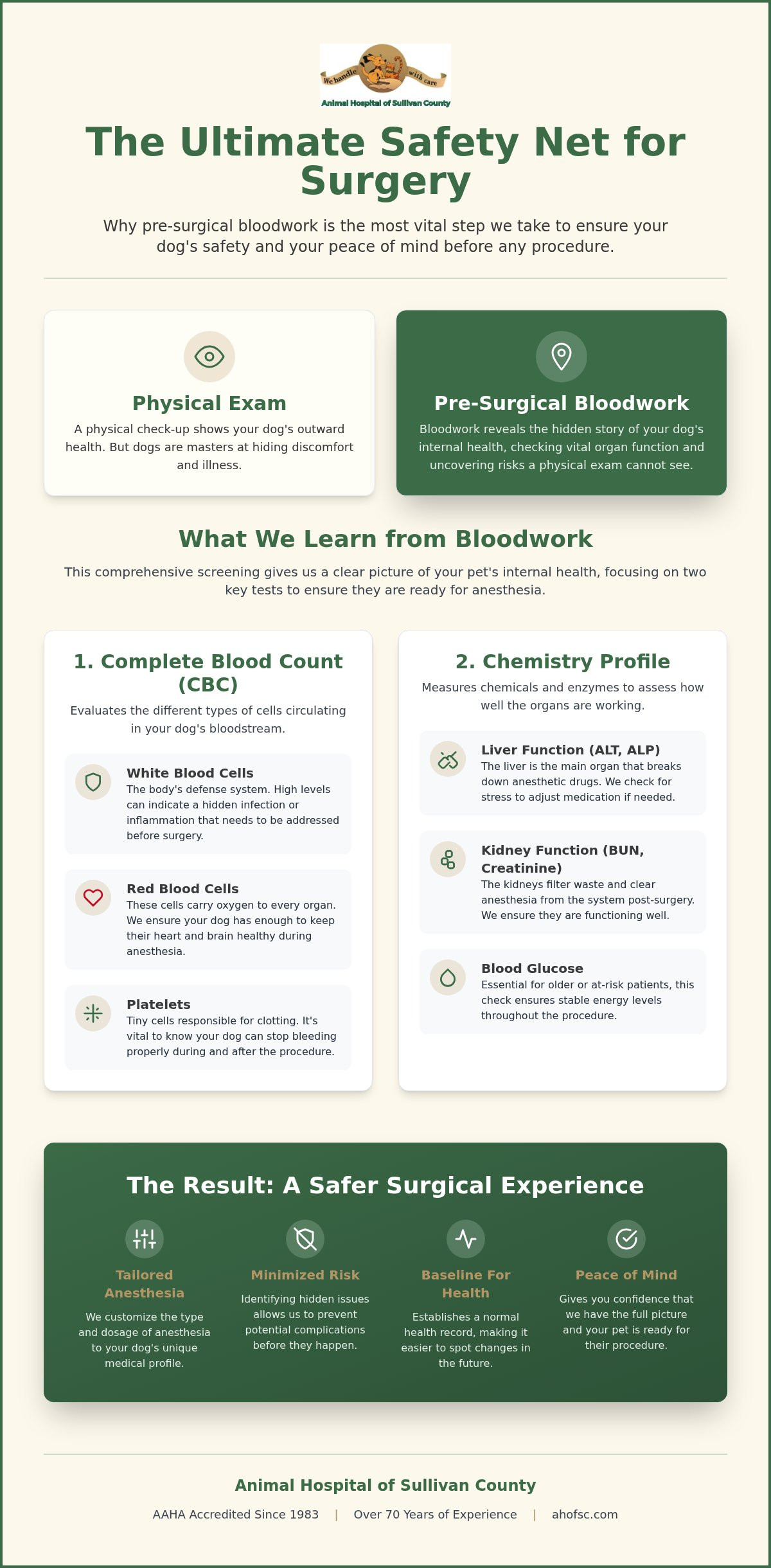
When you bring your dog in for a procedure, their wagging tail and bright eyes tell one story, but their internal organs might tell another. Think of dog pre-surgical bloodwork in Sullivan County as a diagnostic safety net. It's a proactive step we take before any anesthesia is administered. Because dogs are naturally programmed to mask discomfort, they can often hide symptoms of underlying organ stress until a condition is quite advanced. Our goal is to see what a physical exam cannot reveal, ensuring your best friend is truly ready for their surgery.
This screening is a hallmark of a modern Sullivan County veterinary practice. It moves us beyond guesswork and into the realm of evidence-based medicine. By looking at what bloodwork reveals, we gain a clear picture of your pet's internal health. This allows us to customize the anesthesia protocol or, if necessary, postpone a procedure until we can address a hidden issue. It's about providing the same level of care we would want for our own family members. We don't take risks with the lives of those you love.
Why Anesthesia Requires a Healthy Internal System
Anesthesia is a controlled state of unconsciousness that allows us to perform surgery without your dog feeling pain or stress. To keep your dog safe, their body must be able to process and eventually eliminate these drugs. The liver and kidneys are the primary workers here; they filter the medications out of the bloodstream. If these organs are already stressed, they might struggle to handle the additional load. During surgery, we also monitor blood pressure and oxygenation closely to keep every cell healthy. Anesthetic risk is the potential for complications that arise when a dog's organs cannot properly manage the physiological changes caused by anesthesia.
The AAHA Standard for Surgical Safety
We don't just follow local trends; we adhere to the highest standards in the country. The American Animal Hospital Association (AAHA) sets rigorous benchmarks for veterinary care that prioritize safety and excellence. Only about 15% of veterinary hospitals in the United States and Canada achieve this elite accreditation. We've been proud to meet these standards since 1983. This commitment means we prioritize advanced diagnostics for every patient, ensuring that every surgery is as safe as possible. For more about our philosophy, you can read the Animal Hospital of Sullivan County guide to see how we treat your pet like family.
What Does Pre-Anesthetic Bloodwork Actually Reveal?
Many pet parents find themselves wondering what we are actually looking for in those tiny vials of blood. Preanesthetic bloodwork isn't just a single test; it's a comprehensive look at your dog's internal environment. At the Animal Hospital of Sullivan County, we use our onsite laboratory to get these answers quickly. This allows us to have a full picture of your pet's health before they ever enter the surgical suite. When we perform dog pre-surgical bloodwork in Sullivan County, we focus on two primary categories of information.
The Complete Blood Count (CBC): More Than Just Red Cells
The CBC is a deep dive into the different types of cells circulating in your dog's body. First, we look at white blood cells. These are the body's primary defense system. If these levels are high, it might indicate a hidden infection or inflammation that needs attention before surgery. Next, we check platelets. These tiny cells are responsible for clotting. It's vital to know your dog can stop bleeding properly during and after their procedure. Finally, we evaluate red blood cells. These cells carry oxygen to every organ in the body. We need to be certain your dog's blood is rich enough in oxygen to keep their heart and brain healthy while they are asleep.
Chemistry Profile: A Deep Dive into Organ Function
While the CBC looks at cells, the chemistry profile looks at the chemicals and enzymes in the blood. This tells us how well the organs are actually working. We pay close attention to liver enzymes like ALT and ALP. The liver is the main organ responsible for breaking down and metabolizing anesthetic drugs. If the liver is stressed, we may need to adjust the dosage or choose a different medication entirely. We also look at kidney values like BUN and Creatinine. The kidneys filter waste products from the blood; they need to be functioning well to clear the anesthesia from your dog's system after the procedure. For our older patients, checking blood glucose is also essential to ensure their metabolic health is stable.
Once we have these results, our team can customize a plan just for your pet. We don't believe in a "one size fits all" approach to medicine. If we see a slight elevation in a kidney value, we might decide to increase IV fluid support during the surgery to protect those organs. This level of detail is what makes dog pre-surgical bloodwork in Sullivan County such a powerful tool for safety. If you'd like to learn more about our diagnostic services, we are always happy to explain the process and help you feel confident in your pet's care.
Comparing Risk vs. Safety: Why We Don’t Skip the Labs
We often hear pet parents ask a very sensible question: "My dog is young and looks perfectly healthy, so do they really need this?" It's a fair point to raise! We understand that you want to make the best decisions for your pet's care while being mindful of the medical value provided. However, our "heart-first" philosophy means we treat every patient like our own family member. We wouldn't dream of operating on our own dogs without these vital tests. Using dog pre-surgical bloodwork in Sullivan County is the only way veterinarians assess your pet's overall health with total certainty before a procedure begins.
The Risk of the Unknown: Complications We Avoid
Skipping labs means walking into the surgical suite with blinders on. For example, if a dog has low protein levels, it can significantly change how their body distributes and processes anesthetic drugs. Low protein also hinders the body's natural ability to heal the surgical site properly. Undetected anemia is another serious concern we look for. If a dog's red blood cell count is lower than it should be, their heart has to work much harder to circulate oxygen while they are under anesthesia. When we have this data beforehand, we can customize IV fluids and support levels to keep your dog's system stable and strong. We prefer to be prepared for your dog's unique needs rather than reacting to a complication that could have been prevented.
Peace of Mind for the Sullivan County Family
We know that the time your pet spends in surgery can feel like the longest hour of your day. Sitting in the waiting room is much easier when you know we've checked every possible box for safety. By taking a data-backed approach, we replace anxiety with the confidence that comes from facts. Our standards for every veterinary surgeon Sullivan County families trust are built on this foundation of thoroughness. We don't just hope for a safe outcome; we plan for one. This commitment to excellence has been the cornerstone of our care in Ferndale since 1953. Providing dog pre-surgical bloodwork in Sullivan County isn't about adding an extra step; it's about honoring the sacred bond you share with your best friend.
Pre-Surgical Screening Prep for Dogs in Sullivan County
Getting your dog ready for their procedure starts at home with a few simple steps. When we schedule dog pre-surgical bloodwork in Sullivan County, we want to ensure the results are as accurate as possible. This requires a bit of teamwork between you and our medical staff to get the clearest picture of your pet's internal health. We know that any preparation can feel a little daunting, but these steps are designed to make the process smooth and stress-free for your best friend.
We usually ask you to fast your dog for about 12 hours before their blood draw. This is because a recent meal can cause a temporary spike in glucose or lipids (fats) in the bloodstream. These spikes can sometimes muddy the diagnostic picture and make it harder to see the true baseline values we need. However, please don't restrict their water! Keeping your dog well-hydrated is essential. It makes the blood draw much easier and ensures they stay comfortable and energized throughout the morning.
The "Catskills Factor": Tick-Borne Disease Screening
Living in the beautiful Catskills means our dogs spend plenty of time enjoying the outdoors, but it also means they are at a high risk for tick-borne illnesses. We frequently see cases of Lyme disease, Ehrlichia, and Anaplasma in our local patients. These diseases can quietly cause low platelet counts or kidney stress without showing any outward signs. If we were to perform surgery on a dog with low platelets, they might have trouble clotting properly during the procedure. This is why we often integrate 4Dx testing into our dog pre-surgical bloodwork in Sullivan County. It's an extra layer of protection specifically tailored to the risks our local pets face every day.
Scheduling Your Pre-Surgical Appointment in Ferndale
We want this process to be as convenient as possible for your family. You can use the PetDesk app to find a time that works for your schedule and receive helpful reminders about fasting. Most families prefer to have the bloodwork done a few days before the actual surgery. This gives us plenty of time to review the results and discuss any findings with you without the pressure of the surgical clock ticking. When you arrive at our Ferndale clinic, our team uses low-stress handling techniques to ensure your dog feels safe and loved. Please remember to bring any previous medical records and a list of current medications your pet is taking so we can have a complete history.
If you have questions about an upcoming procedure or need to book a screening, you can request an appointment online to speak with our compassionate team. We are here to guide you through every step of the journey.
Expert Diagnostic Care at Animal Hospital of Sullivan County
Choosing a partner for your dog's surgical journey is a significant decision. At Animal Hospital of Sullivan County, we've spent more than 70 years building a legacy of trust in Ferndale. Since 1953, our family-operated clinic has been a steady, calming presence for local pet owners. Led by Dr. Barbara Bodolosky, our veteran-owned practice treats every patient with the same dedication we'd give our own pets. When you trust us with dog pre-surgical bloodwork in Sullivan County, you aren't just getting a lab report. You're getting the collective expertise of a team that views your dog as a cherished household member whose safety is our sacred bond.
Our In-House Lab: Rapid Results When They Matter Most
One of the biggest advantages we offer is our sophisticated onsite laboratory. Many clinics have to send samples to external facilities, which can lead to agonizing wait times for worried families. We've invested in state-of-the-art equipment that meets the American Animal Hospital Association's (AAHA) most rigorous diagnostic standards. Being AAHA-accredited since 1983 means we adhere to safety protocols that only the top 15% of hospitals in the country follow. This technology allows us to process dog pre-surgical bloodwork in Sullivan County almost immediately. If an urgent surgical case arises, we have the data we need to move forward safely within minutes. Once the results are ready, Dr. B or our caring staff will sit down with you to explain every value. We want you to feel informed and empowered, not overwhelmed by medical terminology.
Next Steps: Booking Your Dog’s Safe Surgery
Your peace of mind is our priority from the first consultation through the final post-operative checkup. If your dog needs a procedure, the first step is a thorough pre-surgical exam and blood screening. We'll work with you to create a customized plan that addresses your dog's specific health needs and your concerns. We also offer a variety of pet store products right here in our clinic to help with post-op recovery, from specialized diets to comfort items. Our team is here to support you every step of the way with kindness and technical excellence.
Schedule your dog’s pre-surgical exam at Animal Hospital of Sullivan County today! We look forward to welcoming you and your best friend into our family and providing the "heart-first" care they deserve.
Confidence and Safety for Your Dog’s Next Procedure
Choosing surgery for your pet is an act of deep love, and we're here to ensure every step is handled with the highest level of caution. We've seen how these diagnostics act as a vital safety net, revealing hidden health markers that a physical exam simply can't catch. By prioritizing dog pre-surgical bloodwork in Sullivan County, you're giving your best friend the gift of a tailored, data-backed medical plan that minimizes risk and maximizes safety.
Our team has been a steady partner for local families since 1953. As a veteran-owned and family-operated clinic, we treat your pets like our own. We're proud to be AAHA-accredited since 1983, a distinction held by only the top 15% of clinics. This commitment to excellence means you can rest easy knowing your dog is in expert hands. We're ready to help you navigate this journey with compassion and medical precision! Your pet's health and your peace of mind are our greatest priorities.
Schedule Your Dog’s Safe Surgical Consultation Today
Frequently Asked Questions
Is pre-surgical bloodwork mandatory for every dog at your Sullivan County clinic?
At our AAHA-accredited clinic, we consider pre-surgical bloodwork a vital standard of care for every patient. It is the most effective way to identify hidden risks before anesthesia. We require these tests because your pet's safety is our highest priority. This proactive approach ensures we have the data needed to protect your cherished family member during their procedure.
How much does pre-anesthetic bloodwork typically cost for a dog?
The cost of pre-anesthetic testing depends on the specific diagnostic panels required for your dog's age and health status. We believe in total transparency and provide detailed estimates during your surgical consultation. This allows you to see the medical value of each test. We want you to feel confident that you're investing in the safest possible surgical experience for your best friend.
My dog is only a year old and getting neutered; is bloodwork still necessary?
Even young, healthy-looking dogs can have hidden health concerns. Bloodwork for a one-year-old getting neutered can reveal congenital organ issues or early inflammatory responses that aren't visible during a physical exam. By checking these levels now, we can customize the anesthesia protocol to fit your pup's unique needs. It's a small step that provides a huge safety net for their recovery.
Can pre-surgical bloodwork detect tick-borne diseases like Lyme?
Yes, our screening is specifically designed to catch local threats. Living in the Catskills means our pets face a high risk of Lyme and Ehrlichia. These diseases can cause low platelet counts, which might lead to complications with blood clotting during surgery. Including these tests in dog pre-surgical bloodwork in Sullivan County allows us to address these infections before your dog ever enters the operating room.
How long do the results of the bloodwork take at your Ferndale office?
You won't have to wait long for answers! Our Ferndale office features a state-of-the-art onsite laboratory that delivers results in as little as 15 to 20 minutes. This speed allows Dr. Bodolosky to review the data and speak with you personally before the procedure begins. We know how stressful waiting can be, so we prioritize getting you accurate information as quickly as possible.
What happens if the bloodwork results come back with abnormal values?
If the results show abnormal values, our team will discuss the findings with you immediately. We might decide to adjust the anesthetic drugs, provide additional IV fluid support, or delay the surgery to treat an underlying condition. Every decision is made with your pet's long-term well-being in mind. We'll work together to find the safest path forward for your dog's medical care.
Does my dog need to fast before the pre-surgical blood draw?
We generally ask that you fast your dog for 12 hours before their blood draw. This ensures that nutrients from a recent meal don't cause temporary spikes in glucose or fats, which can make the results harder to interpret. You should always keep fresh water available, though! Staying hydrated is important for your dog's comfort and helps make the blood collection process much easier for them.
Will my dog need bloodwork again if they had it done six months ago?
A lot can change in a dog's internal health in six months. While older results are great for establishing a baseline, we require current dog pre-surgical bloodwork in Sullivan County to ensure we have the most accurate data for today's procedure. Using up-to-date labs is the only way to be certain that your pet's organ function is still strong enough to process anesthesia safely.


