
You're sitting on the living room floor at 2 a.m., watching your senior dog sleep and wondering if that heavy sigh is contentment or a quiet sign of struggle. It's a lonely moment that every devoted pet owner in our community eventually faces. You want to do what's best, but the fear of making the "wrong" decision or missing hidden pain can be paralyzing. This is why a professional pet quality of life assessment Sullivan County families can rely on is so vital. It's completely natural to feel torn between the hope of one more good day and the responsibility of preventing suffering.
At the Animal Hospital of Sullivan County, we believe that your bond with your pet is sacred. We're here to provide the clarity you need to move forward with confidence and grace. By using a clinical framework like the HHHMMMM scale, we help you look past the emotions to see the objective reality of your pet's comfort and happiness. This guide will walk you through how to measure their daily joy, understand the medical signs of decline, and ensure your beloved companion receives the most compassionate care possible in their golden years.
Key Takeaways
- Learn how a professional pet quality of life assessment Sullivan County families trust provides an objective perspective when emotions make it difficult to see the truth.
- Master the HHHMMMM scale to evaluate seven essential areas of your pet’s health, including pain management, hygiene, and mobility.
- Identify the difference between normal aging and treatable medical issues that can be uncovered through advanced onsite diagnostics.
- Implement simple tracking tools like the "Good Day/Bad Day" calendar to help you visualize your pet's trends over time.
- Find peace of mind by partnering with a compassionate local expert who prioritizes your pet's dignity and your family's emotional well-being.
Understanding Pet Quality of Life: Why a Professional Assessment Matters
Quality of life is a phrase we use often, but defining it is deeply personal. It isn't just about the absence of disease; it's the delicate balance of your pet's physical comfort, social connection, and emotional spirit. When you live with an animal every day, a slow decline can be almost invisible. You adapt naturally. You might start carrying your dog up the stairs or hand-feeding your cat without realizing how much their daily reality has shifted. This gradual change is why a professional pet quality of life assessment Sullivan County families choose is so vital. It provides a clear, objective look at a situation that is otherwise clouded by deep emotion.
Our role as your local veterinarian is to serve as a compassionate, neutral advocate for your animal. We move the conversation away from "age" as if it were a disease itself. A number on a calendar doesn't tell us how a pet feels. Instead, we focus on comfort as our primary metric. We look at whether your pet can still engage in the social rituals that define their personality. If those sparks of joy are fading, we work together to understand what that means for their future.
The Emotional Weight of the 'Final Gift'
Caring for a senior or terminally ill pet creates a significant caregiver burden. Many of our neighbors in Sullivan County feel a heavy sense of guilt when they begin to consider end-of-life care. It's helpful to expand your understanding of animal euthanasia not as a failure of your duty, but as a final, selfless gift of mercy. Professional guidance helps alleviate this guilt by replacing uncertainty with facts. We validate the bond you share and ensure that your decisions are rooted in love and dignity rather than fear.
The mental toll of these responsibilities on the family should not be overlooked. For adults who need professional support to process the stress and grief of caregiving, Norton Wellness provides psychiatric and mental health services designed to help individuals navigate significant life stressors and emotional challenges.
Medical Baseline vs. Current Reality
To understand how far a pet has declined, we must know where they started. This is why consistent wellness exams are so important throughout a pet's life. These visits establish a medical baseline of what "normal" looks like for your specific companion. When chronic conditions like arthritis or kidney disease begin to take hold, we compare their current state to that baseline. There is a distinct difference between a manageable illness that requires medication and a terminal decline that prevents a pet from experiencing a "good day." We help you identify that threshold before your pet reaches a state of hidden pain.
The HHHMMMM Scale: A Framework for Evaluating Comfort in 2026
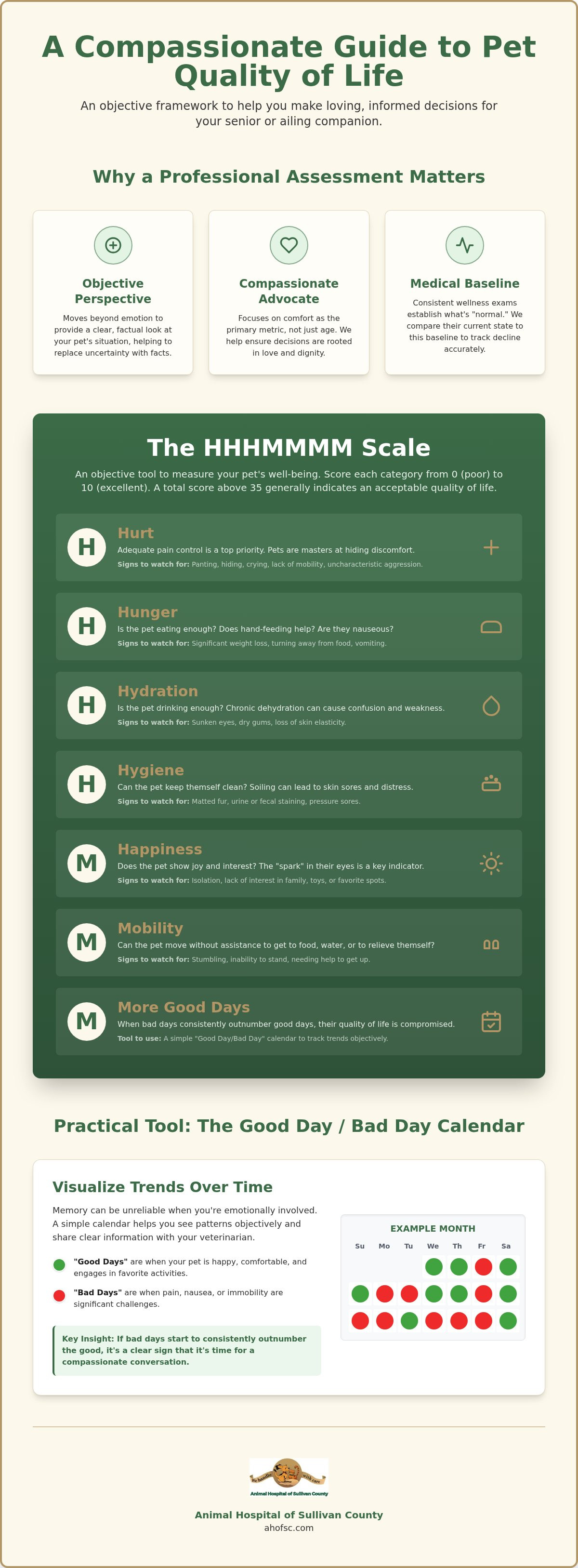
The HHHMMMM scale is a gold-standard tool designed to help families objectively measure their pet's well-being during difficult times. It stands for Hurt, Hunger, Hydration, Hygiene, Happiness, Mobility, and More Good Days. For many families in Ferndale, this framework transforms a cloud of worry into a clear, manageable checklist. By scoring each category from zero to ten, you can see if your pet's total score stays above a 35, which is generally the threshold for an acceptable quality of life. Using this tool as part of a formal pet quality of life assessment Sullivan County experts provide allows you to track subtle shifts that might otherwise be missed in the daily routine.
Evaluating Physical Needs: Hurt, Hunger, and Hydration
Physical comfort is the foundation of a good day. "Hurt" is often the hardest to judge because pets are masters at hiding discomfort. You might notice your dog panting more at night or your cat hiding in a closet they never used before. These are often silent signs of pain. "Hunger" and "Hydration" are equally critical. When nutritional support or hand-feeding is no longer enough to maintain their strength, or when a pet becomes chronically dehydrated, it can lead to confusion and a rapid decline in cognitive function. If you are struggling to keep your pet comfortable, our team is always here to discuss Medical Care options that might improve their daily experience.
Evaluating Emotional Needs: Happiness and Mobility
Emotional health is just as important as physical health. Does your pet still seek out their favorite sunspot on the porch or enjoy a short trip to a local Sullivan County park? This "Happiness" score measures the "spark" in their eyes and their desire to stay socially connected to the family. "Mobility" focuses on whether they can still move independently to greet you or reach their elimination area. If a pet can no longer stand or move without distress, their sense of dignity often suffers. You can find more detailed guidance on Compassionate End-of-Life Support to help you navigate these specific emotional criteria.
The final "M" in the scale stands for "More Good Days than Bad." This is the most telling metric for many families. When the bad days begin to outnumber the good, it's often a sign that the burden of illness has become too heavy for their small bodies to carry. Tracking these scores on a calendar helps you visualize the trend over weeks rather than just focusing on a single difficult afternoon. This long-term view ensures your decisions are rooted in the reality of your pet's ongoing happiness.
Recognizing Subtle Signs: Medical vs. Behavioral Changes
When our pets act differently, we often chalk it up to them just "slowing down" because of age. However, many behavioral shifts are actually physical symptoms in disguise. A dog that suddenly snaps when touched or a cat that stops jumping onto the bed isn't necessarily being grumpy. They're likely communicating pain. It's difficult to separate a bad mood from a medical crisis without help. This is why diagnostics are such a critical part of the process. Blood work or imaging can reveal hidden infections or organ changes that might be treatable, potentially adding months of comfort to your pet's life.
Cognitive Dysfunction Syndrome, often called pet dementia, also plays a major role in quality of life. You might notice your companion staring at walls, getting stuck in corners, or forgetting their house training. These changes are heart-wrenching for families to witness. When you schedule a pet quality of life assessment Sullivan County experts can help you determine if these shifts are temporary slumps or part of a permanent decline in function. We often recommend the "Favorite Things" test. List the five activities your pet has always loved. If they can no longer enjoy three of those five, it's a strong indicator that their identity and joy are being overshadowed by their condition.
Personality Shifts in Senior Pets
Chronic discomfort often leads to increased withdrawal. Your pet might stop greeting you at the door or spend more time under the bed. Night-time anxiety is another common sign; they may pace restlessly or vocalize because they can't get comfortable. These aren't just quirks of aging. They're signals that the current management plan needs adjustment. We encourage you to document these moments. Note the time of day and the specific behavior so we can review them together during your next visit.
Physical Indicators You Might Miss
Some physical changes are so gradual they're easy to overlook. Muscle wasting, particularly in the hindquarters, can happen even if your pet is eating well. In senior cats, a greasy or matted coat often means they've stopped grooming because it's too painful to twist their bodies. Subtle changes in the rhythm or depth of your pet's breathing can often be the first quiet signal of significant internal distress. Recognizing these nuances is a key part of any pet quality of life assessment Sullivan County residents perform at home, helping you make decisions based on your pet's actual physical reality.
Practical Tools for Sullivan County Families: Tracking the 'Good Days'
Tracking your pet’s health at home doesn't have to feel clinical or cold. It’s an act of love! By using concrete tools, you can replace the "guessing game" with a clear picture of your companion's daily reality. This process helps your family reach a consensus and ensures you're making decisions based on facts rather than just a single emotional moment. When you use a professional framework, you move away from the fear of the unknown and toward a place of informed compassion.
This principle of informed compassion and dignity is a value shared by professionals in all areas of end-of-life planning. For families seeking a similar standard of respectful care for human services, Sunnyside Cremation and Funeral provides specialized support in cremation and traditional funeral arrangements.
The Calendar Method: Visualizing the Trend
Get a simple paper calendar and place it on your fridge where everyone can see it. Every evening, mark the day with a simple "smiley" face for a good day or a "sad" face for a bad day. A good day means your pet ate well, interacted with the family, and moved with relative ease. A bad day might involve hiding, refusing food, or visible distress. This visual record is incredibly powerful! It helps you identify the "tipping point" where the bad days begin to outnumber the good. Consistency is vital here because it removes the emotional bias that often makes us remember only the best moments while overlooking the steady struggle. It’s a neighborly way to keep yourself honest about your pet’s actual comfort level.
Involving every member of the household is another essential step. Children often notice different things than adults, and having a 360-degree view ensures that no subtle sign of pain is missed. Once you've tracked these trends, you should also revisit the "Five Favorite Things" test. List the five activities that define your pet’s personality, such as chasing a specific toy or waiting by the door. If they can no longer enjoy these core pieces of their identity, it’s a sign that their quality of life has significantly shifted.
Consulting Your Sullivan County Veterinarian
When you feel the trend is moving in a difficult direction, it’s time to schedule a senior pet care consultation. Come prepared to your appointment with your calendar logs and even short videos of your pet’s mobility at home. Seeing how they move in their own environment provides Dr. B with invaluable context that they might not show in the exam room. Ask specific questions about palliative care and pain management. It’s important to understand that a pet quality of life assessment Sullivan County families receive at our clinic doesn't always mean "the end." Often, it leads to a change in treatment or a new medication that can restore comfort and dignity for a longer period.
If you are struggling to tell if your pet is having a "bad day" or a permanent decline, please reach out to us for a compassionate consultation today.
Compassionate End-of-Life Support at Animal Hospital of Sullivan County
At the Animal Hospital of Sullivan County, we understand that the final chapter of a pet’s life is just as significant as the first. Since 1953, our "heart-first" approach has guided families through these tender moments with sincerity and professional skill. Our Ferndale facility is designed to prioritize a peaceful, non-clinical environment where your companion’s comfort is our only goal. When you come to us for a pet quality of life assessment Sullivan County residents have trusted for generations, you aren't just getting a clinical score. You're getting the support of a neighbor who knows the weight of your bond.
One of the most important benefits of choosing a full-service hospital for this journey is our access to onsite diagnostics. Many national hospice-only services lack the equipment to rule out treatable ailments. Before any final decision is made, we can use our in-house lab to ensure that a sudden slump isn't actually a manageable medical issue. If we find that a condition can be stabilized, we pivot to medical care that restores joy. If the decline is permanent, we transition to a path of dignity and grace. This medical certainty provides a level of peace that a subjective assessment alone cannot offer.
Palliative and Hospice Care Options
Managing pain is the cornerstone of senior care. We provide the specific medical tools and guidance needed to keep your pet comfortable in their own home. This palliative support is designed to extend the quality time you have left, ensuring those final weeks are filled with connection rather than struggle. We walk beside you through the "waiting" period, offering empathy and steady advice as you watch for the subtle signs of decline. Our team is here to ensure that your pet’s final days are spent in the environment they love most, surrounded by the people who cherish them.
A Continuous Circle of Care in Ferndale
Dignity doesn't end when a pet passes. We are proud to offer a unique onsite crematorium, which means your beloved companion never leaves our trusted hands. There is a profound peace of mind in knowing that the same team that cared for them in life is also looking after them in aftercare. To help your family honor their memory, we also provide various memorialization options through our curated pet store products. We invite you to contact us today for a compassionate quality of life consultation to discuss how we can support your family through this journey.
Providing the Comfort and Dignity Your Pet Deserves
Choosing the right time to say goodbye is the most selfless act of love you'll ever perform for your companion. By using objective tools like the HHHMMMM scale and tracking daily trends, you move away from the paralyzing grip of guilt and toward a decision rooted in pure compassion. Remember that behavioral changes are often silent cries for help that our advanced diagnostics can clarify; this ensures no treatable condition is overlooked. Whether your pet needs a new palliative care plan or it's time for a final gift of mercy, you don't have to navigate this journey alone.
Since 1953, our family has been here to support yours with expert medical care and neighborly empathy. We provide total dignity through every step, including the peace of mind offered by our unique onsite crematorium. You can trust that your cherished pet will never leave our capable, caring hands. We're here to help you find the clarity and peace you need during this difficult season. Please Schedule a Compassionate Quality of Life Consultation with Dr. B today to discuss a pet quality of life assessment Sullivan County families can rely on for professional guidance.
Frequently Asked Questions
What is the most accurate pet quality of life scale to use at home?
The HHHMMMM scale is widely considered the most reliable tool for at-home evaluation. This framework helps you score seven key areas of your pet's daily experience, from physical comfort to emotional happiness. By assigning a value to each category, you can see if their total score stays above the recommended threshold. It's a practical way to turn a complex emotional situation into a clear, manageable picture of your pet's actual well-being.
How do I know if my aging dog is in pain if they aren't whimpering?
Dogs rarely whimper or cry out until pain is severe. Instead, look for subtle shifts like heavy panting at night, restlessness, or an inability to get comfortable. They might stop jumping on the couch or begin hiding in unusual places. These behavioral changes are often silent signals of chronic discomfort. A professional pet quality of life assessment Sullivan County families trust can help pinpoint these hidden signs through a thorough physical exam.
Can a quality of life assessment lead to new treatment instead of euthanasia?
Absolutely! An assessment is a tool for clarity, not an automatic path to euthanasia. During a consultation, we often use our in-house diagnostics to look for underlying issues that might be causing distress. Sometimes, adjusting a pain management protocol or treating a hidden infection can significantly improve your pet's comfort. Our goal is always to maximize your pet's happy time with your family by exploring every compassionate medical option available.
What should I expect during a quality of life consultation in Sullivan County?
You can expect a gentle, non-clinical environment where your family's feelings are prioritized. Dr. B will sit down with you to review your home logs and any videos of your pet's mobility. We'll perform a soft physical exam to check for pain and discuss your pet's daily rituals. It’s a collaborative conversation focused on your pet’s dignity. We want you to leave feeling informed and supported by a team that truly understands your bond.
Is it 'too soon' to consider end-of-life care if my pet still eats?
Appetite is only one piece of the puzzle. While eating is a positive sign, it doesn't always mean a pet is comfortable or happy. Many pets will continue to eat even when they can no longer stand independently or are experiencing significant cognitive confusion. We look at the whole animal, including their social interactions and ability to move without distress. It’s never too soon to start the conversation about what "dignity" looks like for your specific companion.
How does the onsite crematorium at Animal Hospital of Sullivan County work?
Our onsite crematorium ensures that your cherished pet never leaves our trusted care. This is a unique service we provide to Sullivan County families to guarantee total dignity and peace of mind during aftercare. Because the process happens right here in Ferndale, you can be certain that your pet is handled with the same heart-first compassion we showed them throughout their life. It provides a continuous circle of care that many families find deeply comforting.
What are the signs that a senior cat's quality of life is declining?
Senior cats often show decline through subtle changes in their grooming habits or social behavior. If your cat's coat appears greasy or matted, it might be because twisting to groom has become too painful. You may also notice them staying on the floor rather than jumping to their favorite high perches. Increased hiding or vocalizing at night can also signal distress. These nuances are important factors in a pet quality of life assessment Sullivan County residents perform for their feline friends.
Can Dr. B help me decide when it is the 'right time'?
Dr. B acts as a compassionate advocate for your pet and a steady guide for your family. While the final decision always rests with you, she provides the medical expertise and objective perspective needed to help you find the "right time." We use clinical data and years of experience to help you see the situation clearly. Our mission is to ensure you feel confident that you are making the most loving choice for your best friend.


