
Imagine it is a quiet Tuesday evening when you notice your sweet tabby, Oliver, straining in his litter box and crying out in a way you have never heard before. Your heart sinks as you realize something is terribly wrong. We know that in these frantic moments, your only priority is saving your cherished family member. It is completely natural to feel overwhelmed by the sudden fear of loss and the heavy weight of an unexpected emergency vet estimate.
Understanding the cat urinary blockage treatment cost PA families might encounter is the first step toward moving from panic to a clear plan of action. You deserve to know exactly what goes into your pet's care without being blinded by medical jargon like catheterization or cystocentesis. This guide will walk you through the life-saving procedures your cat needs and provide a realistic framework for regional costs. We are here to help you navigate this emergency with confidence, ensuring you feel supported while making the best choices for your cat's long-term health and happiness. By the end of this article, you'll have a thorough understanding of the treatment steps and the peace of mind that comes from being prepared.
Key Takeaways
- Learn why male cats are biologically prone to blockages and how to recognize the critical signs of Feline Lower Urinary Tract Disease (FLUTD).
- Discover what happens behind the scenes during emergency triage, from immediate stabilization to the use of advanced diagnostic imaging.
- Gain clarity on the cat urinary blockage treatment cost PA residents can expect, including how severity and hospitalization length impact the final bill.
- Find out how to protect your cat from future episodes through therapeutic diets and careful monitoring during the vital first 30 days of recovery.
- See how rapid results from onsite diagnostics and a heart-first approach to care can make all the difference in a feline emergency.
Recognizing Feline Urinary Obstruction (FUO) as a Critical Emergency
Feline Lower Urinary Tract Disease, or FLUTD, is a broad term that covers several conditions affecting your cat's bladder and urethra. While some versions cause minor discomfort, a urinary blockage is a life-threatening emergency. This happens when the urethra becomes completely obstructed by crystals, stones, or mucus plugs. Male cats are especially vulnerable because their urethras are much longer and narrower than those of female cats. Even a small amount of sediment can create a total plug, preventing them from passing urine entirely. If your cat can't urinate, toxins begin to build up in their system almost immediately.
The Red Alert Signs Every Cat Owner Should Know
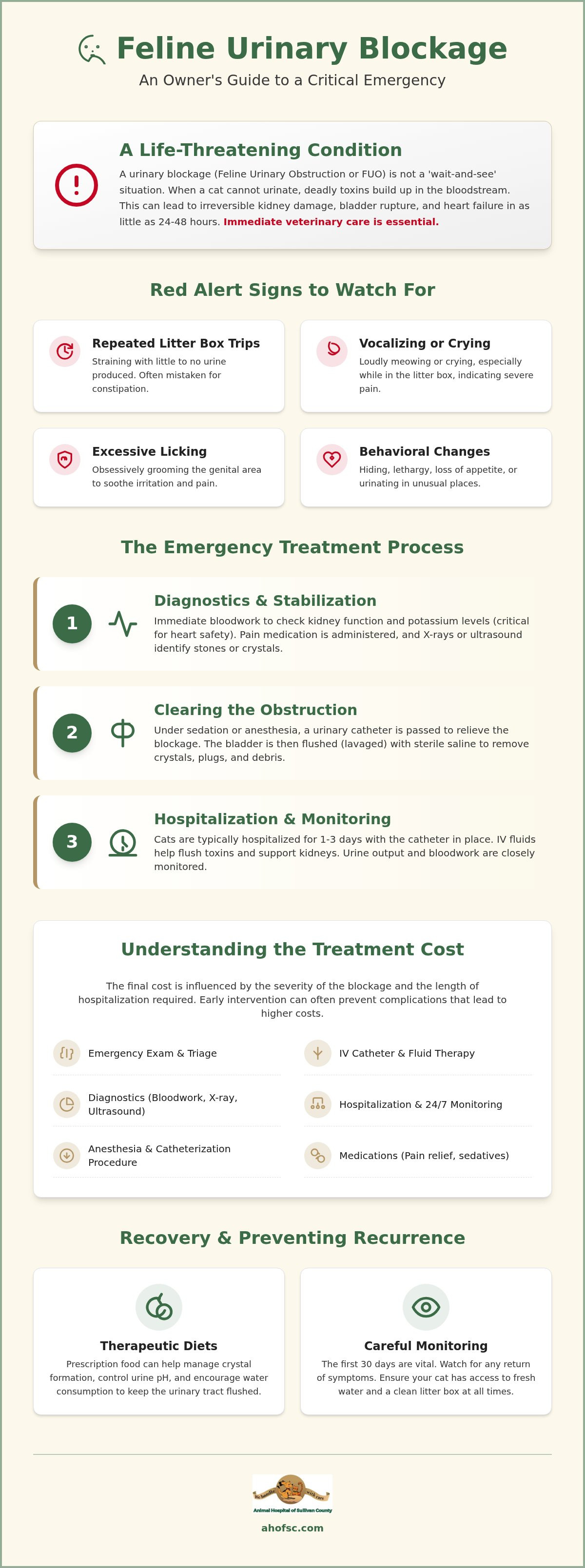
The signs of a blockage can be subtle at first, but they quickly become impossible to ignore. Many owners notice their cat visiting the litter box repeatedly without producing any urine. This behavior is often mistaken for constipation, but it is actually a sign of intense pressure and pain. You might hear your cat vocalizing loudly or crying out while straining. Other common symptoms include:
- Frequent, painful attempts: Your cat may squat in various places around the house, trying desperately to find relief.
- Excessive grooming: They might lick their genital area obsessively to soothe the irritation.
- Behavioral changes: A normally social cat may hide under the bed or in unusual places, acting lethargic or refusing to eat.
- Blood in the urine: If they do manage to pass a few drops, you might notice a pinkish or red tint.
Why This Is a Medical Emergency, Not a 'Wait-and-See' Situation
Waiting even 24 hours can lead to irreversible damage. When a cat is blocked, their body can't filter out potassium and nitrogenous waste. This buildup, known as hyperkalemia, can cause the heart to slow down or even stop. There is also a severe risk of the bladder rupturing or the kidneys failing completely. Seeking help from a small animal vet Sullivan County as soon as you notice symptoms is vital. Early intervention doesn't just save lives; it often helps keep the cat urinary blockage treatment cost PA families face from escalating due to prolonged intensive care. Your cat's prognosis improves significantly when the obstruction is cleared before the kidneys are overwhelmed by toxins. Every hour counts in these situations, and acting quickly is the kindest choice you can make for your cherished companion.
The Clinical Process: What Happens During Emergency Treatment?
When you arrive at the clinic with a feline emergency, our priority is immediate relief and safety. The clinical process is a carefully orchestrated sequence designed to stabilize your cat and clear the life-threatening obstruction. While the focus is on medical intervention, we never lose sight of the emotional bond you share with your pet. Understanding these steps helps demystify the cat urinary blockage treatment cost PA residents may face during such a stressful time.
Step 1: Diagnostics and Stabilization
The first few minutes are critical. We begin by assessing your cat's heart rate and pain levels. High potassium levels, a common side effect of blockage, can be dangerous for the heart. We utilize pet diagnostics Sullivan County to quickly run bloodwork and check electrolyte balances. At the same time, diagnostic imaging like X-rays or ultrasound allows us to see if bladder stones, also known as uroliths, are the primary cause. This phase is about gathering facts and ensuring your cat is stable enough for the next steps. Pain management is also started immediately to reduce urethral spasms and help your cat feel more at ease.
Step 2: Clearing the Obstruction
Once stabilized, your cat will likely need sedation or general anesthesia. This isn't just for comfort; it's necessary to relax the urethral muscles so a catheter can be safely passed. We then place an indwelling urinary catheter to clear the plug and allow urine to flow again. We often perform a bladder lavage, which involves flushing the bladder with sterile saline to remove sediment, crystals, and debris that could cause a secondary blockage. This procedure is the core of the emergency intervention. It requires precision and care to ensure the delicate tissues of the urethra aren't damaged during the process.
Step 3: Post-Obstructive Care and Monitoring
Clearing the path is only half the battle. Your cat will typically stay in the hospital for 24 to 72 hours for intensive monitoring. This period of hospitalization is a significant part of the overall cat urinary blockage treatment cost PA pet owners budget for, but it is the safest way to ensure a full recovery. We track urine output closely and repeat blood tests to ensure kidney values are trending back to normal. During this time, IV fluids flush the system and keep your pet hydrated. Before heading home, we transition them to oral medications to manage pain and prevent further spasms. If you're concerned about your cat's urinary health, reaching out to a trusted veterinary partner can provide the clarity you need.
Understanding Cat Urinary Blockage Treatment Cost in PA and the Tri-State
When you're faced with a feline emergency, the last thing you want to think about is the bottom line. We understand that financial transparency is a vital part of the trust we build with our pet families. The cat urinary blockage treatment cost PA residents encounter is shaped by the complexity of the care required. It isn't just a single fee; it's a collection of life-saving interventions that work together to bring your cherished companion back to health. The severity of the blockage and how long your cat needs to stay in the hospital are the two biggest factors that influence your final estimate.
Breaking Down the Invoice Components
An emergency invoice often includes several layers of specialized care. You'll see costs for the initial exam and emergency triage surcharges, which cover the immediate attention of a skilled medical team. Laboratory work, including blood panels and urinalysis, is essential to monitor kidney function and electrolyte balance. You will also find charges for diagnostic imaging, such as X-rays or ultrasounds, which help us see exactly what is causing the obstruction. Finally, the procedure itself involves anesthesia, specialized surgical supplies, and sterile catheterization kits designed specifically for your cat's delicate anatomy.
Why Regional Location Matters for Cost
The cost of care in the PA, NY, and NJ Tri-State area often reflects the high standard of medicine available in our specific corridor. Maintaining advanced veterinary surgery Sullivan County facilities requires significant investment in technology and highly trained staff. While national averages might suggest lower figures, those numbers often come from regions with lower overhead or fewer specialized resources. Choosing a local expert means your cat benefits from rapid onsite diagnostics and a team that is personally invested in our community. This precision often leads to better outcomes and can prevent the even higher costs associated with a recurring blockage later on.
We encourage you to ask your veterinarian for a detailed estimate before treatment begins. Don't be afraid to ask about the expected duration of the hospital stay and what specific monitoring is included in the daily rate. A clear understanding of these factors helps you make decisions with confidence and care. We believe that being an advocate for your cat means having all the facts so you can focus on what truly matters: their healing and your peace of mind.
Recovery and Prevention: Reducing the Risk of Recurrence
The first few weeks after your cat returns home are a time for gentle care and close observation. It's such a relief to have them back in your arms, but the journey toward long-term health is just beginning! We know that the experience of an emergency can be draining, both emotionally and financially. Statistics suggest that the first 30 days after an obstruction are the most critical because the risk of recurrence is at its highest during this window. While navigating the initial cat urinary blockage treatment cost PA was a significant hurdle, focusing on prevention is the best way to protect your pet's future and your own peace of mind. We're here to partner with you in making these life-saving adjustments.
The Power of Prescription Nutrition
Prescription diets are the cornerstone of preventing future blockages. Unlike standard over-the-counter options, these specialized formulas are scientifically designed to balance urinary pH and dissolve existing crystals. They also contain specific minerals that discourage new crystals from forming in the first place. You can conveniently find these essential pet store products at your veterinary clinic, ensuring you get the exact formula your cat needs. Making the switch to a therapeutic diet for life is one of the most effective ways to keep your cat safe and healthy! It's a simple daily habit that provides a massive layer of protection.
Creating a Stress-Free Home Environment
Feline stress is a major contributor to urinary issues, often leading to a condition called sterile cystitis. When a cat feels anxious or threatened, their bladder lining can become inflamed, creating the debris that eventually causes a physical blockage. You can help by using pheromone diffusers and ensuring your home is a true sanctuary for them. A simple but vital rule for any home is the "N+1" litter box strategy. This means you should always have one more box than you have cats. This reduces competition and stress, especially in multi-cat households where territory is important.
Hydration is another vital piece of the puzzle. Cats often have a naturally low thirst drive, so we must find creative ways to keep them hydrated. Many cats prefer the movement of a water fountain over a still bowl, as it mimics fresh running water in the wild. You can also try "souping" their meals by adding a little warm water to their wet food, which increases their overall fluid intake naturally. These small, daily changes create a protective environment for your pet and help prevent future emergencies that would add to the overall cat urinary blockage treatment cost PA families have to manage. If you have any questions about your cat's specific recovery plan, contact our compassionate team today to schedule a follow-up and ensure your cat is on the right track.
Compassionate Care at Animal Hospital of Sullivan County
For more than seven decades, Animal Hospital of Sullivan County has stood as a steady, calming presence for families across the Tri-State area. Since our doors opened in 1953, we've dedicated ourselves to the sacred bond between people and their animals. We know that facing a medical emergency is one of the most stressful experiences a pet owner can have. That's why we pair our technical skill with a heart-first philosophy. We don't just see patients; we see cherished household members who deserve the highest level of protection and care.
While the cat urinary blockage treatment cost PA residents encounter is a practical factor to consider, we believe the value of experienced, local expertise is what truly provides peace of mind. Our state-of-the-art in-house laboratory ensures we get rapid results during a crisis. This means your cat can move from triage to stabilization without unnecessary delays. Our commitment to your family includes:
- Rapid results from onsite diagnostics for emergency answers
- Advanced surgical care led by Dr. Barbara Bodolosky
- A compassionate, family-oriented environment established in 1953
- Support through every stage of life, from wellness to end-of-life care
Why Families from PA and NY Trust Us
Families often cross the border from Pennsylvania to see us because they value the personalized attention that corporate hospitals often lack. Our surgical team, led by Dr. Barbara Bodolosky, brings decades of experience to every procedure. If you're looking for a sick cat vet near me NY, you'll find a team that's personally invested in your pet's recovery. We take the time to explain every diagnostic step, ensuring you feel informed rather than overwhelmed by complex jargon. This neighborly empathy is the foundation of everything we do.
As we serve many families from across the border, we recognize that comprehensive care often involves finding reliable local services; for instance, many of our clients also look for reputable dog boarding Harrisburg PA to ensure all their pets are well-cared for.
Next Steps for Your Cat's Health
Long-term health is a journey we take together. After the initial emergency is resolved, a regular pet wellness exam Sullivan County helps us monitor your cat's urinary health and catch potential issues before they become crises. You can also easily refill your cat's prescription nutrition through our onsite store to ensure they stay on the right path. If you suspect your cat is currently struggling to urinate or showing signs of distress, please call us immediately for a triage assessment during our business hours. We're here to provide the steady, expert care your family deserves.
Moving Forward with Care and Clarity for Your Feline Family
Your cat is more than a pet; they're a cherished member of your household. We've explored how recognizing the early signs of a blockage and acting within that critical 24-hour window can truly save lives! While the cat urinary blockage treatment cost PA families encounter reflects the advanced medical care required in our region, it's an investment in your companion's longevity and happiness. By prioritizing prescription nutrition and a stress-free home, you can significantly reduce the risk of a recurring emergency and keep your sweet friend safe.
Since 1953, our team has provided a steady, calming presence for the Tri-State community. We combine neighborly empathy with high-tech onsite diagnostics to ensure your pet receives rapid, accurate care when they need it most. Whether you're navigating an immediate crisis or seeking guidance on preventative wellness, we're here to be your dedicated partners in this journey. Contact our compassionate team for emergency triage or follow-up care today. You don't have to face these stressful moments alone. We're ready to help your cat get back to their happy, healthy self!
Frequently Asked Questions
How much does it typically cost to unblock a cat in Pennsylvania?
Industry data shows that the typical cost can range from $500 to $5,000 depending on the severity and location. In the Tri-State area, non-surgical treatment often falls between $750 and $1,500, while complex cases involving surgery can exceed $3,000. Factors like the length of hospitalization and the need for intensive monitoring play a significant role in the final cat urinary blockage treatment cost PA owners might see on their estimate.
Can a cat's urinary blockage clear on its own without treatment?
No, a complete urinary blockage is a life-threatening emergency that won't resolve without medical intervention. Without professional help, toxins build up in the bloodstream and can lead to kidney failure or heart issues within 24 to 48 hours. If you suspect your cat is blocked, it's vital to seek emergency care immediately. Waiting for it to clear naturally is unfortunately not a safe option for your beloved pet.
Is pet insurance likely to cover the cost of a urinary blockage?
Most standard accident and illness pet insurance plans will cover a significant portion of the costs associated with treating a urinary blockage. However, it's important to check your specific policy details regarding pre-existing conditions. If your cat had urinary issues before the policy started, it might be excluded. Insurance can provide immense peace of mind when facing the unexpected cat urinary blockage treatment cost PA families often worry about during a crisis.
What is the survival rate for a cat treated for a urinary blockage?
The survival rate for cats that receive prompt veterinary treatment is generally very high, often exceeding 90 percent. Success depends heavily on how quickly the cat is stabilized and the obstruction is cleared. Early intervention prevents permanent damage to the kidneys and heart. While the situation feels frightening, modern veterinary medicine is incredibly effective at managing these emergencies and helping cats return to their happy, healthy lives at home.
Why is my male cat more at risk than my female cat?
Male cats have a much longer and narrower urethra than female cats, which makes them biologically more susceptible to obstructions. Even a small amount of sediment, crystals, or a mucus plug can easily get stuck in their narrow passage. While female cats can experience urinary inflammation, they rarely suffer from a total physical blockage. This anatomical difference is why we pay such close attention to male cats showing signs of straining.
What happens if I can't afford the treatment for my cat's blockage?
We understand that emergency costs can be a heavy burden, and many clinics offer options like third-party financing to help manage the expense. You should always be open with your veterinary team about your budget so they can prioritize the most critical life-saving steps. Some local animal welfare organizations or charities may also provide assistance for emergency medical needs. Our goal is always to find a compassionate path forward that respects your family's needs.
Does a cat need surgery (PU surgery) after the first blockage?
Surgery is typically not the first step and is usually reserved for cats that suffer from recurring blockages or have a severe anatomical issue. Most first-time blockages are managed with catheterization and medical therapy. If your cat continues to obstruct despite a change in diet and environment, your vet might discuss a Perineal Urethrostomy (PU). This procedure widens the urethral opening to prevent future life-threatening emergencies from happening again in the future.
How can I tell if my cat is blocked or just has a UTI?
A cat with a UTI may strain or go frequently, but they'll still be able to produce small amounts of urine. A blocked cat will often strain intensely while producing absolutely nothing. If your cat is crying out in the litter box, acting lethargic, or licking their genital area excessively, you should treat it as an emergency. It's always better to have a professional assessment than to risk a life-threatening obstruction for your cherished companion.


