
Urgent vet care in Sullivan County is available during business hours, while after-hours emergency clinics include 24/7 or extended-hours services. If your pet has trouble breathing, collapses, has a seizure, is bleeding heavily, or has suffered major trauma, treat the situation as urgent.
It’s natural to feel unsure when a beloved pet suddenly seems unwell. Calling ahead, if possible, gives the veterinary team time to prepare and lets you describe what has changed. This guide to urgent vet care in Sullivan County explains which concerns may need prompt attention, how to describe symptoms, and what to know about office hours and urgent visits. You’ll also find practical steps to take before leaving, so you can focus on helping your companion feel safe.
Key Takeaways
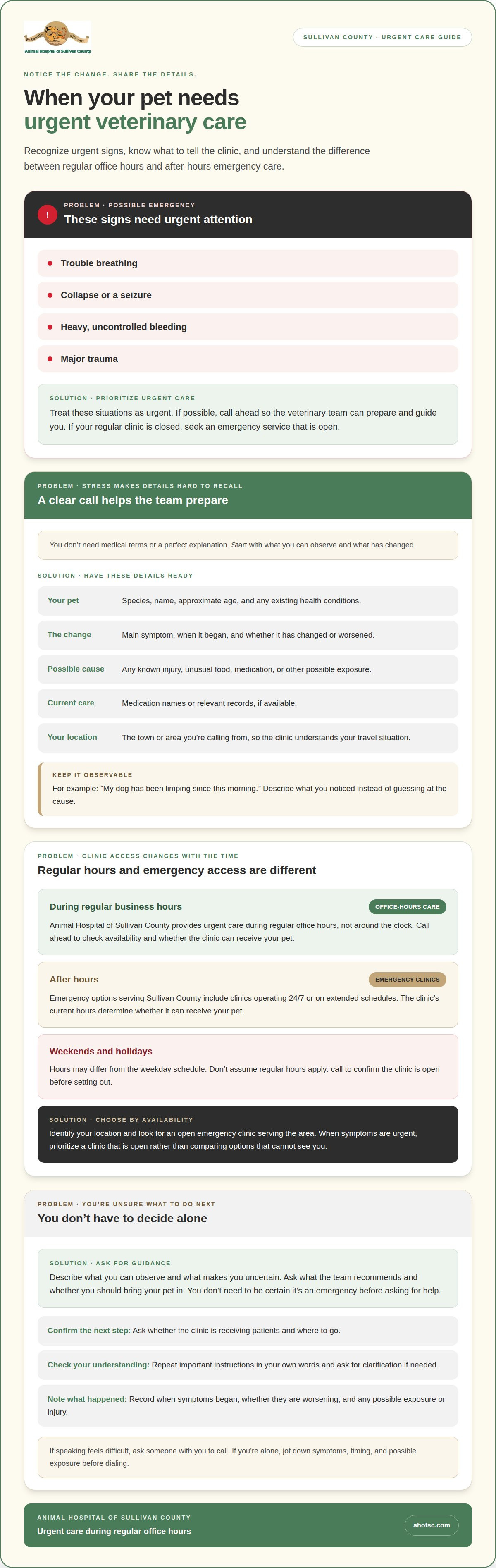
- Know which symptoms need urgent attention, including breathing difficulty, seizures or collapse, uncontrolled bleeding, and major trauma.
- Calling ahead can help the veterinary team prepare and give you guidance while you decide what to do next.
- Understand how regular business hours differ from after-hours, weekend, and holiday emergency options in Sullivan County.
- Learn what to consider when seeking a same-day in-person appointment for a sudden health concern.
- Find out how medical care and diagnostics can support your pet when an urgent health issue arises.
After-hours, weekend, and holiday opening hours
Urgent veterinary care depends on whether a clinic offering urgent vet care Sullivan County is open and equipped to assess your pet. During regular business hours, a veterinary hospital offering emergency treatment may be able to address sudden health concerns. After hours, emergency clinics serving Sullivan County include services operating 24/7 or on extended schedules. Those options matter when a pet’s condition can’t wait for a routine appointment.
Which emergency veterinary clinics serve Sullivan County, and what are their addresses and phone numbers? Emergency options include 24/7 or extended-hours veterinary clinics serving the area. Choose based on your location and the clinic’s current operating hours.
Which nearby 24-hour emergency vet hospitals serve Sullivan County? The available emergency options include 24/7 services, as well as clinics with extended hours. A clinic’s schedule determines whether it can receive your pet at the time you need care.
Weekends and holidays require extra planning because clinic hours may differ from the weekday schedule. Before setting out, call the clinic if possible to confirm it is open and explain your pet’s condition. Don’t assume regular weekday hours apply on a weekend or holiday. Animal Hospital of Sullivan County provides urgent care during regular office hours, not around the clock.
Which Sullivan County veterinary clinics offer payment plans, financing, or pet insurance billing? Payment arrangements are separate from opening hours. Keep your insurance details and payment questions ready when contacting a clinic, alongside a clear description of your pet’s condition.
The closest option depends on your starting point and the route available. Identify your location, then look for an open emergency clinic serving the area. If your pet has urgent symptoms, prioritize a clinic that is open rather than spending time comparing options that cannot see you.
Are there local animal poison control or after-hours veterinary resources for Sullivan County? After-hours emergency clinics with 24/7 or extended schedules are veterinary resources for urgent concerns. If your pet may have swallowed something harmful, note what it was and when it happened. Share those details with the veterinary team.
For a practical plan, keep your pet’s medical details accessible and note what has changed. Record when symptoms began, whether they are worsening, and any possible exposure or injury. These details help the veterinary team understand the situation when you call. If your regular clinic is closed, seek an emergency service open at that time. Regular office hours and emergency access are not interchangeable, so plan ahead for weekends and holidays.
Animal Hospital of Sullivan County is open during designated weekday and weekend hours to assist local families. Call before traveling to check availability, confirm appointment policies, and verify whether the clinic can immediately receive your pet for urgent vet care Sullivan County needs.
Calling before bringing in a pet
A quick call helps the veterinary team prepare for your pet’s arrival. It also gives you a chance to describe what changed and receive guidance about the next step. If you’re worried, you don’t need a perfect medical explanation. Start with what you can see, such as unusual breathing, repeated vomiting, or difficulty standing.
Before calling, gather a few key details. Clear information helps the person answering understand your concern and relay it to the veterinary team.
- Your pet: Give the species, name, and approximate age. Mention any existing health conditions.
- The change: Describe the main symptom and when you first noticed it. Say whether it has changed since then.
- Possible causes: Share any known injury, unusual food, medication, or other possible exposure.
- Current care: Have medication names or relevant records nearby, if available.
- Your location: Give the town or area you’re calling from, so the clinic understands your travel situation.
Keep your description direct. For example, say, “My dog has been limping since this morning,” rather than guessing at the cause. If your cat has stopped eating, describe the change and when it began. Tell the clinic if your pet’s condition changes while you’re preparing to leave.
Listen carefully and repeat important instructions in your own words to confirm you understood. Answer follow-up questions as accurately as you can. Ask whether the clinic is receiving patients and where to go. Calling ahead, when possible, gives the team time to prepare for your pet’s arrival.
If speaking feels difficult, ask someone with you to call while you stay near your pet. If you’re alone, jot down the key details before dialing. A short note about symptoms, timing, and possible exposure can help you stay focused during a stressful situation.
A compassionate, clear call doesn’t require medical terms. Share what you noticed, what changed, and what your pet may have encountered. The veterinary team can use those details to guide the next step. For information about urgent veterinary care, use the practice’s online information as part of planning your call.
If you’re unsure whether your pet’s condition is an emergency, call the veterinary team for guidance rather than trying to settle the question alone. Describe what you can observe and explain what is making you uncertain. You can ask what they recommend as the next step and whether you should bring your pet in. Their response can help you decide how to proceed.
Keep your questions simple and focused on your pet’s current condition. If you don’t understand the guidance, ask the team to clarify before ending the call. You can repeat the main instruction back to confirm you understood. You don’t need to be certain it’s an emergency before asking for help.
Same-day in-person appointments
A same-day appointment may help when a sudden health concern arises during clinic hours. Availability depends on the schedule and whether the clinic can fit in an urgent visit. In Sullivan County, call an open veterinary clinic to request an in-person assessment. Wait for the clinic to confirm the visit before assuming you have an appointment.
Explain why your pet needs to be seen today. For example, describe a new limp, a sudden change in appetite, or repeated vomiting. Give the clinic the timing and any noticeable change since symptoms began. That helps the team understand the reason for your request and determine the appropriate next step. Be direct about whether your pet’s condition is worsening.
A same-day appointment is not the same as emergency care. Difficulty breathing, collapse, a seizure, or uncontrolled bleeding may indicate an emergency. Tell the clinic exactly what you’re seeing rather than focusing only on booking a routine appointment. The symptoms and their urgency help the team determine the appropriate next step.
To make the appointment process smoother, prepare practical details before contacting a clinic:
- Describe the concern: Name the most noticeable symptom and when it started.
- Explain the change: Say whether your pet is improving, worsening, or showing new symptoms.
- Share relevant history: Mention existing conditions or medications that relate to the concern.
- Confirm the visit: Make sure you understand the clinic’s instructions and arrival details.
Different concerns call for different assessments. A new limp may need an examination, while sudden weakness calls for a clear account of what changed. Avoid guessing at a diagnosis. Observable details help the veterinary team understand what needs to be assessed.
Once the clinic confirms the visit, gather relevant medication packaging or medical records, if available, and bring them with your pet. Keep your description consistent if another family member helps. If symptoms change before you leave, update the clinic. A calm, organized handoff keeps attention on your pet’s immediate concern.
For urgent vet care in Sullivan County, start by contacting an open clinic and securing a confirmed visit. A same-day appointment addresses an in-person need during operating hours. For emergency symptoms, promptly describe their severity and when they began.
Conditions and injuries treated
Urgent veterinary care addresses sudden problems that need prompt attention, not just visible injuries. Difficulty breathing, seizures or collapse, uncontrolled bleeding, and major trauma are warning signs that may need urgent or emergency care. Major trauma can include a car accident, a fall, or a wound. Describe what happened and what you can observe instead of trying to name a diagnosis.
Some signs are easier to recognize than others. Breathing difficulty may be apparent from a sudden change in your animal’s breathing. A seizure or collapse can be frightening, and uncontrolled bleeding can be difficult to assess at home. If you see one of these signs, tell the veterinary team plainly which sign occurred and when you noticed it.
For an injury, explain what happened as clearly as you can. Say whether your pet was in a car accident, fell, or developed a wound. Identify the injury’s location and describe what you see, without repeatedly examining a painful area. If you’re unsure what happened, report what you found and when you first noticed the change.
Useful observations help the veterinary team understand the concern. Note whether the problem began suddenly, continued, or changed over time. For example, report that your dog collapsed and describe what you observed afterward. If there is bleeding, say whether it appears controlled or continues. These details describe the situation without guessing at the cause.
While transporting a sick or injured pet, call ahead if possible, describe the symptom or injury, and follow the veterinary team’s instructions. If someone is with you, have them call while you focus on travelling safely.
Keep relevant details ready for the veterinary team. If a car accident or fall occurred, explain what happened and when. If you noticed a wound, identify its location and describe what you see. State any breathing difficulty, seizure, collapse, or bleeding directly. Clear observations are more helpful than a guessed explanation.
Emergency care focuses on urgent health needs, and the assessment depends on what your pet is experiencing. Even without an obvious wound, describe a fall and your pet’s current condition. Mention a visible wound, ongoing bleeding, or collapse. Share any changes while arranging care, especially if a symptom worsens or a new one appears.
In Sullivan County, call a veterinary clinic for guidance when your pet has a severe symptom or major injury. A concise account of the symptom, timing, and possible cause helps the team prepare for your arrival. If you’re unsure whether the condition is urgent, describe what changed and ask for guidance rather than trying to diagnose your pet.
Guidance when unsure whether care is urgent
A sudden change in your pet’s health can be difficult to judge. Focus on what you observe and call a veterinary clinic for guidance if you’re unsure. Difficulty breathing, seizures or collapse, uncontrolled bleeding, and major trauma may need urgent or emergency care. Major trauma includes a car accident, a fall, or a wound.
Look at the change itself rather than trying to diagnose its cause. For example, describe breathing that seems difficult, a collapse you witnessed, or bleeding that continues. Explain whether a car accident, fall, or wound occurred. Clear observations give the veterinary team useful context and help you ask for appropriate guidance.
Before calling, organize the information you can share. A short, direct description is more helpful than a guessed diagnosis. Include:
- The sign: Name what you observed, such as difficulty breathing or a seizure.
- The timing: Say when you first noticed the change.
- The event: Mention a known fall, car accident, or wound.
- The current condition: Describe what you’re seeing now and whether it has changed.
When you call, say plainly that you’re unsure whether your pet needs urgent veterinary care. Describe the specific sign or injury and ask for guidance. If your pet collapses after you call, update the clinic. A new or worsening sign may change what the team needs to know.
Don’t minimize a serious sign just because its cause isn’t obvious. A pet may struggle to breathe without a visible injury, or a fall may leave you unsure what was hurt. Report what you observe instead of deciding whether it “counts” as an emergency. The veterinary team can use your description to guide the next step.
If it’s safe, keep your pet nearby while you call, and ask someone else to help with details if available. One person can describe the symptoms while another listens and notes instructions. If you’re alone, focus on the main sign, when it began, and any known injury. Don’t delay the call to search for a diagnosis.
For urgent veterinary care in Sullivan County, call for guidance when the symptoms leave you uncertain. Describe difficulty breathing, seizures or collapse, uncontrolled bleeding, or major trauma directly. Contact the veterinary team for urgent care guidance and share what you’ve observed.
Animal Hospital of Sullivan County: Preventive Care
Animal Hospital of Sullivan County provides preventive care, medical care, and diagnostics to support pets’ ongoing health and address concerns. If your pet develops a new or changing health issue, these services can help determine the next step. Surgical care is also available when treatment requires it.
For urgent concerns during regular office hours, Animal Hospital of Sullivan County offers emergency treatment. Call ahead when possible and describe severe symptoms so the team can prepare for your pet’s arrival. Preventive care supports your companion’s ongoing wellness beyond an urgent visit.
You’re welcome to contact Animal Hospital of Sullivan County to discuss your pet’s care.
Choose a next step for your pet’s care
A clear care plan can make a stressful moment easier to manage. Keep your pet’s relevant health information together and think about how you’ll describe a sudden change if you need help. If urgent vet care in Sullivan County becomes a concern, focus on what your pet is experiencing and take the next step based on that need.
Animal Hospital of Sullivan County offers preventive care for ongoing wellness, medical care for health concerns, and surgical care when treatment calls for it. These services support your pet beyond a single urgent visit and help you plan as care needs change.
If you’d like to discuss care for your companion, contact Animal Hospital of Sullivan County. Taking one thoughtful step can help you feel more prepared to care for the family member who depends on you.
Frequently Asked Questions
Which urgent-care veterinarians in Sullivan County are open now, and what are their hours?
Animal Hospital of Sullivan County’s listed hours are Monday through Thursday, 7:30 AM to 6:00 PM; Friday, 8:00 AM to 1:00 PM; Saturday by appointment; and Sunday closed. Urgent care and emergency surgery are available during regular office hours only. Pet owners traveling from New York, Connecticut, New Jersey, or Pennsylvania can use the Ferndale, New York schedule to plan when to call or arrive.
Do Sullivan County emergency vets require appointments, and should owners call before arriving?
Call ahead whenever possible so the veterinary team can prepare for your pet’s arrival. Appointment arrangements depend on timing and the clinic’s schedule, so don’t assume walk-ins are accepted. Animal Hospital of Sullivan County provides urgent treatment during regular office hours, and Saturday visits are by appointment. When you call, briefly describe the symptoms, when they began, and any sudden changes. The hospital serves pet owners in Sullivan County, the Catskills, the Hudson Valley, and surrounding communities.
What types of urgent pet emergencies do local veterinary clinics treat?
Difficulty breathing, seizures or collapse, uncontrolled bleeding, and major trauma, such as a car accident, fall, or wound, may need prompt veterinary attention. Animal Hospital of Sullivan County offers emergency treatment during regular office hours. When calling about an injury, share its location and whether bleeding continues. Describe what you observe rather than trying to diagnose the cause yourself.


