
For how to prepare for your first vet visit, gather your dog’s veterinary records, write down questions about health, diet, or behavior, and plan to arrive a few minutes early. Schedule your new pet’s first appointment within the first week at home, so you can discuss care and any needed next steps with the veterinarian. A little preparation can help the visit feel more familiar for both of you.
It’s natural to feel protective when your dog is going somewhere new, meeting unfamiliar people, and having an exam. You’ll learn what to bring, how to practice gentle handling at home, and how to make the trip and clinic visit more comfortable. You’ll also find simple ways to reward your dog afterward, helping end the experience on a reassuring note.
Key Takeaways
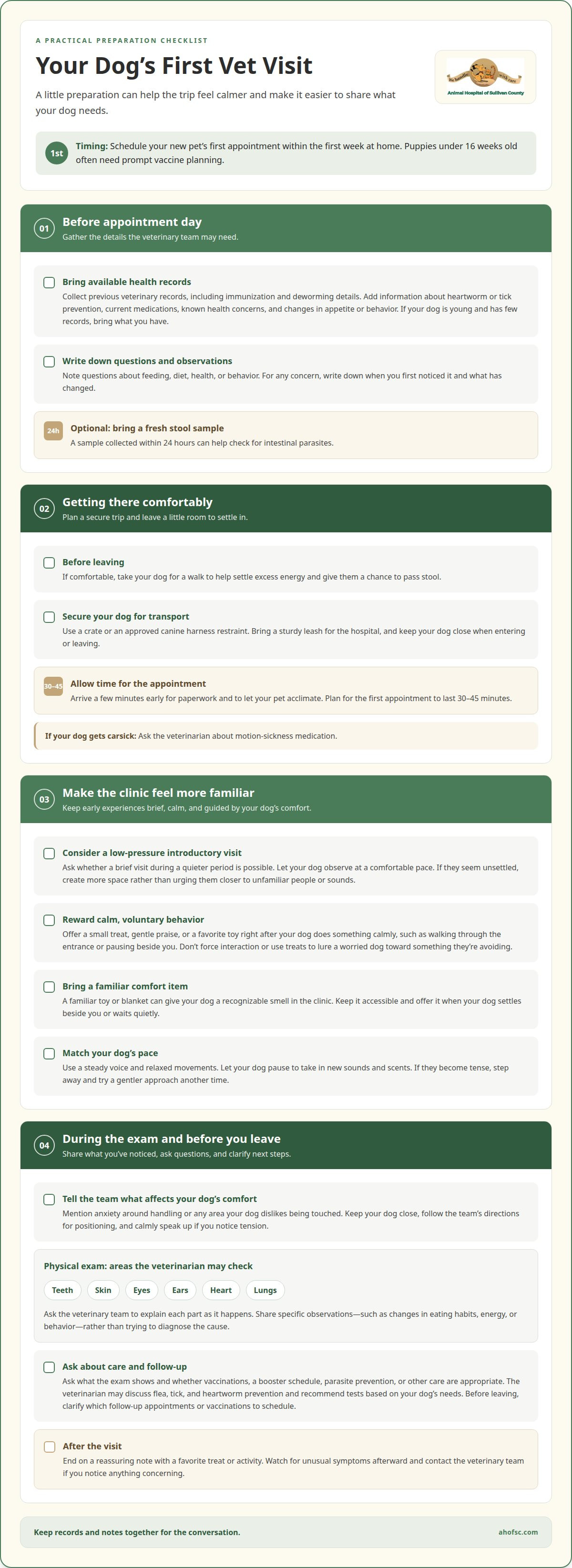
- Gather your dog’s veterinary records and jot down health, diet, or behavior questions before the appointment.
- Make the clinic feel more familiar with calm, positive experiences before exam day.
- Practice gentle handling at home and reward your dog for cooperating.
- Know what the veterinarian may assess during a physical exam, so the steps feel less surprising.
- End the visit with a favorite treat or activity to help build a positive association.
What should I do for my dog’s first medical appointment?
Plan the appointment, gather your dog’s health history, and prepare for a calm, secure trip. These steps help the veterinary team understand your dog’s needs and make the most of your visit.
-
Choose a veterinarian and schedule the visit
Choose a veterinary hospital that’s practical to reach and where you can discuss your dog’s needs clearly. A good veterinarian near you should be able to review your pet’s history, explain care options, and answer questions in language you understand. Schedule a new pet’s first visit within the first week at home. Puppies under 16 weeks old often need prompt vaccine planning, so arrange their appointment without delay.
-
Gather your pet’s health history
Collect previous veterinary records before the appointment, including immunization and deworming details. Add information about heartworm or tick prevention, current medications, known health concerns, and any changes in appetite or behavior. If your dog is young and has few records, bring what you have. Write down questions about feeding, diet, or behavior, and note when you first noticed each concern. A fresh stool sample collected within 24 hours can help check for intestinal parasites.
-
Prepare your pet for the trip
Take your dog for a walk before leaving, if comfortable, to settle excess energy and give them a chance to pass stool. Transport your dog securely in a crate or with an approved canine harness restraint. Bring a sturdy leash for the hospital, and keep your dog close when entering or leaving. Arrive a few minutes early to complete paperwork and let your pet acclimate. Plan for the first appointment to last 30-45 minutes.
-
Stay calm and ask questions
Keep your voice and movements calm during the appointment; dogs may respond to your energy. Ask what the exam shows and whether vaccinations, a booster schedule, parasite prevention, or other care are appropriate. The veterinarian may discuss flea, tick, and heartworm prevention and recommend tests based on your dog’s needs. Before leaving, ask which follow-up appointments or vaccinations to schedule. Afterward, watch for unusual symptoms and contact the veterinary team if you notice anything concerning.
Keep your notes and records together so you can raise health, diet, or behavior concerns during the discussion. If your dog tends to get carsick, ask the veterinarian about motion-sickness medication.
Use the veterinarian’s recommendations to plan follow-up appointments or vaccinations. A walk before the visit may help your dog expend excess energy. If your dog defecates, you can collect a stool sample to bring along. Stay composed throughout the visit, since pets may pick up on your energy.
Making an introductory clinic visit positive
Help your dog build a familiar, positive association with the clinic before a full examination. Brief, low-pressure visits and thoughtful rewards can make the setting feel less unfamiliar.
- Ask about arranging an introductory visit during a quieter period. A less busy lobby gives your dog room to notice the surroundings without facing a crowd of people or animals at once. Keep the visit brief and let your dog observe at a comfortable pace. If your dog seems unsettled, create more space rather than urging them toward unfamiliar people or sounds.
-
Use positive reinforcement during the visit
Reward calm, voluntary behavior with a small treat, gentle praise, or a favorite toy. For example, offer a treat when your dog walks through the entrance or pauses calmly beside you. Give rewards right after the behavior you want to encourage. Don’t force interaction or use treats to lure a worried dog closer to something they’re avoiding.
- If the clinic allows brief visits between appointments, your dog can experience the space without having an exam. Follow the clinic’s guidance and keep your dog securely with you. A calm stop near the entrance may be enough at first. If your dog stays relaxed, let them explore a little more; if they become tense, step away and try a gentler approach another time.
-
Stay calm and positive
Use a steady voice and relaxed movements as you enter the clinic and wait with your dog. Dogs can notice changes in their owner’s energy, so take a slow breath before greeting staff or approaching the exam area. Keep your dog close, offer reassurance without fuss, and let them pause to take in unfamiliar sounds and scents.
- Bring a familiar toy or blanket to give your dog a comforting item in the clinic. Keep it accessible, and offer it when your dog settles beside you or waits quietly. A familiar smell can make the new setting feel more recognizable without asking your dog to interact. For help planning a gentle start, explore a welcoming clinic visit as part of your dog’s introduction to veterinary care.
Physical examination
Ask the veterinary team to explain each part of your dog’s examination as it happens. Knowing what the veterinarian is checking can help you think of questions and share useful observations.
- Before the examination begins, tell the veterinarian about anything that affects your dog’s comfort. Mention anxiety around handling or a particular area your dog dislikes being touched. This gives the team helpful context for the physical exam. Keep your dog close and follow the team’s directions for positioning. If you notice tension, speak up calmly so the examination can proceed thoughtfully.
- The veterinarian may check your dog’s teeth, skin, eyes, and ears as part of the physical examination. Share specific observations, such as changes in your dog’s eating habits or behavior, rather than trying to diagnose the cause. The veterinarian can consider those details alongside the exam and explain what they may mean for your dog.
- The veterinarian will also listen to your dog’s heart and lungs. You can ask what they’re assessing. If you’ve noticed a change in your dog’s energy or usual activity, mention when it started and how it compares with their normal behavior. Concrete examples help explain your concern without requiring you to interpret the finding yourself.
- Be prepared for a veterinary technician to take your dog’s temperature or collect samples. The technician may collect a stool sample and a small blood sample to check for intestinal parasites, heartworm, and tick-transmitted diseases. These checks are not a guarantee of a particular result. Ask what each sample is intended to assess and how the findings relate to your dog’s health. That conversation helps you understand the reason for each step.
- Ask the veterinarian to summarize the examination before you leave the animal hospital. Find out which findings are routine, which need attention, and what recommendations apply to your dog. If a term or result is unfamiliar, ask for a plain-language explanation and write down the answer. A kitten may have different age-related needs, so keep the discussion focused on your dog’s age, history, and exam findings.
Practicing handling and restraint
Brief practice at home can help your dog become more familiar with gentle handling. Keep each interaction calm, reward cooperation, and stop if your dog becomes uncomfortable.
-
Practice handling at home
Choose a quiet moment to gently touch your dog’s shoulder, back, paws, and ears. Use brief touches, then pause to see whether your dog stays relaxed or moves away. Repeat only touches your dog accepts comfortably. For example, lightly touch one paw, release it, and let your dog settle before trying again. Don’t force a position or continue if your dog shows discomfort.
-
Use treats and calm handling
Offer a small treat after your dog calmly accepts a touch or brief hold. Move slowly and speak steadily so handling doesn’t become sudden or startling. A favorite toy can also help if your dog enjoys play. Reward cooperation rather than trying to hold your dog still through resistance, and finish on a calm note.
- Build familiarity in small steps instead of practicing every kind of touch at once. Start with an area your dog already accepts, then try a different area during another calm session. For instance, practice a brief ear touch one day and a paw touch another time. This helps you notice what feels comfortable and gives your dog a chance to learn gradually.
- Practice a gentle pause while your dog stands or sits beside you. Touch briefly, release, and reward calm cooperation. If your dog pulls away, stop and give them room instead of tightening your hold. This lets you observe your dog’s response without turning practice into a struggle. Keep the leash nearby if your dog is more settled with it on.
- Use the appointment to discuss handling concerns, vaccinations, and prevention with the veterinarian. Share which touches your dog accepts and which make them pull away, such as having their paws handled. Explain what practice has helped at home. Recommendations will depend on your dog’s needs; clear examples help the team understand your concerns and guide the discussion.
You can help your dog feel more comfortable with exams by briefly practicing handling and rewarding cooperation with treats or cuddles. Offer a reward after a touch your dog accepts, then allow a quiet break. Cuddles are an option if your dog enjoys them; a reward shouldn’t become a way to hold your dog in place. The aim is a willing, brief interaction, not completing a sequence of touches. Building comfort with physical handling also benefits other routine care routines, such as when mobile grooming services like Pawgo attend to your pet's coat and paws at home.
Before an appointment, stick with a calm approach rather than adding a demanding rehearsal. If a practice moment becomes difficult, end it without trying to get one last touch, and return to an easier interaction another time. Treat each successful pause or accepted touch as enough for that session. These brief moments help you prepare for handling while keeping cooperation central. At the visit, describe the practice and rewards your dog responds to, so the veterinary team has useful context for discussing the exam.
Rewarding pets after the visit
A veterinary visit doesn’t have to end at the clinic door. A treat or favorite activity afterward can help create a more positive association with the experience.
- Offer a treat or favorite activity after the appointment, once your dog is safely away from the clinic. For example, give a small treat during a quiet pause or head home for a familiar game. Choose something your dog enjoys and can comfortably have. The aim is to end the outing pleasantly, not to make your dog perform or interact when they need space.
- Let your dog settle before offering more attention. Some dogs may be ready to play, while others may prefer a calm ride home and a rest in their usual spot. Follow your dog’s cues rather than expecting every pet to respond the same way. If your dog turns away from a treat or toy, give them room and offer comfort without pressure.
- Make the return home predictable by following a familiar routine. Offer water, allow a quiet break, and let your dog choose a comfortable resting place. A blanket from home can provide a familiar spot after the clinic’s unfamiliar sights and sounds. Keep the transition simple, especially if your dog seems tired or wants to be left alone.
- Write a brief note about what helped your dog relax during the visit. Record whether a treat, a calm pause, or a favorite toy seemed welcome. Add any concerns to discuss next time, such as a moment when your dog appeared uncomfortable. Keep the note with appointment paperwork and medical records so useful details are easy to find.
- Use what you observed to prepare for the next visit. If your dog settled after a short break, plan to allow another. If they didn’t accept a particular reward, try a different familiar activity afterward. These small adjustments help you respond to your dog rather than expecting every visit to feel the same.
- Keep rewards gentle and appropriate for your dog’s needs. If you have concerns about feeding a treat after an exam, ask the veterinary team what suits your pet. To plan ongoing care and make future appointments part of a steady routine, schedule your dog’s next veterinary visit.
Animal Hospital of Sullivan County: Preventive Care
Animal Hospital of Sullivan County provides Preventive Care to support your dog’s ongoing wellness and help you plan the next steps after a first examination. Bring your questions about vaccinations, parasite prevention, or recommended follow-up, and discuss what fits your dog’s health history. If the veterinarian identifies a concern, Medical Care and Diagnostics can help address it. Surgical Care is also available when a pet needs surgical treatment. These services connect an introductory appointment with continued care, from routine prevention to evaluation of a health concern. To talk about your dog’s care, contact Animal Hospital of Sullivan County or visit ahofsc.com.
Build a confident start to your dog’s care
Knowing how to prepare for your first vet visit is one step toward making veterinary care part of your dog’s life. Over time, appointments can help you understand your pet’s changing needs and build familiarity with the care team. Keep notes about questions that come up between visits so your next conversation can focus on what matters most to your dog.
Animal Hospital of Sullivan County offers Preventive Care, Medical Care, and Surgical Care to support pets through different health needs. If you’re ready to discuss your dog’s care or plan a next step, contact Animal Hospital of Sullivan County. A thoughtful first visit can be the beginning of steady, attentive care for a cherished member of your family.
Frequently Asked Questions
What can I do before the first visit?
If you’re wondering how to prepare for your first vet visit, note any changes you’ve observed since bringing your pet home. Include appetite, energy, bathroom habits, and reactions to unfamiliar people or places. For example, record whether your dog hesitates before meals or hides when visitors arrive. These details give the veterinary team a clearer picture of your pet’s everyday behavior and help focus your conversation.
What can I do to reduce anxiety in my dog?
For a dog with significant anxiety, discuss support options with the veterinarian before appointment day. A veterinarian can prescribe medication beforehand to help especially nervous dogs. Explain what your dog does when worried, such as trembling, hiding, or resisting the car ride. That context helps the veterinarian consider your dog’s needs and plan a more manageable visit.
What should I bring to my pet’s first vet visit?
Bring available medical records, a sturdy leash for your dog, and a list of questions. If you can collect one, a fresh stool sample gathered within 24 hours can help the veterinarian check for intestinal parasites. Keep the sample secure during travel. If your pet has no previous records, bring the information you do have about their health and care history.
What happens during a pet’s first veterinary exam?
The veterinarian checks your pet’s general health, including the teeth, skin, eyes, and ears, and listens to the heart and lungs. Depending on your pet’s needs, the team may check their temperature or collect stool or a small blood sample. The visit also gives you time to discuss health concerns and ask what any recommended tests are intended to assess.
What vaccinations and tests might a puppy or kitten need at the first vet visit?
The veterinarian may review immunizations, discuss any needed vaccines, and explain a booster schedule. Puppies and kittens under 16 weeks old often need prompt vaccine planning. Depending on the pet’s health and history, the visit may also include basic tests and discussion of flea, tick, or heartworm prevention. Recommendations are tailored to the individual animal.
How can I reduce my pet’s anxiety during a vet visit?
Tell the veterinary team early if your pet shows signs of distress, such as pulling away or trembling. They can take that behavior into account as they approach the examination. Keep your voice steady and follow the team’s directions; avoid forcing your pet toward a person or object they’re avoiding. A brief pause may give your pet a chance to settle.
When should I schedule a new pet’s first vet appointment?
Schedule a new pet’s first veterinary visit within the first week after bringing them home. Planning how to prepare for your first vet visit also means arranging care promptly, especially for puppies and kittens under 16 weeks old, who often need immediate vaccine planning. Early scheduling gives you time to discuss your pet’s history and establish a care plan for your new companion.


