
Preventive care for small dogs includes regular wellness visits, vaccinations, parasite protection, dental care, and everyday safety. Your dog’s plan should reflect their age, lifestyle, and health needs, and may change as they grow older or their routine shifts.
It’s natural to focus on your little companion’s comfort and happiness. Simple habits at home can support both, while routine veterinary visits give you a chance to discuss health changes early.
This guide covers flea, tick, heartworm, and intestinal parasite prevention, what to expect at wellness visits, and ways to reduce common household risks. You’ll also learn why dental checks and home care matter, so you can support your dog’s health throughout the year.
Key Takeaways
- Build a care plan around your dog’s age, lifestyle, and health needs, including vaccines suited to their likely exposures.
- Keep parasite protection on your radar year-round, and include heartworm testing and stool checks in preventive discussions.
- Use wellness visits to review changes in weight, behavior, and health, and to discuss which exams or tests fit your dog’s life stage.
- Reduce everyday risks by securing your dog in the car, keeping hazards out of reach, and making home and outdoor spaces safer.
- Pair regular dental assessments with home care to help protect your dog’s comfort and oral health.
What Is Preventive Care for Pets?
Preventive care is an ongoing plan to protect a dog’s health and address concerns early. For a small dog, it may include vaccinations, parasite protection, wellness exams, dental assessments, and care tailored to age, lifestyle, and health.
Core and Lifestyle Vaccinations
Core vaccines protect against diseases considered important for dogs across lifestyles, while other vaccines address specific exposure risks. Core protection includes vaccines for rabies, distemper, and parvovirus. Vaccines for kennel cough, Lyme disease, or canine influenza may be recommended based on your dog’s activities and surroundings.
This distinction explains why two dogs may have different vaccine plans. A dog that regularly spends time around other animals may face different risks from one with fewer such contacts.
Age and Lifestyle Recommendations
Vaccination recommendations can change with a dog’s age, health, routine, and likely contact with other animals. Puppies need a vaccination plan as they grow, while adult dogs’ needs depend partly on their vaccine history and current exposure. A wellness exam is a good time to review these details with the veterinarian.
Share practical details, such as daycare visits, time outdoors, or frequent contact with other dogs. Location matters, too: local disease exposure can affect which protections are relevant. This helps tailor your small dog’s plan rather than relying on a one-size-fits-all schedule.
Vaccinations for Disease Prevention
Vaccines prepare a dog’s immune system to recognize diseases such as distemper, parvovirus, and rabies. Vaccination helps prevent these infections, which can cause serious illness. Protection is planned around your dog’s health and exposure risks, not simply their size.
Rabies vaccination is required by state law as a public-health measure. Other vaccines may address risks such as leptospirosis, which can cause liver and kidney failure in dogs. Discussing disease exposure during a wellness exam helps connect each recommendation to a clear purpose.
Vaccination timing matters, too. Adult dogs may receive booster shots annually or once every three years, depending on the vaccine and their plan. Don’t assume every vaccine follows the same interval. Keep vaccination records and review them during wellness visits to identify which protection is due.
For preventive care for small dogs, focus on practical questions: Which diseases are relevant where your dog lives? Does their lifestyle involve regular contact with other animals? What does their vaccination history show? These details help shape a thoughtful plan, alongside parasite prevention and dental checks.
Flea, tick, heartworm, and intestinal parasite prevention
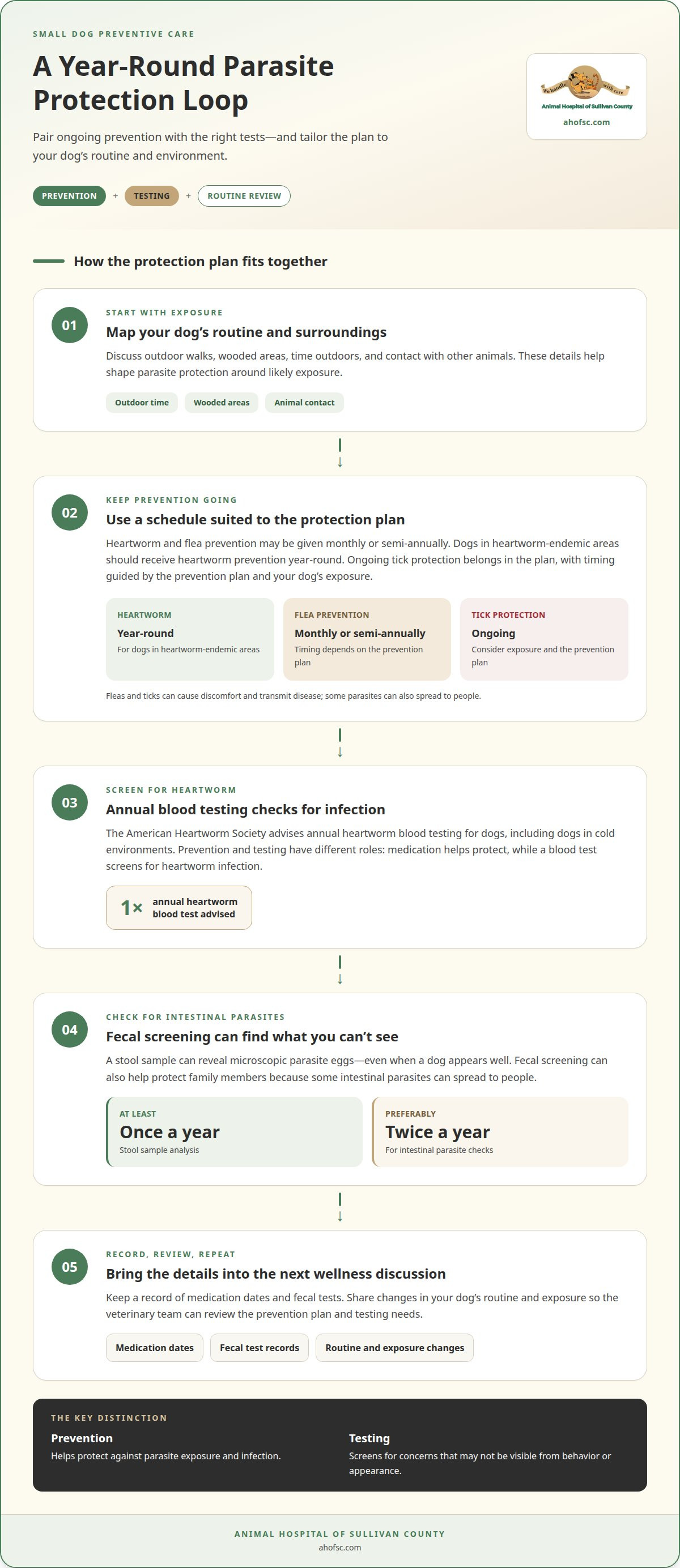
Heartworm and flea prevention may be given monthly or semi-annually. Dogs in heartworm-endemic areas should receive heartworm prevention year-round, and tick protection should be part of an ongoing parasite plan.
Preventing Fleas, Ticks, and Heartworm
Preventive medication helps protect dogs from parasites that can cause discomfort or transmit disease. Fleas and ticks can also pass diseases to people, so protection supports the health of your household as well as your pet.
Heartworm prevention matters even in colder environments, while tick exposure depends partly on where your dog spends time. Share details about outdoor walks, wooded areas, and contact with other animals when discussing a prevention plan.
Intestinal Parasite Prevention
Intestinal parasite prevention combines appropriate protection with fecal testing. A stool sample can reveal microscopic parasite eggs that aren’t visible to the naked eye, so testing can be useful even when your dog appears well.
Some intestinal parasites can spread to people, so fecal screening also helps protect family members. When discussing parasite risks, include your dog’s routines, such as time outdoors or contact with other animals.
Heartworm, Parasite, and Blood Testing
The American Heartworm Society advises annual heartworm blood testing for dogs, including those in cold environments. Testing can detect heartworm infection, while regular parasite screening may identify concerns that aren’t apparent from your dog’s behavior.
A fecal exam checks for intestinal parasites, while routine blood tests can reveal internal problems that aren’t visible externally. These tests answer different questions, so a wellness plan may include both heartworm screening and stool analysis.
Prevention Schedules
Heartworm and flea prevention may be given monthly or semi-annually. Dogs in heartworm-endemic areas need heartworm prevention year-round. Ongoing tick protection is important, too, with timing based on the prevention plan and your dog’s exposure.
Dogs should have a stool sample analyzed at least once a year, and preferably twice, to check for intestinal parasites. Keeping a record of medication dates and fecal tests helps you spot missed doses and share useful details at the next wellness visit.
Parasite prevention isn’t a single medication or test. It combines regular protection, annual heartworm testing, and fecal screening, with attention to your dog’s environment. A dog that spends time outdoors may face different parasite exposure from one whose routine is mostly indoors.
Fleas and ticks can cause discomfort and transmit disease, while heartworm infection requires a blood test to screen for. Pairing prevention with testing gives each part a clear role. A veterinary team can help organize these details; discuss preventive care alongside your dog’s parasite and testing plan.
Household hazard prevention and wellness visits
Plan a veterinary exam at least once a year, and preferably twice; puppies need more frequent visits. Before an appointment, bring vaccination and medical records, note your concerns, and secure your dog in a crate or with a seat belt for the ride.
Routine preventive care costs in the United States depend on the visit, vaccines, parasite prevention, and tests; the price depends on the case and is given after a quote request.
Veterinary Exams and Screenings
A wellness exam gives the veterinarian a chance to assess your dog and discuss health concerns. Mention changes in appetite, movement, behavior, or weight, even if they seem minor.
Screening may include blood work, urinalysis, or a fecal exam, depending on your dog’s age and health. Routine tests can help identify internal problems that aren’t visible externally. Bring a medication list and note recent changes so the visit covers details that matter to your dog.
Puppy and Adult Visit Timing
Visit frequency changes with life stage: puppies need more frequent veterinary visits, while adult dogs need complete wellness exams annually. Puppy appointments cover vaccinations, parasite screening, and spay or neuter planning. These visits help keep preventive care aligned with development.
As dogs age, twice-yearly veterinary visits can help track changing health needs. A veterinarian may adjust laboratory work and screening over time. Keep a record of visits and results so changes can be compared across appointments.
Wellness Plans and Pet Insurance
A wellness plan focuses on routine preventive services, while pet insurance addresses medical expenses covered by its policy. They serve different purposes, so understand what each covers before relying on it for an expected expense.
For example, a wellness plan may focus on scheduled exams and preventive care, while insurance terms determine which medical costs qualify. Review the written details, including exclusions and reimbursement rules. Neither replaces routine veterinary visits or a discussion of your dog’s health concerns.
Checkup Costs and Visit Preparation
There isn’t one routine-care cost for every small dog. The total depends on your dog’s age, recommended vaccines, parasite prevention, and whether the visit includes screening or other tests.
Prepare by gathering medical records and writing down questions about appetite, activity, or new symptoms. Bring your dog in a secure crate or use a seat belt in the car. A familiar blanket or toy may provide comfort during the trip, while calm handling can help keep the visit predictable.
Home safety matters between appointments, too. Keep rat poison, automotive supplies, and landscaping products out of reach, and avoid unnecessary pesticide use. Keep your dog away from sprayed areas until they’ve dried. Never leave a dog in a vehicle, especially on warm days.
For small dogs that climb onto furniture, ramps or pet ladders can help reduce the risk of falls. Check yard fences for holes, and provide outdoor dogs with shade, water, and ventilation. These practical checks complement veterinary visits and make everyday routines safer.
Year-round parasite prevention
Small dogs should have a stool sample analyzed at least once a year, preferably twice, for intestinal parasites. The American Heartworm Society advises annual heartworm blood testing, including for dogs in cold environments. Other screening depends on exposure and health history.
Fecal Parasite Exams
A fecal exam checks a stool sample for microscopic parasite eggs that owners can’t see. It can reveal intestinal parasites even when your dog’s appearance seems unchanged, making it a useful part of routine screening.
Bring a fresh sample to the veterinary visit when requested, and share details about outdoor habits or contact with other animals. This context can help interpret the result. Some intestinal parasites can spread to people, so identifying them matters for the household.
Keep a record of fecal exam dates and results. Testing a sample once a year, and preferably twice, helps check for parasites over time. If your dog develops changes in appetite, stool, or weight, note when they began and raise them at the next veterinary visit.
A negative fecal result describes that sample, not every possible health concern. Fecal testing and blood work examine different things, so one doesn’t replace the other. Discuss both as part of routine screening, alongside your dog’s parasite-prevention history.
Blood Work and Parasite Testing
Blood work and parasite testing look for internal concerns that may not be visible during a physical exam. Annual blood tests can include a complete blood count, chemistry panel, and thyroid screen, as well as urinalysis. Each test provides different information about your dog’s health.
Heartworm screening uses a blood test, and the American Heartworm Society advises annual testing even for dogs in cold environments. In areas where ticks are prevalent, screening for vector-borne diseases such as Lyme disease or ehrlichiosis may also be advised.
Routine results are most useful when considered alongside your dog’s history. Bring previous test results, medication dates, and notes about changes in energy or weight. As your dog ages, laboratory work and testing recommendations may change, so records help show how results shift over time.
Ask how each test relates to your dog’s exposure and current health. A dog with frequent tick exposure, for example, may have different screening considerations from one with a different routine. Fecal exams, blood work, urinalysis, and targeted parasite tests each add distinct information.
Dental assessments and cleaning
Regular dental exams and cleanings support your dog’s overall wellness, alongside vaccines, parasite protection, and other routine care. A dental appointment is also a chance to share changes you’ve noticed at home.
Dental Hygiene and Health
Dental hygiene combines home care with professional assessment to help maintain your dog’s oral health. Regular dental care can lower the risk of painful problems, so include your dog’s mouth in everyday care.
During a calm home check, look for visible changes and note any difficulty eating or chewing. Share your observations at a wellness appointment, even if your dog still seems eager for meals and exercise. A specific example, such as avoiding a favorite chew, gives the veterinary team useful context.
Dental health belongs in a broader wellness plan. At an appointment, mention your dog’s age, daily routine, and previous dental care. Puppies can get used to gentle mouth checks as part of handling, while an adult dog’s needs may reflect their dental condition and home care.
Preventing Periodontal Disease
Preventive dental care combines regular exams, professional cleanings, and home maintenance to reduce the risk of painful oral problems. Dogs may need teeth cleaned every one to two years, depending on preventive care and home maintenance.
That range is a planning guide, not a schedule for every dog. Ask about cleaning frequency during a dental assessment, and share what home care your dog tolerates. The veterinarian can use the exam and your dog’s history to discuss an appropriate next step.
Watch for changes you can describe clearly, such as new reluctance to chew or a difference in how your dog approaches food. These observations don’t establish a diagnosis, but they can help explain why an earlier dental assessment may be useful.
Small dogs don’t all share the same health problems simply because of their size. For dental health, watch for changes in eating or chewing and raise them at an appointment. The guidance supports regular dental exams and cleanings, not a universal breed-specific risk list.
Make a dental appointment more useful by writing down changes and questions beforehand. Bring your dog’s care history, including relevant records such as rabies vaccinations, so the visit can consider overall wellness alongside oral health. Mention whether home dental care has been manageable and describe any changes since the last exam.
Regular exercise, a nutritious diet, and weight monitoring also support general wellness, but they don’t replace dental assessment. Use routine visits to discuss both everyday care and specific health concerns. If you’d like support with your dog’s preventive care, connect with the veterinary team about dental assessments and cleanings.
Animal Hospital of Sullivan County: Preventive Care
Animal Hospital of Sullivan County provides Preventive Care to help you plan routine support for your small dog. Discuss your dog’s vaccination history, parasite prevention, wellness visits, and dental assessments with the team, and how these needs fit together.
If an exam raises a concern, Medical Care and Diagnostics can help address health questions. Surgical Care is also available when the veterinarian determines surgery is appropriate. Sharing changes in your dog’s eating, energy, weight, or comfort gives the veterinary team useful context.
To plan your dog’s preventive care, contact Animal Hospital of Sullivan County or visit ahofsc.com.
Make Your Dog’s Care Plan a Living Routine
Your dog’s needs can shift as their routine, age, and health change. Keep a brief record of what’s typical for your companion, including appetite, energy, and comfort during everyday activities. When something changes, you’ll be better prepared to describe it and decide what to raise at an appointment.
That steady attention is at the heart of preventive care for small dogs. It needn’t feel complicated: a few notes, a familiar routine, and open conversations about your dog’s wellbeing can help you approach care with confidence. Let your questions guide the next conversation, whether you’re planning ahead or responding to a change.
Animal Hospital of Sullivan County can help you talk through your dog’s care needs. Contact Animal Hospital of Sullivan County to take the next step for your companion. Your thoughtful attention matters, and small, caring choices can support a happier life together.
Frequently Asked Questions
What are preventative healthcare guidelines?
Preventive healthcare guidelines outline routine care to help protect pets’ health throughout life. The Canine Preventive Healthcare Guidelines were developed by the American Animal Hospital Association and the American Veterinary Medical Association using information from veterinary specialty groups. For a small dog, apply the recommendations to their age, lifestyle, and health history. Use the guidelines to guide conversations about exams, vaccines, parasite screening, dental health, and daily habits.
Can you provide an example of a disease that can be prevented through vaccination?
Rabies is one disease vaccination can help prevent. Distemper and parvovirus are also vaccine-preventable diseases in dogs. Vaccines help the immune system recognize specific threats, but your dog’s plan should account for their health and exposure risks. Discuss their contact with other animals and outdoor routine when reviewing which protections suit their lifestyle.
What preventive veterinary care do small dogs need at each life stage?
Puppies need more frequent veterinary visits for vaccines, parasite screening, and spay or neuter planning. Adult dogs benefit from regular wellness exams and preventive care reviews. As dogs age, veterinarians may recommend more frequent exams and adjust laboratory testing to changing health needs. At every stage, mention changes in appetite, movement, or behavior. These observations help make each appointment relevant to your dog’s current life.
How often should small dogs have wellness exams and vaccinations?
Complete wellness exams are recommended annually for dogs, with more frequent exams for puppies and senior dogs. Puppy visits support vaccination and parasite-screening needs as they grow. Adult vaccine boosters are usually given annually or once every three years, depending on the vaccine. Keep vaccination records together and bring them to appointments so the veterinarian can review past doses and discuss what is due.
Which vaccines are recommended or required for small dogs in the United States?
Core vaccines protect against rabies, distemper, and parvovirus. Rabies vaccination is required by state law. Depending on health, exposure, and lifestyle, a veterinarian may also discuss adenovirus-2, leptospirosis, kennel cough, Lyme disease, or canine influenza vaccines. For instance, regular contact with other dogs can affect lifestyle vaccine recommendations. The same considerations apply to small dogs as to other dogs; size alone doesn’t determine vaccine needs.
What diet, portion sizes, and exercise help prevent obesity in small dogs?
Feed a nutritious, quality diet and track the amount served at each meal. Use the food’s feeding guidance as a starting point, then discuss portions with your veterinarian in relation to your dog’s weight and body condition. Daily exercise, such as walks, can help maintain a healthy weight. Maintaining a healthy weight can help prevent diabetes, arthritis, and heart disease in pets.


