
Vet bills are easier to manage when you plan before care is urgent. To learn how to save money on pet care, build a budget for routine needs, discuss treatment options and costs with your veterinary team, and consider whether insurance or financial assistance could help. Pet care costs in the United States have surged over the last five years, so planning ahead can make unexpected expenses feel less overwhelming.
It’s understandable to worry about costs while wanting the best for a cherished family member. You can make thoughtful choices without putting off important care. This guide explains how to discuss treatment costs, assess pet insurance, set aside money for veterinary needs, and reduce health risks through preventive care. It also covers when financial assistance may help.
Key Takeaways
- Ask for a clear treatment estimate and discuss care options so you can make informed decisions about your pet’s needs.
- Compare pet insurance coverage, exclusions, and reimbursement rules before choosing a plan.
- Build a dedicated veterinary fund gradually and explore assistance programs if an unexpected bill is difficult to manage.
- Use routine preventive care to help catch health concerns early and reduce the risk of more complex treatment.
- Learn which everyday grooming and care habits can help support your pet’s wellbeing while keeping spending thoughtful.
1. Financial assistance and discussing treatment costs
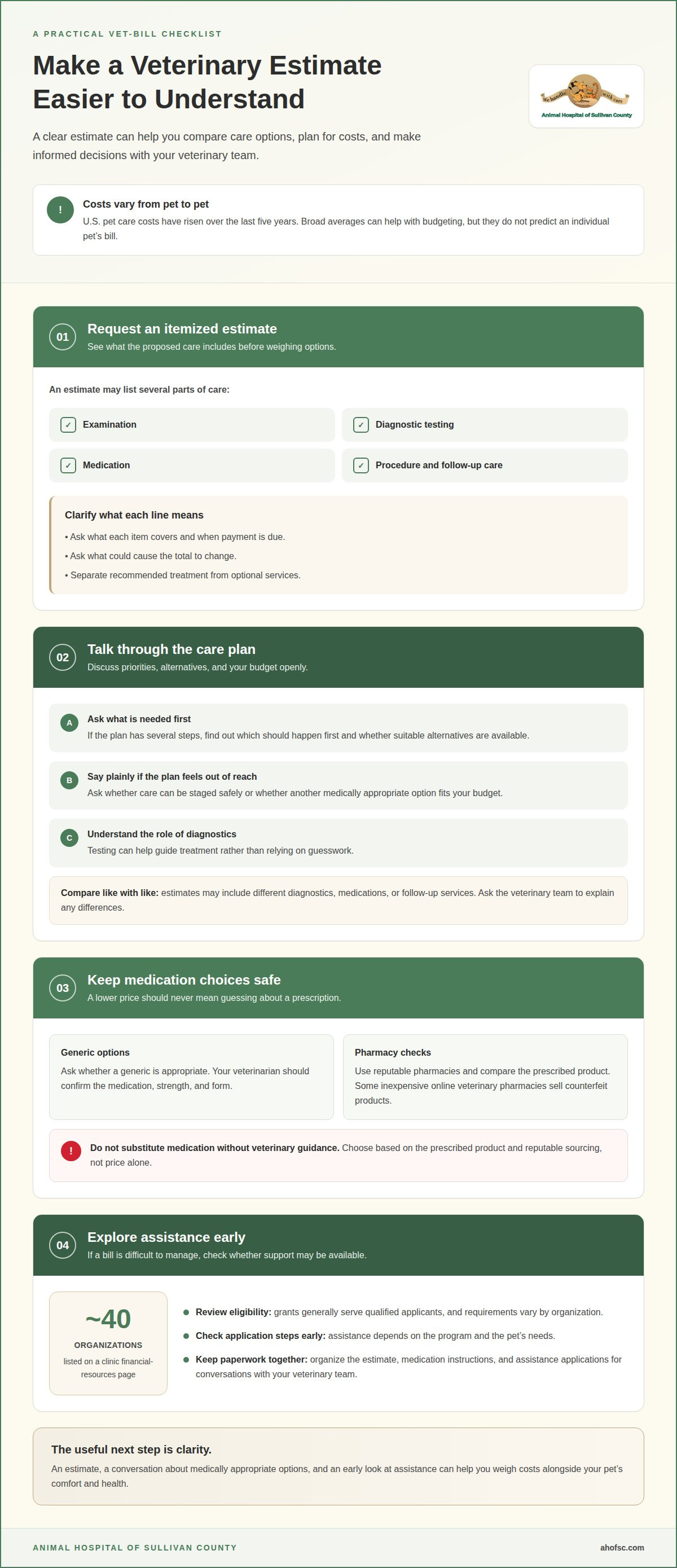
U.S. pet care costs have risen over the last five years, making early conversations about treatment especially useful. Those averages help with broad budgeting, but they don’t predict an individual pet’s bill.
Veterinary costs depend on the care involved. An estimate may include an examination, diagnostic testing, medication, a procedure, and follow-up care. Ask for an itemized estimate that separates recommended treatment from optional services. If a plan involves several steps, ask which are needed first and whether suitable alternatives are available. For example, diagnostic testing can help guide treatment instead of relying on guesswork.
To understand an estimate, ask what each line covers, when payment is due, and what could change the total. If the proposed plan feels out of reach, say so plainly. Discuss whether treatment can be staged safely or whether another medically appropriate option fits your budget. Clear communication helps you weigh cost alongside your pet’s comfort and health.
Generic medications may be an option if your veterinarian confirms that the medication, strength, and form are appropriate for your pet. Buy prescription drugs and parasite preventives only from reputable pharmacies. Some inexpensive online veterinary pharmacies sell counterfeit products. Compare reputable pharmacies for the prescribed product, but don’t choose by price alone or substitute medication without veterinary guidance.
Comparing estimates can clarify what’s included, but there’s no single savings amount that applies to every pet. The difference depends on the recommended care, diagnostics, medication, and follow-up included in each estimate. Compare like with like, and ask for an explanation when estimates cover different services.
If costs are difficult to manage, look into veterinary assistance grants. Grant programs generally serve qualified applicants, and requirements vary by organization. A clinic financial-resources page lists nearly 40 organizations that provide grants for veterinary care. Review eligibility and application steps early, since assistance may depend on the program and the pet’s needs.
For practical planning, keep the estimate, medication instructions, and assistance applications together. You can then discuss specific options with the veterinary team instead of making a rushed decision during a stressful visit.
2. Does Pet Insurance Help You Save Money on Vet Bills?
Insurance can help you plan for unexpected veterinary bills, but it doesn’t automatically reduce your total spending. Policies vary, and most insurers don’t cover pre-existing conditions. Some plans offer wellness coverage that reimburses part of preventive care, such as vaccines and annual exams. Whether a policy suits your household depends on its coverage, exclusions, and how you prefer to manage veterinary expenses.
Review the policy terms before enrolling. Check the premium, deductible, reimbursement rules, coverage limits, and waiting periods. Consider whether the plan covers accidents, illnesses, or both, and how it handles ongoing conditions. Compare these details with your pet’s age, health history, and likely care needs. A plan’s value depends on the protection it provides for your situation, not its name or monthly premium alone.
Home grooming can help maintain your pet’s coat between professional care. Brush long-haired pets daily to manage tangles, while short-haired pets can be brushed weekly. Keep sessions calm and brief, using a brush suited to the coat and rewarding relaxed behavior. Bathing is generally needed about once a month, as needed. Stop if grooming causes pain or distress, and seek veterinary advice about skin changes or persistent matting.
Make dental care part of your home routine. Brushing your pet’s teeth every day can reduce the risk of periodontal disease and may delay or eliminate the need for a professional cleaning. Introduce the toothbrush gradually, giving your pet time to get comfortable. Use pet toothpaste, not human toothpaste, and keep each session gentle. If your pet has painful gums, bleeding, or trouble eating, arrange veterinary care rather than trying to treat the problem at home.
For play, rotate safe toys your pet already enjoys instead of buying replacements whenever interest fades. A cardboard box can give a cat a simple place to explore, while a sturdy ball may engage a dog in supervised play. Remove items that break, shed pieces, or become small enough to swallow. Choose homemade toys to suit your pet’s size and chewing habits, and don’t leave your pet alone with an item that could come apart.
Homemade treats can help manage routine spending, but ingredients matter. Choose simple foods your pet already tolerates, keep portions small, and count treats as part of regular meals. Avoid ingredients known to be unsafe for pets, and don’t use a new recipe to manage a medical condition. If your pet has allergies or a prescribed diet, ask about suitable choices before changing treats.
For help making preventive care decisions, explore preventive veterinary guidance as part of your pet’s routine.
3. Pet insurance and veterinary cost planning
Insurance and savings play different roles in a veterinary budget. A policy may reimburse eligible expenses, while an emergency fund sets money aside for care. Using both approaches can help prepare for unexpected costs and routine expenses that insurance may not cover.
Compare premiums, deductibles, and reimbursement rates together. The premium is the recurring amount you pay to keep coverage; the deductible is what you pay toward eligible care before reimbursement begins. The reimbursement rate determines the share of eligible expenses the insurer pays under the policy. A lower premium may come with a higher deductible or a smaller reimbursement share, so compare the full policy rather than one figure.
Read exclusions and limits before choosing a plan. Policies vary, and most insurers don’t cover pre-existing conditions. Check how the policy defines those conditions, which expenses qualify, and whether coverage has limits. For example, a plan that excludes an existing diagnosis may not reimburse related treatment, even if it covers other eligible illnesses or accidents.
Wellness coverage is another consideration. Some pet insurance plans reimburse part of preventive care costs, such as vaccines and annual exams. Compare the reimbursement with the wellness services your pet is likely to need, and check any limits or eligibility rules. This can help you decide whether the added coverage supports your budget or whether setting money aside directly is a better fit.
A dedicated fund can help cover expenses outside a policy’s terms, including deductibles and excluded care. Start by saving $20-$50 each month, then work toward a reserve covering three to six months of pet care expenses. If monthly saving feels difficult, choose an amount that fits your household budget and contribute consistently. Aligning on these expenses is also vital for household harmony; unexpected pet costs can create friction between partners, and specialists like Tracy Kimberg emphasize the value of open communication when couples and blended families navigate shared financial priorities. Keep this money separate from everyday spending so it remains available for veterinary needs.
Use a simple planning routine to keep insurance and savings aligned:
- Record the premium, deductible, reimbursement rate, exclusions, and coverage limits for each policy you’re considering.
- Set a monthly savings amount and track contributions separately from other household expenses.
- Review policy documents when your pet’s health needs change, especially after a new diagnosis.
- Revisit your fund target as routine care and your household budget change.
For example, if a policy reimburses eligible treatment but excludes a pre-existing condition, your fund can help prepare for that gap. If a plan offers wellness coverage, compare its terms with expected preventive needs before counting on reimbursement. This review helps you understand what insurance may pay, what you’ll pay yourself, and how savings can support your pet’s care.
4. Preventive veterinary care
Preventive care gives you regular opportunities to discuss your pet’s health before a concern becomes urgent. Schedule annual veterinary exams and routine check-ups to help identify potential health issues early. Visits may include a wellness exam, blood work, core vaccinations, heartworm testing, parasite prevention, and dental care. Your pet’s age, health, and daily routine help shape the plan. For families considering how to save money on pet care, early attention can help catch changes before they become more complex.
Vaccinations help protect against diseases your veterinarian identifies as relevant to your pet. Keep a record of vaccines and visit dates, and bring it to each appointment. If a dose is missed or treatment is incomplete, contact the veterinary team for a plan to resume care. Gaps in treatment can lead to complications and additional visits, so clear records support consistent follow-through.
Parasite prevention needs ongoing attention in New York, Connecticut, New Jersey, and Pennsylvania. Year-round heartworm, flea, and tick prevention is recommended for pets in this region. Pair preventive medication with scheduled heartworm testing, and follow the product instructions for your pet. Discuss your pet’s lifestyle and health needs during an exam before changing the routine.
Routine wellness visits, vaccinations, and parasite prevention can cost less than treating the diseases they help prevent. Early detection of kidney disease, diabetes, or a urinary obstruction can also reduce treatment costs and recovery time. These visits give you a chance to discuss testing and respond before a health issue progresses. That’s one practical way to save money on pet care while protecting your companion’s wellbeing.
Everyday injury prevention starts with a consistent home routine. Keep walkways clear of objects that could trip a pet, store household chemicals and medications out of reach, and supervise pets in unfamiliar spaces. During walks, use a leash and prevent pets from approaching unknown animals. These steps help manage common hazards and keep routines predictable.
- Keep one record of exam dates, vaccine history, medications, and parasite-prevention doses.
- Use reminders for scheduled testing and recurring preventives, then note each completed dose.
- Share new symptoms or behavior changes at a veterinary appointment rather than waiting for the next annual visit.
- Review household routines for hazards, including accessible medications, cluttered walkways, and unsupervised outdoor activity.
Preventive care works best as a steady plan, not a series of isolated appointments. Annual exams, timely vaccinations, and year-round parasite prevention give you regular opportunities to review your pet’s health and adjust care as needs change. Keeping records and completing recommended treatments can help prevent gaps that lead to complications and extra veterinary visits.
5. Financial assistance programs
A veterinary grant may help eligible families manage care for a sick or injured pet. Each program sets its own qualification rules, covered expenses, and application process. Start by matching the program’s purpose to your pet’s situation. A grant focused on a particular diagnosis, treatment, or applicant group may not fit every veterinary need.
Before applying, gather a clear picture of the care involved. Useful information may include your pet’s diagnosis, recommended treatment, an estimate, and relevant medical records. Keep the documents together so you can answer application questions consistently. If an application requests information you don’t have, ask the veterinary team for the relevant clinical details.
Read each program’s eligibility criteria carefully. Some grants limit support by diagnosis, location, household circumstances, or treatment type. Others may require an application before treatment begins. Don’t assume one application covers every expense. Note what the program says it can support, which documents it requests, and how it explains decisions.
A simple tracking sheet can keep multiple applications organized. Record each program’s name, eligibility criteria, required documents, submission date, and next step. For example, if one application requests a treatment estimate and another needs medical records, track those tasks separately. Follow each program’s instructions and keep copies of submitted materials.
Ask how assistance would fit with your pet’s treatment plan. A grant may apply only to specific care, and its timing may affect your planning. Tell the veterinary team that you’re seeking assistance, and share any application requirements related to the estimate or medical records. Discuss the recommended care clearly so financial planning doesn’t leave you uncertain about the next treatment step.
If a program cannot help, use its eligibility criteria to guide your next search. The mismatch may involve the treatment, applicant requirements, or timing of the request. Keep your documents ready and look for another program whose stated purpose better fits your pet’s needs. Don’t assume an application will be approved or that every expense will qualify.
- Match the program’s stated purpose to your pet’s diagnosis or treatment need.
- Prepare the estimate and medical details requested by the application.
- Track submission requirements and follow each program’s own process.
- Keep the veterinary team informed about documents related to treatment planning.
For support discussing your pet’s medical needs and treatment plan, schedule a veterinary care conversation.
Animal Hospital of Sullivan County: Preventive Care
Animal Hospital of Sullivan County can help you plan preventive care and address health concerns as they arise. Turn to the veterinary team for routine wellness needs, new symptoms, or questions about recommended testing and treatment. Preventive Care supports ongoing health planning, while Diagnostics can help investigate a concern. Medical Care and Surgical Care address needs that call for treatment or a procedure.
Bring your pet’s health history, current medications, and questions about the care plan to your appointment. Discussing these details can help you understand which steps are recommended and plan for your pet’s needs. Contact Animal Hospital of Sullivan County to discuss your pet’s care.
Make your next care decision with confidence
A manageable pet-care plan isn’t built all at once. Choose one useful next step, such as setting a reminder for a wellness visit or organizing your pet’s medical records. That small action can make future conversations about care and household budgeting more focused.
Learning how to save money on pet care also means knowing when professional guidance helps. Animal Hospital of Sullivan County offers Preventive Care to support ongoing wellness, along with Medical Care and Surgical Care when a pet needs treatment. Sharing your concerns and your pet’s health history can help shape a conversation about appropriate care and the decisions ahead.
You don’t have to work through every question before taking that first step. Bring the concern that matters most, whether it’s planning routine care or understanding a treatment recommendation. Contact Animal Hospital of Sullivan County to discuss your pet’s care. A thoughtful plan can help you feel more prepared to care for a beloved companion.
Frequently Asked Questions
But why are costs rising?
Pet care costs in the United States have risen over the last five years, putting more pressure on household budgets. A pet’s needs can also change over time: a new symptom may call for diagnostic testing, medication, or follow-up treatment. The best way to understand a proposed bill is to ask what each recommended step addresses and how it supports your pet’s care.
Does pet insurance help you save money on vet bills?
Pet insurance can reimburse eligible expenses, but whether it saves money depends on the policy and your pet’s care needs. Compare premiums, deductibles, reimbursement rules, and exclusions before enrolling. For example, a policy that excludes a condition your pet already has may not help with related treatment. Some plans include wellness coverage, so review whether their terms suit your expected preventive-care needs.
How can pet owners save money on food without compromising nutrition?
Choose quality food suited to your pet’s age, and feed the amount recommended for their needs. Measure portions instead of topping up the bowl by habit, and count treats as part of daily food. If you’re considering a diet change, ask about your pet’s nutritional needs first. Avoid replacing balanced food with homemade recipes that may not meet those needs.
What preventive care helps avoid expensive veterinary bills?
Keep a regular wellness schedule that includes exams, vaccinations, dental care, and parasite prevention suited to your pet. In New York, Connecticut, New Jersey, and Pennsylvania, year-round heartworm, flea, and tick prevention is recommended. At home, record medication doses and watch for changes in appetite, movement, or behavior. Sharing these observations at an appointment can help guide timely evaluation.
Where can low-income pet owners find financial assistance for veterinary care?
Look for veterinary grant programs that match your pet’s diagnosis, treatment, and your household’s eligibility. Applications may request medical records, a treatment estimate, or proof of circumstances, so gather relevant documents before applying. Read each program’s rules carefully, since covered care and application timing differ. If one program doesn’t fit, use its criteria to identify what to look for in another.
How can owners save on grooming, boarding, and pet supplies?
Regular brushing and simple home grooming can help maintain your pet’s coat between professional appointments. Before shopping for supplies, make a list, use suitable items you already have, and choose durable toys that match your pet’s size and chewing habits. Plan care arrangements early when you travel. Never leave a pet with an unsafe toy or unsuitable food.
Are generic pet medications as safe and effective as brand-name options, and where are they cheapest?
A generic medication can be an option when your veterinarian confirms its medication, strength, and form are appropriate for your pet. Compare reputable pharmacies for the prescribed product, but don’t choose by price alone; some of the cheapest online veterinary pharmacies sell counterfeit products.
How much can pet owners save by comparing veterinarians or using low-cost clinics?
Savings vary depending on the recommended care and the diagnostics, medications, and follow-up services included in each estimate. Compare estimates for the same services and ask about differences. No single savings amount applies to every pet.


