

If you’re thinking, “I think my pet is dying, what should I do?” call a veterinarian promptly, especially if your pet is struggling to breathe or has suddenly become very weak. A dog may die at home, but if you’re unsure whether your pet has passed or is in distress, contact a veterinarian immediately for guidance. Changes that look like the end of life can also have treatable causes.
It’s frightening to see a beloved companion lose interest in food, drink differently, struggle to move, or act unlike themselves. This guide explains which changes to watch for, when to seek veterinary care, and how to help your pet feel safe and comfortable. You’ll also find gentle ways to support children and other pets as your family faces a difficult goodbye.
Key Takeaways
- Breathing trouble or sudden weakness calls for prompt veterinary guidance, since serious symptoms can sometimes have treatable causes.
- Changes in appetite, thirst, or weight are useful clues to share with your veterinarian, especially when you note when they began.
- A quiet resting place and familiar routines can help your pet feel more secure while you follow veterinary advice.
- Look at your dog’s comfort, behavior, and ability to enjoy familiar activities together when considering quality of life.
- Gentle, age-appropriate explanations can help children, while giving other pets a calm way to adjust to a companion’s absence.
1. Consulting a veterinarian about symptoms and end-of-life decisions
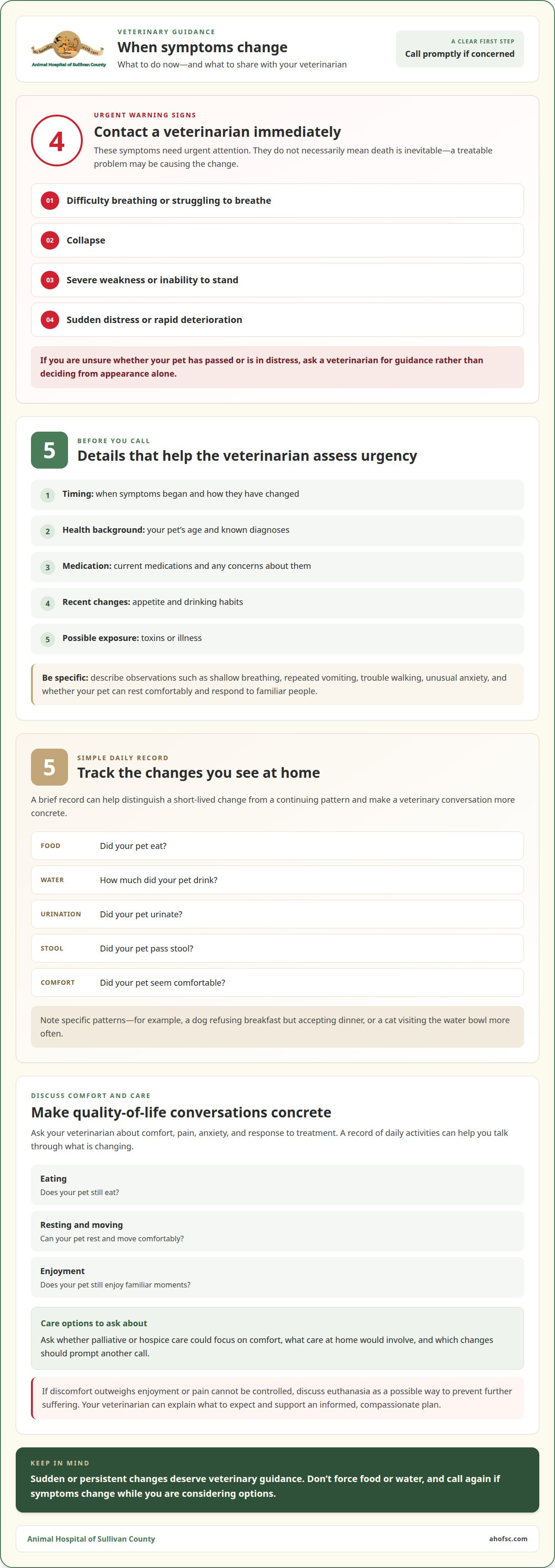
If you’re thinking, “I think my pet is dying, what do I do?” contact a veterinarian promptly. Difficulty breathing, collapse, severe weakness, or sudden distress needs urgent attention. Don’t assume these signs mean death is inevitable. A veterinarian can assess your pet in person or by telehealth and determine whether a treatable problem may be causing the change.
Call immediately if your pet is struggling to breathe, cannot stand, or seems to be rapidly deteriorating. If your dog’s death at home is uncertain, ask a veterinarian for guidance rather than trying to decide from appearance alone. The veterinarian can help establish what is happening and what action may ease suffering. Pets with COVID-19 may have difficulty breathing or unusual lack of energy, according to the Centers for Disease Control and Prevention.
Before calling, note when the symptoms began and how they have changed. Share your pet’s age, known diagnoses, current medications, recent appetite and drinking changes, and any possible exposure to toxins or illness. Describe specific observations, such as shallow breathing, repeated vomiting, trouble walking, or unusual anxiety. Mention whether your pet can rest comfortably and respond to familiar people. These details help the veterinarian understand the urgency and prepare for an examination.
Emergency veterinary visits and end-of-life care costs depend on the examination, diagnostics, treatments, and decisions involved; pricing is provided after a quote request. To find a 24-hour emergency veterinarian near you, search for that phrase with your city or ZIP code, then call before traveling to confirm the hospital can receive your pet.
When a pet’s health is declining, ask the veterinarian about comfort, pain, anxiety, treatment response, and quality of life. A record of daily activities can make the discussion more concrete: note whether your pet eats, rests, moves comfortably, and still enjoys familiar moments. Ask whether palliative or hospice care could focus on comfort, what care at home would involve, and which changes should prompt another call. If discomfort outweighs enjoyment or pain cannot be controlled, discuss euthanasia as a possible way to prevent further suffering.
A veterinarian can explain euthanasia, what your pet may experience, and how you can be present. Ask about sedation, timing, and what to expect afterward, so you can make an informed choice without feeling rushed. You remain the decision-maker; the veterinarian’s role is to explain your pet’s condition and support a compassionate plan. If symptoms change suddenly while you are considering options, call again rather than relying on an earlier assessment.
2. Loss of appetite and changes in drinking
A pet’s appetite and drinking habits can reveal important changes in health. Note what your pet eats, how much water they drink, and when the change began. Increased thirst can signal serious kidney or hormonal problems, while steady weight loss may accompany chronic illness. Rapid, significant weight loss in a cat can leave the face looking unusually hollow. Share these observations with your veterinarian rather than assuming they mean your pet is dying.
If eating has become difficult, offer food gently without pressuring your pet. Warming food, hand-feeding a small amount, or adding a food topper may encourage interest. Keep fresh water within easy reach, but remember that access to water alone may not maintain hydration. A veterinarian may suggest smaller, more frequent meals or easily digestible food. If prescribed medication seems to cause nausea while your pet is eating poorly, ask about adjusting it; continue medication if your pet tolerates it.
Keep a simple daily record: whether your pet ate, drank, urinated, passed stool, and seemed comfortable. For example, note if a dog refuses breakfast but accepts dinner, or if a cat visits the water bowl more often. These details help distinguish a brief change from a continuing pattern. Don’t force food or water, and contact a veterinarian about a sudden or persistent change, especially alongside weakness, vomiting, or discomfort.
Some pets lose bladder or bowel control as their condition changes. Place absorbent pads near the resting area, clean soiled bedding promptly, and change diapers frequently if you use them. This helps reduce skin irritation and keeps your pet more comfortable. If mobility is limited, a large towel placed beneath the body can offer support while your pet gets up to urinate or defecate. Avoid pulling or lifting in a way that causes pain; ask your veterinarian for handling advice suited to your pet.
These changes can make care physically and emotionally difficult. If family members need to know, use clear, gentle language: “Milo is very sick, and we’re helping him stay comfortable.” Give children space to ask questions and share meaningful moments, such as sitting quietly with their pet. If someone dismisses the loss, you can say, “Milo is part of our family, and this matters to us.” Friends or relatives who understand may form a support network. For changes in eating or drinking, discuss the symptoms with a veterinarian and share your daily notes.
3. Providing emotional support and maintaining familiar routines
A predictable day can reduce stress for a dog facing terminal illness. Keep familiar waking, resting, and bedtime patterns where possible, while adapting activities to your pet’s symptoms. If a short walk now causes strain, let your dog sniff outside briefly or rest beside you instead. Offer a quiet place away from household noise, and keep a favorite blanket or familiar bed nearby. Small, recognizable comforts can make home feel less unsettling.
Follow the veterinarian’s directions for every medication. Give each dose as prescribed, and record the time so family members don’t accidentally repeat it. If a pill becomes difficult to give or your dog seems uncomfortable afterward, contact the veterinarian before changing or stopping treatment. Ask whether the care plan should change as symptoms develop. For a pet receiving hospice care, regular communication with the veterinary team helps you understand comfort needs and make thoughtful adjustments at home.
Familiar people can offer calm company without asking a tired pet to interact. Sit nearby, speak softly, or stroke your dog only if they welcome touch. Let the pet choose whether to rest alone or stay close. A child might read a favorite story beside the bed, while an adult keeps the room quiet. These simple moments allow family members to spend time with a beloved pet without turning every visit into an activity.
Grief can affect pet owners before and after a loss. Ask a trusted friend or relative to listen, help with daily responsibilities, or accompany you to a veterinary appointment. If sadness, stress, or worry feels difficult to manage, a grief counselor can provide a private space to talk. Seniors grieving a companion may appreciate a regular phone call, a shared meal, or help with routines the pet once shaped. Ask what kind of support feels welcome instead of assuming.
A memorial can give family members a gentle way to remember their pet. Save a photograph, write down a favorite story, or create a small keepsake using a collar or name tag. Choose an activity that fits your household, and let each person participate differently. Someone may want to talk, while another prefers quiet reflection. There’s no single right way to honor the bond. Continuing familiar daily rhythms while making room for remembrance can help each family member move through grief at their own pace.
4. Recognizing signs that a dog may be nearing the end of life
A dog’s decline can show up in breathing, movement, appetite, behavior, or interest in familiar activities. Physical or behavioral changes may begin as early as three months before death, but decline alone doesn’t establish that death is near. Treatable illnesses can cause similar changes. A veterinarian should examine a dog whose health or daily routine has changed and help identify what the signs mean.
Difficulty breathing needs prompt veterinary attention. Watch for irregular, shallow, or labored breaths, repeated gasping, or a dog who can’t settle comfortably. Weakness and extreme lethargy also call for urgent attention, especially when they appear suddenly. A cold body or pale or bluish appearance can signal serious circulation problems. These signs require immediate veterinary guidance, not a wait-and-see approach at home.
Pain can look different from one pet to another. Cats and dogs may pant or gasp, withdraw from family, resist movement, or become unusually selective about food. A dog who no longer climbs onto a favorite bed, for example, may be showing discomfort or weakness. Note what has changed and when, including whether your pet can rest, move, and respond as usual. Share those specific observations with the veterinarian.
Quality of life involves more than one symptom. Consider whether your dog can eat, drink, move comfortably, rest, and enjoy familiar people or activities. List three to five things your pet loves, such as greeting you, sniffing outside, or playing with a favorite toy. Track whether those moments still happen and mark good and difficult days on a calendar. The pattern can make changes easier to discuss.
The HHHHHMM Quality of Life Scale, designed by Dr. Alice Villalobos, rates each parameter from one to 10. A score of 35 or higher suggests acceptable quality of life and possible benefit from palliative care; below 35 indicates poor quality of life and may prompt a discussion about hospice or euthanasia. Use the scale as a conversation aid, not a diagnosis. Your veterinarian can weigh pain, anxiety, treatment response, and overall well-being.
Ask for help assessing the whole picture if your dog’s good moments are becoming harder to find. The ASPCA advises recording daily activities and considering euthanasia when discomfort outweighs a pet’s ability to enjoy life. Bring your notes, examples, and questions to the veterinarian. A clear record of routine changes can help you discuss comfort-focused care and make a compassionate plan for your dog.
5. Children and other pets during a final goodbye
Children often need clear, gentle words when an animal is very sick or dies. Explain what is happening honestly, using language they can understand, such as, “Luna’s body is very ill, and the veterinarian is helping her.” Avoid saying a pet has gone to sleep, which can confuse a child about sleep. Offer choices: they may sit nearby, draw a picture, say goodbye, or step away. Let them know their feelings are welcome, even if they change from sadness to play.
A weak or elderly pet may need a resting place that’s easy to reach. Set a cushioned bed on the floor, away from stairs and busy paths, so your companion doesn’t need to climb or jump. The ASPCA recommends a warm, well-cushioned sleeping spot for pets with limited mobility, which can help protect pressure points. Keep essentials nearby and make room for the pet to rest without being crowded. If touch seems unwelcome, let your pet stay undisturbed.
For a pet who struggles to stand, a large towel placed beneath the body can support movement outside to urinate or defecate. Absorbent pads and prompt cleaning help keep bedding dry when accidents happen. Change soiled bedding gently, and watch for redness or irritation on the skin. These simple steps can preserve comfort and dignity while your pet remains at home. Ask the veterinarian how to handle or reposition a pet who appears painful.
To travel with a critically ill pet, call the veterinary facility before leaving and describe the immediate symptoms. Use a secure carrier or stable, padded surface, keep handling gentle, and have another person drive if possible so you can observe your pet. Don’t force a position that worsens breathing or distress; tell the veterinary team what changed during the trip.
After a companion dies, surviving pets may notice the absence and behave differently. If it feels appropriate, allow them to briefly approach or smell the deceased animal in a calm, supervised setting. Don’t force contact; give each pet space to move away. Keep their familiar feeding and resting arrangements steady, and watch for changes in appetite or behavior. A quiet opportunity to investigate may help household animals adjust to the loss.
Families can mark the goodbye in personal ways. A child might choose a favorite photograph, while an adult writes down a story about the pet’s companionship. Invite each family member to participate, but don’t require a shared ritual. If your pet’s comfort or mobility is changing, contact the veterinary team for guidance about supportive care and next steps.
Animal Hospital of Sullivan County
Animal Hospital of Sullivan County can help you understand concerning changes in your pet’s health and consider the next steps. If your pet’s appetite, breathing, mobility, or daily routine has changed, the veterinary team can provide medical care and diagnostics to assess what may be happening. When urgent symptoms arise, the hospital also offers emergency treatment during regular office hours.
For an older or seriously ill pet, a veterinary assessment can help clarify treatment options and support decisions focused on comfort and quality of life. Share the symptoms you’ve noticed, when they began, and any changes in eating, drinking, or behavior.
Contact Animal Hospital of Sullivan County to discuss your pet’s symptoms and care needs.
Take the next step with care
If you’re thinking, “I think my pet is dying; what do I do?” you don’t have to carry every decision alone. Choose someone you trust to sit with you, listen, and help you keep track of questions. A steady presence can make a difficult conversation feel more manageable.
Give yourself permission to focus on the next decision, rather than trying to solve everything at once. You can ask what matters most for your pet’s comfort, what choices are available, and what changes would call for another conversation. Clear answers can help you make decisions that reflect your pet’s needs and the bond you share.
When you’re ready to talk through your concerns, contact Animal Hospital of Sullivan County. You deserve thoughtful guidance as you care for your beloved companion. One calm, informed step at a time is enough.
Frequently Asked Questions
Can Dogs Pass Away in Their Sleep?
Yes, a dog can die while resting or asleep, but the appearance of sleep doesn’t confirm that death has occurred. If your dog is unresponsive or breathing irregularly, contact a veterinarian immediately for guidance. Don’t assume your pet has passed based only on stillness. A veterinarian can help assess what’s happening and explain the next steps, including how to confirm a death at home.
What should I do immediately if my pet is struggling to breathe, unconscious, or in severe pain?
Call a veterinarian or emergency veterinary facility immediately and describe the symptoms before traveling. Breathing difficulty, unconsciousness, and severe pain need urgent attention. Keep your pet as calm and still as possible, and avoid forcing food, water, or medication. If someone is with you, ask them to call while you prepare to leave. Follow the veterinary team’s instructions during transport, and tell them about any sudden changes.
Should I call an emergency vet, my regular veterinarian, or an animal poison control center?
For breathing trouble, unconsciousness, or severe pain, contact an emergency veterinary facility promptly. If your regular veterinarian is open, call them for urgent guidance; emergency treatment may be available during business hours. If you suspect your pet swallowed a toxin, contact a veterinarian or animal poison control center right away. Share the substance’s name, the time of possible exposure, and any symptoms. Don’t wait for symptoms to worsen before seeking guidance.
What are the options for pain relief, hospice care, or euthanasia for a dying pet?
Options may include medication to relieve pain or anxiety, hospice care focused on comfort, or euthanasia when suffering cannot be adequately relieved. A veterinarian can consider your pet’s condition, response to treatment, and needs at home when discussing these choices. Ask what each approach would involve day to day, what changes to watch for, and how the care plan could adapt if your pet’s comfort changes.
How can I tell whether euthanasia may be the kindest choice for my pet?
Consider euthanasia with your veterinarian if your pet’s pain or distress can’t be controlled, or if daily life no longer includes comfortable, enjoyable moments. For example, a pet who can’t rest without distress or no longer responds to favorite people may need a closer quality-of-life discussion. Your veterinarian can help weigh comfort, anxiety, and treatment response. The decision remains yours, supported by a clear understanding of your pet’s condition.
What should I expect during pet euthanasia, and what aftercare or cremation options are available?
During euthanasia, a veterinarian may give a sedative to help your pet relax, followed by a special medication, as described by the ASPCA. The ASPCA says the procedure takes about 10 to 20 seconds. You can ask the veterinarian what to expect and whether you may remain with your pet. Afterward, discuss aftercare arrangements, including the onsite crematorium offered by Animal Hospital of Sullivan County.


