

For pet owners looking for in-house pet diagnostics near me, testing may include blood and urine analysis, parasite checks, and imaging such as X-rays or ultrasound, depending on a pet’s symptoms. On-site blood panels, urinalysis, and parasite checks are typically processed within 15 to 30 minutes. These results can help a veterinarian identify possible health concerns and choose what care to consider next.
It’s natural to worry when your pet seems unwell, and waiting for answers can make that worry harder. Knowing which tests may be recommended and what they can show can help you feel more prepared for a visit. This guide covers common in-house tests, how samples and imaging fit into an appointment, and why some results are available quickly while others need further analysis. You’ll also learn how diagnostic findings help guide care for illness or injury, so you can better understand the next steps for your companion.
Key Takeaways
- Learn what blood, urine, and fecal tests can help reveal about your pet’s health.
- Understand how symptoms and an examination help guide which diagnostic tests are useful.
- See how X-rays and other imaging can add information when illness or injury may involve structures inside the body.
- Find out how test findings can help shape decisions about your pet’s next steps in care.
What is included in in-house diagnostic services?
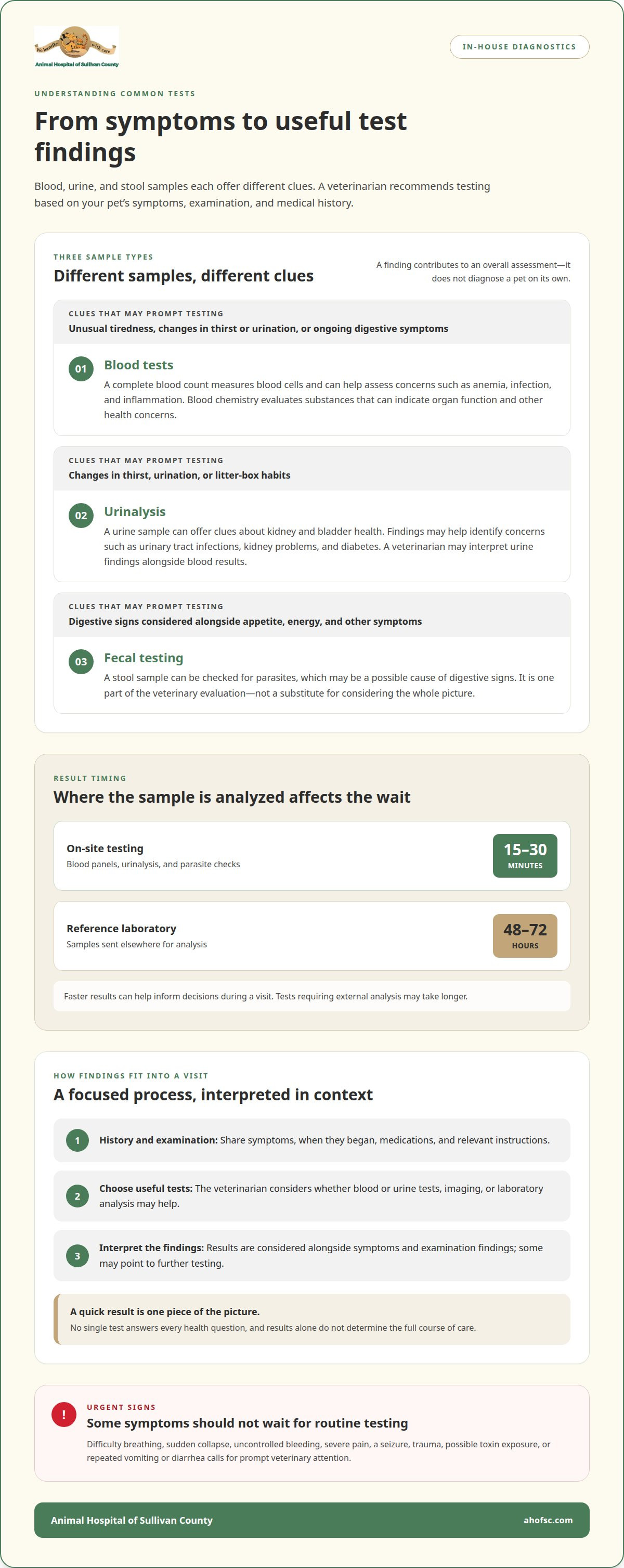
In-house veterinary diagnostics may include blood tests, urinalysis, and fecal exams to investigate different signs of illness. Each sample provides different information: blood reflects blood cells and body chemistry, urine can offer clues about the kidneys and bladder, and stool can be checked for parasites. The veterinarian recommends tests based on your pet’s symptoms, examination, and medical history.
A complete blood count measures the number and characteristics of blood cells. It can help assess concerns such as anemia, infection, and inflammation. Blood chemistry testing evaluates substances that can indicate organ function and other health concerns. For example, a veterinarian may recommend blood work if a pet seems unusually tired, drinks or urinates differently, or has ongoing digestive symptoms. Results contribute to an overall assessment rather than providing a diagnosis on their own.
Routine blood work can also provide useful information for a pet who appears healthy. The results offer a snapshot to consider alongside the physical examination and medical history. If future results differ, comparing them may help identify a change worth investigating. Screening can also help assess concerns such as kidney or liver disease, diabetes, hormonal imbalances, or anemia. The appropriate tests depend on your pet’s age, health, and reason for the visit.
Urinalysis examines a urine sample for findings related to kidney and bladder health. It can help identify concerns such as urinary tract infections, kidney problems, and diabetes. A veterinarian may interpret urine findings alongside blood results, especially if your pet has changes in thirst, urination, or litter-box habits. Together, these samples can help narrow down which body systems need closer evaluation.
Fecal testing focuses on a stool sample. An examination may include parasite checks, which can help identify intestinal parasites as a possible cause of digestive signs. The sample is assessed as part of the veterinary evaluation, not as a substitute for considering appetite, energy, and other symptoms. Blood panels, urinalysis, and parasite checks at clinics with on-site testing are typically processed within 15 to 30 minutes.
Mobile veterinary bloodwork means collecting a blood sample during a visit at home. This can be useful when travel is difficult for a pet or family. Collection and testing are separate steps: depending on the service, a sample may be analyzed with portable equipment or sent to a laboratory. A home blood draw does not necessarily mean results are produced at home or immediately. Ask how sample handling fits into the planned visit.
How diagnostic testing and results work during a visit
A diagnostic visit usually starts with a history and examination. These help the veterinarian focus testing on your pet’s symptoms and decide whether blood or urine tests, imaging, or laboratory analysis may help explain what’s happening.
In-House and Reference Laboratory Testing
In-house testing analyzes samples at the veterinary facility, while reference laboratory testing sends samples elsewhere for analysis. Clinics with on-site testing typically process blood panels, urinalysis, and parasite checks within 15 to 30 minutes; reference laboratories typically return results in 48 to 72 hours. Behind the scenes, modern diagnostic labs and clinics often connect testing hardware directly to patient records using automated workflow and document archiving tools from platforms like BitAffix to ensure reports transfer without delay. Faster results can help inform decisions during the visit, while a test requiring external analysis may take longer.
An appointment helps the veterinary team connect test choices with examination findings and medical history. A referral is not always needed for diagnostic testing; the care pathway depends on the reason for testing and your pet’s existing veterinary care. Before bloodwork, urine collection, or imaging, share medications, recent symptoms, and any instructions you’ve received. Preparation varies by test, so don’t change food or medication unless instructed.
Persistent lethargy, reduced appetite, unexplained weight loss, or sudden changes in thirst or urination may warrant prompt evaluation. Sharing when these changes began and how they’ve progressed can help the team decide whether to investigate kidney function, infection, or another underlying concern.
Cost Considerations for In-House Testing
The cost of in-house diagnostics depends on which tests are performed and how the sample is analyzed. A single blood test differs from a combination of bloodwork, urine testing, and imaging. Tests sent to a reference laboratory also involve a separate analysis process. The estimate depends on the case and is provided after a quote request; the type of test, sample handling, and need for external analysis all affect it.
Results can help identify which concerns need attention and what next steps may be appropriate. Addressing a medical issue before it worsens may help avoid additional expenses, but test results alone do not determine the full course of care.
Risks and Limitations of In-House Tests
In-house testing can provide useful findings quickly, but no single test answers every health question. Results need to be interpreted alongside symptoms and examination findings. A result may point to the need for further testing, such as reference laboratory analysis or imaging, rather than immediately identifying one cause.
Difficulty breathing, sudden collapse, uncontrolled bleeding, severe pain, a seizure, trauma, or possible toxin exposure calls for immediate veterinary evaluation. Repeated vomiting or diarrhea also warrants prompt attention. These symptoms should not wait on routine diagnostic testing; urgent assessment helps determine what care is needed. For other concerns, diagnostic testing can help build a clearer picture of your pet’s health.
On-site pet X-rays and laboratory services
On-site X-rays create images that help a veterinarian examine bones and structures inside your pet’s body. A radiograph is a two-dimensional image, showing structures from a particular angle rather than providing a complete view of every tissue. The veterinarian considers the image alongside your pet’s symptoms and examination. That context helps connect a visible change with the reason for imaging.
For an injury, X-rays can help detect fractures and assess the location and appearance of broken bones. If your pet may have swallowed an object, radiographs can help look for foreign material and signs of an intestinal blockage. They can also show changes in the size, shape, or position of some organs. These findings may be associated with conditions affecting the heart, lungs, kidneys, or other abdominal organs.
Radiographs can also help evaluate bladder stones, chronic arthritis, and some spinal cord diseases. In the chest, images may help assess lung conditions and the heart’s size or position. If your pet is uncomfortable when moving, imaging of the affected area can reveal changes that may not be visible during an external examination. The symptoms help guide which part of the body needs imaging.
X-rays and ultrasound answer different questions. Radiography uses X-rays to produce images of internal structures, while ultrasound uses high-frequency sound waves, not radiation. Ultrasound can create images of abdominal organs, including the liver, spleen, gallbladder, and kidneys. If radiographs show an unclear finding, ultrasound may provide another view of soft tissues. The choice depends on the body area and the information needed.
For radiography, the pet is positioned so the image captures the area being assessed. Staying still helps produce a clearer image, and the veterinary team works carefully to position your pet. Veterinary radiography uses very low doses of radiation and is described as non-invasive and painless. A veterinarian weighs the value of the image against the reason for testing, such as suspected fractures or possible swallowed objects.
Laboratory testing complements imaging by examining samples rather than creating pictures. Blood, urine, and fecal tests can add information about organ function, urinary health, and possible intestinal parasites. A result may help explain symptoms that an X-ray alone cannot clarify. Conversely, an image can reveal a structural concern that laboratory findings may not show. Together, these diagnostic tools can inform care and help determine whether further evaluation is useful.
Diagnostic evaluations for illness and injury
A focused evaluation connects your pet’s symptoms with tests that examine different parts of the body. The veterinarian considers the medical history, physical examination, and changes such as appetite loss or unusual urination. This information helps guide diagnostic choices for a suspected illness or injury. For example, blood and urine findings may be considered together when symptoms point to a urinary concern. Accurate interpretation depends on the full picture, not one result alone.
Possible poisoning calls for prompt veterinary attention. If a pet may have eaten a toxic food, household chemical, or plant, share what was ingested and when, if known. This information helps guide immediate assessment and appropriate testing. In-house diagnostics can rapidly identify toxins after ingestion. Depending on the suspected exposure, the evaluation may include blood tests and other checks to assess the pet’s condition. Don’t wait for routine testing when toxin ingestion is suspected.
Heart concerns may call for imaging alongside other diagnostic findings. A real-time veterinary ultrasound can help assess heart valve motion, blood flow, heart muscle contractions, and heart defects. Unlike an X-ray, ultrasound uses high-frequency sound waves to create images inside the body. These moving images let the veterinary team examine heart activity as it happens. The findings help build an evaluation of a suspected heart problem and inform decisions about further care.
Other tests can help investigate illness when symptoms do not point to one clear cause. Endocrine testing evaluates concerns involving hormone-related body functions. Cytology examines cells, while histopathology examines tissue samples. These tests answer different questions: cell examination assesses a sample’s cellular features, while tissue examination provides context about how cells are arranged. A veterinarian may use these methods when examination findings or earlier tests indicate a need for closer analysis.
Ultrasound can also help assess suspected bladder stones, tumors, and organ abnormalities. It creates images of abdominal organs such as the liver, spleen, gallbladder, and kidneys. This can be useful when symptoms suggest an internal concern but radiographs or laboratory findings leave questions. The choice of imaging depends on the area being evaluated and the detail needed. Ultrasound complements other diagnostics rather than replacing every test.
When a pet has an injury, pain, or sudden change in behavior, each finding adds context to the evaluation. A clinic may combine examination results with laboratory tests or imaging to investigate possible causes. The next step depends on what those findings show and your pet’s overall condition. This coordinated approach helps guide care for illness and injury while keeping your pet’s needs at the center.
How fast test results can inform treatment
Faster results give the veterinary team information to assess a pet’s condition during the visit. Laboratory findings influence up to 70% of veterinarians’ medical decisions. A blood panel, for example, can help clarify whether symptoms call for closer attention to organ function, infection, or another concern. The result is considered alongside the examination and medical history, helping shape a reasoned care plan instead of relying on symptoms alone.
Immediate results are especially useful when an illness needs prompt assessment. If a pet has sudden changes in thirst or urination, test findings can add information about kidney function and guide what to evaluate next. For possible toxin exposure, rapid diagnostic testing can help identify toxins and inform immediate care decisions. Quick access to findings also helps the veterinary team explain what the tests show while you’re together, rather than leaving you without context during an extended wait.
Speed matters, but it doesn’t mean every question is answered immediately. A screening result can point toward a concern without identifying its cause, so further evaluation may be needed. Some samples require reference laboratory analysis, and imaging can answer questions that bloodwork cannot. This stepwise approach connects each result to a useful next decision, without assuming one test explains every symptom.
For pets living with a chronic illness, repeated testing helps assess how their condition changes over time. For example, glucose curves for pets with diabetes track blood sugar over a period typically lasting 12 to 24 hours. Those measurements show patterns rather than a single moment, helping the veterinary team assess whether treatment is working and whether adjustments are needed. Comparing results across rechecks adds context to daily observations at home.
Results can also help distinguish monitoring from investigating a new problem. A stable finding in a pet with a known condition differs from a sudden change accompanied by weakness, vomiting, or unusual behavior. The veterinarian considers test patterns, symptoms, and response to treatment together. This context helps determine whether to continue monitoring, do additional testing, or change the care plan.
For families, timely explanations can reduce uncertainty and stress during a difficult visit. Ask what a result means for your pet’s current symptoms, what decision it informs, and whether another test is needed. If illness or injury has you concerned, schedule a diagnostic evaluation to discuss the findings and care options.
Animal Hospital of Sullivan County: Diagnostics
Animal Hospital of Sullivan County provides diagnostic testing to investigate changes in your pet’s health, from unexplained symptoms to concerns after an injury. Findings can support decisions about medical care and clarify whether further evaluation or treatment may be appropriate. Diagnostic information can also contribute to preventive care by giving the veterinary team a clearer view of your pet’s health.
If your pet seems unwell, develops a new symptom, or needs follow-up for an ongoing concern, the team can explain the diagnostic process and care options. Each pet’s situation is considered individually, with attention to their comfort and well-being. Contact Animal Hospital of Sullivan County to discuss your pet’s diagnostic needs.
Take the next step with confidence
Choosing in-house pet diagnostics near me is about more than getting test results. It also means having a veterinary team help you understand what those findings mean for your companion’s care. Before a visit, note the changes you’ve observed and the questions you want to discuss, so you feel prepared to talk through next steps.
Animal Hospital of Sullivan County offers Preventive Care, Medical Care, and Surgical Care to support pets’ health. Diagnostic findings can inform conversations about which type of care may fit your pet’s situation. You know your companion best, and sharing your concerns is an important part of that discussion.
For guidance about your pet’s diagnostic needs, contact Animal Hospital of Sullivan County. A thoughtful conversation can help you take the next step with care and confidence.
Frequently Asked Questions
Are in-house diagnostics more expensive than external lab tests?
Not necessarily. Cost depends on the tests needed and how samples are processed. An in-house panel and an outside laboratory analysis may involve different tests, so compare what each estimate includes rather than focusing only on where testing takes place. Consider whether the plan includes multiple sample types or follow-up evaluation. The right option is the one that answers the veterinary question and supports your pet’s care.
How do in-house diagnostics improve pet care?
In-house diagnostics can give the veterinary team information to guide decisions during a visit. Findings, for example, can help determine whether a pet needs further evaluation, a change in care, or monitoring over time. They also give families the opportunity to discuss results and their meaning with the team. Testing supports clinical judgment; it doesn’t replace the examination or explain every symptom by itself.
Is diagnostic testing safe for pets?
Veterinary diagnostic tests are selected to investigate a health concern, and the method matters. Sample collection and imaging involve different procedures, which the veterinary team considers in light of your pet’s condition and comfort. Every test has limitations, and some pets need gentle handling during an examination or image capture. The team weighs the information a test may provide against the needs of the individual animal.
What veterinary clinics near me offer in-house pet diagnostics?
For families looking for in-house pet diagnostics near me, Animal Hospital of Sullivan County provides diagnostic services in Ferndale, New York, serving pet owners across New York, Connecticut, New Jersey, and Pennsylvania. The hospital is located at 667 Harris Rd, Ferndale, NY 12734. If your pet has a new or ongoing concern, a veterinary evaluation can help determine what diagnostic approach may be appropriate.
Which in-house diagnostic tests do local veterinary clinics offer?
For pet owners searching for in-house pet diagnostics near me, Animal Hospital of Sullivan County offers blood, urine, and fecal diagnostic testing. These sample types help the veterinary team investigate different concerns, from changes in overall health to urinary or digestive symptoms. The right test depends on the reason for evaluation and your pet’s history. The veterinarian can explain how each selected test relates to your pet’s specific concern.
How much do in-house pet diagnostic tests cost near me?
The estimate depends on the case and is provided after a quote request. It may vary based on which tests are needed, whether several sample types are included, and whether further evaluation is part of the plan. Ask the veterinary team to explain the proposed tests in relation to your pet’s symptoms. That context helps clarify what the diagnostic work is intended to assess.
Are in-house pet test results available during the same visit?
Some in-house test results may be available during the visit, while tests requiring outside laboratory analysis take longer. Timing depends on the test and where the sample is analyzed. A same-visit result can help the veterinary team discuss care decisions with you. If a result needs additional analysis, the team can explain how it fits into your pet’s overall evaluation.
How do in-house pet diagnostics compare with tests sent to an outside laboratory?
In-house tests are analyzed at the veterinary facility, while samples for outside laboratory tests are sent elsewhere for analysis. On-site processing can support decisions during the visit; external testing requires waiting for the laboratory’s report. The appropriate approach depends on the test and the question being investigated. Both can provide useful information, and results are interpreted alongside your pet’s symptoms and examination.


