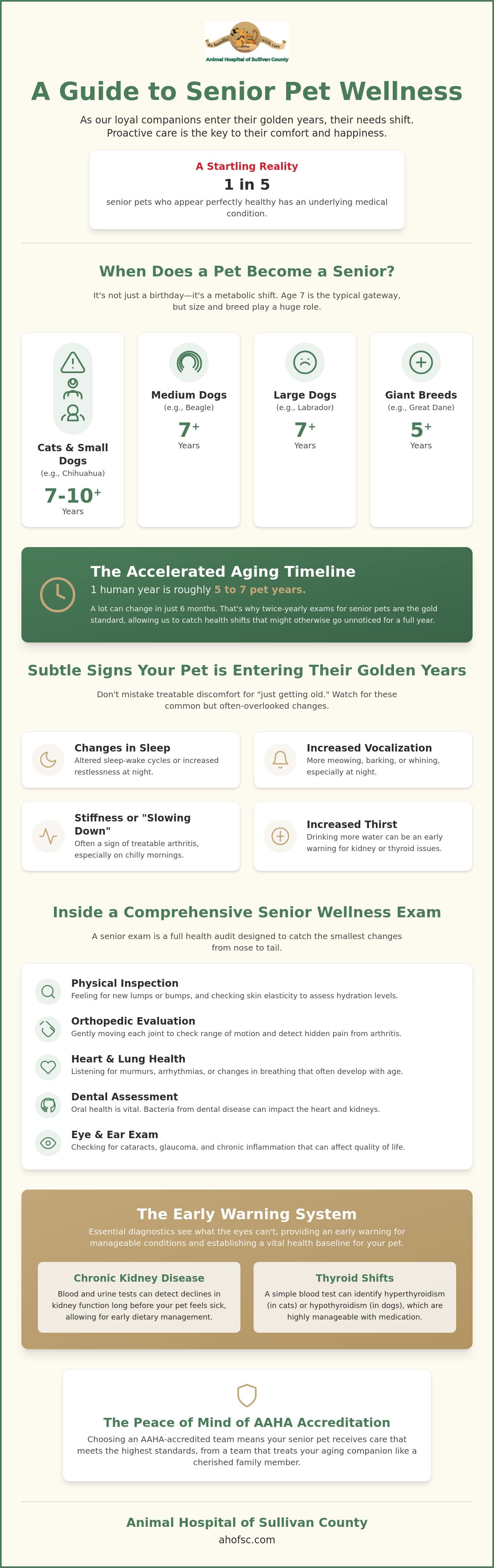
Did you know that one in five senior pets who appear perfectly healthy actually has an underlying medical condition waiting to be discovered? It's a startling reality for many families in our community. As our loyal companions enter their golden years, their needs shift from simple checkups to more strategic care. That's why senior pet wellness exams in Sullivan County are so vital for catching these "silent" changes before they impact your pet's happiness.
We understand the worry that comes when your once-energetic dog or cat starts to slow down or shows signs of stiffness. It's natural to feel anxious about which diagnostic tests are truly necessary or how to manage the costs of chronic care. You want the very best for your family member, and you deserve a partner who values their comfort as much as you do! Our specialized senior wellness exams at our Ferndale clinic are designed to detect early health shifts, giving you the tools to extend your best friend's quality of life.
This article explores what happens during a comprehensive senior exam and how proactive diagnostics can improve your pet's mobility and comfort. You will also learn how our AAHA-accredited team provides the peace of mind you need to enjoy these precious years together.
Key Takeaways
- Identify when your dog or cat officially enters their "golden years" based on their specific breed, size, and lifestyle.
- Learn how senior pet wellness exams in Sullivan County go beyond standard checkups to include specialized orthopedic evaluations for hidden joint pain.
- Uncover the diagnostic tests that act as early warning systems for manageable conditions like chronic kidney disease and thyroid shifts.
- Explore proactive strategies for managing osteoarthritis to ensure your pet remains mobile, comfortable, and happy!
- Understand the benefits of seeking care from an AAHA-accredited team that treats your aging pet like a cherished family member.
When Does a Pet Become a "Senior" in Sullivan County?
Many pet owners are surprised to learn that most veterinarians consider age seven to be the gateway to seniority. While your dog or cat might still have a playful spirit, their internal systems begin to transition during this time. This biological "Senior Shift" means that organ functions like kidney filtration and liver metabolism can begin to decline long before you notice a change in their daily behavior. Because these changes are often silent, twice-yearly senior pet wellness exams Sullivan County are the gold standard for pets over seven. These frequent checkups allow us to catch subtle health deviations that could otherwise go unnoticed for a full year.
Size plays a massive role in how quickly a pet ages. A Great Dane may reach senior status as early as age five, while a tiny Chihuahua might not be considered a senior until they are ten or older. Understanding Aging in dogs helps us tailor our care to the specific needs of your pet's breed and size. Large breeds often face joint and heart challenges earlier in life; smaller breeds might be more prone to dental or kidney issues as they age. Every pet is an individual, and their journey into their golden years is unique to them.
The Accelerated Aging Timeline
It's often said that one human year equals roughly five to seven pet years. This means that a lot can happen internally in just six months for a senior animal! A minor shift in thyroid levels or a slight increase in water consumption can indicate a significant health change in a relatively short period. We believe that seniority is best defined as a metabolic shift where the body’s ability to repair itself begins to slow down, rather than just a specific birthday on a calendar.
Signs Your Pet is Entering Their Golden Years
Sometimes the signs of aging are subtle. You might notice changes in sleep patterns, increased vocalization at night, or a pet who suddenly drinks more water than usual. Don't fall for the "slowing down" myth! Many owners assume a pet is just getting old, when they are actually experiencing treatable discomfort from conditions like arthritis. In Sullivan County, our chilly winters and damp springs can be particularly tough on aging joints. If your companion seems stiff on those cold Ferndale mornings, it's often a sign that they need a little extra support to maintain their mobility and comfort.
What to Expect During a Comprehensive Senior Wellness Exam
When you bring your beloved companion in for senior pet wellness exams Sullivan County, you aren't just getting a quick look-over. You're giving them a comprehensive health audit designed to uncover the smallest changes. We start with a thorough physical inspection. Our team feels for new lumps or bumps and checks skin elasticity, which provides immediate insight into your pet's hydration levels. We also perform a detailed orthopedic evaluation. By gently moving each joint, we check for range of motion and look for signs of hidden pain that your pet might be masking at home. Our goal is to ensure they can still enjoy their favorite walks through the Ferndale trails!
Heart health is another critical focus during these visits. We listen closely for murmurs or arrhythmias that often develop as pets age. We also pay close attention to their teeth. There is a powerful dental connection between oral bacteria and the health of the heart and kidneys. Keeping those pearly whites clean is about more than just fresh breath; it's about protecting their vital organs from systemic infection. These steps align with the AVMA senior pet care guidelines, which emphasize that increased veterinary vigilance is the key to a long, happy life for aging animals.
Living in Sullivan County brings unique challenges for our seniors. Our region is a known hotspot for ticks and Lyme disease. For an aging pet with a naturally declining immune system, these environmental risks can be much harder to fight off than they were in their youth. We integrate these local factors into every exam to ensure your pet is protected against our specific local threats. If you have noticed your pet slowing down lately, scheduling a wellness visit is the first step toward getting them back to their old selves.
The Nose-to-Tail Clinical Assessment
During the clinical assessment, we perform abdominal palpation to check for organ enlargement or unusual masses. We also examine the eyes to distinguish between normal age-related cloudiness, known as nuclear sclerosis, and actual cataracts. We don't forget the ears! We check for chronic inflammation that often plagues aging ears, ensuring your pet stays comfortable and responsive to your voice.
Nutritional and Behavioral Consultation
As pets slow down, their calorie requirements change significantly. We'll discuss the right diet to prevent weight gain, which can put extra stress on old joints. We also talk about behavior. If your pet seems confused or restless at night, they might be experiencing Cognitive Dysfunction Syndrome (CDS). You can use the PetDesk app to track these behavioral changes between visits! This data helps us make the best decisions for your friend's care and comfort.
Essential Senior Diagnostics: Seeing What the Eyes Can’t
While the physical exam we discussed earlier provides vital clues, many age-related changes happen where we can't see them. This is where diagnostic testing becomes your pet's greatest advocate. During senior pet wellness exams Sullivan County, we use advanced tools to look beneath the surface. A comprehensive senior blood panel is essential. It allows us to evaluate liver and kidney function, as well as thyroid health. These organs are the engines of your pet's body. If they begin to falter, early detection means we can often manage the condition through simple changes in diet or medication.
A urinalysis is another cornerstone of senior care. It is frequently the earliest indicator of diabetes or renal disease. By checking how well the kidneys concentrate urine, we can spot issues months before they show up in bloodwork. We also utilize diagnostic imaging, like X-rays, to assess heart size and joint health. These images help us identify early-stage heart disease or the true extent of arthritis in those aging hips and knees. For our local neighbors, Lyme and tick screening is a non-negotiable part of the visit. Sullivan County seniors often have aging immune systems that struggle to fight off tick-borne illnesses, making early detection critical for a full recovery!
The Power of In-House Laboratory Testing
We know that waiting for results can be stressful for any pet parent. That's why we utilize our onsite laboratory to provide immediate answers for urgent senior concerns. Having these capabilities right here in Ferndale means we can start a treatment plan the very same day. These tests also help us establish "baselines." By comparing this year’s results to last year’s, we can see trends that might still be within a "normal" range but are moving in the wrong direction for your specific pet. You can learn more about our technology by visiting our guide on Pet Diagnostics in Sullivan County.
Monitoring Chronic Conditions
For pets already managing health shifts, regular monitoring is the key to comfort. We often perform blood pressure checks for cats with hyperthyroidism or kidney disease, as hypertension can lead to sudden vision loss. We also offer glaucoma screening for certain breeds that are predisposed to increased ocular pressure. Research indicates that one in five healthy-looking senior pets has an underlying health condition that can be detected with early screening. These diagnostics are about more than just finding problems; they are about giving you the peace of mind that your best friend is truly healthy from the inside out.
Common Senior Ailments and Early Intervention
Discovering a health shift through senior pet wellness exams Sullivan County is the first step toward a proactive care plan. One of the most frequent conditions we manage is osteoarthritis. It is often heartbreaking to see a once-energetic dog hesitate at the bottom of the stairs or struggle to rise in the morning. However, we have many tools to help! By combining high-quality supplements, weight management, and modern medications, we can significantly improve your pet's comfort and mobility. Our goal is to keep those tails wagging and those purrs coming for as long as possible.
We also keep a close watch for Chronic Kidney Disease (CKD) and endocrine disorders like Cushing’s Disease or Diabetes Mellitus. When we catch CKD in its early stages through the bloodwork and urinalysis we discussed earlier, we can often implement life-extending diets that reduce the workload on the kidneys. Similarly, managing diabetes or thyroid issues early prevents secondary complications and keeps your pet feeling their best. We also focus on cognitive health. If your companion seems a bit "lost" or has changed their social habits, there are brain-supporting nutrients and strategies we can use to help clear that mental fog.
The "Silent Killers" of Aging Pets
Some conditions are masters of disguise. For instance, heart disease often starts subtly. A soft cough in a senior dog is never "just a cough"; it can be an early warning sign of heart enlargement or fluid buildup. We also place a high priority on cancer screening. Because our pets age so much faster than we do, investigating a new lump or bump immediately is vital. For more tips on managing your pet's environment and daily routine, take a look at our guide on Senior Pet Care in Sullivan County.
Home Monitoring: Your Role in the Care Team
You are the most important member of your pet's health care team! You know their quirks and habits better than anyone else. We encourage you to trust your "pet parent" intuition. If something feels "off," it usually is. You can perform a simple "Water Bowl" test at home by tracking if you are refilling the bowl more often than usual. Increased thirst and urination are classic signals for several senior ailments. If you notice these changes, or if your friend is suddenly reluctant to jump onto the couch, contact us today to schedule a consultation so we can address these shifts early.
Why Choose Animal Hospital of Sullivan County for Senior Care?
We believe the bond between you and your aging pet is a sacred one that deserves the highest level of protection. As the only AAHA-accredited hospital in the county for over 25 years, we hold ourselves to rigorous standards of veterinary excellence. When you choose us for senior pet wellness exams Sullivan County, you’re getting a dedicated partner who merges advanced medical technology with genuine, neighborly empathy. We provide a steady, calming presence throughout your companion's journey, offering everything from preventive screenings to specialized surgical care. This continuity of care ensures your pet is always in familiar, capable hands!
Our approach is always "heart-first." We don't just see patients; we see cherished family members who have given a lifetime of loyalty. By choosing a local expert who understands the specific environmental risks in Ferndale and the surrounding areas, you're giving your pet a medical advocate who is personally invested in their well-being. We move at a pace that feels thorough and supportive, never rushed, so you have the time to ask questions and feel confident in your pet's health plan.
Our Compassionate Expert, Dr. B
Dr. Barbara Bodolosky has been a pillar of our local pet community for decades, carrying on a legacy of care that began when our hospital was established in 1953. Having a "family pet doctor" who knows your companion’s history from their youth through their golden years is invaluable for spotting the subtle shifts we've discussed. We are here for every stage of the journey, including the most difficult ones. Our full-spectrum care includes a respectful onsite crematorium, ensuring your best friend is treated with dignity and love until the very end.
Scheduling Your Senior’s Next Visit
Booking a visit is simple and stress-free. You can call our office directly or use the PetDesk app for easy scheduling at your convenience! To help us provide the most thorough evaluation, please bring a few items to your appointment:
- A current list of all medications and supplements your pet is taking.
- Notes on any behavioral changes, such as restlessness at night or altered social habits.
- Observations about shifts in thirst, appetite, or their ability to navigate stairs.
Navigating these golden years doesn't have to be an anxious experience. Every gray muzzle tells a story of years of friendship, and we are dedicated to making sure those final chapters are filled with comfort and joy. Your aging best friend deserves the peace of mind that comes from expert care delivered with a gentle touch. We look forward to seeing you and your cherished companion soon!
Partnering for Your Pet's Healthiest Years Yet
Watching your best friend age is a journey filled with both love and new responsibilities. By understanding that "seniority" is a biological shift rather than just a number, you can take proactive steps to ensure their comfort. We have explored how twice-yearly visits and detailed bloodwork reveal what the eyes can't see, allowing us to manage conditions like kidney disease or arthritis before they impact your pet's happiness. These senior pet wellness exams Sullivan County are the most powerful tool you have to protect your companion's quality of life.
Since 1953, our family has been serving yours with a heart-first approach. As an AAHA-Accredited Hospital with a full suite of onsite diagnostics and laboratory services, we provide the medical excellence your pet deserves right here in Ferndale. We are committed to being your steady guide through every gray muzzle and slow walk. You don't have to navigate these changes alone! Schedule your companion’s senior wellness exam today at our Ferndale clinic. We look forward to helping your cherished friend enjoy a long, comfortable, and vibrant life by your side.
Frequently Asked Questions
How often should a senior pet have a wellness exam?
Healthy senior dogs and cats should receive a complete veterinary exam and laboratory testing every six months. Because our companions age much faster than we do, a lot can change internally in just half a year. These frequent senior pet wellness exams Sullivan County help us catch "silent" shifts in organ function or mobility before they become clinical symptoms, ensuring your friend stays comfortable and happy.
What is included in a senior pet blood panel?
A comprehensive senior blood panel typically includes a complete blood count and a chemistry profile to evaluate internal health. These tests allow us to check how well the liver and kidneys are filtering toxins and assess thyroid hormone levels. We also look at blood sugar levels to screen for diabetes. This detailed internal map helps us establish a baseline to compare against future results, ensuring we spot trends early.
Is my dog too old for a dental cleaning?
Age alone is never a reason to skip essential dental care, as seniority is not a disease. While we take extra precautions with senior anesthesia, maintaining oral health is vital because dental bacteria can travel to the heart and kidneys. We perform thorough pre-anesthetic bloodwork and monitoring to ensure your pet is a safe candidate, prioritizing their safety and comfort while protecting their vital organs.
How can I tell if my senior pet is in pain?
Most senior pets are stoic and won't cry out even when they are in significant discomfort. Instead, look for subtle signs like hesitation before climbing stairs, difficulty rising from a nap, or a sudden change in sleeping locations. Some pets may become more irritable or withdraw from social interaction. If you notice these shifts, it's often a sign that their joints or back need some extra support and medical attention!
What are the most common health problems in older cats?
Older cats frequently face challenges with chronic kidney disease, hyperthyroidism, and dental issues. Many feline seniors also suffer from "hidden" arthritis, which might manifest as a reluctance to jump onto high surfaces or changes in litter box habits. Early detection through regular screening allows us to manage these conditions with specialized diets or medications, keeping your kitty comfortable and purring happily for years to come.
Why does my senior dog need more frequent Lyme disease testing?
Living in a tick-heavy region like Sullivan County makes frequent screening essential for seniors with naturally declining immune systems. An older dog's body may not mount the same defense against tick-borne illnesses as a younger one, making them more vulnerable to complications. Regular testing ensures we catch these infections early, when they are most manageable and much less taxing on your pet's aging system.
Can senior wellness exams really extend my pet’s life?
Yes, proactive senior pet wellness exams Sullivan County are designed specifically to extend the quality and length of your pet's life! Research shows that 1 in 5 senior pets who appear healthy has an underlying condition that can be detected through screening. By catching these issues early, we can intervene with lifestyle changes or treatments that prevent a manageable condition from becoming a life-threatening crisis.
Do you offer specialized food for senior pets at your clinic?
We certainly do! Our clinic carries a variety of specialized pet store products, including therapeutic diets specifically formulated for the unique nutritional needs of aging animals. Whether your pet needs a diet that supports joint health, kidney function, or weight management, we can recommend the best option to keep them thriving. For those who value the convenience of home delivery for their essentials, specialty online stores like McPet offer a wide range of products to support your aging companion's needs. Proper nutrition is a cornerstone of senior care and can significantly improve daily comfort.


