
Imagine it's the evening before your dog's procedure at our clinic in Ferndale, and you're staring at their empty bowl, wondering if you've missed a single detail. It's completely natural to feel a knot in your stomach when your furry family member needs medical attention. When it comes to preparing your pet for surgery Sullivan County families often find that a bit of clear guidance goes a long way in calming those nerves. You want the absolute best for your companion, and we're here to ensure you feel supported every step of the way.
We understand that the thought of anesthesia or managing pain during recovery can feel overwhelming. You aren't alone in these worries; every devoted pet parent feels this weight. This guide will help you physically and emotionally prepare your pet for a safe surgical procedure and a smooth recovery right here in the heart of Sullivan County. We'll walk through exactly how to handle fasting rules, what to expect during the check-in process, and how to create a cozy, quiet space for your pet to heal comfortably once they're back in your arms.
Key Takeaways
- Discover how your dedicated preparation at home directly influences anesthesia safety and your pet's emotional well-being.
- Understand why pre-anesthetic bloodwork and digital radiography are vital, non-negotiable steps for protecting your cherished family member.
- Master the essential night-before checklist, including fasting rules and medication schedules, when preparing your pet for surgery Sullivan County.
- Learn how to navigate the logistics of surgery day and why a simple final tick check is a crucial safety measure before entering the hospital.
- Gain confidence in managing your pet's post-operative care, from monitoring pain levels to the importance of follow-up exams for long-term health.
The Heart-First Approach to Veterinary Surgery in Sullivan County
Surgery isn't just a clinical task; it's a significant moment in your pet's life that requires a delicate touch. In our community, we view every procedure as a shared journey between our medical team and your family. Preparing your pet for surgery Sullivan County involves more than just following a list of rules. It is about creating a protective safety net that ensures your companion remains safe, comfortable, and loved from the moment they walk through our doors in Ferndale until they are back resting in their favorite bed.
Your role at home is just as critical as ours in the operating room. Simple actions like managing food intake or keeping your pet calm directly impact their safety during the procedure. We believe that an informed owner is a confident owner. By working together, we combine technical precision with the kind of neighborly empathy you'd expect from a long-standing member of the community. We are your partners in this process, ensuring that every detail is addressed with sincerity and care.
Reducing Anesthesia Anxiety Through Education
Anxiety often stems from the unknown, especially regarding Veterinary anesthesia. Modern protocols have advanced significantly, allowing us to tailor every plan to your pet's specific age, breed, and health status. We use sophisticated monitoring equipment to track vital signs every second your pet is under our care. These pre-surgical steps are designed to minimize risks and provide the highest level of protection.
Thorough surgical preparation is the foundation of a safe recovery. When we understand every detail of your pet's health beforehand, we can act with absolute confidence. We want you to understand the "why" behind every instruction we give. This knowledge transforms a stressful event into a manageable part of your pet's healthcare journey. Our team is always ready to explain our monitoring processes to give you peace of mind.
The AHOSC Commitment to Compassionate Care
Our roots in Sullivan County run deep, as we have been serving local families since 1953. We don't see patients as numbers or cases; we see them as cherished family members who deserve our full attention and heart. This is why having a trusted veterinary surgeon Sullivan County families can rely on is so important.
Our "compassionate expert" approach is designed to lower your stress levels while providing top-tier medical care. We are here to listen to your concerns and answer every question with patience. We know that when you feel at peace, your pet feels that calm energy too! Our history of dedication means you are putting your pet's life into hands that truly care about the outcome. When you are preparing your pet for surgery Sullivan County, you aren't just getting a medical service; you're joining a community of care that has lasted for generations.
Essential Pre-Surgical Diagnostic Steps for Your Pet
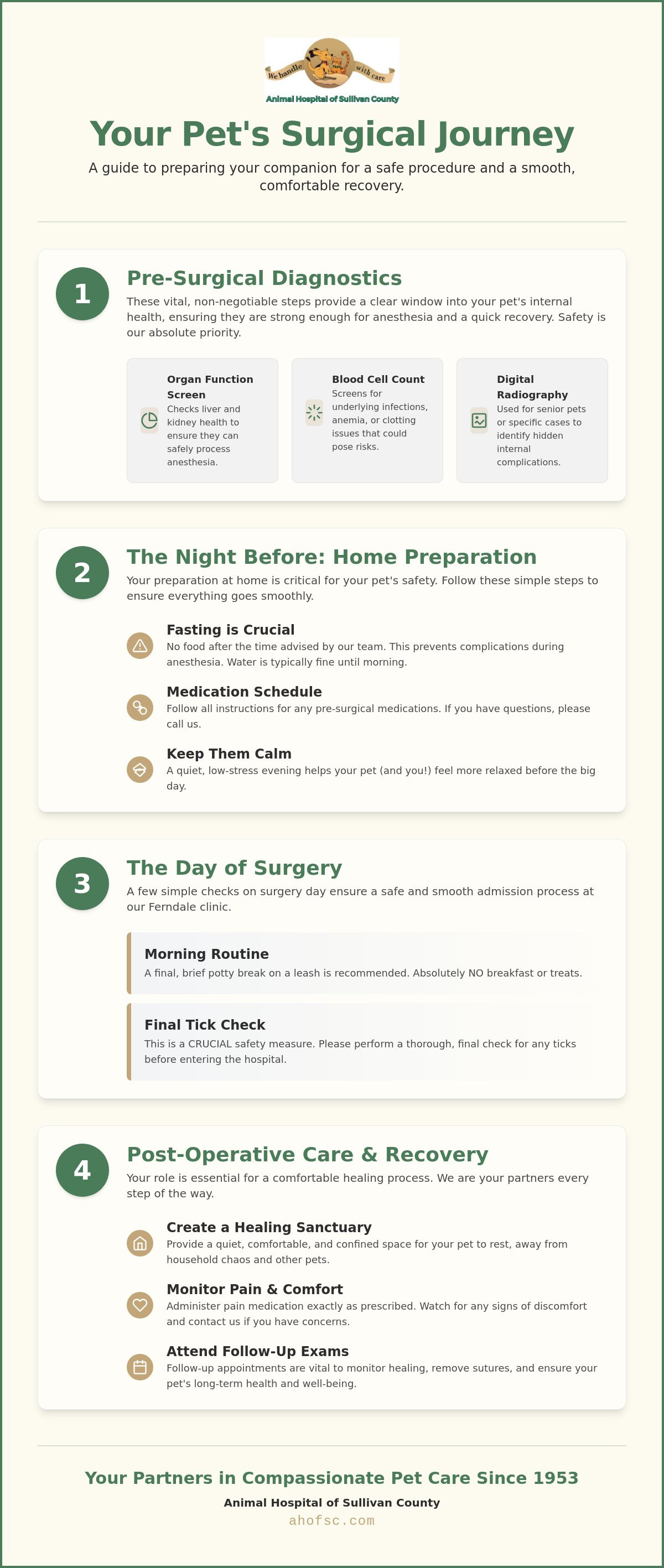
When we talk about preparing your pet for surgery Sullivan County families often ask why we require specific tests beforehand. The answer is simple: we want to be as prepared as possible for your pet's unique needs. Think of pre-surgical diagnostics as a clear window into your pet’s internal world. These steps allow us to see what a physical exam might miss. By checking organ function and internal structures, we ensure your pet's body is strong enough to handle anesthesia and heal quickly.
Safety is our absolute priority. This AVMA guide to anesthesia safety highlights how diagnostic screenings help us identify potential risks before they become problems. We use this data to create a customized plan just for your furry friend. For our older companions, these tests are even more crucial. We specialize in senior pet care Sullivan County, adjusting our diagnostic approach to account for the natural changes that come with aging. This often includes more detailed heart screenings or digital radiography to identify hidden complications before they can affect a procedure.
Unlocking Your Pet’s Internal Health
Our onsite laboratory allows us to get results fast. We focus heavily on liver and kidney function because these organs are responsible for metabolizing and clearing anesthesia from the system. We also screen for underlying infections or clotting issues that could affect the surgical site. Having these answers before we begin allows our team to proceed with confidence. If you're curious about the technology we use to keep your pet safe, you can learn more about our comprehensive diagnostics during your next visit.
The Pre-Surgical Physical Examination
Diagnostics are powerful, but they don't replace a hands-on touch. Dr. B or our skilled medical team performs a final "nose-to-tail" check right before the procedure. We listen closely to the heart and lungs to ensure absolute stability. This is also the perfect time for you to ask about breed-specific risks or share any new observations about your pet's behavior. We believe in open communication. Your insights as a pet parent are a vital part of the medical team!
- Heart and Lung Auscultation: Ensuring respiratory and cardiovascular strength.
- Temperature Check: Confirming your pet isn't fighting a hidden fever.
- Hydration Assessment: Checking fluid levels to support blood pressure during surgery.
By combining advanced technology with a gentle, personal exam, we build a foundation of safety. This thoroughness is how we honor the bond you share with your pet. We want you to feel certain that every precaution has been taken for your family member's well-being.
The Night Before: Fasting and Home Preparation Checklist
The evening before a procedure can feel a bit quiet and perhaps a little tense for you. Your pet often picks up on your energy, so staying calm is one of the best gifts you can give them. When preparing your pet for surgery Sullivan County, your home becomes the first stage of the recovery process. This is the time to focus on safety and comfort. By taking these steps, you are actively participating in your pet's healing journey and ensuring the safest possible environment for their upcoming care.
We want this night to be as stress-free as possible for both of you. Stick to your usual evening routine as much as you can. A gentle walk or some quiet cuddle time on the sofa helps keep their heart rate steady and their spirit high. While we handle the technical medical details at our Ferndale clinic, your careful attention to these home-based rules makes a world of difference in the operating room the next morning!
Fasting Rules for Dogs and Cats
Standard safety protocol requires that most adult pets have an empty stomach before receiving anesthesia. This is often called the "No Food After Midnight" rule. It is vital to remember that even a small treat or a stray kibble can interfere with anesthesia safety. When a pet has food in their stomach, there is a risk of aspiration, which occurs if they accidentally inhale stomach contents into their lungs while groggy. To keep your companion safe, please follow these guidelines:
- Withhold Food: Remove all food bowls by midnight the night before. This includes treats, dental chews, and table scraps.
- Water Access: In most cases, your pet can have access to fresh water throughout the night. We typically recommend removing the water bowl a few hours before you head to the clinic.
- Multi-Pet Management: If you have other animals at home, feed them in a separate room or on a raised surface where the patient cannot reach.
If your pet accidentally eats something the morning of surgery, please tell us immediately. We care about their safety above all else, and we may simply need to adjust the surgical schedule to ensure they are ready.
Preparing the Recovery Space
A groggy pet is a vulnerable pet. Before you leave for the hospital, take a few minutes to create a "recovery nest" where they can rest undisturbed once they return. Choose a quiet, low-traffic area of your home that is familiar to them. If possible, pick a spot on the ground floor to avoid the need for stairs, which can be difficult and dangerous for a pet recovering from anesthesia.
Make sure their favorite bed is clean and supportive. Place their water bowl nearby, but ensure it is in a spot where they won't accidentally tip it over if they are still a bit wobbly. Remove any potential hazards like loose rugs, children's toys, or sharp furniture corners. By setting this up ahead of time, you can focus entirely on your pet's comfort the moment you bring them back home.
If preparing your home for a recovering pet prompts a larger decluttering effort, you can discover Underdog Dumpster for efficient residential waste management solutions.
Navigating Sullivan County Logistics on Surgery Day
The morning of a procedure often brings a mix of quiet focus and natural jitters. While you might be primarily concerned with the medical details, the logistical side of getting to our Ferndale facility is a major part of the journey. When preparing your pet for surgery Sullivan County residents know that local travel and weather can add an extra layer of planning to the big day. Whether you are driving in from Liberty, Monticello, or across the Tri-State area, giving yourself plenty of time ensures you arrive with a calm heart and a relaxed pet.
Our goal is to make the check-in process as seamless as possible. We recommend arriving exactly at your scheduled time to help us maintain a soothing environment for all our patients. If you are traveling during our beautiful but unpredictable Catskills winters, please check the local road conditions early. A smooth, slow drive is always better for a pet who hasn't had breakfast! If you have any last-minute questions before you leave the house, you can always contact our team for guidance.
Regional Health and Environmental Safety
Living in the heart of the mountains means we share our home with a very active tick population. Before you load your pet into the car, please perform a final, thorough "nose-to-tail" tick check. It is vital that no hitchhikers enter the sterile hospital environment. Beyond simple hygiene, we also consider the long-term impact of Lyme disease on a pet's immune system. If your pet has a history of tick-borne illness, we may adjust our recovery protocols to ensure their body has the extra support it needs to heal.
Weather management is another local priority. In the summer, please use your vehicle's climate control to keep the cabin cool, as stress can make pets more prone to overheating. During the colder months, temperature drops can be sudden and sharp. A secure, warm carrier is essential for keeping your pet protected from the biting winds of a Catskills winter during the transition from your car to our clinic. Keeping their body temperature stable from the very start helps support a safer transition into anesthesia.
Check-In and Communication
When you arrive in Ferndale, our medical team will greet you to finalize the morning's paperwork. This is a quick but essential step where we confirm the day's plan and answer any lingering questions. We will also ask for your best contact number. We know you'll be waiting for news, so we make it a priority to provide mid-day updates as soon as your pet is resting comfortably in recovery.
Knowing that we offer daytime urgent care provides an extra layer of peace of mind. Our facility is fully equipped to handle your pet's needs throughout the entire day. You aren't just dropping them off; you're leaving them with neighbors who are deeply invested in their safety. We treat every patient with the same sincerity and dedication we would give our own family members.
Recovery and Beyond: Why AHOSC is Your Lifelong Partner
The moment you bring your pet home from the hospital is the start of a critical healing phase. While the procedure itself is finished, your role in the recovery process is just beginning. Preparing your pet for surgery Sullivan County means being ready for the quiet days and careful monitoring that follow. We view this time as a true partnership. Our medical team provides the clinical foundation, and you provide the loving, familiar environment where the real healing happens.
Think of surgery not as a single event, but as a gateway to better health. This perspective is central to the lifelong pet care Sullivan County families have relied on for decades. Our team remains dedicated to your pet's comfort through every chapter of their life. This includes providing a steady, calming presence during the delicate stages of pet end of life care Sullivan County. We honor the bond you share by ensuring dignity is at the center of every medical decision, whether your pet is a playful puppy or a cherished senior.
Post-Operative Support and Pain Management
Recognizing pain in animals can be tricky because they are masters at hiding their discomfort. You might notice subtle signs like shivering, unusual quietness, or a lack of interest in their favorite toy. Our "heart-first" approach means we prioritize effective, proactive pain management to ensure your pet stays comfortable. We'll walk you through exactly what to look for and how to administer post-op medications safely.
Follow-up exams are an essential part of this process. These visits allow us to confirm that the surgical site is healing properly and that your pet's internal systems are returning to normal. If you ever see something that worries you, such as excessive redness or a refusal to drink water, please reach out to us. We are here to help you identify the difference between a normal recovery and an urgent concern. You are never alone in this process!
Joining the AHOSC Family
Because we are a long-standing part of the community, Dr. B and our team stay personally invested in your pet's journey long after the initial procedure. Seeing our surgical patients return for routine wellness visits with happy, energetic spirits is the most rewarding part of our work! When preparing your pet for surgery Sullivan County, you're gaining a team that cares about your pet's long-term happiness just as much as you do.
To help your pet get back on their paws, our onsite pet store offers recovery diets and essential medications right here in Ferndale. You won't have to make extra stops on your way home to get the high-quality nutrition they need to heal. We want every part of this experience to feel supportive and organized for your family.
We are ready to be your partner in health. Schedule your pre-surgical consultation with our compassionate team today!
Your Partner in a Healthy and Happy Future
Approaching a medical procedure for your pet is a journey that requires both technical expertise and a gentle touch. We've seen how a blend of careful home preparation, advanced diagnostics, and neighborly empathy creates the safest environment for your companion. By following fasting guidelines and creating a peaceful recovery nest, you're giving your pet the best possible start on their road to healing. Remember that preparing your pet for surgery Sullivan County is a true partnership between your family and our medical team.
Our clinic has been a dedicated part of this community since 1953. Led by Dr. Barbara Bodolosky, we combine years of experience with onsite digital diagnostics to provide fast, accurate results that prioritize your pet's safety. We don't just treat patients; we care for family members with the same sincerity and dedication we give our own pets. You can feel confident knowing your cherished companion is in supportive and highly capable hands. Trust your pet’s surgery to our compassionate Ferndale team; schedule a consultation! We look forward to helping your furry friend return to their happy, energetic self very soon!
Frequently Asked Questions
How long should my pet fast before surgery in Sullivan County?
Your pet should typically stop eating by midnight the night before their scheduled procedure. This 12 hour fasting period ensures their stomach is empty, which is vital for safe anesthesia. If your pet has a specific medical condition like diabetes, we will provide you with a modified plan. Always double check with our team if you're unsure about the timing for your pet's last meal!
Can my pet have water the morning of their procedure?
Your pet can usually have access to fresh water throughout the night before their surgery. We generally recommend removing the water bowl a few hours before you head to our Ferndale clinic. Staying hydrated is helpful, but we want to minimize the risk of your pet having a full stomach. If they accidentally drink a large amount right before leaving, please let us know.
Why does my pet need bloodwork if they seem perfectly healthy?
Bloodwork allows us to see how your pet's internal organs are functioning, which a physical exam simply cannot reveal. Even healthy looking pets may have underlying issues with liver or kidney function that could change how they process anesthesia. When preparing your pet for surgery Sullivan County families appreciate this extra layer of safety. It gives us the data needed to protect your cherished companion.
What should I do if my pet takes daily medications for a chronic condition?
Please provide a full list of all medications and supplements during your pre-surgical consultation so we can give you specific instructions. We will tell you exactly which doses to give and which to skip on the morning of the procedure. Some heart medications are vital to continue, while others might interfere with our anesthesia protocols. Never change their medication schedule without confirming with our team first!
How long will my pet need to stay at the hospital after surgery?
Most surgical patients are admitted in the early morning and are ready to go home the same afternoon. This daytime stay allows our medical team to monitor their initial recovery and ensure they are stable and comfortable before leaving. More complex procedures might require a longer period of observation. We will provide you with a specific pickup time when we call you with your pet's update.
Is it safe for my senior dog to undergo anesthesia?
Anesthesia is generally safe for senior dogs when we use modern protocols and thorough pre-surgical screening. We take extra care with our older patients by tailoring the plan to their specific health status and organ function. While age is not a disease, it does require a more delicate approach. Our team monitors senior pets every second to ensure their vital signs remain steady and strong.
What are the most common surgical risks I should be aware of?
The most common risks include minor reactions to anesthesia, post-operative bleeding, or localized infection at the incision site. When preparing your pet for surgery Sullivan County owners should also watch for self-trauma, such as licking or chewing at the wound. We minimize these risks through advanced monitoring and sterile techniques. Using a protective collar at home is a simple way to prevent most recovery complications.
What if my pet has an emergency the night after surgery?
If your pet has a medical crisis after our office has closed, you should contact the nearest 24/7 emergency veterinary hospital immediately. While we provide daytime urgent care, we are not a 24 hour facility. We will provide you with a post-operative care sheet that includes signs to watch for and contact information for local emergency partners. Your pet's safety remains our priority even after hours.


