
In Pennsylvania, every dog that is 3 months of age or older must be licensed. This new pet owner guide for Sullivan County also covers the everyday steps that help a new pet feel safe, build good habits, and settle comfortably into family life.
Bringing home a pet is joyful, and there is plenty to learn. A calm start can make training and socialization easier, while thoughtful changes around the house can help prevent escapes and keep curious paws away from hazards. This new pet owner guide for Sullivan County covers practical ways to secure your home, practice basic cues, introduce new experiences at a comfortable pace, and understand dog licensing. Whether you’re welcoming a puppy or an adult companion, preparation can help you care for them confidently and give your new family member a reassuring start.
Key Takeaways
- Build a care routine around your pet’s physical, emotional, and medical needs, and keep them close and under control in public.
- Introduce new places and people gradually, practice basic cues regularly, and notice when your dog needs more space.
- Pennsylvania requires a license for every dog that is 3 months of age or older, so include licensing in your new-pet checklist.
- Prepare everyday supplies and know how to respond if your pet needs urgent attention.
- Secure doors, fences, and gates, including self-closing gates, to reduce the chance of an unexpected escape or encounter.
1. Responsible pet ownership and community safety
Responsible ownership means planning for your pet’s physical, emotional, and medical needs throughout life. Build nutrition, veterinary care, training, socialization, exercise, and grooming into a regular routine. For example, schedule daily activity and practice household routines instead of treating care as food and water alone. A new pet owner in Sullivan County can create a simple schedule for meals, activity, rest, and health needs. Predictable care also makes it easier to notice changes in appetite, behavior, or energy.
Community safety starts with control in shared spaces. Follow local leash rules, keep your dog close, and choose a leash you can manage comfortably. Anyone walking your dog should be able to guide them safely, including when another dog or person approaches. Respect signs in parks and neighborhoods. If your dog pulls toward people, create more distance and calmly redirect their attention before moving on.
If your pet goes missing, share a clear description and the last known location with nearby residents, and contact local animal services. If you find a loose pet, keep a safe distance, avoid chasing them, and seek help finding their owner. After an animal bite, separate the animals, exchange contact information, and seek appropriate medical or veterinary care. Report the incident to local authorities.
Give working guide dog teams room to move. Guide dogs are trained to focus on their handlers and their surroundings, so don’t approach, distract, or let your dog rush toward them. Even a playful greeting can interrupt a guide dog’s focus. Keep your dog beside you, take another route if needed, and teach children to ask before interacting with a working guide dog.
Children also need clear rules for everyday interactions with pets. Show them how to give an animal space while eating or resting, and to ask an adult before approaching an unfamiliar pet. Never assume a dog welcomes a greeting just because it seems friendly. Watch your own pet’s reactions to strangers and other animals. If a busy path or gathering overwhelms your dog, increase your distance or leave the area.
Make safety a shared household habit. Tell everyone which doors must stay closed, who holds the leash, and what to do if a pet slips away. Keep walks calm and controlled, and avoid situations your dog finds overwhelming. These practical steps protect your pet and help neighbors, children, and working guide dog teams feel safer in shared spaces.
Make sure anyone walking your dog can manage them safely, and keep your dog at a safe distance from guide dog teams. Even a friendly rush can disrupt a working guide dog’s focus.
2. Obedience training and socialization
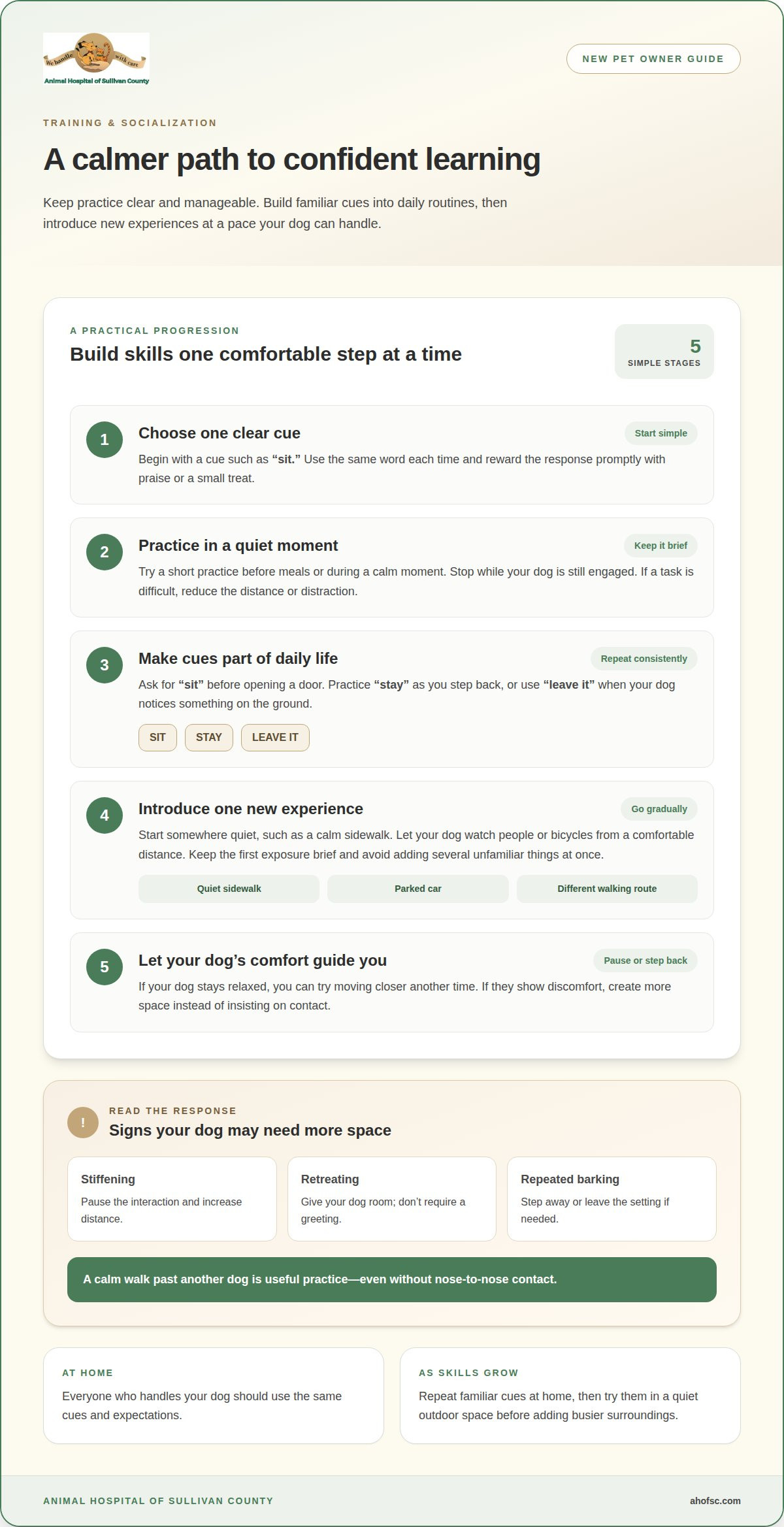
Training works best when short, clear practice becomes part of everyday life. Choose one cue, such as “sit,” and use the same word each time. Reward the response promptly with praise or a small treat. Practice before meals or during a quiet moment, then stop while your dog is still engaged. This new pet owner guide for Sullivan County families starts with consistency: everyone at home should use the same cue and reward.
Build useful cues into daily routines. Ask for “sit” before opening the door, and practice “stay” as you step back. Use “leave it” when your dog notices a dropped tissue or something on the sidewalk. Keep practice calm. If your dog struggles, make the task easier by reducing the distance or distraction, then try again.
Socialization means introducing experiences in a controlled way, not pushing your dog into every encounter. Start somewhere quiet, such as a calm sidewalk, and let your dog watch people pass from a comfortable distance. If your dog stays relaxed, try moving closer another time. If they hide, pull away, or bark, create more space instead of insisting on contact.
New environments might include a parked car, a quiet outdoor seating area, or a different walking route. Introduce one unfamiliar element at a time. For example, let your dog observe bicycles from across a path before walking closer. Keep the first exposure brief and leave while your dog can still settle. Gradual introductions help you notice which sights, sounds, or surfaces feel difficult.
Notice your dog’s reactions around other dogs and unfamiliar people. Stiffening, retreating, or repeated barking are signs to increase distance and pause the interaction. Don’t require greetings. A calm walk past another dog is useful practice, even without nose-to-nose contact. A new pet owner guide for Sullivan County households should respect each dog’s comfort rather than follow a fixed schedule of introductions.
Repeat familiar cues at home, then try them in a quiet outdoor space before adding busier surroundings. Ask everyone who handles your dog to use the same cues and expectations. If a health concern affects your pet’s participation, professional pet care support can help you consider the next step.
Practice basic cues such as sit, stay, and leave it regularly so they become part of everyday routines. Use familiar cues consistently, and continue at a pace your dog can manage. Introduce new environments in a controlled way, leaving room to pause or step back if your dog seems uncomfortable.
Pay attention to how your dog responds to other dogs and strangers. A reaction that signals discomfort is a reason to increase distance or leave, not insist on an encounter. Avoid settings that overwhelm your dog, and let their comfort guide each introduction. Regular practice and controlled exposure help keep learning manageable.
3. Pennsylvania dog licensing requirement
Pennsylvania requires a license for every dog that is 3 months of age or older. That means licensing belongs on your new-pet checklist once your dog reaches that age. A young puppy may not need a license immediately, but the age threshold makes timing important. If you bring home an older dog, the requirement applies already. Keep the licensing task separate from training and supply planning so it doesn’t get overlooked during a busy homecoming.
In Sullivan County, applications and payments may be submitted in person at the County Treasurer’s Office, 245 Muncy St, Laporte. The application can cover up to 5 dogs, which may help households licensing several companions at once. Use the application to account for each dog included, rather than assuming one dog’s license covers another. The county’s listed license expiration date is December 31, 2025. Keep that date in mind as you organize licensing paperwork and household records.
Some applicants may qualify for a different license category. A dog license applicant must be at least 65 years old to qualify for the senior citizen license. People with disabilities applying for a Sullivan County dog license must provide proof of disability to the county treasurer. These requirements distinguish eligibility from the basic rule: every Pennsylvania dog aged 3 months or older needs a license. If you’re applying for more than one dog, consider how the county’s application limit applies to your household.
An unlicensed dog in Pennsylvania may result in a maximum fine of $500. Treat the age threshold as a practical reminder, not a detail to leave for later. When a puppy approaches 3 months, gather the information needed for its application and plan to submit it through the county’s stated in-person option. For a newly adopted adult dog, put the same task near the top of your settling-in list. Organized records make it easier to keep each dog’s paperwork together.
For a simple home record, note each dog’s name, age, and licensing paperwork location. Keep that information with other important pet records, rather than relying on memory. If your household has multiple dogs, the application’s limit of 5 dogs gives you a clear planning point. Senior citizen eligibility begins at age 65, while applicants with disabilities must provide proof to the county treasurer. Knowing these details helps you prepare the right application path and avoid overlooking Pennsylvania’s licensing requirement.
4. Pet shops and emergency supply options
This guide’s dog licensing information applies to Sullivan County, Pennsylvania. Sullivan County, New York, is a different county, so Pennsylvania’s licensing information does not apply there. In Pennsylvania, the Sullivan County Treasurer’s Office in Laporte handles dog license applications and payments. For urgent pet health needs, local veterinary clinics provide emergency treatment during regular office hours. This is not a substitute for planning ahead.
Start your supply plan with your pet’s daily routine. Set aside the food your pet already eats, bowls, a leash or carrier, and waste bags. Keep essentials together so a rushed departure doesn’t leave important items behind. For example, place a small ready-to-carry kit near the door, then store the main food supply in a dry, easy-to-reach spot. Familiar food can also make settling into a new home gentler.
For emergency preparedness, organize your pet’s records and essentials in one place. Include your pet’s name, a recent photograph, and key veterinary information. Keep a secure carrier accessible for cats and small pets, and a leash ready for dogs. If severe weather or another urgent situation requires leaving home, a prepared kit can help you move calmly. Replace food and other supplies as you use them.
Local help depends on what you need. The Sullivan County Treasurer’s Office is the county resource for dog licensing, while urgent medical concerns call for veterinary care. Regional facilities such as the Animal Hospital of Sullivan County provide care for those in the neighboring New York county, but Pennsylvania residents should identify a local regional veterinarian. Pet store products can help with everyday needs, but supplies alone cannot assess an injury or sudden illness.
Before an emergency, write down where you keep your pet’s carrier, leash, food, and records. Make sure everyone in the household knows those locations. If your pet needs urgent attention, keep them safely contained for transport and bring relevant records. For example, keep a cat carrier easy to reach, not buried behind storage boxes. Store a dog’s leash near the exit for a controlled trip.
Keep routine shopping separate from medical planning. Food, cleaning supplies, and familiar comfort items support daily care, while urgent symptoms need prompt veterinary attention. Note the difference before you need to act: a missing food bowl can wait for a supply run, but a serious injury requires veterinary attention. Knowing the county, the Treasurer’s Office’s licensing role, and the limits of business-hours emergency treatment gives new pet owners a clearer local plan.
5. Secure fences, gates, and doors
Before your dog or cat arrives, choose a quiet area and remove hazards from reach. Check doors, windows, gates, and fence lines for openings, then secure them before your pet explores. For dogs, secure fencing and self-closing gates can help prevent unexpected encounters in the neighborhood.
Walk the fence line from both sides, checking for loose panels, gaps, and dips in the ground. Close any opening your dog could squeeze through or dig under. Test each gate by opening and releasing it, then make sure it closes securely. Keep the latch usable for everyone in the household, and don’t leave a gate propped open during deliveries or yard work.
Plan the entryway before carrying in food, bedding, or other supplies. A dog may rush toward an open door, while a cat may slip through during a busy arrival. Ask one person to manage the pet while another brings items inside. Keep exterior doors closed between trips, and use an interior door or pet barrier to separate the entry from the rest of the home. For households exploring secure entrance hardware to prevent accidental escapes, options from AN Digital Lock offer smart auto-locking features that keep exterior entry points protected.
For a cat, check window screens, balcony access, and gaps behind appliances before allowing free access. Close windows without secure screens and keep balcony doors shut. Store cleaning products, medications, and small objects behind closed doors or in cabinets. Put dangling cords and fragile items out of reach, especially in the room where your cat will first settle.
Check your home one room at a time instead of trying to inspect it all at once. In the kitchen, secure cupboards containing cleaners and keep food scraps inaccessible. In the bathroom, close the toilet lid and store personal care products. In bedrooms, tuck away loose cords and check closets before closing doors. A small checklist near the entry can remind everyone which doors and gates need attention.
Make opening and closing gates a shared routine. Tell visitors to wait until the dog is secured before entering, and ask household members to close the gate behind them. During yard work, keep the pet indoors or with a responsible adult. These simple habits help a secure fence work as intended instead of relying on the barrier alone.
If home preparation raises questions about your new pet’s health or care, contact the veterinary team for support.
Animal Hospital of Sullivan County
Animal Hospital of Sullivan County can support your pet’s care as you settle into new routines. Preventive Care helps you plan ongoing wellness, while Medical Care and Diagnostics address health concerns. Surgical Care is available when your pet’s condition calls for a procedure.
Bring questions about your pet’s health, changes in behavior, or care needs to a veterinary visit. For example, if a new dog seems uncomfortable during daily activity or your cat’s appetite changes, a veterinary assessment can help guide next steps. Professional care complements home preparation, training, and licensing with attention to your companion’s well-being.
For urgent health needs, emergency treatment is available during business hours. For help with your pet’s care, contact Animal Hospital of Sullivan County.
Build a Care Routine That Grows With Your Pet
Your relationship with a new companion develops through the small choices you make each day. As your pet settles in, notice which routines help them feel comfortable and where they may need more support. A new pet owner guide for Sullivan County is a starting point, not a substitute for attentive care as your pet’s needs change.
Animal Hospital of Sullivan County offers Preventive Care for ongoing wellness, Medical Care for health concerns, and Surgical Care when a pet needs a procedure. These services can form part of a thoughtful care plan as your companion grows and settles into family life.
For guidance on your pet’s care, Contact Animal Hospital of Sullivan County. A caring next step can help you move forward with greater confidence and keep building a safe, healthy life together.
Frequently Asked Questions
How do I license and register a dog or cat in Sullivan County?
In Sullivan County, Pennsylvania, every dog aged 3 months or older needs a license; the stated rule concerns dogs, not cats. Applications and payments may be submitted in person at the Sullivan County Treasurer’s Office, 245 Muncy St, Laporte, and one application can cover up to 5 dogs. Sullivan County, New York, is a different county, so Pennsylvania’s dog-license process should not be treated as a New York registration rule.
What are Sullivan County's pet ownership, leash, and nuisance rules?
Keep dogs close and under control in public, follow local leash rules, and respect posted signs. Don’t let a dog approach or distract a working guide dog, even if your pet is friendly. For example, shorten the leash and move aside when a guide dog team approaches. Specific nuisance requirements depend on local rules, so don’t assume a neighbor’s complaint automatically describes a legal violation.
Where can new pet owners find veterinarians and emergency animal hospitals in Sullivan County?
Animal Hospital of Sullivan County provides veterinary care in Ferndale, New York, including emergency treatment during business hours. It does not provide 24/7 emergency care. For a sudden health concern, call the hospital during its regular office hours to discuss the next step. Keep your pet’s current medications, medical records, and a clear description of symptoms ready, so the veterinary team has useful context.
What vaccinations, parasite prevention, and veterinary checkups does a new pet need?
Your pet’s age, health history, and daily environment shape the preventive care that may be appropriate. Bring adoption or previous veterinary records to a visit, and note any known vaccines or parasite-prevention products. Animal Hospital of Sullivan County offers preventive care, vaccinations, and parasite prevention. Ask the veterinary team to review your pet’s records and discuss a plan suited to them instead of relying on another pet’s schedule.
What local resources help with pet food, training, and behavior support in Sullivan County?
For everyday needs, pet stores can provide food and basic supplies, and Animal Hospital of Sullivan County offers pet store products. You can begin training at home with consistent cues such as “sit” and “stay,” introduced calmly. If a behavior change or health concern affects your pet’s routine, veterinary care can help assess possible medical factors. Avoid forcing interactions that visibly distress your companion.


