

A safe first week begins with more than a bowl and a bed. A new kitten checklist for 2026 should cover kitten-formulated food, litter and a box, a carrier, a quiet safe space, and a veterinary plan for vaccines and deworming. The Centers for Disease Control and Prevention recommends a veterinary visit within a few days to a week after adoption, so bring any records you received and plan for a health review early.
It’s natural to focus on the sweet essentials, then wonder whether you’ve missed something important. A kitten’s vaccine series may already have begun before adoption, so those records can help guide the next steps. This guide turns that worry into practical actions: what to set up before arrival, how to think about food and preventive care, which warning signs need prompt attention, and how to reduce risks from toxic plants, medicines, and flea products. You’ll have a clear starting point for welcoming your kitten gently and helping them settle into a safer home.
Key Takeaways
- Prepare a quiet settling-in space with kitten-sized essentials, including a suitable litter box and safe litter.
- Plan a veterinary visit to review your kitten’s health, deworming needs, and vaccine records.
- Learn which changes in eating, energy, or breathing call for prompt veterinary attention.
- Choose food labeled for kitten growth and follow a consistent feeding routine.
- Reduce household risks by keeping toxic plants, human medicines, and unsuitable flea products out of reach.
Do indoor cats need vaccines and deworming?
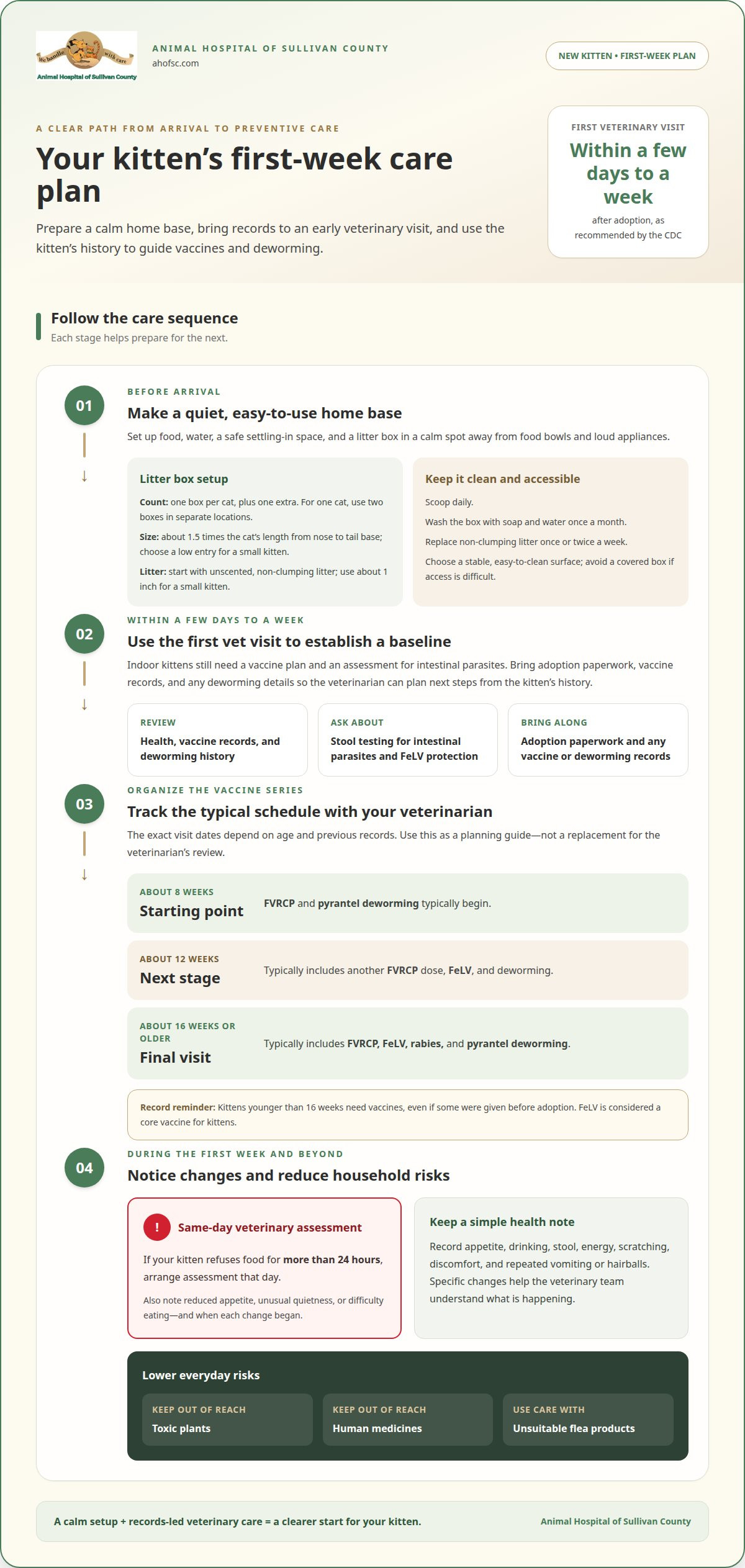
Yes. An indoor kitten still needs a vaccine plan and an assessment for intestinal parasites. The Centers for Disease Control and Prevention recommends a veterinary visit within a few days to a week after adoption. To help your kitten settle and begin litter training, prepare a quiet area with food, water, and an easy-to-reach litter box. Place the box in a calm spot, away from food bowls.
- ☐ Set up enough litter boxes. Provide one box per cat, plus one additional box; a single-cat home should have two boxes in separate locations. More than one option can help a kitten find a box without crossing a busy room.
- ☐ Choose a low-entry box with room to turn. A useful size guide is about 1.5 times the cat’s length from nose to tail base. For a small kitten, a low side makes entering and leaving easier; avoid a covered, or closed, box if it makes access difficult.
- ☐ Start with unscented, non-clumping litter. Young kittens may taste litter while exploring, so non-clumping litter is a sensible early choice. Use about 1 inch for a small kitten, then adjust as the kitten grows; unscented options avoid adding a strong smell.
- ☐ Keep the box clean and the surface easy to reach. Scoop litter daily, wash the box with soap and water once a month, and replace non-clumping litter once or twice a week. Place boxes on a stable, easy-to-clean surface, not beside loud appliances.
- ☐ Review vaccines and deworming at the first visit. The typical schedule starts FVRCP and pyrantel deworming at about 8 weeks, then includes another FVRCP dose, FeLV, and deworming at about 12 weeks. The final visit at about 16 weeks or older typically includes FVRCP, FeLV, rabies, and pyrantel deworming.
- ☐ Keep vaccine records together. Kittens younger than 16 weeks need vaccines, even if they received some before adoption. Bring adoption records to the appointment so the veterinarian can map the next doses without guessing.
- ☐ Ask about parasite testing and FeLV protection. FeLV is considered a core vaccine for kittens, and a stool sample can be tested for intestinal parasites. The veterinarian can use the kitten’s history and exam to guide deworming care.
- ☐ Clean small spills promptly and monitor hairballs. Remove tracked litter from nearby floors, then note repeated vomiting or hairballs in your kitten’s health notes. A change in frequency or appetite gives the veterinarian useful context.
Urgent signs that need veterinary attention
A kitten that refuses food for more than 24 hours should be assessed by a veterinarian the same day. Also note changes such as reduced appetite, unusual quietness, or difficulty eating, and share when they began. A written timeline helps the veterinary team understand what has changed.
Arrange the first veterinary visit within a few days to a week after adoption, as the Centers for Disease Control and Prevention recommends. Bring adoption paperwork, any vaccine records, and details about food, litter, and recent behavior. The exam can establish a health baseline and identify questions about parasites, vaccines, or ongoing care.
Parasite checks can include testing a stool sample for intestinal parasites. Tell the veterinarian about any deworming already given, including the date if recorded, so the care plan reflects your kitten’s history. Keep a brief note of stool changes or appetite concerns; specific examples make the discussion more useful.
Adoption, licensing, and microchip requirements in the United States depend on state and local rules, rather than one checklist applying everywhere. A microchip provides permanent identification, but it can help reunite a lost kitten with their family only if the registration details are current.
Spaying or neutering is generally recommended by five months of age. Deworming timing depends on the kitten’s age, history, and parasite findings, while microchipping can be discussed at the first veterinary visit. The veterinarian can coordinate these steps with preventive care and the kitten’s examination.
- ☐ Seek same-day assessment after prolonged food refusal. More than 24 hours without eating is the stated threshold for veterinary assessment that day.
- ☐ Keep a brief symptom record. Note appetite, drinking, stool, energy, and any scratching or discomfort, with the time each change appears.
- ☐ Bring records to the first appointment. Adoption documents and vaccine or deworming details help the veterinarian understand what has already happened.
- ☐ Ask about parasite testing. A stool sample can be checked for intestinal parasites, and the kitten’s history helps shape follow-up care.
- ☐ Discuss identification and sterilization planning. Keep microchip registration current, and plan spaying or neutering by five months of age.
For a first-week examination, plan a veterinary visit and bring the kitten’s records and symptom notes.
FVRCP and FeLV vaccination schedule
A kitten’s vaccine plan usually begins in early kittenhood and continues through at least 16 weeks. FVRCP protects against several common feline diseases, while FeLV vaccination helps protect against feline leukemia virus. The exact visit dates depend on the kitten’s age and previous records, so the first veterinary examination is the point to organize the series. A new kitten checklist 2026 is most useful when it tracks both appointments and doses.
The total cost of kitten care depends on the visits, vaccines, deworming, tests, food, and supplies needed. Veterinary service pricing is provided after a quote request.
Use this schedule as a planning guide alongside the kitten’s records. A kitten adopted from a shelter may already have received a vaccine, so bring its paperwork in a carrier to the first appointment. A positive FeLV test result can also affect the care plan and should be discussed with the veterinarian. Add each recorded vaccine date to your new kitten checklist 2026 to keep the sequence clear.
- ☐ Start FVRCP at 6-8 weeks. Repeat doses every 3-4 weeks until the kitten reaches 16-20 weeks, because maternal antibodies can affect how well early doses work.
- ☐ Begin FeLV vaccination at 8 weeks. The series has two doses spaced three to four weeks apart, and FeLV is considered a core vaccine for kittens.
- ☐ Keep the later vaccine appointment. A typical final visit at about 16 weeks or older includes FVRCP, FeLV, rabies, and pyrantel deworming, based on the schedule already started.
- ☐ Plan for follow-up protection. Kittens are not fully protected until roughly two weeks after the final vaccine-series dose, and 2021 AAHA/AAFP feline guidelines recommend a core vaccine booster at about 6 months.
- ☐ Bring prior records to every visit. Dates and vaccine names help the veterinary team continue the series accurately instead of repeating doses without context.
Vaccination visits also create a chance to review feeding and growth. Kittens younger than 6 months should eat a commercial diet made specifically for growth, with an AAFCO statement of nutritional adequacy. Feed four to five small meals daily rather than leaving food available for free-feeding. Follow the package feeding guidance and track appetite and body condition, since a kitten’s needs change as it grows.
Keep the routine simple: record each appointment, vaccine, and deworming treatment in one place. If the shelter or previous caregiver provided a health record, bring it along with questions about missed or upcoming doses. A calm carrier ride and familiar bedding can make each visit easier.
Kitten food and AAFCO nutritional adequacy
For a growing kitten, choose a commercial food labeled for growth and check for an AAFCO statement of nutritional adequacy. This statement helps identify food formulated to meet the nutritional needs of that life stage. Match the label to your kitten’s age, and keep the packaging handy so you can follow the feeding directions.
Daily energy needs change as a kitten grows. At 10 weeks, the listed energy requirement is 200 kcal per kilogram of body weight per day; at 10 months, it is 80 kcal/kg/day. These figures describe needs at those ages, not a serving size for every kitten. Use the food’s feeding directions and your kitten’s growth and appetite to guide portions.
- ☐ Select food labeled for kitten growth. Kittens younger than 6 months should eat a commercial diet made specifically for growing kittens, because their food needs differ from an adult cat’s.
- ☐ Look for the AAFCO nutritional adequacy statement. Check that the statement says the food is formulated for growth, rather than relying on front-of-package words alone.
- ☐ Measure portions using the package directions. Use the kitten’s current weight and age when following feeding guidance, then record changes so you can notice shifts in appetite or growth.
- ☐ Keep fresh water in a separate bowl. Put food and water in distinct dishes, so the kitten has a clear, accessible place for each.
- ☐ Choose stable, easy-to-clean food and water bowls. Place them on a washable surface and clean away leftover food, which makes daily feeding easier to manage.
- ☐ Set bowls in a calm location. Keep feeding dishes away from the litter box and busy walkways; a quiet corner gives the kitten room to eat without interruptions.
- ☐ Keep dishes accessible as your kitten grows. Check the bowl location after moving furniture or adding a cat tree, so climbing routes don’t block access to food and water.
- ☐ Track what your kitten actually eats. Note an example such as leaving most of breakfast untouched, since a change from normal appetite can be useful information at a veterinary visit.
Food texture can also affect how a kitten approaches meals. If you switch foods, introduce the new one gradually and observe whether your kitten eats comfortably. Keep the original package and note the date of the change; these details can help explain later changes in appetite or stool. Don’t assume an adult feline diet meets a kitten’s growth needs.
Use a simple feeding log to record the food name, portion offered, and leftovers. For example, noting morning and evening intake can show whether your kitten’s appetite stays steady throughout the day. Revisit the package directions as your kitten grows, and bring the label to a veterinary appointment if you have questions about nutrition or development.
Toxic plants, medicines, and flea products
Kitten-proofing means checking more than floors and furniture. A bouquet, an open medicine container, or a flea product intended for another animal can pose a serious risk. Start with a room-by-room scan, then repeat it whenever you bring home plants, medications, or new pet supplies.
- ☐ Remove true lilies and daylilies from the home. Every part is toxic to cats, and pollen or vase water can cause kidney failure.
- ☐ Treat possible lily contact as urgent. The ASPCA warns that lily exposure can be fatal if treatment is delayed longer than 18 hours; call the ASPCA Animal Poison Control Center at (888) 426-4435.
- ☐ Keep tulips, daffodils, and sago palm away from your kitten. These plants can make cats ill, so remove them from rooms your kitten can enter.
- ☐ Keep onions and garlic out of kitten food. Both are dangerous for cats, including when mixed into food meant for people.
- ☐ Store medicines in a closed cabinet. Put containers away after use, rather than leaving tablets or bottles on a counter a curious animal can reach.
- ☐ Choose flea and tick products for your kitten’s age and weight. Most kittens can start these products at 8 weeks old and a minimum weight of around 2 pounds.
- ☐ Read the product label before applying flea treatment.
- ☐ Keep flea products intended for dogs away from cats. Use only a product labeled for your kitten, and don’t guess at a dose based on another animal’s treatment.
Make the safety check part of setting up your kitten’s supplies. Scan low shelves, windowsills, and tables for plants and medicine containers, and check bouquets before bringing them indoors. A vertical scratching post gives your kitten an appropriate place to scratch, while removing toxic plants addresses a separate household hazard. Keep the post away from plant displays and stored products.
If your kitten chews a plant, contacts medicine, or receives a flea product not intended for them, note the product or plant name and the time of exposure. Call the ASPCA Animal Poison Control Center for poison guidance, and seek veterinary medical care for a suspected exposure. Don’t wait for symptoms after possible lily contact.
For help with a kitten’s possible exposure or preventive care, request veterinary medical care.
Animal Hospital of Sullivan County
Animal Hospital of Sullivan County can help you turn your kitten’s checklist into a practical care plan. Preventive Care supports routine wellness planning, while Medical Care and Diagnostics help address health concerns as they arise. If your kitten needs a procedure, Surgical Care can be part of the discussion.
Bring adoption and health records, along with notes about eating, litter habits, or possible household exposures. These details help the veterinary team understand your kitten’s history and discuss suitable next steps, including vaccines, parasite checks, and nutrition questions.
If you’re unsure what to tackle first or have a concern about your kitten’s health, contact Animal Hospital of Sullivan County to discuss their care.
Make your kitten’s care plan grow with them
Your new kitten checklist for 2026 can become a useful record, not just a list of supplies. Add notes about what your kitten enjoys, what changes at home, and which questions come up as you build a routine together. Small observations can help you make thoughtful adjustments and give the veterinary team helpful context at future visits.
As your kitten grows, revisit the care plan and update it to reflect their needs. A favorite resting place may change, or a new habit may prompt a question. You don’t have to work out every next step alone. Animal Hospital of Sullivan County can help you discuss your kitten’s ongoing care.
Contact Animal Hospital of Sullivan County to talk through your kitten’s care plan. You’re building a bond one gentle, attentive day at a time, and that’s a lovely place to begin.
Frequently Asked Questions
What do I need for a new kitten before bringing it home?
Prepare a carrier, kitten food, food and water bowls, litter, a litter box, and a quiet settling-in space. Add a scratching post and a few safe toys for play and scratching. Keep adoption and health records together for the first veterinary appointment. You can make the room welcoming without filling it with supplies; clear pathways and easy access to essentials matter most.
Can my kitten have the run of the house on day one?
Start your kitten in a safe, confined area, then gradually open up other kitten-proofed rooms over the first few weeks. This gives them time to learn where the essentials are before exploring the whole home. For example, secure loose cords and put away medicines before letting them into a new room. If you have other pets, begin introductions through a closed door and proceed at a calm pace.
Does an indoor-only kitten still need a microchip?
Yes, microchipping is recommended for indoor cats because an open door or damaged screen can create an unexpected escape route. A microchip provides permanent identification, but it can help reunite you only if the registration details are current. Update your contact information after a move or phone-number change, and ask for the chip number and registration instructions when the procedure is complete.
How long should a new kitten stay in a safe room?
A new kitten can usually begin exploring after 24 to 48 hours, once they’re eating, drinking, and using the litter box reliably. Keep the safe room available as a retreat while you introduce other areas over the first few weeks. For instance, let the kitten explore one additional kitten-proofed space, then return to familiar food, water, and bedding.
How many litter boxes does one kitten need?
Provide two litter boxes for one kitten, in separate locations. Choose accessible spots your kitten can reach without passing through a noisy or busy area. If one box is near a washing machine, for example, put the second in a quieter part of the home. Keeping both easy to find can help maintain a steady litter routine as your kitten explores.
How much of this can I buy after the kitten arrives?
How often should I deworm a kitten?
Deworming is commonly included with kitten visits at about 8 weeks, 12 weeks, and 16 weeks or older. The exact plan depends on the kitten’s age, prior treatment, and parasite findings. Bring any adoption or treatment records to the veterinary visit, and mention changes in stool or appetite. A stool sample can be tested for intestinal parasites and help guide follow-up care.
What is the 3-3-3 rule for kittens?
The 3-3-3 rule describes a settling-in pattern: about 3 days to decompress, 3 weeks to learn household routines, and 3 months to feel at home. Use it as a way to think about gradual adjustment, not as a deadline for behavior. Keep daily routines steady, offer a quiet retreat, and let your kitten approach new people, rooms, and experiences at a comfortable pace.


