

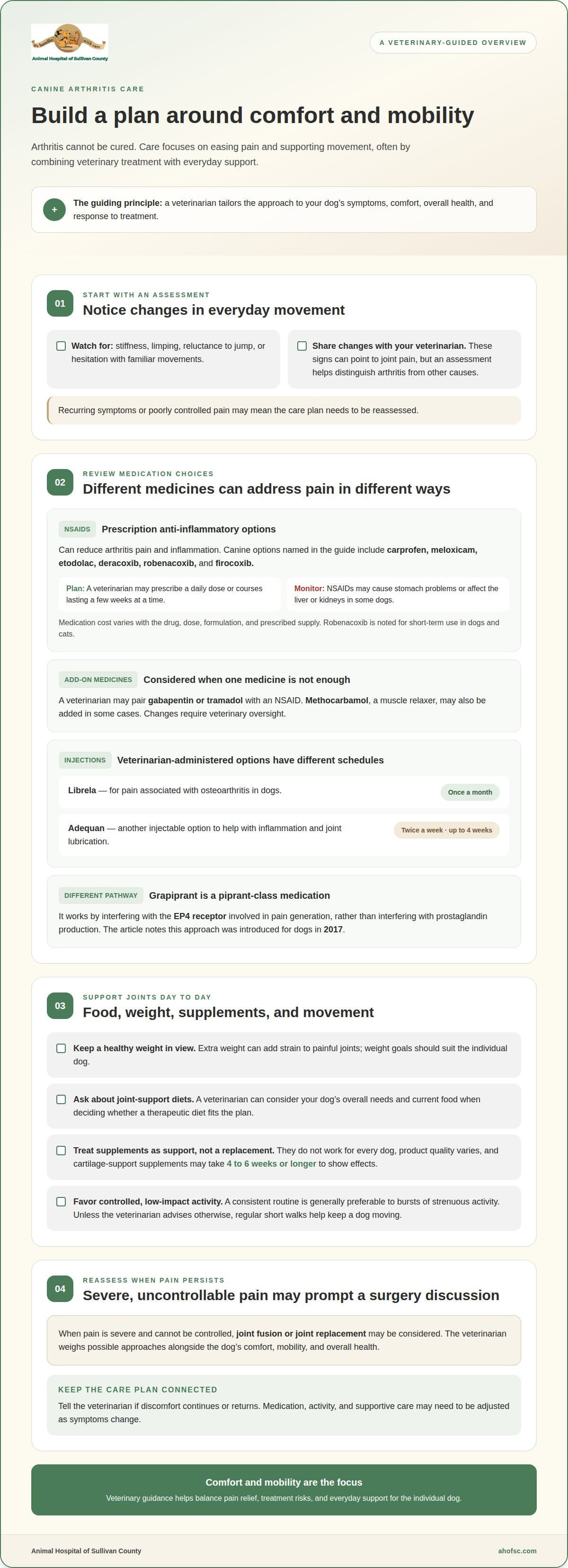
Severe arthritis can call for more than medication alone. Arthritis can’t be cured, so treatment focuses on easing pain and supporting mobility. Pain relief options for arthritic dogs can include medication, controlled exercise, home care, and, when pain is severe and uncontrollable, joint fusion or replacement.
It’s understandable to want pain relief options for arthritic dogs while also worrying about the risks of long-term pain medication. NSAIDs can help manage pain and inflammation, but they may cause stomach problems or affect the liver or kidneys in some dogs. A veterinarian can weigh those risks against your dog’s comfort, mobility, and overall health.
This guide explains how medication, daily routines, and surgery can fit into arthritis care. You’ll also learn which NSAID side effects to watch for and when severe pain may prompt a discussion about joint surgery. A thoughtful plan can help your companion move more comfortably.
Key Takeaways
- Learn why joint supplements can take time to show effects and why they should not replace prescribed treatment.
- See how veterinarians tailor medication plans and consider other approaches when pain relief is insufficient.
- Find out how guided, low-impact activity and simple home adjustments can support your dog’s comfort and mobility.
- Understand which side effects may occur with NSAIDs and why monitoring matters during long-term treatment.
- Explore how a veterinarian may weigh different therapies, including surgery, when arthritis pain remains difficult to control.
How Is Arthritis in Dogs Treated?
Arthritis care aims to ease pain and preserve mobility, since the condition cannot be cured. A veterinarian may combine weight management, medication, supportive diets, and other therapies.
Joint Supplements
Joint supplements are products intended to support joint health in dogs with arthritis. They may complement a broader treatment plan, but they aren’t a substitute for medication and don’t work for every dog. Cartilage-support supplements may take 4 to 6 weeks or longer to show effects. Because product quality varies, veterinary advice can help determine whether a supplement fits your dog’s needs.
Veterinary Consultation for Joint Pain
A veterinary consultation can assess signs such as stiffness, limping, or reluctance to jump. These changes can signal joint pain, even in a young dog, so discuss them with a veterinarian. An assessment helps distinguish arthritis-related discomfort from other causes and guide care. Because arthritis requires ongoing management, recurring symptoms or poorly controlled pain may mean the plan needs to change.
Research into Joint Injections
Research into joint injections includes approaches designed to target pain signals while sparing other nerves. Dr. Diego Portela’s work examined a knee nerve-targeting technique and reported high success with minimal risk. This matters because blocking a large nerve in a canine joint can paralyze part of the body for months. The elbow’s complex anatomy makes it more challenging, and researchers identified areas needing further refinement.
Veterinary Joint-Support Diets
Veterinary joint-support diets are therapeutic foods formulated to support mobility in dogs with arthritis. A veterinarian may recommend one as part of a broader plan, taking your dog’s overall needs and current food into account. Maintaining a healthy weight also reduces extra strain on joints and may help prevent pain from worsening. Food changes and weight goals should suit the individual dog, not replace other pain treatments.
Arthritis involves deterioration of joint cartilage, which can make movement uncomfortable and contribute to stiffness or limping. A dog may also hesitate before jumping onto furniture or climbing. These signs can be subtle at first, so describing changes in everyday movement helps a veterinarian assess joint pain and its effect on mobility.
Weight is another part of long-term joint support. Extra strain can make painful movement harder, while maintaining a healthy weight can reduce pressure on affected joints. A veterinary plan can account for mobility and comfort, then adjust as symptoms change. Together, these options help shape care around the individual dog.
Veterinary pain relief and anti-inflammatory medication
Veterinary treatment may use anti-inflammatory drugs to reduce arthritis pain and inflammation. Prescription NSAIDs used for canine arthritis include carprofen, meloxicam, etodolac, deracoxib, robenacoxib, and firocoxib. Robenacoxib is noted for short-term use in dogs and cats. Cost varies with the medication, dose, formulation, and prescribed supply.
Veterinary Pain Medications
Veterinary pain medications are prescription drugs used to reduce osteoarthritis discomfort. NSAIDs such as carprofen and deracoxib are standard treatments that target pain and inflammation. A veterinarian may prescribe a daily dose or use the medication in courses lasting a few weeks at a time. The plan depends on pain control and how well the dog tolerates treatment. If relief is inadequate, the veterinarian may consider another approach.
Adjunct Pain-Relief Medications
Adjunct medications are added to a primary treatment to address pain through another pathway. A veterinarian may pair gabapentin or tramadol with an NSAID when one medication alone isn’t providing enough relief. Methocarbamol, a muscle relaxer, may also be added in some cases. These medicines still require veterinary oversight: the clinician considers the dog’s symptoms and current treatment before changing the plan. Tell the veterinarian if discomfort continues or returns so the treatment can be reassessed.
Injectable Arthritis Medication
Injectable arthritis medication offers another veterinary-administered approach to osteoarthritis pain. A veterinarian gives Librela once a month for pain associated with osteoarthritis in dogs. Adequan is a different injectable option, administered by a veterinarian two times a week for up to four weeks to help with inflammation and joint lubrication. These treatments have different schedules and purposes. A veterinary assessment helps determine whether an injection fits with the dog’s other medications and care.
Piprant-Class Medication
Piprant-class medication targets a different part of the pain process from NSAIDs. Grapiprant works by interfering with the EP4 receptor involved in pain generation, rather than interfering with prostaglandin production. This distinction explains why veterinarians may consider it as a different pharmaceutical approach for canine osteoarthritis. The piprant-class approach was introduced for dogs in 2017, and grapiprant was identified as the only piprant medication on the market at the time described.
Medication choice and monitoring are part of a tailored veterinary medical care plan. Keep the veterinarian informed when your dog’s pain changes or returns.
Vet-guided exercise and home care for arthritic dogs
For canine osteoarthritis, controlled movement supports mobility without adding unnecessary strain to sore joints. A veterinarian can tailor activity and home adjustments to the dog’s symptoms and comfort.
A consistent, low-impact routine is generally preferable to bursts of strenuous activity. Unless a veterinarian advises otherwise, regular short walks help keep a dog moving. One suggested plan starts with walks lasting up to 10 or 15 minutes, repeated three to four times per day. The right duration depends on the dog’s response, so the veterinarian can guide adjustments if movement becomes harder or discomfort increases.
High-impact activity can put extra stress on painful joints. Ball chasing, running, and jumping are examples to avoid in an arthritis exercise routine. Instead, a veterinarian may recommend steady walks and, where suitable, hydrotherapy. Water-based exercise can provide movement without putting too much strain on joints. A veterinary professional can tailor these activities to the dog’s mobility and current pain.
- Keep activity regular: Short, consistent walks are preferable to a demanding session followed by long periods of inactivity.
- Encourage gentle movement: Getting up and moving periodically can help prevent stiffness.
- Reduce slipping: Nonslip mats or rugs can help dogs move more safely across slippery floors.
- Dry after wet walks: Drying the dog after time outside helps keep the routine comfortable.
Home comfort can support a veterinary exercise plan. A heat pad under a dog’s bed may soothe painful joints, especially in cold weather. A hot water bottle can also warm joints, but wrap it in a blanket or towel and never leave the dog alone with it. These precautions reduce the risk of direct contact with a hot surface.
Watch how your dog moves during everyday routines, such as standing up, crossing a slick floor, or approaching a step. Stiffness, limping, or reluctance to jump can help the veterinarian identify difficult movements. If symptoms return or pain is poorly controlled, tell the veterinarian. The exercise plan or broader treatment may need adjustment.
Hydrotherapy and short walks serve different purposes, but both can fit into a controlled mobility plan. A veterinarian can advise which activities to use and how often, based on the dog’s symptoms. Keeping activity low-impact, adding nonslip surfaces, and providing safe warmth at rest can support comfortable movement at home.
Potential NSAID side effects and risks
NSAIDs can reduce pain and inflammation, but long-term use carries potential risks. In some dogs, these medications cause stomach problems or affect the liver and kidneys.
Monitoring Long-Term NSAID Use
Monitoring means tracking a dog’s response to treatment and watching for possible medication effects. A veterinarian may use checkups and blood tests to assess health, including liver and kidney function. The timing depends on the dog’s health, treatment, and clinical findings. Follow-up helps the veterinarian weigh pain relief against possible effects and adjust the plan if concerns arise.
Stomach upset and ulcers are potential concerns with long-term NSAID use in dogs. Liver and kidney effects can also occur. Share changes in appetite, comfort, or everyday behavior during follow-up. If arthritis pain returns, the dog may need a revised plan rather than an unreviewed medication change.
Urgent Signs of Severe Pain or Medication Effects
Report severe or worsening pain, persistent stiffness, limping, or reluctance to jump promptly to a veterinarian. Stomach upset during NSAID treatment also deserves attention, as it can signal a medication effect. If your dog seems markedly worse or develops concerning symptoms while taking medication, contact a veterinary professional for guidance on the next step.
Human pain medicines aren’t interchangeable with canine prescriptions. Don’t give your dog a human pain medicine unless a veterinarian directs you to; the medication and dose must suit the dog. This caution also applies if your dog already takes a prescription NSAID, since adding another medicine can complicate treatment. Tell the veterinarian about any medicine your dog has received.
Track prescribed medication and describe changes clearly at follow-up. For example, note whether stomach upset began after treatment started or whether limping returned despite the current plan. These details help the veterinarian assess comfort and possible side effects. Don’t change the prescribed NSAID plan or add another pain medicine without veterinary direction.
Long-term arthritis care balances pain control with attention to possible stomach, liver, and kidney effects. Blood tests and follow-up examinations can help assess that balance, while symptoms show how well treatment is working. Report worsening pain or stomach upset promptly to give the veterinarian useful information when deciding whether to revise the approach.
What are the safest and most effective pain relief options for dogs with arthritis?
A strong approach combines pain control with support for movement and comfort. For many dogs, that means veterinary medication alongside appropriate activity and home care. Treatment should balance relief against potential side effects, especially with long-term NSAID use. The plan may also need to change when symptoms return or remain poorly controlled.
NSAIDs are commonly used to reduce arthritis pain and inflammation. Discuss their benefits and risks regularly with the veterinarian, particularly during ongoing treatment. If one medication doesn’t provide enough relief, the veterinarian can consider another approach rather than simply increasing treatment. Gabapentin or tramadol may address pain through a different pathway when added to NSAID therapy.
A multimodal plan can combine different kinds of support. Acupuncture, as part of multimodal treatment, can reduce chronic arthritis pain in dogs. Dried milk protein anti-inflammatory products may start working in 4-7 days and reach maximum effect in 10-14 days. These approaches have different roles and timelines, so a veterinarian can explain how they fit with prescribed medication and the dog’s signs.
Supplements and therapeutic diets can support joint mobility, but they aren’t stand-alone pain treatments. Joint supplements don’t work for every dog and may take 4 to 6 weeks or longer to show effects. A veterinarian can help assess product suitability and fit a joint-support diet into the wider plan. Maintaining a healthy weight also reduces extra strain on painful joints.
Severe, uncontrollable arthritis pain can prompt discussion of surgery. Joint fusion or replacement may be considered, often at specialist veterinary hospitals. Surgery is a different level of intervention from medication or home adjustments. The decision depends on the affected joint, pain severity, and whether other approaches control symptoms.
Treatment effectiveness shows in daily function as well as comfort. A dog’s ability to rise, walk, and manage familiar activities provides useful context for treatment reviews. Tell the veterinarian if stiffness, limping, or reluctance to jump persists or returns. This information helps guide adjustments, whether the next consideration is medication, rehabilitation, or a surgical assessment.
The safest pain relief options for arthritic dogs are those used within a veterinary plan that considers both comfort and medication risks. Discuss your dog’s arthritis treatment options with a veterinary professional to identify a suitable next step.
Animal Hospital of Sullivan County
Animal Hospital of Sullivan County can assess your dog’s joint pain and discuss suitable care. If you notice stiffness, limping, reluctance to jump, or pain that returns despite treatment, a veterinary evaluation can help clarify what may be affecting your dog’s movement.
Medical Care and Diagnostics can support assessment and treatment planning, while Preventive Care helps address ongoing health needs. If arthritis becomes severe and surgery is being considered, Surgical Care may also be relevant. The next step depends on your dog’s symptoms, current treatment, and daily comfort.
Share changes you have noticed, such as difficulty rising or a change in walking, so the veterinary team can understand your concerns. Contact Animal Hospital of Sullivan County to discuss your dog’s arthritis care.
Make comfort part of the next conversation
Arthritis care is not a single decision. Your dog’s needs can shift, and priorities may change too. Consider the everyday moments you hope to protect, such as getting up comfortably, enjoying a gentle walk, or settling down to rest. These priorities can shape a useful conversation about pain relief options for arthritic dogs and what quality of life means for your companion.
Bring your questions and concerns to a veterinary professional, especially if your dog’s movement or comfort has changed. A clear conversation can turn uncertainty into a thoughtful next step for your family. You don’t have to sort through every option alone.
Start a conversation with Animal Hospital of Sullivan County about your dog’s comfort and arthritis care. With attentive guidance and a plan that reflects your dog’s needs, you can keep working toward more comfortable days together.
Frequently Asked Questions
Can a dog recover from arthritis?
Arthritis can’t be cured, but treatment can help manage pain and support mobility over time. The goal is to protect your dog’s comfort and daily function, not reverse joint changes. Note, for example, whether your dog struggles more after resting or avoids a familiar activity. Sharing these observations at veterinary visits can help the care plan respond to changes.
What are the risks, side effects, and contraindications of arthritis pain medications for dogs?
NSAIDs can cause stomach upset or ulcers and may affect the liver or kidneys in some dogs. A veterinarian considers your dog’s health and current medications when selecting treatment. Share a complete list of medicines and supplements, including products given occasionally. Don’t combine a human pain medicine with your dog’s prescription unless the veterinarian directs you to. Report new symptoms or appetite changes promptly.
Can gabapentin, amantadine, or other medications help relieve arthritis pain in dogs?
Gabapentin may be added to an NSAID plan to address pain through another pathway. Tramadol may also be considered, and methocarbamol can sometimes be added as a muscle relaxer. A veterinarian matches medication choices to the dog’s symptoms and current treatment. Don’t start, stop, or combine medicines based on another dog’s experience; prescriptions and dosing plans must suit the individual patient.
Do joint supplements such as glucosamine, chondroitin, or omega-3s help dogs with arthritis, and what doses are used?
Joint supplements may support some dogs, but they aren’t a substitute for medication and don’t work for every dog. Products differ, so there isn’t one dose that fits every supplement or patient. For omega-3s, dogs and cats convert about 10% of flaxseed oil to omega-three fatty acids; fish oils are advised instead of relying on flaxseed. A veterinarian can help select a suitable product and dose.
Are injectable treatments such as Librela effective for canine arthritis, and what are the risks and costs?
Librela is a veterinarian-administered, once-a-month injection for pain associated with osteoarthritis in dogs. Its suitability depends on the dog’s health and treatment needs, and a veterinarian can explain possible benefits and risks before starting. Costs vary with the prescribed treatment and circumstances. Ask for a case-specific estimate before proceeding, and contact the veterinary team if your dog’s comfort changes between appointments.
What home changes, exercise, physical therapy, or weight-loss support can a veterinarian recommend to reduce arthritis pain in dogs?
A veterinarian can tailor low-impact activity and suggest home changes based on your dog’s movement. Examples include nonslip rugs for better footing, short regular walks, and hydrotherapy where appropriate. A healthy-weight plan can also reduce extra strain on joints. For families in New York, Connecticut, New Jersey, or Pennsylvania, bring details about slippery floors, stairs, and difficult daily movements to the veterinary appointment.
Which prescription NSAIDs are approved for dogs with arthritis in the United States, and what do they cost?
Prescription NSAIDs listed for canine arthritis include carprofen, meloxicam, etodolac, deracoxib, robenacoxib, and firocoxib. Cost varies with the medication, dose, formulation, and prescribed supply.


