
Non-emergency vet care in Wurtsboro, NY, is for routine wellness visits and health concerns that need veterinary attention but aren’t immediate emergencies. It can include preventive checkups and evaluation of non-urgent concerns, such as skin or digestive changes. If a pet’s condition seems severe or rapidly worsening, emergency care may be needed instead.
It’s natural to worry when your pet isn’t acting like themselves, even when the problem doesn’t seem urgent. This article explains which concerns can be addressed at a non-emergency visit, what to expect during wellness and sick appointments, and how veterinary professionals assess a pet’s needs. You’ll also learn which warning signs may call for emergency attention, so you can make an informed decision for a cherished member of your family.
Key Takeaways
- Learn which skin, stomach, and minor injury concerns may be suitable for a non-emergency veterinary visit.
- Recognize when a change in your pet’s condition may call for urgent or emergency attention instead.
- Understand what wellness visits for cats and dogs can cover and how routine care supports their health.
- See how veterinary diagnostics can help investigate symptoms and guide care during a sick visit.
- Find out what to look for in local clinic contact and hours information when planning veterinary care.
Conditions treated, including injuries, skin problems, and stomach issues
Non-emergency vet care in Wurtsboro, NY, can address health changes that need professional attention but aren’t immediately life-threatening. A veterinarian considers your pet’s symptoms, history, and overall condition before recommending care. A small wound, persistent scratching, or reduced appetite can each warrant an appointment.
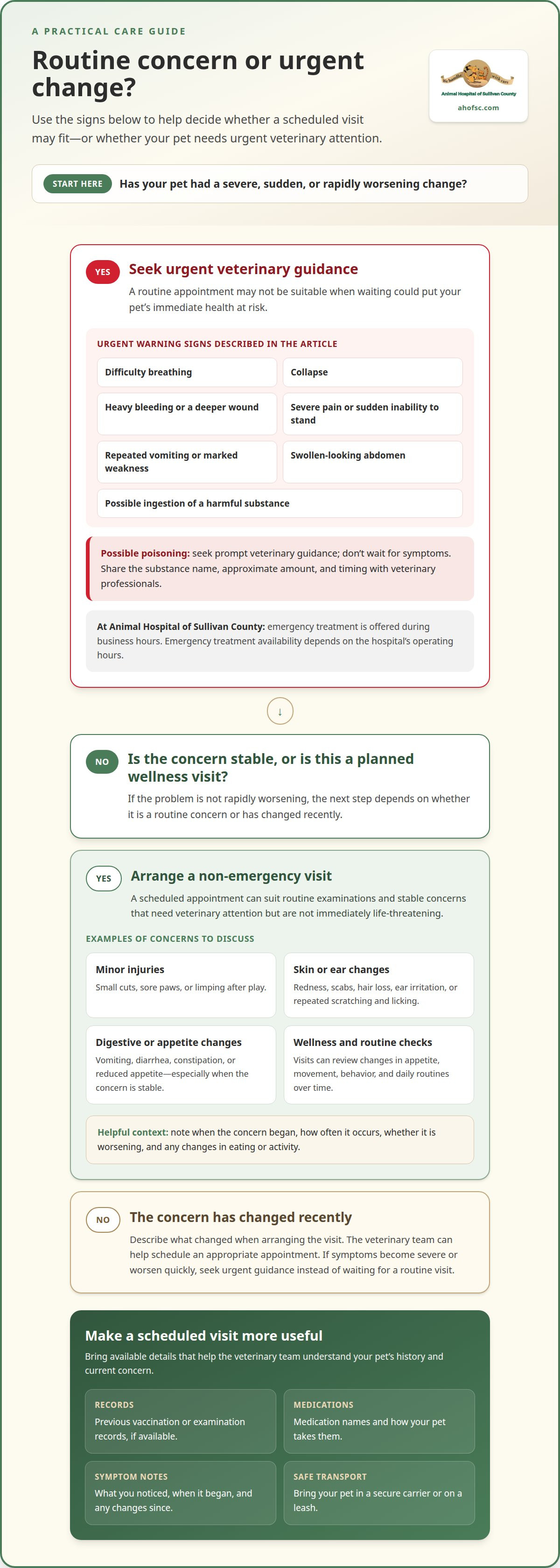
Injuries can range from minor cuts and sore paws to limping after play. A veterinarian examines the affected area and considers how the injury happened, whether the discomfort is worsening, and whether your pet can move normally. Deeper wounds, heavy bleeding, severe pain, or a sudden inability to stand need urgent assessment rather than a routine visit.
Skin concerns can include redness, scabs, hair loss, ear irritation, or repeated licking. Fleas, environmental changes, and other causes can produce similar signs, so the pattern and location help guide the examination. Note when the problem began and which areas your pet keeps scratching. Those details help the veterinary team assess the concern.
Stomach and bowel symptoms may include vomiting, diarrhea, constipation, or changes in appetite. The veterinarian will consider how often symptoms occur, whether they’re worsening, and whether other changes appear alongside them. Repeated vomiting, marked weakness, or a swollen-looking abdomen may signal an urgent problem.
Suspected poisoning requires prompt attention. If your pet may have swallowed something harmful, seek prompt veterinary guidance. If a pet may have swallowed a harmful substance, share the substance name, approximate amount, and timing with veterinary professionals. Don’t wait for symptoms before seeking guidance.
Payment plans, financing, and pet insurance depend on clinic policies and the insurer’s terms. Reimbursement may vary by policy and the care provided, so details differ between plans.
Distance and travel time from Wurtsboro depend on your starting point, destination, route, and traffic. A nearby community may take longer to reach during congestion than a farther destination on a clear route. Use the clinic’s address and current route conditions to plan your trip.
Which nearby clinics handle urgent problems? A veterinary hospital that provides urgent or emergency treatment is the appropriate setting for sudden, serious symptoms, but care is limited to its operating hours. If your pet has difficulty breathing, collapses, has heavy bleeding, or may have ingested poison, seek urgent veterinary guidance.
For less severe concerns, arrange a sick visit and describe the symptom, when it started, and any changes since. A veterinarian can examine your pet and decide whether diagnostics, medication, or another procedure is appropriate. Bring relevant medication details and records if available.
When symptoms change quickly, seek professional guidance rather than waiting for a routine appointment. A mild skin irritation, for example, differs from rapidly spreading swelling or unusual weakness. Clear observations help the veterinary team determine how promptly your pet should be seen.
Regular appointments and emergency care
A routine appointment gives the veterinary team time to assess your pet without the pace of an emergency visit. Book a non-emergency visit for a scheduled examination or a stable concern that isn’t rapidly worsening. The team can review the concern, examine your pet, and discuss appropriate care.
To arrange a non-emergency veterinary appointment near Wurtsboro, contact the hospital and describe the reason for the visit. Explain whether the concern is routine or has changed recently, so the team can help schedule an appropriate appointment. If symptoms become severe or worsen quickly, make that clear instead of describing the visit as routine.
For a first appointment, bring any available medical records, a list of current medications, and details about your pet’s symptoms. Include when the concern began and any changes you’ve noticed, such as altered eating or activity. These details help an experienced veterinary team understand your pet’s history and plan the examination.
A few simple preparation steps can make the visit more useful:
- Gather previous vaccination or examination records, if available.
- Write down medication names and how your pet takes them.
- Describe the main concern and when you first noticed it.
- Bring your pet in a secure carrier or on a leash.
Emergency care differs from a scheduled appointment. Sudden collapse, difficulty breathing, major bleeding, or a rapidly worsening condition calls for urgent veterinary attention. A regular appointment may not be suitable if waiting could put your pet’s immediate health at risk. Call the veterinary hospital and clearly describe what has changed.
Emergency treatment availability can depend on the hospital’s operating hours. At Animal Hospital of Sullivan County, emergency treatment is offered during business hours. If a pet needs urgent assessment during those hours, emergency veterinary treatment may be the appropriate next step.
For a stable concern, explain your pet’s symptoms when arranging the appointment. The team can use those details to understand the reason for the visit and prepare for the examination. For example, noting that your pet has been limping since a particular activity gives the veterinarian useful context, but doesn’t replace an in-person assessment.
Keep the distinction clear: routine care suits planned visits and stable concerns, while sudden or severe changes need urgent attention. Sharing accurate observations, medication details, and available records helps the veterinary team provide focused care for your companion.
Wellness care for cats and dogs
Routine wellness visits help track your pet’s health over time, not just address new symptoms. The veterinarian can review changes in appetite, movement, behavior, and daily routines.
Routine Wellness Visits
A wellness appointment usually begins with a conversation about your pet’s health and daily habits, followed by a physical examination. Mention changes in your cat’s water intake or your dog’s activity level, for example. Those details help the veterinarian focus the visit on your companion’s needs.
Routine visits are also an opportunity to discuss preventive care and questions about your pet’s health. Bring prior records when available, and describe any changes since the last examination. The veterinarian can explain the findings and discuss suitable next steps for your pet.
Nearby veterinary practices offer routine wellness visits, while acceptance of new patients depends on each practice’s current appointment capacity. When arranging care, state that you’re seeking a wellness visit and identify your pet’s species. This helps the practice understand the request and schedule the appropriate type of appointment.
To make the visit useful, organize your observations in advance. Note changes in eating, drinking, grooming, bathroom habits, or play. For instance, a dog that tires sooner during familiar walks has a different history from one with no change in activity. Clear examples make the discussion more specific.
Care for Cats, Dogs, and Other Pets
Veterinary practices commonly provide wellness care for cats and dogs, but the animals they see can differ. Nearby vets may care for both species; care for other pets depends on each practice’s patients and services. Describe the species when booking so the appointment is planned appropriately.
Cats and dogs can’t describe discomfort in words, so changes in routine matter. A cat hiding more than usual or a dog avoiding stairs gives the veterinarian useful context. Share when the change began and whether it affects eating, movement, or rest.
For pets beyond cats and dogs, species-specific needs can shape the examination and care plan. Rabbits, birds, and other companion animals have different behaviors and routines. When contacting a practice, explain the animal’s species and reason for the visit rather than assuming every veterinary office treats every kind of pet.
Families with more than one kind of pet can keep separate notes for each animal. Record each pet’s current concerns and relevant medical history. This helps prevent one companion’s symptoms or medications from being confused with another’s during a wellness discussion.
Whether the visit is for a cat, dog, or another companion, focus on observable details: what changed, when it began, and how it affects everyday life. These examples help the veterinary team understand your pet’s routine and make the wellness appointment more productive.
Diagnostics and sick visits
A sick visit starts with the reason for concern, followed by an examination. A dog with reduced appetite, for example, needs a different assessment from a cat with repeated sneezing. Describe what changed, when it began, and whether it’s getting worse. These details help the veterinary team focus the medical evaluation.
During the appointment, the veterinarian reviews your pet’s history and assesses its current condition. The examination may help determine whether diagnostics are useful. A pet with ongoing digestive changes, for instance, may need a different evaluation from one with a new skin concern. The goal is to connect the findings with the symptoms before discussing care.
Diagnostics can help investigate a concern when an examination alone doesn’t provide enough information. The veterinarian selects the next step based on your pet’s signs, history, and examination findings. This may involve testing or other procedures, depending on the medical question. Results can help guide a treatment plan or show whether further assessment is needed.
Before a sick visit, organize observations that clarify the timeline. Share changes in eating, drinking, movement, sleep, or bathroom habits. Note whether symptoms appear after a meal, activity, or medication. If more than one sign is present, describe each separately. For example, mention both low energy and a change in appetite.
Useful information to share includes:
- The first day you noticed the concern.
- How often the symptom appears and whether it has changed.
- Current medications and any recent changes.
- Relevant medical records or prior diagnostic results.
These details help the clinic consider the full picture rather than one isolated symptom. A brief written timeline can be especially useful when signs come and go. For example, noting that your pet eats normally in the morning but refuses dinner gives the veterinarian a clearer pattern to discuss.
After an examination or diagnostic testing, ask for a plain-language explanation of the findings and recommended next steps. The veterinarian can explain what a procedure is intended to clarify, how results relate to the symptoms, and which treatment options fit the findings. Understanding the reason for each step helps you make informed decisions for your companion.
Some concerns may be addressed with medical care, while others call for further diagnostics or a different plan. The veterinarian weighs the examination and available results together. If your pet’s condition changes before the appointment, describe the new signs when contacting the clinic, especially if they become sudden or severe.
Follow-up matters, too. Keep the care instructions and note whether symptoms improve, persist, or change after treatment. That record gives the veterinary team useful information if another assessment is needed. A clear timeline, from the first symptoms through follow-up, supports thoughtful decisions about your pet’s health.
What are the addresses, phone numbers, and hours of nearby veterinary clinics?
A helpful clinic listing puts three practical details together: street address, phone number, and operating hours. Use the address to identify the destination, the phone number to discuss the visit, and the hours to plan when to travel. These details help distinguish a routine appointment from an urgent situation.
Before setting out from Wurtsboro, make sure the address belongs to the veterinary location you intend to visit. A practice may have separate locations, so match the street address with the clinic name on your appointment information. Enter the full address into your navigation app, then review the route and current travel conditions.
Hours matter because routine appointments and urgent concerns require different timing. Look at the day of the week as well as the opening and closing times. For example, a weekday schedule may differ from a weekend schedule. If your pet’s symptoms worsen before a planned visit, use the listed phone number to explain the change and ask about urgent assessment.
Keep the clinic’s phone number with its address in your phone or household notes. A saved contact is easier to find than an old search result when your pet needs care. Include the clinic name in the contact label, especially if you keep more than one veterinary number.
When comparing local clinic information, organize the details consistently:
- Clinic name: identify the exact veterinary location.
- Street address: use the location associated with the appointment.
- Phone number: save it with the clinic name.
- Hours: note the relevant day and opening times.
- Route: review the destination and current travel conditions.
This simple format helps prevent mix-ups. A saved phone number without a clinic name can be hard to identify, while an address without the correct clinic can lead to a wrong turn. Pair each contact detail with the same clinic entry.
For a scheduled wellness or sick visit, plan around the listed hours and appointment time. If you’re traveling with a cat, place the carrier near the door before departure. For a dog, have a leash ready. These small preparations help keep the trip focused on reaching the right veterinary location.
If the concern becomes sudden or severe, don’t rely only on a routine appointment time. Call the veterinary hospital and describe the change, such as collapse or difficulty breathing. What you share helps the team understand the urgency and guide the next step.
For veterinary care in the area, arrange an appointment through the provided clinic contact options.
Animal Hospital of Sullivan County: Emergency Treatment
Animal Hospital of Sullivan County provides emergency treatment during regular office hours for pets with urgent health concerns. Sudden changes, such as collapse or serious injury, may need prompt veterinary attention rather than a routine appointment. During office hours, the hospital’s emergency treatment can address urgent needs.
For ongoing health needs, the hospital also provides preventive, medical, and surgical care. These services support pets through routine needs and more involved treatment when appropriate. Sharing clear information about your pet’s symptoms helps the veterinary team understand the concern.
If you’re unsure whether your pet needs urgent attention or a routine visit, contact Animal Hospital of Sullivan County to discuss the next step.
Take the Next Step for Your Pet’s Care
Choosing non-emergency vet care in Wurtsboro, NY, can be part of a thoughtful plan for your pet’s wellbeing. Match the reason for care with the right appointment, whether it’s a routine concern or a change that needs medical attention. If the situation feels urgent, seek veterinary guidance promptly rather than waiting for a routine visit.
Animal Hospital of Sullivan County provides preventive, medical, and surgical care for pets in the Catskills, Hudson Valley, New York City, and surrounding communities, including Ferndale, Monticello, Liberty, and Sullivan County. Contact the veterinary team to discuss your companion’s symptoms and history and plan the next step.
Contact Animal Hospital of Sullivan County to discuss your pet’s care. Taking that step can help you feel more prepared to support the animal who depends on you. Your attentive care and a trusted veterinary partnership can make the path ahead feel more manageable.
Frequently Asked Questions
What veterinary clinics near Wurtsboro, NY offer non-emergency care?
Animal Hospital of Sullivan County in Ferndale provides veterinary care for pets in the Wurtsboro area. Its location is 667 Harris Rd, Ferndale, NY 12734, and the phone number is (845) 292-6711. For a non-emergency concern, such as a change in your pet’s routine or a planned wellness visit, contact the hospital to discuss the type of appointment that fits your pet’s needs.
What services do Wurtsboro-area vets provide, such as vaccinations, exams, and dental care?
Available services vary by veterinary practice. Animal Hospital of Sullivan County provides wellness exams, essential vaccinations, and dental exams and professional cleanings. For example, a pet’s wellness visit can include a discussion of preventive care, while a dental appointment focuses on oral health. The veterinarian can explain which care is appropriate based on your pet’s age, health history, and the concern you’d like addressed.


