
A calm response starts with a ready kit, not a guess. Knowing which pet first aid kit essentials to keep on hand means having basic wound-care supplies, your pet’s medical records, and emergency veterinary contacts together in one place.
It’s natural to worry when a beloved pet is hurt, especially if you’re unsure what’s safe to do at home. A well-organized kit can help you respond to minor problems while you decide whether veterinary care is needed. It can’t replace professional treatment, but it can help you stay prepared.
Here, you’ll learn what to pack, how to keep records and contacts ready, and how to respond to minor cuts, paw injuries, bites, and stings. You’ll also learn when home first aid should give way to prompt veterinary attention.
Key Takeaways
- Keep your veterinarian’s contact details, emergency clinic information, and your pet’s medical records together for quick access.
- Choose supplies that help with basic wound care, and learn what each item is intended to do before an emergency.
- Know what to watch for after a bite or sting, and when your pet may need veterinary attention.
- For bleeding, use gentle pressure with gauze or a clean towel; paw pad injuries should be evaluated by a veterinarian.
- Use an emergency assessment to recognize when a problem is beyond what a home first aid kit can safely manage.
1. Emergency veterinary contacts and medical records
A first aid kit is more useful when it connects you quickly with veterinary help. Write your regular veterinarian’s clinic name, phone number, and address on a card, then add contact details for a nearby emergency veterinary clinic. Dog owners should know where the nearest 24-hour emergency veterinary clinic is and how to reach it. Keep the card inside the kit and save the same details in your phone.
Prepare a compact medical record for each pet. Include their name, age, identifying details, known allergies, ongoing health conditions, and current medications, with the dose and schedule provided by your veterinarian. Add vaccination information and a brief history of significant illnesses or procedures. For example, if your dog takes daily medication, recording its name and timing can help you give accurate information during an urgent call.
Store records in a waterproof sleeve or a secure digital note you can access away from home. Update them when a prescription changes or your pet receives new care. If you travel, keep the emergency card and records with the kit in your car or travel bag. Being prepared helps you share useful details without relying on memory during a stressful moment.
For suspected poisoning, call a veterinarian promptly rather than trying a home remedy. The ASPCA Animal Poison Control Center (APCC) provides a 24-hour helpline at (888) 426-4435. You can also list the Pet Poison Helpline at 1-855-764-7661 on your emergency card. If possible, keep the suspected substance’s packaging nearby so you can describe it accurately. Don’t induce vomiting unless a veterinarian specifically instructs you to do so.
What items should never be used on pets for first aid? Don’t give human over-the-counter medication or use human eye drops unless a veterinarian directs you. Avoid cleaning a scratch or cut with peroxide or alcohol. Use a pet-friendly option such as saline instead.
What should you do if a pet is choking, poisoned, or having a seizure? Contact a veterinarian or emergency veterinary clinic immediately, and share what happened and when. If poisoning is suspected, don’t induce vomiting without veterinary instruction. Don’t offer food or water to a pet that is seizing or unable to swallow normally.
Keep the kit out of children’s reach but easy for an adult to grab. A clearly labeled contact card, current medication list, and accessible records make preparation a practical first step when your pet needs help.
When poisoning is possible, pet owners should not try to treat a pet without consulting a veterinarian. Contact a veterinarian before taking treatment steps, and explain that possible poisoning is involved. Also contact a veterinarian about vomiting, diarrhea, or a pet not eating. Ask the veterinarian to determine whether the pet needs immediate care. These concerns call for veterinary advice about urgency; do not decide on your own whether immediate care is necessary. Describe which concern applies when you make contact, so the veterinarian can help determine whether immediate care is needed.
2. Essential supplies for a pet first aid kit
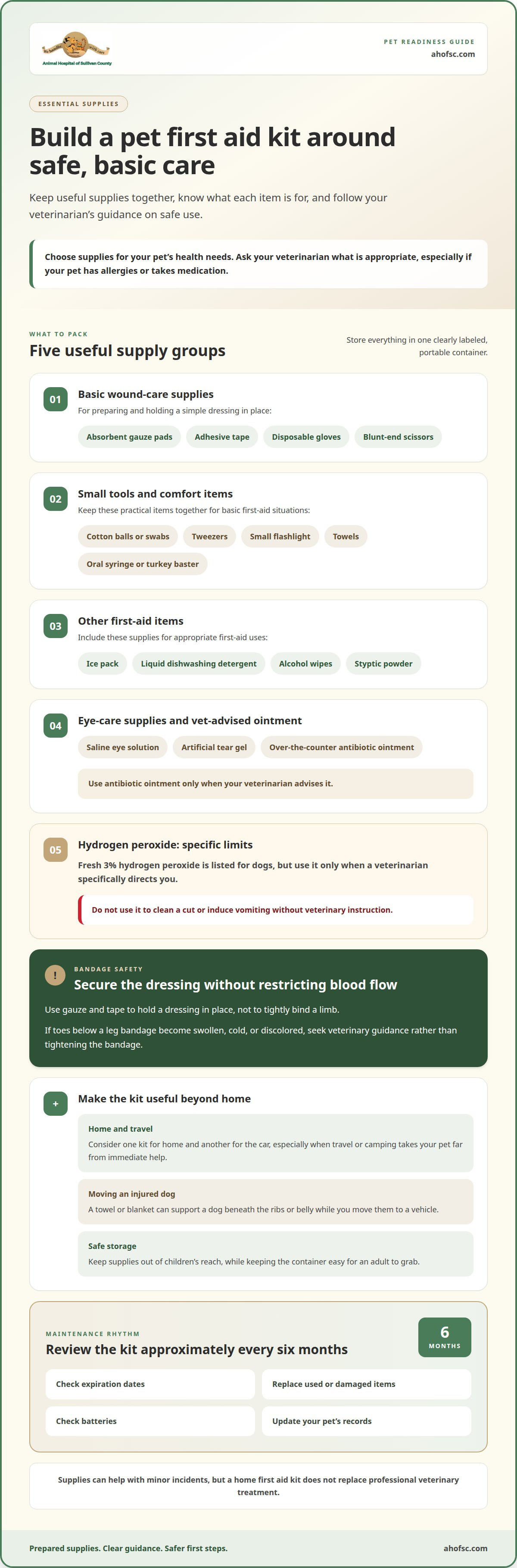
Choose pet first aid kit essentials based on your companion’s health needs and your veterinarian’s advice. Ask which supplies suit your pet, especially if they have allergies or take medication. Keep everything together in a clearly labeled, portable container, and learn what each item is for before an unexpected scrape or paw problem.
Useful supplies include:
- Absorbent gauze pads, adhesive tape, disposable gloves, and blunt-end scissors for basic wound care.
- Cotton balls or swabs, tweezers, a small flashlight, towels, and an oral syringe or turkey baster.
- An ice pack, liquid dishwashing detergent, alcohol wipes, and styptic powder for appropriate first-aid uses.
- Saline eye solution and artificial tear gel, plus over-the-counter antibiotic ointment to use only when your veterinarian advises it.
- Fresh 3% hydrogen peroxide for dogs, used only when a veterinarian specifically directs you. Don’t use it to clean a cut or induce vomiting without veterinary instruction.
These core pet first aid kit essentials can help with minor incidents, but handle supplies safely. Use gauze and tape to hold a dressing in place, not to tightly bind a limb. A bandage should stay put without restricting blood flow. If toes below a leg bandage become swollen, cold, or discolored, seek veterinary guidance rather than tightening it.
How much does a pre-made pet first aid kit cost compared with a DIY kit? Prices vary with the supplies included, so compare contents rather than assuming one option always costs less. A DIY kit lets you select individual items, while a pre-made kit gathers supplies together.
Should pet first aid kits differ for dogs, cats, or other animals? Keep supplies relevant to your pet, and ask your veterinarian about species-specific needs and safe use. Items suitable for a dog aren’t automatically suitable for every animal.
What medications are safe to include in a dog or cat first aid kit? Don’t use human over-the-counter medications unless a veterinarian directs you. Keep prescribed medication with its label and instructions, and use ointments or other treatments only as your veterinarian advises.
Make one kit for home and another for the car, especially if travel or camping takes your pet far from immediate help. A towel or blanket can support a dog beneath the ribs or belly while you move them to a vehicle. Keep pet first aid kit essentials out of children’s reach.
Inspect supplies every few months. Approximately every six months, review expiration dates, replace used or damaged items, check batteries, and update records. For help choosing care after an injury, explore veterinary medical care.
Review supplies for expiration or replacement, especially anything that may no longer be usable. Styptic powder can help stop mild bleeding, including from a broken nail or a nail cut too close to the quick. Keep a kit at home and another in the car.
3. Responding to bug bites and stings
A bee or other insect can surprise a curious pet outdoors. Move your companion away from the insect to a calm, safe place. Note where the bite or sting occurred, when you noticed it, and whether you saw the insect. These details help your veterinarian understand the situation and advise you on the next step.
Keep your pet close while you observe them. Look at the affected area without pressing, rubbing, or applying a product. Note visible changes and watch your pet’s behavior. If you’re unsure what you see, take a clear photo to share with the veterinarian. Don’t delay contacting a veterinarian if your pet appears unwell or you’re concerned.
Use a simple observation sequence so you can give useful information during a call:
- Describe the location, such as the muzzle, ear, paw, or belly.
- Say when the incident happened and whether you witnessed it.
- Report visible changes and any behavior that differs from your pet’s usual manner.
- Share any known allergies or medication information from your pet’s records.
Seeing the insect may help identify what happened, but don’t risk another sting by trying to catch or handle it. If you saw a bee near your dog’s paw, for example, tell the veterinarian where your dog was and what you observed. If you don’t know which insect it was, say so rather than guessing. Clear details help keep the conversation focused on your pet’s needs.
Don’t give human over-the-counter medication, apply human eye drops, or use a topical treatment unless a veterinarian directs you. A product from a household first aid kit may not be suitable for your pet. Avoid experimenting with creams, oils, or home remedies while waiting for professional advice. Keep the packaging available if your pet has already touched or swallowed something.
If you suspect a sting in the mouth or around the face, contact a veterinarian promptly and describe the location. Do the same if you notice a concerning change after a bite or sting. If your pet has trouble swallowing normally, don’t offer food or water. If poisoning is also possible, don’t try to make your pet vomit unless a veterinarian instructs you.
After the call, follow the instructions you receive and continue observing your pet. Record when and where the incident happened and any changes you notice. Update the veterinarian if the situation changes. A first aid kit can help you stay organized, but bites and stings may need professional assessment rather than home treatment.
4. Treating minor cuts and paw pad injuries
First, keep your pet as still and comfortable as possible, then locate the injury. A shallow scratch differs from a deeper cut, puncture, or torn paw pad. Pet first aid kit essentials such as clean gauze and saline can support a careful response while you seek veterinary advice. Contact a veterinarian before cleaning anything more serious than a scratch. A veterinarian should evaluate paw pad injuries, even if they look small.
For external bleeding, place clean gauze or a towel over the area and apply light, steady pressure. Hold it in place for at least three minutes before checking for a clot. Repeatedly lifting the gauze may disturb clotting, so keep the pressure steady. These pet first aid kit essentials can help in the moment, but persistent bleeding, a deep wound, or visible distress calls for veterinary care, not just a home dressing.
For a minor surface scratch, gently rinse with saline or another pet-friendly wound cleanser. Don’t use peroxide or alcohol, which can irritate tissue. Ask a veterinarian before applying ointment or another product to a wound. Even a familiar household treatment may not suit your pet or the injury.
How do you handle pet bleeding, wounds, burns, or insect stings at home? Apply light pressure to bleeding with gauze or a clean towel, and contact a veterinarian about wounds beyond a scratch. Don’t apply ointment to a burn without veterinary direction. For a sting, move your pet away from the insect and seek veterinary advice if you’re concerned.
If a veterinarian recommends a dressing, wrap it snugly enough to stay in place without restricting blood flow. Don’t pull tape tightly around a limb. Change a dog’s cut or scrape dressing every day, or sooner if it becomes wet or damaged. Keep the area protected between changes, and check that the dressing hasn’t slipped or become soiled.
Observe your pet after covering an injury. A dog that keeps licking a paw may disturb the dressing, while a change in walking can signal discomfort. Don’t treat a paw pad injury as an ordinary scrape. Arrange a veterinary evaluation so the wound can be assessed and any ongoing care determined.
After home first aid, take your dog to a veterinarian to determine whether further care is needed. Share when the injury happened and what you applied. If a fracture or muscle injury is possible, don’t realign or splint the area. Gently stabilize it without putting pressure on the limb while arranging veterinary care. Pet first aid kit essentials support a basic response, but don’t replace an examination.
5. Vital signs and emergency assessment
An initial assessment should help you describe what you see, not diagnose your pet. Note when and what happened, then observe breathing, responsiveness, movement, and visible injuries. Compare your pet’s behavior with their usual state. For example, record whether a normally alert dog responds to your voice or seems unusually disoriented.
Watch your pet’s chest and face without restraining them. Note whether breathing looks strained, unusually noisy, or different from normal. Check whether your pet can stand and walk comfortably, but don’t make them move to test an injury. If movement appears painful or a fracture is possible, keep them gently still and contact a veterinarian.
Look for bleeding, swelling, or a change in gum color, and record what you observe. Don’t press on a painful area or force your pet’s mouth open. A frightened or injured animal may react defensively, even with a familiar person. Keep your face away from their mouth and avoid handling them more than necessary.
Use a brief written log to organize details for a veterinary call. Include when the change began, what your pet was doing, any possible exposure, and medication information. Note whether signs are improving, worsening, or staying the same. If you suspect poisoning, keep the product packaging nearby and call a veterinarian or poison helpline rather than trying a home treatment.
- Breathing: Describe the effort and any unusual sounds you notice.
- Awareness: Record whether your pet responds to your voice or touch.
- Movement: Note limping, reluctance to stand, or trouble walking.
- Visible changes: Record bleeding, swelling, or other changes you can see.
- Timing: Write down when the event began and how your pet has changed.
Seek emergency veterinary help for seizures, inability to swallow normally, significant bleeding, suspected poisoning, or a pet that is mentally impaired. Don’t offer food or water to a pet that is vomiting, seizing, unable to swallow normally, or mentally impaired. Share your observations and when they occurred with the veterinary team to help them assess the situation.
A first aid kit supports basic preparation, but it cannot determine the cause of abnormal signs. If your pet’s breathing, awareness, or movement concerns you, arrange emergency veterinary treatment promptly. Avoid delaying care to collect measurements or complete a checklist. Your observations, the event’s timing, and any known exposure are useful information to provide.
Animal Hospital of Sullivan County
Animal Hospital of Sullivan County provides Medical Care and Diagnostics to assess injuries, unusual symptoms, and first aid concerns beyond what a home kit can address. Preventive Care also gives you a chance to discuss preparedness before an emergency. Surgical Care may be relevant when an injury needs treatment beyond basic wound care.
Bring your pet’s medical records and describe what happened, when symptoms began, and any first aid already given. For urgent concerns, use the veterinary emergency contact details in your kit to determine the appropriate next step.
Please contact Animal Hospital of Sullivan County to discuss your pet’s care.
Make preparedness part of your pet’s care
A first aid kit is most useful when it suits your pet’s needs and the care they already receive. As your companion’s health changes, update your preparations in line with veterinary guidance. The right pet first aid kit essentials can support a steady response, while a veterinarian can help you decide when an injury or symptom needs professional attention.
Animal Hospital of Sullivan County provides Preventive Care, Medical Care, and Surgical Care for pets with different health needs. Whether you want to discuss preparedness or need guidance after an injury, veterinary care can help you choose a sensible next step for your companion.
Contact Animal Hospital of Sullivan County to discuss your pet’s care. A little preparation today can help you feel more ready to care for the family member who depends on you.
For poisoning concerns, the ASPCA Animal Poison Control Center’s 24-hour helpline is (888) 426-4435.
Frequently Asked Questions
What essential supplies should be in a pet first aid kit?
Include materials for covering minor wounds, handling small objects, and seeing clearly in dim light. Useful examples include gauze pads, adhesive tape, blunt-end scissors, gloves, tweezers, and a flashlight. Add saline eye solution, towels, and an ice pack. Keep treatment products separate from tools, and label anything that should only be used under veterinary direction. Tailor the final selection to your pet’s health needs.
How often should you check and replace pet first aid kit supplies?
Inspect the kit every few months, and do a thorough review approximately every six months. Replace expired, damaged, or used items, and check that batteries still work. If you use a supply during an outing, note it for replacement as soon as you return. Before travel, make sure the kit is packed and its contents are usable. Keep the container dry and easy for an adult to reach.
What emergency contacts and pet medical information should be kept in a first aid kit?
Keep your regular veterinary clinic’s name, phone number, and address beside emergency veterinary clinic contacts. Include your pet’s identifying details, allergies, health conditions, and current medication instructions. A brief record of important procedures can help add context during a call. Store a printed copy in a protected sleeve, with a matching digital copy accessible while away from home. Update both after medication changes or new veterinary care.


