

Indoor living lowers exposure, but it doesn’t make a cat parasite-proof. Parasite prevention for indoor cats matters because fleas can enter the home, and a cat can get tapeworms by swallowing an infected flea while grooming. Year-round prevention is recommended, with protection chosen to suit a cat’s lifestyle and local parasite risks.
It’s understandable to think a cat who stays indoors has little chance of encountering parasites. Yet fleas and other parasites can get inside, and even occasional outdoor access can change a cat’s exposure.
This guide explains how parasites reach indoor cats, how fleas can spread tapeworms, and which product types may help protect against fleas, ticks, heartworms, and intestinal parasites. You’ll also learn why location, lifestyle, and routine veterinary testing matter when choosing an approach that fits your cat and supports their wellbeing throughout the year.
Key Takeaways
- Fleas can enter the home and pass tapeworms to cats when swallowed during grooming; indoor living doesn’t eliminate exposure.
- Indoor heating and flea life stages can allow infestations to persist through colder months.
- Prevention options cover different parasites, so product choice should reflect your cat’s exposures and health needs.
- Consider location, outdoor access, and time away from home when shaping a year-round prevention plan.
- Veterinary exams and parasite testing can help guide protection as your cat’s risks change.
How Do Parasites Get Into a Home With Indoor Cats?
An indoor cat can encounter parasites without roaming outside. Flea eggs and other parasite eggs may arrive on shoes, then reach a cat’s paws as they move around the home. A cat can also pick up fleas from another animal or from shared indoor spaces. Even a brief encounter can introduce parasites that settle into carpets, bedding, and other resting places.
Fleas bring more than itching. Flea allergy dermatitis is an allergic reaction to flea saliva that can cause severe itchiness. A single flea bite may trigger weeks of discomfort in a sensitive cat. Fleas can also carry tapeworms: a cat becomes infected by swallowing an infected flea while grooming. Fleas found on cats have tested positive for at least one disease pathogen transmissible to cats in as many as 80% of cases. Mosquitoes, meanwhile, can transmit heartworm, so flea control alone does not address every parasite risk.
A flea infestation can persist indoors through changing seasons. Flea pupae may remain in the environment until temperature and humidity suit them, then hatch. Indoor heating can keep fleas active in January, while carpets and bedding give fleas places to establish themselves within a few weeks. Fleas can also survive indoors without freezing temperatures or other adverse weather. That’s why cold weather outside doesn’t necessarily end exposure inside the home.
Flea and tick control works best when the product matches the cat and the parasites it targets. Products intended for dogs may not be safe for cats, so use only flea products labeled for feline safety and follow the directions. A veterinarian can help select appropriate prevention based on the cat’s health and exposure. Prevention should also account for ticks, especially for cats with outdoor access.
Routine checks can help identify a problem early. Check your cat daily for ticks, especially after outdoor access, and pay attention to the ears, head, and feet. Look for signs such as persistent scratching or visible fleas, but remember that a flea-allergic cat may react strongly to a single bite. If you find a tick or notice new itching, tell the veterinarian what you saw and when it began. Those details help guide the next steps in parasite control.
Year-round parasite prevention
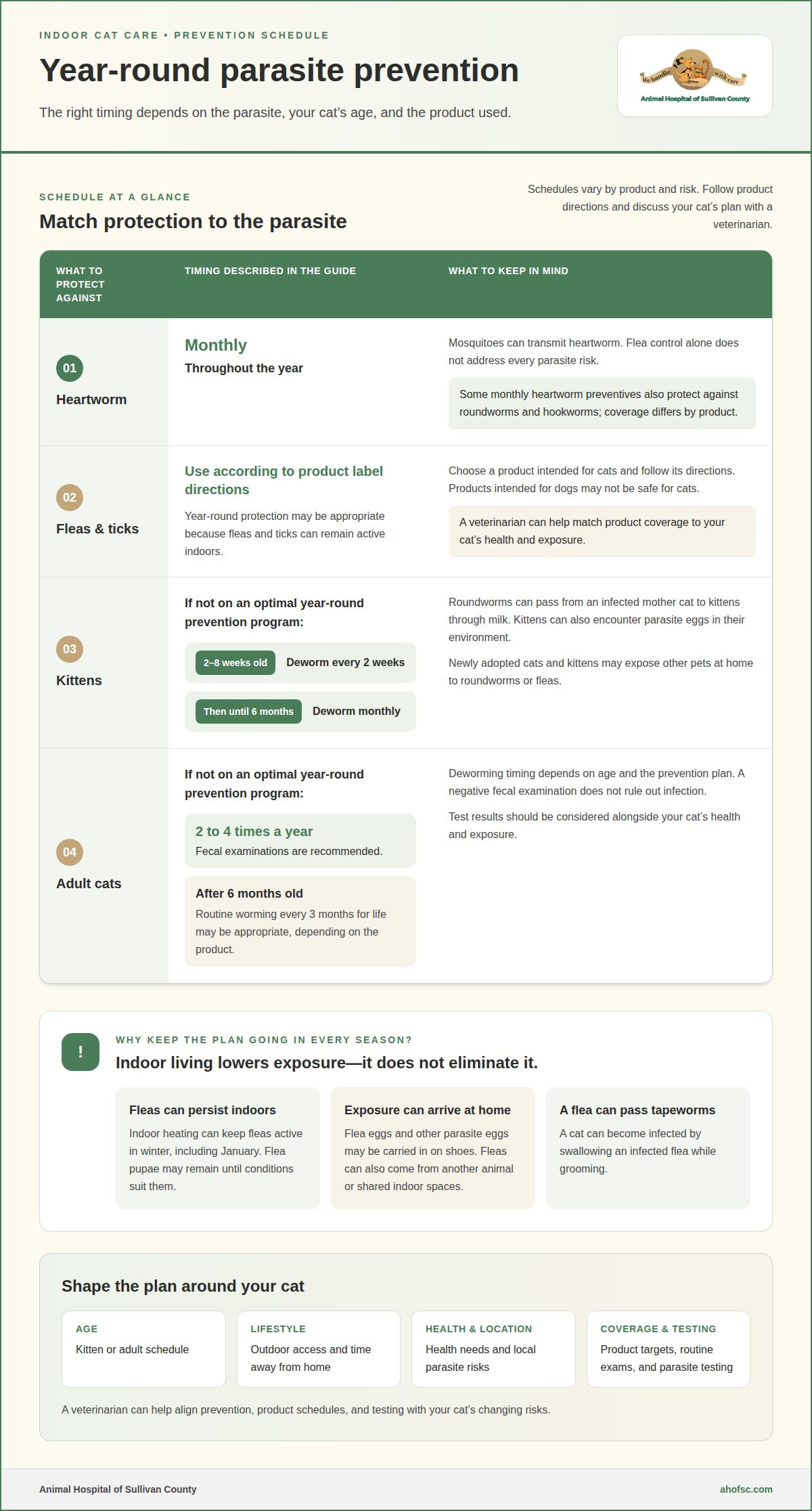
Indoor cats should receive parasite prevention year-round, with the schedule matched to each product and parasite risk. Heartworm prevention is given monthly throughout the year; use flea and tick products according to their label directions, while deworming timing depends on age and the prevention plan.
Ongoing Prevention for Indoor Cats
Year-round prevention means maintaining appropriate protection through every season, rather than stopping when outdoor weather turns cold. Fleas, ticks, and worms can remain active all year, and indoor heating can sustain flea activity in winter. A consistent schedule helps reduce gaps in protection, including during months when a cat spends little or no time outdoors.
Broad-spectrum products can protect against more than one parasite, but coverage differs by product. Some monthly heartworm preventives also protect against roundworms and hookworms. A veterinarian can match a product’s coverage to your cat’s lifestyle, health, and local parasite risks. Preventive Care can help shape a plan around your cat’s needs.
Roundworm Transmission
Roundworms can pass from an infected mother cat to her kittens through milk, so being born indoors doesn’t eliminate this early exposure. Cats can also encounter parasite eggs in their environment. Once swallowed, some intestinal parasites can develop inside the cat, and certain worm species that affect cats can also be transmitted to people.
For kittens without an optimal year-round prevention program, the recommended deworming schedule is every two weeks from 2 to 8 weeks of age, then monthly until 6 months of age. This early timing matters because young kittens are growing while parasites may be developing. Newly adopted cats and kittens may also expose other pets at home to roundworms or fleas, so household prevention needs consideration.
Prevention Timing by Parasite
Prevention timing varies by parasite and product, so one schedule won’t suit every cat. Heartworm preventive medication is given monthly throughout the year. Use flea and tick products according to their label directions, and consider year-round protection because these parasites can remain active indoors.
For adult cats not following an optimal year-round prevention program, fecal examinations are recommended 2 to 4 times a year. After 6 months old, routine worming every three months for life may be appropriate, depending on the product. Kittens need the age-based schedule above, while routine fecal testing can help identify intestinal parasites. A negative fecal examination does not rule out infection, so results are interpreted alongside the cat’s health and exposure.
Keeping litter areas clean and feeding prepared or cooked food can also help reduce intestinal parasite exposure. The right balance of prevention, testing, and follow-up depends on the cat’s age, health, and contact with other animals. For a plan centered on year-round preventive care, align the product schedule with the parasites it targets and the protection your cat needs.
Indoor-cat exposure to parasites and vectors
Indoor cats can encounter fleas, ticks, heartworms, and intestinal parasites through insects, prey, and contaminated surroundings. The route may be subtle, but understanding it helps explain why staying indoors doesn’t eliminate every exposure.
Flea and Tick Exposure
Fleas and ticks can reach indoor cats when another animal carries them inside or a cat briefly goes outdoors. Ticks can transmit feline diseases, including rickettsial infection and hemotropic mycoplasmosis. A cat can also carry an infected tick into the home, creating a possible exposure for people.
Indoor spaces don’t always stop fleas from surviving. Fleas can persist inside without freezing temperatures or other adverse weather. Eggs from some parasites that can infect people may also survive in soil and on household surfaces for weeks. These examples show why an indoor cat’s exposure depends on more than outdoor adventures.
Contact with wildlife or insects adds another route. Mice can enter homes through openings as small as a quarter, and a cat that hunts one may encounter roundworms. Mosquitoes can enter apartments, including homes on the tenth floor, and transmit heartworm. Heartworm disease has been identified in all 50 U.S. states, so an upper-floor home doesn’t eliminate that potential exposure.
Heartworms and Intestinal Worms
Mosquitoes transmit heartworms to cats, while intestinal worms can be encountered through prey or swallowed parasite stages. These routes differ, so one type of prevention or test may not address every parasite. Knowing whether a cat hunts, encounters insects, or shares space with other animals helps clarify potential exposures.
Fecal examination findings illustrate that intestinal parasites vary. In a U.S. retrospective study of owned cats, from 2007 through 2018, Cystoisospora species appeared in 9.4% of fecal examinations. Giardia species appeared in 4%, while Dipylidium caninum appeared in 1.1%. These results represent examined samples, not an individual cat’s likelihood of infection.
The same U.S. retrospective study found Toxocara cati in 7.8% of fecal examinations from 2007 through 2018. Roundworms can also pass from mother cats to kittens through milk. As a result, kittens may face intestinal parasite exposure before they ever go outdoors. A veterinarian can consider age, history, and symptoms alongside testing when assessing possible infection.
Parasite signs aren’t always obvious at home. A fecal examination can look for intestinal parasites, while heartworm screening addresses a different concern. Share changes such as coughing, altered stool, or reduced appetite with the veterinarian. Exposure risks can also change when a household adopts another pet or a cat begins supervised outdoor visits.
Tailoring prevention to lifestyle and parasite prevalence
A useful prevention plan reflects where a cat lives, how it spends time, and which parasites are prevalent locally. An indoor-only cat has different exposures from one taking leashed walks, using an outdoor enclosure, or staying away from home. Those details help determine suitable preventive coverage and testing, rather than treating every cat’s risk as identical.
Location matters, too. In seasonal climates, flea and tick seasons can last up to 10 months a year when spring or fall is warm. A cat in New York, Connecticut, New Jersey, or Pennsylvania may therefore have exposure beyond the hottest part of summer. Indoor living lowers some outdoor risks, but doesn’t erase the effects of local conditions or pests carried inside.
Consider the cat’s routine, not just its home address. A cat that spends time in an enclosed patio, travels for visits, or shares a home with pets that go outdoors may encounter different parasites than a cat with no animal contact. Hunting also changes the picture, since prey can expose cats to intestinal parasites. A change in routine is a good reason to revisit the prevention plan.
Testing can help tailor protection to an individual cat. Adult cats should have fecal examinations 1 to 2 times each year, depending on health and lifestyle. A cat with outdoor access, hunting behavior, or contact with newly adopted animals may need a different testing schedule from an indoor-only cat. The veterinarian can consider these exposures alongside health history and local parasite prevalence.
Kittens need particular attention because age affects both exposure and prevention needs. They can acquire roundworms through their mother’s milk, so being born indoors doesn’t eliminate that route. Their early deworming schedule also differs from an adult cat’s. A kitten’s age, previous care, and contact with other animals help guide the appropriate plan and timing for follow-up visits.
Prevention choices should weigh likely exposure against each cat’s health and the protection a product provides. For example, a cat that stays indoors but lives with an outdoor dog has different household exposure from one living alone. Seasonal conditions, travel, outdoor access, and health changes all matter. Revisiting these factors during routine veterinary visits keeps the plan responsive as a cat’s life changes.
Parasite prevention product types
Cat preventives differ in how they’re given and which parasites they target. Topical products are applied to the cat, while other preventive medications follow a schedule suited to their label. Some products cover several parasites; others focus on particular risks. Compare products by their coverage, not simply by whether they’re topical or broad-spectrum.
For fleas and ticks, a cat-specific product can address external parasites. Heartworm preventives address a different exposure: mosquitoes transmit heartworm, so flea-only coverage can’t replace heartworm protection. Some monthly heartworm preventives also protect against roundworms and hookworms. Ask a veterinarian about the product’s labeled coverage so the plan accounts for parasites relevant to your cat.
Deworming products address intestinal parasites, but their coverage and timing differ. Kittens and adult cats don’t necessarily follow the same schedule, and a fecal examination can help identify intestinal parasites. Broad-spectrum prevention may help reduce risks across more than one parasite group, but it doesn’t mean every product protects against every parasite. Match the product to the needed coverage and the cat’s life stage.
In the United States, product and prescription costs depend on the cat’s case and are provided after a quote request. Factors include product type, parasite coverage, the cat’s age and weight, and whether an examination or testing is needed. Comparing products by active coverage and schedule helps explain why two preventives can differ in cost, even when both are intended for cats.
Side effects vary by medication and cat. Follow the product label and have a veterinarian consider the cat’s health history. Never use flea products unless they’re specifically labeled as safe for cats. Dog products may not be safe for cats, including dog flea products containing permethrin, so don’t transfer a dog’s treatment to a cat.
Choose a product category based on the exposure being addressed: fleas and ticks, heartworm, intestinal worms, or several parasite groups. Keep the package and dosing directions available for the veterinary discussion, especially if the cat already takes medication. If your cat shows a concerning change after treatment, contact a veterinarian promptly with the product name and application or administration time.
For help matching prevention to your cat’s needs, schedule a preventive care visit.
Animal Hospital of Sullivan County
Animal Hospital of Sullivan County can help shape a prevention plan around your cat’s health, lifestyle, and parasite exposure. During Preventive Care, the veterinary team can discuss appropriate protection and testing, including fecal examinations when indicated. Diagnostics can help investigate possible infection and guide decisions when symptoms or test results raise concern.
Bring details about your cat’s routine, current medications, past prevention, and any changes in appetite, stool, or behavior. This context helps the veterinary team consider which parasites matter and whether further evaluation is needed. If you’re unsure whether your indoor cat’s protection fits their needs, contact Animal Hospital of Sullivan County to discuss the next step.
Make the Next Step a Personal Plan
Your cat’s needs can change with age, health, household routines, and time spent outdoors. Review the prevention plan as circumstances shift, so protection stays suited to your cat rather than simply following an old routine. If you’re considering parasite prevention for indoor cats, a veterinary conversation can connect product choices with your cat’s overall health.
Animal Hospital of Sullivan County offers Preventive Care, Medical Care, and Surgical Care to support pets as their needs evolve. Bring up changes in your cat’s routine or health during a visit, including new animal companions or outdoor access. Those details can guide a thoughtful discussion about prevention and appropriate care.
Contact Animal Hospital of Sullivan County to discuss a prevention plan for your cat. A caring, individualized approach can help you move forward with greater confidence and keep your companion’s wellbeing at the center of every decision.
Frequently Asked Questions
Can cats get worms from fleas?
Yes. A cat can get a tapeworm by swallowing an infected flea while grooming. This can happen even if the cat doesn’t usually go outdoors, since fleas may reach indoor spaces. If you’ve noticed fleas or signs that concern you, share those observations with your veterinarian. They can consider your cat’s exposure and whether testing or treatment is appropriate.
How can a veterinarian help prevent parasites on my cat?
A veterinarian can use your cat’s health history, lifestyle, and test results to guide prevention choices. For example, mention whether your cat lives with pets that go outdoors or has recently joined your household. Fecal testing can help assess intestinal parasites, while heartworm screening addresses another risk. At Animal Hospital of Sullivan County, Preventive Care and Diagnostics support discussions about protection and testing.
Can People Catch Parasites From Their Cat?
Yes, some intestinal worm species that affect cats can also be transmitted to people. That doesn’t mean every parasite a cat carries can infect a person, but it makes routine parasite control and clean litter habits worthwhile. Daily litter box cleaning can help control intestinal parasite infections in cats. If someone in your household has concerns after a possible exposure, speak with a healthcare professional.
Can a Mosquito Give an Indoor Cat Heartworm?
Yes. A mosquito can transmit heartworm to an indoor cat, so a closed door doesn’t eliminate every possible route of exposure. One mosquito bite can be sufficient for transmission, and heartworm disease can cause fatal respiratory disease. Mention your cat’s home environment and any mosquito exposure concerns during a veterinary visit. This helps guide a discussion about suitable prevention and screening.
Do I still need to protect my cat if they’re kept indoors?
Indoor living reduces some exposures, but it can’t prevent every parasite from reaching a cat. Insects, other animals, and contaminated items can bring exposure inside. Year-round protection is recommended, with product choice shaped by your cat’s health and surroundings. For parasite prevention for indoor cats, tell your veterinarian about changes such as a new pet, travel, or access to an enclosed outdoor space.
How often should an indoor cat have a fecal test?
Most indoor cats should have a fecal test once a year. Kittens may need fecal examinations 2 to 4 times during their first year of life. Testing frequency can also reflect a cat’s health and lifestyle, such as hunting or contact with other animals. A negative fecal examination doesn’t rule out a parasitic infection, so your veterinarian may interpret results alongside other findings.
If my cat never goes outside, do I really need flea prevention?
Flea prevention may still be appropriate for a cat who stays indoors, because fleas can enter on other animals or belongings. Indoor heating can also allow fleas to remain active during winter. If your household includes a dog or another pet that goes outside, mention that shared exposure when discussing prevention. Use only flea products labeled as safe for cats.
What Health Problems Do Parasites Cause in Cats?
Parasites can cause problems ranging from severe itching to serious disease. Flea allergy dermatitis is an allergic reaction to flea saliva, and a severe flea infestation can make a small kitten dangerously anemic through blood loss. Heartworm disease can cause fatal respiratory illness. Effects vary by parasite, so share changes in your cat’s comfort or health with a veterinarian.


