
A smaller scoop alone may not help an overweight pet lose weight safely. Nutritional counseling for overweight pets connects food portions, treats, activity, and health in a veterinarian-guided plan tailored to the animal. The goal is steady progress while meeting nutritional needs, not simply cutting food without considering what the pet requires.
It’s understandable to feel unsure about what to change when a beloved companion is gaining weight or finding movement harder. Professional guidance can help you understand how diet and health affect weight, and why a gradual, individualized approach matters. This article explains how veterinarians assess body condition and possible health risks, how portions and treats fit into a weight-management plan, and how follow-up helps track progress and guide adjustments.
Key Takeaways
- A veterinarian can assess body condition, lifestyle, and health to shape a gradual weight-management plan around your pet’s needs.
- Accurate portions and a full picture of meals, treats, and extras can help reveal where daily calories add up.
- Reducing treats works best when it’s balanced with your pet’s nutrition needs and a rewarding way to reinforce good behavior.
- Extra weight can affect mobility and overall health, so changes in activity or comfort are worth discussing during veterinary care.
- Follow-up assessments help track progress and guide adjustments to food, activity, and ongoing support.
What is Pet Nutrition Counseling and Why is it Important?
Pet nutrition counseling connects diet, body condition, activity, and health to a practical weight-management plan. Veterinary guidance can help prevent overfeeding and support gradual, monitored weight loss.
Personalized Plans and Body Condition Checks
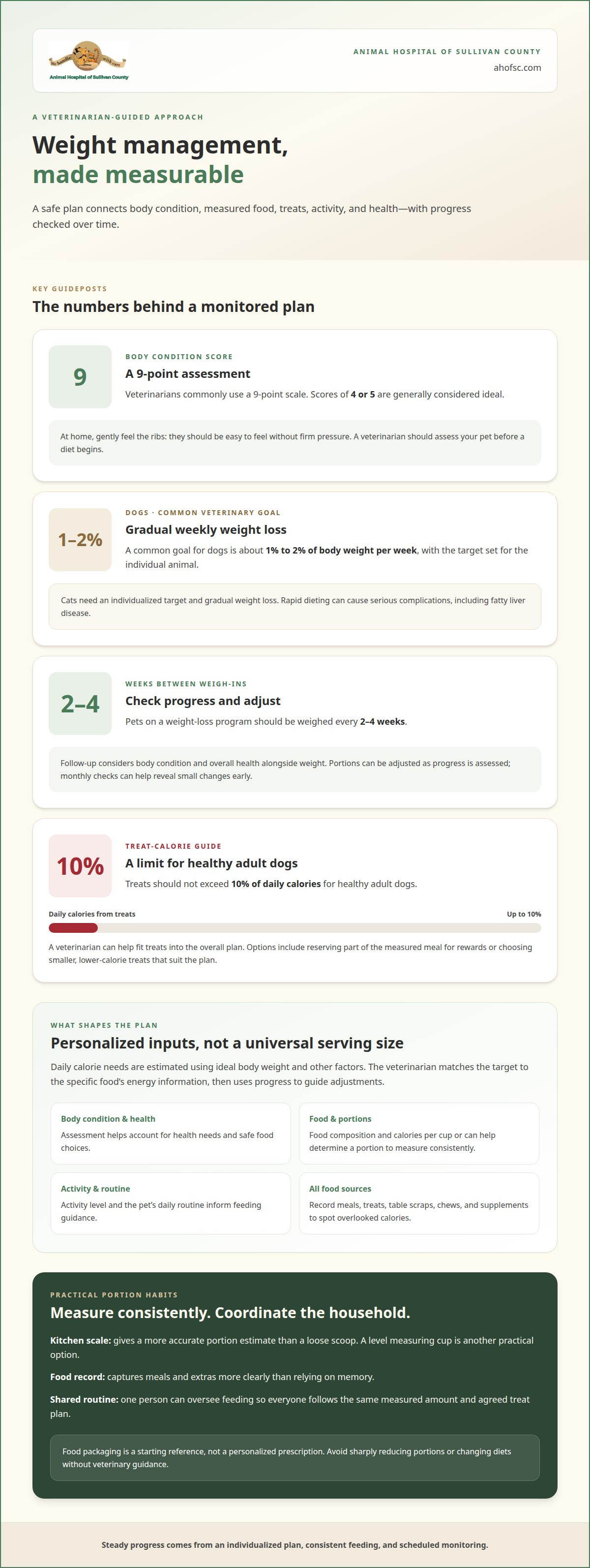
A personalized plan matches food portions and activity to the pet’s ideal body condition and health needs. Veterinarians commonly use a 9-point Body Condition Score; scores of 4 or 5 are generally considered ideal. At home, feel the ribs gently: they should be easy to feel without firm pressure. Before starting a diet, have a veterinarian evaluate the pet, since medical conditions can affect weight and safe food choices.
Balanced and Prescription Weight-Management Diets
A balanced weight-management diet controls calories while providing essential nutrients. Veterinary weight-loss diets can have lower energy density while supplying nutrients and supporting lean muscle. Some prescription diets use fiber, water, or air to increase food volume and fullness without adding as many calories. The right food depends on the pet’s health, age, and activity level, so avoid sharply reducing portions or changing diets without veterinary guidance. Cats need gradual weight loss because rapid dieting can cause serious complications, including fatty liver disease.
Safe Weight-Loss Rates and Food Portions
Safe weight loss is gradual and monitored, with the target set for the individual animal. A common veterinary weight-loss goal for dogs is about 1% to 2% of body weight per week; cats need an individualized target. A veterinarian estimates daily calorie needs using ideal body weight and other factors, then adjusts portions as progress is assessed. Recommended food and portion sizes depend on those calculations, food composition, health, and activity, rather than a universal serving amount.
Weigh-Ins and Follow-Up Visits
Weigh-ins and follow-up visits track whether a plan is working and whether portions need adjustment. Pets on a weight-loss program should be weighed every 2-4 weeks, with body condition and overall health monitored alongside weight. Long-term maintenance also depends on household consistency: one person can oversee feeding, measured meals can prevent accidental overfeeding, and everyone should follow the agreed treat plan. Monthly weight checks can help reveal small changes early.
Costs depend on the pet’s needs, such as examination, diagnostics, diet, and follow-up; a case-specific price is provided after a quote request. Free or low-cost options vary by location, and there is no single nationwide program to rely on. Ask about local assistance options during a veterinary visit. After a plan begins, consistent household feeding and scheduled monitoring help maintain progress.
How veterinarians measure food portions and calculate calories for overweight pets
Veterinarians use a pet’s body condition, current diet, and activity level to develop a feeding plan. Measuring meals and tracking all food and treats helps show whether dietary changes match the pet’s needs.
Explain how veterinarians set daily calorie targets and guide calorie counting.
A daily calorie target is the amount of energy a veterinarian estimates will support a pet’s weight-loss plan. The estimate considers ideal body weight, current body condition, health, food, and activity level. Because foods differ in calories per cup or can, the veterinarian uses the specific diet’s energy information to set an appropriate portion. Progress helps show whether the initial target needs adjustment.
Calorie counting includes more than the main meal. A food record can include meals, treats, table scraps, chews, and supplements, making overlooked calories easier to spot. For example, a household may measure meals but still add training snacks or extra bites at the table. Recording each source gives the veterinarian a clearer picture than relying on memory.
Food packaging offers a starting reference, not a personalized prescription. Feeding directions may provide too much for a mildly active or inactive pet. The veterinarian considers the animal’s routine and health when setting a target, then matches it to the food’s calorie content. That makes the calorie goal a portion owners can measure consistently.
Describe how veterinarians guide portion control, food measurement, and treat moderation or reduction.
Portion control means serving a measured amount of food and accounting for treats within the daily calorie target. A kitchen scale gives a more accurate portion estimate than a loose scoop; a level measuring cup is another practical option. For dogs, a heaping cup can quietly add extra food. For cats, scheduled, portion-controlled feeding is essential for managing feline obesity, according to the National Center for Biotechnology Information, U.S. National Library of Medicine.
For healthy adult dogs, treats should not exceed 10% of their daily calories, according to Illinois Pets Education • Translation • Support (I-PETS). Veterinarians can help owners identify which treats fit that allowance and account for them in the overall plan. Reducing treat calories may mean reserving part of the pet’s measured meal for rewards or choosing smaller, lower-calorie options that suit the plan.
Consistency matters across everyone who feeds the pet. One person can coordinate portions, while the household follows the same measured amount and treat limits. A veterinarian can review the diet record and body condition during medical care, then adjust guidance if the pet’s weight trend or activity changes. For help with a pet’s dietary needs, veterinary medical care can support a professionally guided plan.
Health risks associated with pet obesity
Pet obesity can affect mobility, breathing, and long-term health, not just appearance. Excess weight can contribute to joint pain and arthritis, diabetes, heart disease, and respiratory problems. A pet that pants more than usual, resists activity, or seems irritable may have a change worth discussing during a veterinary evaluation. These signs can have other causes, too, so the veterinarian considers the whole health picture.
Overfeeding and too little activity can contribute to weight gain, but illness may also affect a pet’s weight. A veterinary assessment helps distinguish lifestyle factors from underlying conditions that could change the weight-loss plan. For example, hypothyroidism or Cushing’s disease may contribute to a dog’s weight gain and make weight loss more difficult. Identifying a contributing condition matters because changing food alone may not address the full health concern.
Chronic conditions call for extra care with dietary changes. A pet with diabetes, kidney disease, or allergies needs food choices considered alongside its existing treatment plan. The veterinarian can review the pet’s diet, condition, and medical needs before recommending a change. For example, replacing a familiar food abruptly may disrupt eating, while an unsuitable diet may complicate management of the underlying condition. A sound plan accounts for both weight and health.
Safe strategies combine controlled feeding with activity suited to the pet. A veterinarian may recommend scheduled meals, measured portions, and fewer calorie-dense treats, while tailoring movement to comfort and mobility. Gentle walks can help dogs stay active without excessive joint stress, while interactive play can encourage movement in cats. Discuss high-intensity exercise with a veterinarian first, especially if arthritis or breathing difficulty affects activity.
Feeding schedules can make intake more predictable. Overweight pets may be fed two or three times per day at scheduled times, with the amount and food type based on their individual needs. One household member can coordinate meals and treats so extra servings don’t undermine the plan. If a pet has diabetes, kidney disease, or another chronic condition, the feeding approach should fit its care plan rather than follow a general weight-loss rule.
Regular veterinary follow-up helps connect weight changes with energy, comfort, and underlying conditions. A veterinarian can reassess mobility, breathing, appetite, and body condition, then adjust feeding or activity as needed. If a pet becomes reluctant to move, develops labored breathing, or shows a notable behavior change, arrange an evaluation rather than increasing exercise or sharply cutting food. A safe plan protects daily well-being as weight changes.
Veterinary guidance on reducing treats
Treats can strengthen a bond, but extra bites also add calories to a pet’s day. A veterinarian can help fit rewards into a weight-management plan.
Describe lower-calorie treat options a veterinarian may recommend.
Lower-calorie rewards let you praise a pet without adding as many calories as calorie-dense treats. A veterinarian can help identify options suited to the pet’s diet, health, and daily calorie target. For example, set aside part of a measured meal for training rewards so those bites come from planned food rather than becoming extra servings.
Portion size matters, too. Four or five treats can equal an extra meal’s worth of calories for a pet, so even small rewards can accumulate across a day. A veterinarian can review treat labels and recommend low-calorie, nutritious choices that suit the pet. For a pet with diabetes, food rewards should also fit the dietary plan used to manage that condition.
Explain how veterinarians set treat limits and recommend reducing treats as rewards.
A veterinarian sets treat limits by considering the pet’s calorie needs, current diet, health, and weight-management goal. Treats should account for no more than 5-10% of a pet’s daily calories. This allowance helps owners understand how rewards fit alongside meals, rather than treating them as calorie-free extras. If treats are frequent, the veterinarian can help adjust their type or amount.
Reducing treats doesn’t mean giving up positive reinforcement. Reward a desired behavior with a piece of the pet’s measured food, praise, or a short play session. During dog training, for example, several small food rewards can come from the daily portion. This supports consistent feeding while preserving enjoyable interaction and exercise.
A useful review starts with an honest record of reward habits. Include training treats, chews, table scraps, and snacks from every household member. The veterinarian can use this picture to identify where extra calories enter and decide which changes are manageable. If several people feed the pet, one person can coordinate rewards and share the agreed limits with everyone.
Make changes in a way that protects the whole plan. A pet with a chronic condition may need treat choices coordinated with its regular diet and care. The veterinarian can reassess body condition and progress, then adjust the reward allowance if needed. Pairing suitable treats with appropriate activity supports weight management without relying on food rewards alone.
Veterinary and pet nutritionist counseling
Professional counseling connects a pet’s weight history, daily routine, and medical needs to a coordinated nutrition plan. A veterinarian can assess whether excess weight may involve underlying disease, while a pet nutritionist can help shape dietary recommendations and a transition schedule. The shared goal is to understand what may be driving weight gain and how to support steady progress without overlooking the animal’s overall health.
A useful consultation begins with the pet’s dietary history. The veterinarian reviews current food, meal routine, treats, supplements, appetite, and changes in weight. Household habits matter, too: several family members may offer snacks without realizing how often they do so. This fuller picture helps explain the pet’s usual calorie intake and reveal patterns that may be hard to notice at a single meal.
Recommendations should fit the individual animal, not just its species. Age, breed, activity level, body condition, and health all shape food choices and feeding needs. A young, active dog and a less active senior cat have different considerations, even if both need weight management. The veterinarian can also assess whether a medical condition contributes to weight gain or makes weight loss harder, then align dietary changes with appropriate care.
Nutrition counseling can address more than weight alone. A pet’s food plan may need to account for arthritis, high blood pressure, thyroid disorders, food intolerance, or kidney, urinary tract, and liver problems. For example, dietary changes for a pet with a chronic condition should be considered alongside its existing treatment plan. This helps ensure a weight-focused adjustment doesn’t overlook another important health need.
Changing diets also calls for thoughtful transition and observation. A pet nutritionist can create a schedule for introducing a new food and monitor the animal’s response. A sudden switch may affect appetite or digestion, including causing vomiting, diarrhea, constipation, or excess gas. Follow-up sessions let the professional review these responses, weigh progress, and adjust the plan when the pet’s needs change. That ongoing exchange helps turn recommendations into a routine the household can maintain.
Bring a clear account of meals, snacks, activity, and recent weight changes to the consultation. Those details help the veterinarian or nutritionist identify practical changes and explain how progress will be assessed. If you’re concerned about weight gain or a diet change, discuss your pet’s weight concerns with a veterinary professional.
If scheduling is difficult, sessions may take place face to face, online, or over the phone. Healthy nutrition can support muscle tone and immune system development in pets.
Animal Hospital of Sullivan County
Animal Hospital of Sullivan County can assess weight concerns as part of your pet’s overall health. During medical care, a veterinarian can review changes in weight, activity, and eating habits, then discuss how they relate to your pet’s condition. Diagnostic testing can help assess health concerns that may affect weight or influence a feeding plan.
Consider arranging an evaluation if your pet is gaining weight, struggling with activity, or needs help maintaining progress. Preventive Care can also keep weight and general health in view over time. Every pet is different, and a professional assessment can help guide the next steps.
Contact Animal Hospital of Sullivan County to discuss your pet’s weight concerns.
Take the Next Step Toward a Healthier Routine
Lasting changes should fit the life you and your pet share. Consider the routine you can maintain, including who handles meals and which rewards your pet enjoys. These details can help shape a practical conversation about nutritional counseling for overweight pets, with goals that support your companion’s comfort and well-being.
You don’t need every answer before seeking guidance. If you’re concerned about your pet’s weight or unsure where to begin, a veterinary conversation can help you consider a suitable path forward. Small, thoughtful changes can become part of a caring routine, and professional support can help you move ahead with confidence.
Contact Animal Hospital of Sullivan County to discuss your pet’s needs. A healthier routine can start with one caring conversation.
Frequently Asked Questions
Why should my dog lose weight?
A dog may benefit from weight loss because excess weight can make everyday movement harder and contribute to health problems. Joint strain, for example, may affect comfort on walks or when standing up. A veterinarian can assess whether weight is affecting your dog’s mobility and overall health, then discuss suitable goals. The aim is to support a more comfortable, active life, not simply change how your dog looks.
What does nutritional counseling for overweight dogs and cats include?
Nutritional counseling for overweight pets can include a review of food, feeding habits, treats, activity, and medical history. For example, noting that a cat eats from several household members’ bowls can help explain weight changes. The veterinarian can use these details to identify patterns and shape recommendations that fit the animal’s routine. Counseling can also include follow-up to discuss appetite, digestion, and how the plan works in daily life.
How does a veterinarian calculate a healthy target weight and calorie goal for an overweight pet?
A veterinarian estimates a suitable target by considering body condition, current weight, build, age, health, and activity. The goal isn’t based on breed alone: pets of the same breed can have different body shapes and needs. The veterinarian estimates calorie needs using the target and the animal’s circumstances. During follow-up, changes in weight and body condition help show whether the calorie goal needs adjustment.
How do prescription weight-loss diets compare with commercial pet foods?
Prescription weight-loss diets are formulated to control calories while supplying needed nutrients and supporting lean muscle. Some use fiber, water, or air to increase food volume and help a pet feel fuller. Commercial weight-control foods vary, so check the label and nutritional suitability. For commercial weight-control dog food, check that it’s formulated to Association of American Feed Control Officials standards for adult maintenance.
What health risks are associated with obesity in dogs and cats?
Obesity can contribute to arthritis, diabetes, heart disease, breathing problems, and reduced mobility in dogs and cats. These effects may show up in everyday routines: a pet might hesitate before climbing stairs, tire quickly during play, or struggle to groom comfortably. Excess weight can also affect overall well-being and lifespan. A veterinary assessment can help distinguish weight-related changes from other health concerns that need attention.


