

Changing veterinarians can protect your pet’s care and make the next visit feel less daunting, especially when you prepare ahead. If you’re wondering how to switch veterinarians smoothly, remember that your pet’s medical history doesn’t always transfer automatically, and a new clinic can feel unfamiliar to a beloved companion.
It’s natural to worry that a medication, diagnosis, or test result might get overlooked. You may also be thinking about how your pet will handle a different waiting room, team, and routine. A calm, organized transition can ease those concerns and give the new veterinary team a clearer picture of your pet’s needs from the start.
This guide explains how to request and organize medical records, share important care details, and prepare for a more comfortable first appointment. You’ll also learn how to assess whether a veterinary relationship feels right for your pet and family over time. With thoughtful steps, the change can become a steady handoff that supports continuity of care and helps your pet feel secure.
Key Takeaways
- Consider whether the reason for switching points to an ongoing mismatch or might be resolved through a conversation first.
- Organize key records and personal notes before your pet’s care moves to a new clinic.
- Prepare for the first appointment with clear questions, your pet’s current concerns, and a plan for next steps.
- Use familiar comforts and a predictable routine to help your pet adjust to a new veterinary setting at their own pace.
- Build continuity through clear conversations and follow-up as you begin a veterinary relationship in Sullivan County.
When should you switch veterinarians, and what should come first?
Changing veterinarians can feel personal. Your pet may have a history with the team, and the people who’ve helped care for them may feel like part of your family’s support system. Still, it’s reasonable to look for a veterinary relationship that fits your pet’s needs and your household today. Thinking through the reasons for a change can help you make a considered choice without disrupting care.
A single frustrating interaction doesn’t always mean the relationship can’t be repaired. If you feel comfortable doing so, explain what concerned you and what would help you feel better informed. A clear conversation may resolve a misunderstanding. But if concerns continue, your pet’s needs are changing, or you no longer feel confident in the care relationship, considering a switch is a valid next step.
What are common reasons to change veterinarians?
Practical circumstances often shape the decision. A move may make the clinic difficult to reach, or appointment timing may no longer suit your family. Your pet may also need a different kind of ongoing care as they age or develop a health condition. Communication matters, too: you should feel able to ask questions, understand recommendations, and share concerns without feeling rushed or dismissed.
Consider the whole picture rather than judging the relationship by one difficult moment. A good fit supports your pet’s health and helps you feel comfortable participating in their care.
How can you avoid a gap in your pet’s care?
Before making the change, look ahead at what’s already planned. Write down upcoming appointments, active treatment plans, and time-sensitive follow-up, such as a recheck or a test result you’re waiting to discuss. This makes it easier to see what needs to happen next and avoid losing track during the transition.
Keep essential details close at hand while records are being transferred. Note your pet’s current medications and instructions, the reason for each medication if you know it, and the main details of any ongoing concern. This is a practical first step in learning how to switch veterinarians smoothly, especially when your pet has more than one care need.
Don’t let routine transfer planning delay attention to an urgent problem. If your pet has symptoms that are severe, worsening, or causing you immediate concern, seek timely veterinary care rather than waiting for records or a routine first appointment. Address your pet’s immediate needs first, then continue with the rest of the transition.
How to prepare your pet’s veterinary records for a smooth transfer
Organized records help a new veterinary team understand your pet’s health history and make informed decisions. Use a simple sequence: identify what matters, request the records, add your own observations, then check what arrived. You don’t need to know every medical detail. Your notes and the clinic’s records work together to give the care team a fuller picture.
Which records and care details should you gather?
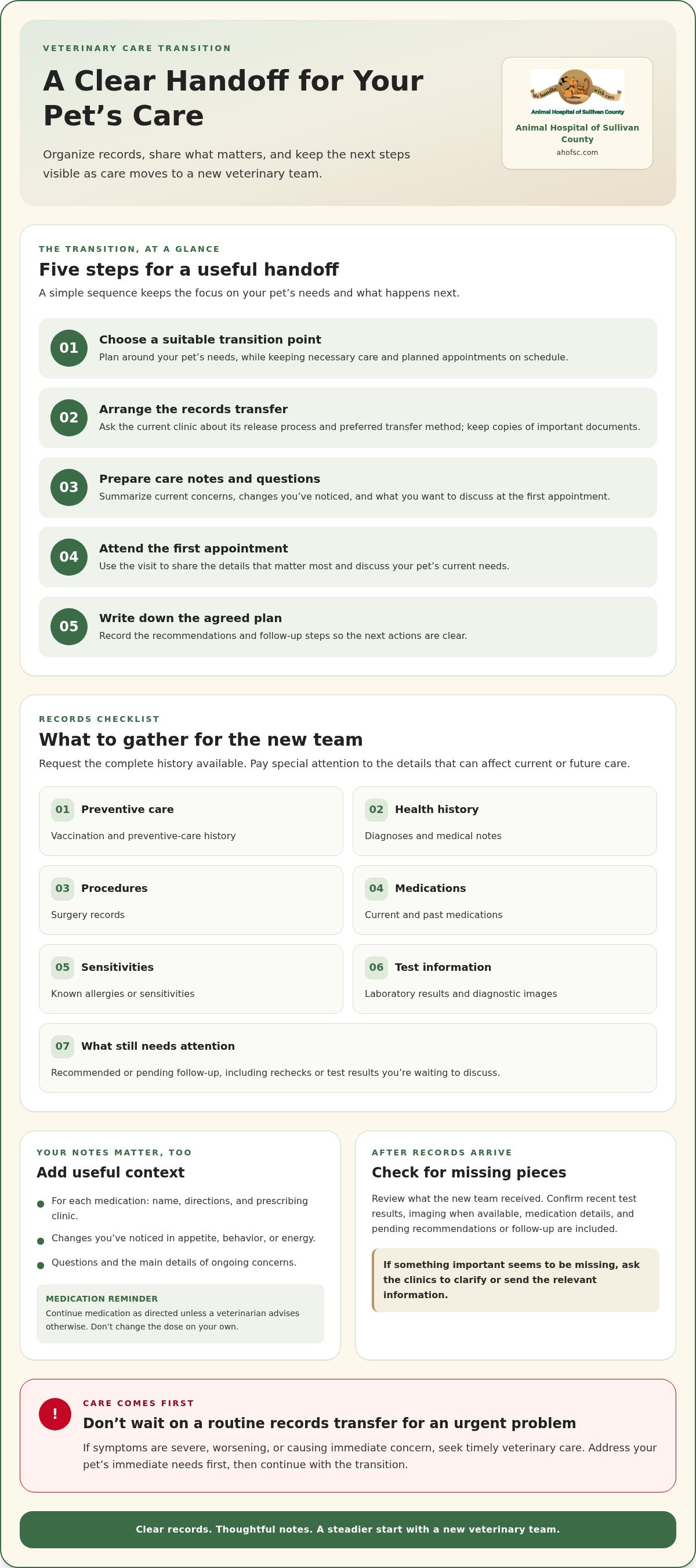
Ask for the complete history available, then pay special attention to information that affects current or future care. A concise checklist includes vaccination and preventive-care history, diagnoses and medical notes, surgery records, current and past medications, known allergies or sensitivities, laboratory results, diagnostic images, and recommended or pending follow-up.
For each medication, write down its name, directions, and prescribing clinic. Keep using it as directed unless a veterinarian advises otherwise, and don’t change the dose on your own. Add a brief personal note about changes you’ve noticed, such as shifts in appetite, behavior, or energy, along with questions for the next appointment. These observations can provide useful context that may not appear in formal records.
How do you request records from your current veterinarian?
Contact the current clinic and ask about its records-release process and preferred transfer method. You can authorize the clinic to send records to the new care team, and it’s helpful to keep copies of important documents for your own reference. The AVMA ethical guidelines address ending a veterinary-client relationship and the role of records in supporting a patient’s continuing care.
After the transfer, review what the new team received. Check that recent test results, imaging when available, medication details, and pending recommendations or follow-up are included. If something important seems to be missing, ask the clinics to clarify or send the relevant information. This review can catch gaps before they complicate a care conversation.
Organizing records is a practical part of learning how to switch veterinarians smoothly. The goal is to give the next team useful context, not simply a stack of paperwork. For families beginning a veterinary relationship with Animal Hospital of Sullivan County, clear records and questions help lay the groundwork for ongoing care.
How to make the veterinarian transition step by step
With the records process underway, focus on making the handoff useful at your pet’s first visit. Choose a transition point that fits your pet’s needs, such as before a routine appointment, while keeping necessary care on schedule. Then prepare a short summary of what matters most, so you can use appointment time to discuss your pet rather than trying to recall every detail.
Quick sequence: choose a suitable transition point, arrange records, prepare questions and care notes, attend the first appointment, then write down the agreed plan and follow-up steps.
What should you do before your pet’s first appointment?
Bring any records you have, a current medication list with directions, previous diagnoses, and a concise list of your pet’s present concerns. Note when you first noticed each concern and whether it has changed. Add questions about ongoing treatment, preventive care, or previously recommended follow-up. This helps the veterinarian understand both your pet’s history and what you’re hoping to address.
Include details that can make the visit more comfortable, too. Let the team know how your pet responds to handling, whether they’re worried around other animals, and what helps them settle. These details can guide a gentler approach.
What should you discuss with the new veterinary team?
Start by sharing your main concerns and asking the veterinarian to review the history with you. The American Veterinary Medical Association’s guidance on transferring your pet’s medical records supports continuity between veterinary relationships. Ask what the available records suggest and whether any details need clarification.
Talk through current treatment, preventive needs, and any recommended tests or follow-up in language that feels clear to your family. If something is unfamiliar, ask what it means for your pet and what the next step involves. You don’t need to leave with every possible question answered, but you should understand the immediate plan and how it supports your pet’s health.
Before you go, summarize what you’ve agreed to do and note who will handle each pending item. Record medication changes only as directed by the veterinarian, along with any follow-up timing or results you’re waiting for. These notes give you a reliable reference after the visit and help turn a first appointment into the beginning of coordinated care.
How to help your pet feel calmer with a new veterinarian
A new clinic can feel like a big change to a pet, but each animal responds in their own way. Some settle into a new routine quickly; others need more time and gentle support. A familiar object, calm handling, and a predictable trip can make the experience more reassuring, even if your pet remains unsure at first.
How can you prepare a nervous dog or cat?
Keep the preparation simple and familiar. For a cat, leave the carrier out at home before the visit and make it a comfortable resting place with familiar bedding. On appointment day, allow time to get your cat settled rather than rushing. A favorite blanket or another suitable comfort item may bring a familiar scent along.
For a dog, use familiar cues and bring a comfort item if appropriate. Keep your own movements calm, and tell the veterinary team before the visit if your dog is fearful, reactive, or uncomfortable with particular types of handling. Share what usually helps, too. That information lets the team consider your pet’s needs as they guide the visit.
Try to keep the trip and appointment-day routine as steady as possible. Allow time for a calm departure and bring a familiar item if it helps. There’s no need to expect every pet to relax immediately. Patience matters.
What if your pet is already managing a health condition?
For a pet with an ongoing condition, emotional comfort and medical continuity go hand in hand. Give the new veterinary team a clear account of symptoms, diagnoses, treatments, and recent changes. Mention changes in appetite, activity, or behavior, even if they seem minor. Keep the conversation centered on what your pet needs now and what care is already in progress.
Age-related needs can also shape the transition. If your pet is a senior, consider the broader guide to compassionate lifelong pet care for additional perspective on supporting them over time. At the appointment, let the team know what helps your older companion move, rest, and feel comfortable.
Thoughtful communication is part of how to switch veterinarians smoothly, especially when a pet needs ongoing medical care. If you’re preparing for a new visit in Sullivan County, plan your pet’s next veterinary visit with their comfort and care needs in mind.
Starting a lasting veterinary relationship in Sullivan County
A successful transition doesn’t end when records arrive at a new clinic. It grows through clear conversations, thoughtful follow-up, and a shared understanding of what your pet needs now and as those needs change. Your first appointment is a starting point: keep asking questions, share new observations, and make sure you understand the next steps in your pet’s care.
What can ongoing veterinary care include?
A pet’s care journey may include preventive visits, medical care for new or ongoing concerns, surgery when appropriate, and diagnostic testing to help inform clinical decisions. Not every pet needs the same care or follows the same schedule. An organized history helps the veterinary team understand what’s been done, what has changed, and what may need attention next.
For example, previous test results and notes about a recurring concern can provide context for a new conversation. Details about medications, past procedures, and preventive care can also help the team consider your pet’s needs as a whole. These records support a more informed discussion, while the veterinarian’s assessment and your family’s observations help shape an appropriate plan.
How can Sullivan County families take the next step?
For families in Sullivan County and across New York, Connecticut, New Jersey, and Pennsylvania, Animal Hospital of Sullivan County offers preventive, medical, and surgical care supported by diagnostic testing. The small-animal practice has served the community since 1953. A lasting relationship is built visit by visit, with clear communication and attention to your pet’s individual history.
As your pet’s needs evolve, keep their care notes together and bring questions to follow-up conversations. If you’re thinking about their needs across every life stage, you can also explore the guide to lifelong pet care for broader perspective.
When you’re ready to take the next step, explore compassionate veterinary care at Animal Hospital of Sullivan County. A well-prepared first visit can be the beginning of steady, ongoing care for your cherished companion.
Take the Next Step Toward Steady, Supportive Care
A thoughtful transition starts with a clear plan: keep essential care on track, gather your pet’s medical history, and prepare questions for the new veterinary team. Add familiar comforts and share your pet’s needs so the first visit can feel more manageable. These practical steps show you how to switch veterinarians smoothly while keeping your companion’s well-being at the center.
A lasting veterinary relationship grows through ongoing conversations and care that reflects your pet’s changing needs. Animal Hospital of Sullivan County provides preventive, medical, and surgical care supported by diagnostics. Each visit is an opportunity to build a clearer picture of your pet’s health over time.
Explore veterinary care at Animal Hospital of Sullivan County as you consider the next step for your family. With preparation and a caring team, a new beginning can feel more comfortable for you and your beloved pet.
Frequently Asked Questions
How do I switch veterinarians without losing my pet’s medical records?
Request the records from your current clinic and ask how they can be sent to the new veterinary team. Transfers usually require an owner’s request, so don’t assume the information will move automatically. Keep copies of important documents for reference, and check with the new team that recent results and pending follow-up details arrived. Your own notes on current concerns and medications can help fill gaps during the handoff.
Can I change veterinarians while my pet is taking medication?
Yes, you can plan a change while your pet is taking medication. Continue giving it as directed unless a veterinarian advises otherwise, and don’t adjust or stop a dose on your own. Share the medication name, directions, prescribing clinic, and reason it was prescribed with the new veterinary team. If you’re concerned about having enough medication during the transition, contact a veterinarian promptly to discuss your pet’s care.
What records should I transfer to a new veterinarian?
Transfer available preventive-care and vaccination history, diagnoses, medical notes, surgery records, laboratory results, diagnostic images, and information about allergies or sensitivities. Include current medications and any recommended or pending follow-up. Your own observations matter, too: note changes in appetite, behavior, energy, or other concerns. A complete history helps the new veterinarian understand your pet’s care so far and discuss appropriate next steps with you.
How long does it take to transfer veterinary records?
There isn’t one standard transfer timeframe for every clinic or location. Ask the current clinic about its process and request the records well before your pet’s first routine appointment when possible. Transfer isn’t automatic, so make the request yourself and keep copies of essential information. If your pet needs attention before the records arrive, bring your notes and medication details, and don’t delay care for an urgent concern.
Will switching veterinarians stress my dog or cat?
A change may unsettle some pets, while others adjust more quickly. Familiar routines and gentle preparation can help: bring suitable bedding or a comfort item, use a familiar carrier for your cat, and give your dog time to settle before the visit. Tell the veterinary team about fear, reactivity, or handling sensitivities so they can take your pet’s comfort into account. Be patient; adjustment can take time.
Should I tell my current veterinarian that I am switching?
You can let your current veterinarian know, but you don’t need to give a detailed explanation if you’d rather keep the conversation brief. A simple request to send your pet’s records to the new clinic can keep the handoff clear and professional. Ask about the clinic’s preferred transfer method, and keep a copy of key records for yourself. Sharing relevant information supports continuity, even if the decision to change feels personal.
What should I bring to my pet’s first appointment with a new veterinarian?
Bring any records you have, a current medication list with directions, and notes about diagnoses, symptoms, and questions. Include details about behavior or handling preferences that may help your pet feel safer. For families in New York, Connecticut, New Jersey, and Pennsylvania, preparing these details before the visit can help make the first care conversation more focused. If records are still in transit, let the team know what information is pending.


