

What if the most helpful way to calm your pet isn’t a new supplement, but a better understanding of what’s unsettling them? If you’re wondering how to reduce pet anxiety naturally, it can be hard to tell whether hiding during a storm, pacing when you leave, or resisting the car signals anxiety or a health concern. It makes sense to look for gentle ways to help, but you don’t have to guess your way through conflicting advice.
A calmer plan starts with noticing patterns: when distress happens, what may trigger it, and what helps your pet settle. Small, steady changes to the environment and daily routine can offer support. Supplements and other calming aids call for care because their safety and effects vary. Natural strategies aren’t always enough, especially when anxiety is severe or persistent.
This guide will help you spot possible triggers, try safe, gradual steps at home, and understand when veterinary guidance is the right next move. If the behavior is new, intense, or could be linked to a health problem, share your observations with your veterinarian. With patience and the right support, you can help your companion feel more secure.
Key Takeaways
- Track when distress begins, what happens beforehand, and how long your pet takes to recover. These details can help uncover possible triggers.
- Learn how to reduce pet anxiety naturally with gradual changes to your pet’s surroundings and routine, guided by calm consistency and rewards.
- Choose calming aids thoughtfully. Enrichment, training, and environmental adjustments can support your pet, but products may have varied effects.
- For separation or noise concerns, use brief, manageable practice and record your pet’s responses rather than forcing exposure.
- Arrange a veterinary assessment for sudden, persistent, worsening, or potentially painful behavior changes, and bring your notes along.
How to recognize pet anxiety and identify what may be triggering it
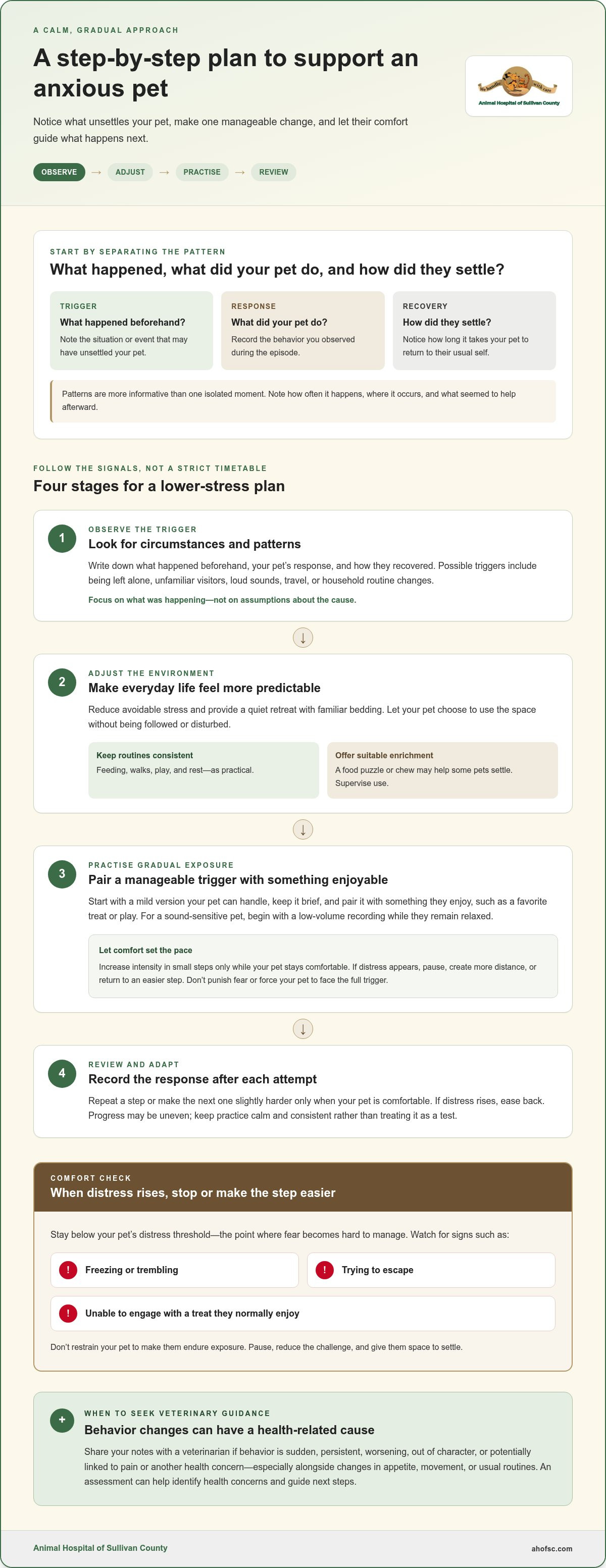
An anxious moment is a fear or stress response to something a pet perceives as unsettling. A brief reaction to an unexpected bang may fade once the room is quiet. Anxiety is more concerning when distress repeats, lasts, or affects everyday routines. To understand the pattern, separate three things: the trigger is what happens beforehand; the response is what your pet does; and recovery is how they settle afterward.
These details can help you decide what support to try and whether a health concern needs attention. They’re also a useful starting point when considering how to reduce pet anxiety naturally, without assuming every unusual behavior has the same cause.
For another overview of separation-related signs and causes, see Separation anxiety in dogs. The video below discusses natural calming options for dogs. Keep in mind that a video can’t determine what’s safe or suitable for your individual pet.
What can anxiety look like in dogs and cats?
Some pets hide, pace, tremble, vocalize, cling close, or seem unable to settle. Others may eat less or show a change in usual habits. Dogs and cats can express distress differently, and the same pet may react differently depending on the situation. A single behavior, such as hiding or refusing a treat, isn’t proof of anxiety by itself.
Keep a simple record: note how often the behavior occurs, how long it lasts, where it happens, and how quickly your pet returns to their usual self. Include what was happening just before and during the episode, along with what seemed to help afterward. Patterns are more informative than one isolated moment.
Which situations may trigger anxious behavior?
Possible triggers include being left alone, unfamiliar visitors, loud sounds, travel, or changes to the household routine. Triggers can overlap: a visitor arriving during a storm, for example, may make it harder to tell what unsettled your pet. Every animal has their own history and sensitivities, so focus on the circumstances rather than relying on assumptions.
A behavior change can also reflect pain or another health issue, especially if it starts suddenly or comes with changes in appetite, movement, or normal routines. If distress persists, worsens, or seems out of character, share your notes with your veterinarian. A veterinary assessment can help identify health concerns and guide appropriate next steps.
How to reduce pet anxiety naturally with gradual, low-stress steps
A gentle plan works best when it follows your pet’s signals rather than a strict timetable. If you’re learning how to reduce pet anxiety naturally, build from what you’ve observed and make one manageable change at a time. The aim isn’t to stop every reaction immediately. It’s to help your companion feel safer and see whether their response improves.
- Observe the trigger. Note what happens beforehand, what your pet does, and how they recover. Look for patterns instead of relying on one episode.
- Adjust the environment. Reduce avoidable stress and provide a quiet place your pet can choose to use.
- Practise gradual exposure. Introduce a mild version of the trigger alongside something your pet enjoys. Keep the experience brief and comfortable.
- Review progress. Record your pet’s response after each attempt. Repeat, make the next step slightly harder only when they’re comfortable, or ease back if distress rises.
Gradual exposure pairs a manageable version of a trigger with a safe, positive experience, helping your pet build comfort at their own pace. Stay below your pet’s distress threshold, the point where fear becomes hard to manage. If they freeze, try to escape, tremble, or can’t engage with a treat they normally enjoy, stop or reduce the challenge. Don’t punish fear, restrain your pet to make them endure it, or force them to face the full trigger.
Create a predictable, comforting home environment
Set up a quiet retreat with familiar bedding where your pet can withdraw without being followed or disturbed. Keep feeding, walks, play, and rest as consistent as practical. A predictable rhythm can make daily life feel more secure. Enrichment, such as a suitable food puzzle or chew, may help some pets settle. Choose options suited to your pet and supervise their use.
Use gradual exposure and positive associations
Begin with a version of the trigger your pet can handle, then pair it with something they enjoy, such as a favorite treat or play. For a sound-sensitive pet, this might mean starting with a low-volume recording while they remain relaxed. Increase intensity in small steps only if they stay comfortable. If distress appears, pause, create more distance, or return to an easier step.
Progress may be uneven, and that’s okay. Keep practice calm and consistent, and avoid turning it into a test your pet has to pass. For persistent or difficult anxiety, a veterinarian can assess the concern and discuss suitable support. Cornell’s overview of veterinary behavior medicine offers more context on emotional disorders in pets. If you’re concerned about your pet’s behavior, discuss your observations with our veterinary team.
Natural calming aids for pets: what may help and what needs caution
There’s no single aid that works for every pet. The safest starting point is often not a product, but a closer look at what helps your companion feel secure. For owners considering how to reduce pet anxiety naturally, it helps to distinguish everyday support from products that may have variable effects. No calming aid should be treated as a guaranteed cure or a substitute for veterinary advice when distress is significant.
Which non-product approaches can support a calmer pet?
Predictable routines, a comfortable retreat, and activity suited to your pet can reduce avoidable stress and support day-to-day wellbeing. Reward-based training can help pets build positive associations with manageable situations. These approaches take consistency, and progress may be gradual. Track whether your pet settles sooner, recovers more easily, or seems more comfortable in daily life.
Pheromone products, such as diffusers or sprays, may offer additional support for some pets, but responses vary and they aren’t a stand-alone solution. Use them as one part of a broader plan that includes environmental changes and gentle learning, rather than expecting a product to remove the trigger or resolve anxiety on its own.
Are herbs, supplements, essential oils, or CBD safe for pets?
Natural origin doesn’t guarantee that a product is safe, effective, or consistent in quality. Research on calming supplements is limited; L-theanine and alpha-casozepine have some supportive data, but the studies are small. Evidence for herbal options is also limited, and findings on CBD for dog anxiety are mixed. A product that suits one animal may not be appropriate for another.
Don’t give your pet human supplements, CBD, or herbal products without veterinary guidance. Products can cause harm or interact with medications. Essential oils also need particular caution: don’t apply concentrated oils directly to your pet, and ask your veterinarian before using them around animals. Share the product label and a list of your pet’s current medications with the veterinary team before starting anything new. Don’t guess at a dose.
Choose any aid with a clear purpose, then observe your pet’s comfort and recovery rather than relying on marketing claims. A calming product may be intended to support a pet during a stressful situation, but it won’t necessarily address what’s driving the distress. If separation is a concern, the ASPCA’s guide to common dog behavior issues includes information about separation anxiety. Your veterinarian can help you weigh potential benefits and risks for your pet.
How to handle separation, noise, and other common anxiety triggers
Once you have a clearer idea of what unsettles your pet, adapt your approach to that situation. Keep practice brief and manageable, and let your pet’s comfort and safety guide each step. A training exercise can wait. If your pet becomes highly distressed, stop, create distance from the trigger, and give them a chance to settle.
A simple log can help you see what’s changing. Note the trigger, your pet’s response, what you tried, and how long recovery took. Patterns in your notes can help you adjust your plan and give your veterinarian a useful picture if distress persists.
What can help a pet who struggles when left alone?
Start with a brief separation your pet can handle calmly, then build duration gradually only while they remain settled. A familiar resting area can offer comfort, and keeping departures and returns low-key may make them less eventful. If your pet shows marked distress soon after you leave, don’t leave them to endure prolonged episodes as a training method. Reduce the challenge and seek veterinary guidance if the problem continues.
How can you prepare for loud sounds, visitors, or travel?
For loud sounds, offer a quiet retreat away from windows or the noisiest part of the home. Before visitors arrive, give your pet the option to rest separately; don’t force greetings or contact. For travel, let your pet explore familiar travel items at their own pace and plan ahead when possible. If a predictable event is the trigger, brief, low-intensity practice beforehand may help, as long as your pet stays comfortable.
Seasonal noise or repeated travel distress may call for planning well before the event. Discuss persistent or severe reactions with your veterinarian, especially if your pet risks injury or can’t recover easily. If behavior changes as your pet ages, pain or another health concern may be involved; our guide to senior pet care in Sullivan County offers related information.
These small, trigger-specific adjustments can help you understand how to reduce pet anxiety naturally without adding pressure that could intensify fear. If you’re concerned about your pet’s response to separation, noise, or travel, schedule a veterinary assessment and bring your behavior notes to discuss with the care team.
When natural anxiety strategies are not enough: getting veterinary support
Home strategies can be helpful, but they shouldn’t delay an assessment if your pet’s behavior is new, severe, worsening, or difficult to manage safely. Anxiety-like behavior may also be connected to pain or another health concern. A veterinary assessment can help explore possible medical causes and guide you toward appropriate next steps. Seeking help doesn’t mean you’ve failed your pet. It’s a caring way to understand what they need.
When should you arrange a veterinary assessment?
Arrange an assessment for persistent distress, escalating reactions, or a sudden change in your pet’s usual behavior. Seek guidance if your pet risks injury, hurts themselves, can’t settle, or has changes to eating or sleeping. These signs deserve attention even if you suspect a recognizable trigger. Animal Hospital of Sullivan County provides emergency treatment during business hours.
What should you bring to an appointment?
Your observations can help the veterinary team understand the pattern. Keep a simple record of when episodes happen, what may have triggered them, how long they last, and what helps your pet recover. Include any changes in appetite, sleep, movement, or daily routines. If it’s safe to capture a short video without approaching or upsetting your pet, it may help show what happens at home.
Bring the names or labels of supplements and calming products, along with a list of current medications. Don’t start or stop a medication based on a video or online advice; discuss product questions with the care team. You can also explore the Animal Hospital of Sullivan County’s broader guide to ongoing pet care for more context on supporting your companion’s health.
If you’ve been trying to work out how to reduce pet anxiety naturally and your pet is still struggling, it’s reasonable to ask for support. The Sullivan County veterinary team can discuss your concerns and behavior notes with you as part of your pet’s medical care. You don’t need to have every answer before making an appointment. Start with what you’ve noticed and what worries you most.
Take the Next Gentle Step Toward a Calmer, More Comfortable Pet
Helping an anxious pet is a gradual process, not a quick fix. Notice what may be triggering the distress, make calm and manageable changes, and track how your companion responds. Natural aids can play a supporting role, but their effects and safety vary, so discuss products and supplements with your veterinarian before trying them.
If you’re still wondering how to reduce pet anxiety naturally, remember that you don’t have to figure it all out alone. New, worsening, or persistent behavior deserves attention, especially when pain or another health concern could be involved. Bringing notes about your pet’s triggers and recovery can make a veterinary conversation more useful.
Animal Hospital of Sullivan County has cared for pets since 1953, with comprehensive preventive and medical care supported by onsite diagnostic capabilities. Serving pet families in New York, Connecticut, New Jersey, and Pennsylvania, our team can help you take a thoughtful next step. Talk with our veterinary team about your pet’s anxiety and share what you’ve observed. With patience, understanding, and the right support, you can help your companion feel safer and more at ease.
Frequently Asked Questions
Is there a natural way to calm an anxious pet?
Yes, gentle changes at home may support a pet’s comfort, though there’s no guaranteed natural cure. Offer a quiet retreat, keep routines predictable, and provide enrichment suited to your pet. Gradual, reward-based practice can help build comfort around manageable triggers. The best plan depends on the individual animal and what’s causing distress. Before trying supplements or essential oils, discuss safety with your veterinarian, especially if your pet takes medication.
How can I calm my dog naturally during a storm?
Prepare a quiet indoor retreat before the storm, using familiar bedding and reducing exposure to flashes or loud sounds where you can. Let your dog choose whether to come close for comfort or rest alone. During calm periods, you can practise with very soft storm sounds paired with something enjoyable, stopping if your dog shows distress. Don’t punish fearful behavior or insist your dog stay near a frightening sound.
Can I leave my anxious pet alone to get used to it?
Don’t leave a highly distressed pet alone for a prolonged period as a way to teach them to cope. Start with a separation brief enough for your pet to remain settled, then increase it gradually while they’re comfortable. If your pet panics, risks injury, or struggles to recover, pause the practice and speak with a veterinarian. Repeated overwhelming absences may worsen distress rather than help your pet feel safe alone.
Do calming supplements or essential oils work for pets?
Some calming products may help some animals, but effectiveness, quality, and safety vary. A product intended for people may not be safe for pets, and supplements can interact with medications or health conditions. Don’t give a human supplement, CBD, or herbal product, or apply or diffuse essential oils around your pet, without veterinary guidance. Share the product label and your pet’s medication list with the veterinary team before use.
What is the difference between pet anxiety and normal fear?
Fear is a response to a perceived threat and may ease after the situation passes. Anxiety can include anticipation or recurring distress around a trigger, even before it appears. One behavior alone can’t confirm what your pet is experiencing. Note the setting, what happened beforehand, how often the response occurs, its intensity, and how your pet recovers. If you’re concerned, a veterinarian can help assess the behavior and consider possible health factors.
How long does it take to reduce pet anxiety naturally?
There’s no set timeline for how to reduce pet anxiety naturally. Progress can depend on the trigger, how long the behavior has been present, and whether practice stays manageable for your pet. Look for gradual changes, such as settling more easily or recovering sooner, rather than expecting an overnight result. Keep notes as you go. If distress worsens or you’re not seeing progress, review the approach with your veterinarian.
When should I take my anxious pet to the vet?
Arrange a veterinary assessment if distress is persistent, worsening, newly appearing, or disrupting eating, sleeping, or everyday activities. Seek prompt guidance if your pet may injure themselves or others, can’t settle, or has a sudden behavior change, since pain or another health issue may be involved. Animal Hospital of Sullivan County provides medical care and onsite diagnostics for pets. Pet families in New York, Connecticut, New Jersey, and Pennsylvania can bring behavior notes and product details to discuss with the care team.


