
What if protecting your puppy takes more than keeping up with vaccines? The best way to understand how to prevent common puppy diseases is to combine age-appropriate veterinary care, parasite prevention, healthy daily routines, and sensible choices about exposure. That can feel like a lot to manage while you’re also helping a new family member settle in.
It’s understandable to wonder which illnesses pose the greatest risk, when vaccines offer protection, and how to socialize your puppy safely along the way. A veterinarian can tailor a prevention plan to your puppy’s age, health, and routine, including outdoor exposures that come with life in the Catskills. Bring the records you have and describe where your puppy spends time so the recommendations fit your household.
This guide explains key preventable health risks, how vaccines and parasite control fit into a manageable routine, and what changes may call for prompt veterinary attention. With steady care and a trusted veterinary partner, you can give your puppy a healthier start and enjoy those first months with greater peace of mind.
Key Takeaways
- Understanding how to prevent common puppy diseases starts with recognizing that risks can vary with your puppy’s age, health history, and exposure.
- Bring any health records to a veterinary visit and work together on vaccine timing, parasite care, and follow-up as your puppy grows.
- Simple habits, including cleaning food and water bowls and disposing of waste safely, can support a healthier home routine.
- Socialization is important, but choose activities and settings with your puppy’s current protection and veterinary guidance in mind.
- Repeated vomiting or diarrhea, marked lethargy, or difficulty breathing warrants prompt veterinary advice.
How to prevent common puppy diseases: start with the risks
Protecting a puppy doesn’t mean eliminating every possible illness. It means taking manageable steps, guided by a veterinarian, to reduce preventable risks and respond early if something seems wrong. The best approach to how to prevent common puppy diseases depends on your puppy’s age, health, and everyday exposures.
Disease prevention lowers the chance of illness; early detection notices possible signs, and treatment addresses illness after it develops. These steps work together, but none can promise that a puppy will never get sick. For broader background on canine health and prevention, see this canine health overview.
For a brief overview of common puppy illnesses and protection, watch:
Which diseases are puppy owners most often trying to prevent?
Some of the most concerning risks are infectious or parasitic. Parvovirus can cause serious gastrointestinal illness, while distemper can affect several body systems and make puppies seriously ill. Respiratory infections may spread among dogs, and intestinal parasites can affect a puppy’s health. Heartworm and external parasites, such as fleas and ticks, are also worth discussing with your veterinarian. No single vaccine or parasite-control measure protects against every risk, so prevention choices should be tailored to the puppy.
Why do age and exposure change a puppy’s risk?
Young puppies are still developing immune protection, and their health needs can differ. A veterinarian considers age, medical history, and likely exposure when advising on vaccination and parasite control. Contact with other dogs, shared spaces, wildlife, and outdoor areas can all shape which precautions make sense.
For Sullivan County families, outdoor routines in the Catskills are a useful part of that conversation. A puppy exploring yards, trails, or wooded areas may encounter different exposures than one whose outings are mostly close to home. If you live elsewhere in New York, Connecticut, New Jersey, or Pennsylvania, share the same details about your puppy’s local routine and surroundings. The point is not to assume particular disease rates, but to give your veterinary team the information needed to discuss practical prevention choices as your puppy grows and explores.
Build a puppy disease-prevention plan with vaccines and parasite care
A clear plan turns prevention into manageable steps instead of a guessing game. A puppy’s preventive plan should be individualized because age, health history, lifestyle, and likely exposure all shape which protections are appropriate and when. Your veterinary team can help you make those decisions and adjust the plan as your puppy grows.
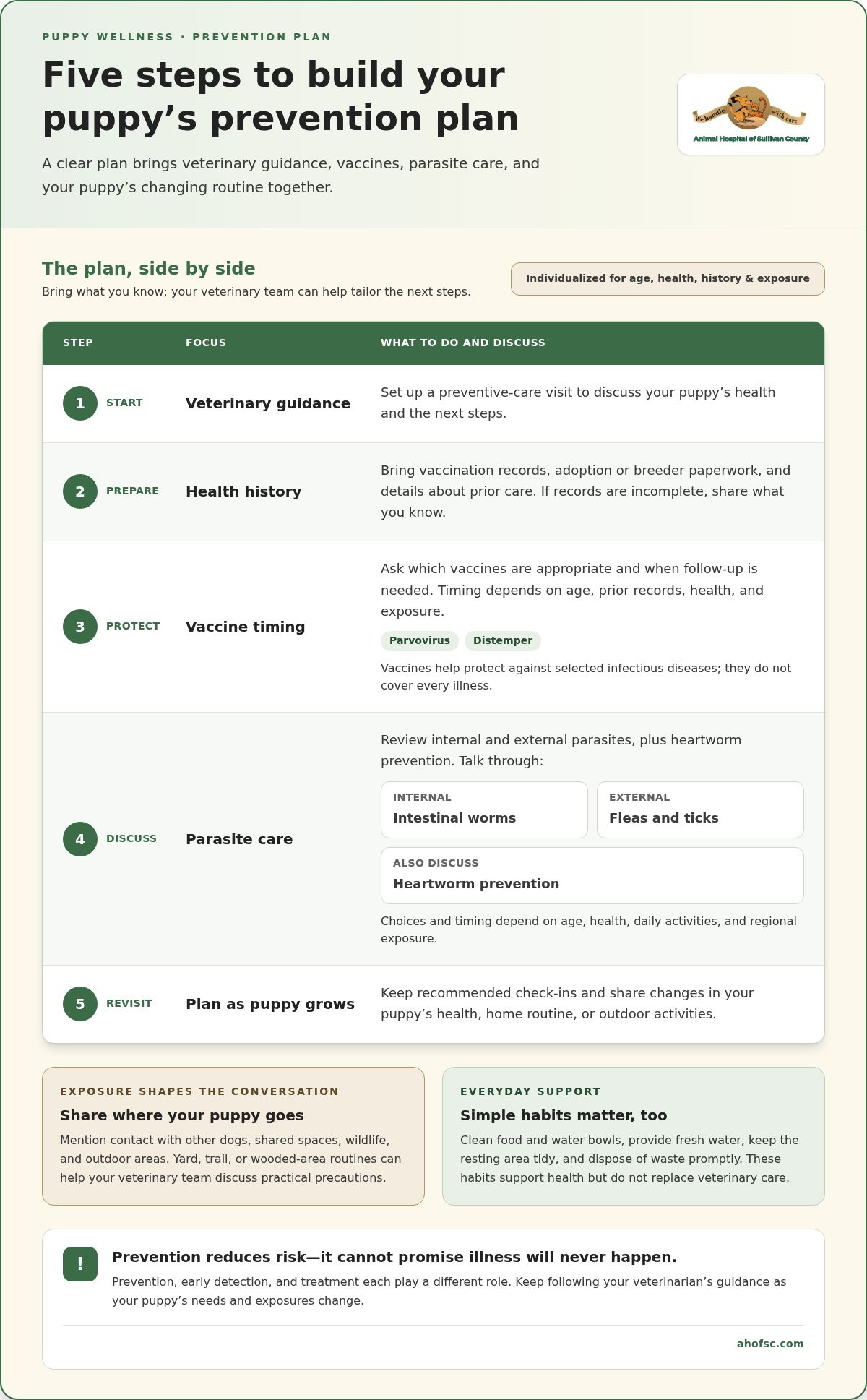
Use this five-step process to get started:
- 1. Arrange veterinary guidance. Set up a preventive-care visit to discuss your puppy’s health and the next steps.
- 2. Review health history. Bring vaccination records, adoption or breeder paperwork, and information about prior care. If records are incomplete, tell the veterinarian what you know.
- 3. Plan vaccines. Ask which vaccines are appropriate and when follow-up is needed. Timing depends on age, prior records, health, and exposure.
- 4. Discuss parasite care. Review internal parasites, such as intestinal worms, and external parasites, including fleas and ticks, as well as heartworm prevention.
- 5. Revisit the plan. Follow the recommended check-ins and share changes in your puppy’s health, home routine, or outdoor activities.
How do puppy vaccines fit into disease prevention?
Vaccines help protect against selected infectious diseases, including parvovirus and distemper. They don’t cover every illness, and a vaccine visit is only one part of ongoing prevention. Your veterinarian will recommend timing based on your puppy’s individual circumstances. Keep a copy of available records and follow the advised schedule for follow-up, even if your puppy seems healthy.
How should owners approach parasite prevention?
Parasite prevention isn’t one-size-fits-all. Ask about intestinal worms, fleas, ticks, and heartworm, and discuss how age, health, daily activities, and regional exposure affect the choices and timing. In the Catskills, include your puppy’s outdoor routine in the conversation. The same applies to puppy owners across New York, Connecticut, New Jersey, and Pennsylvania: describe the places your puppy visits rather than assuming every puppy has the same exposure. For more context on products available through a veterinary clinic, see this veterinary pet store products buying guide.
Prevention also includes supporting healthy development. Positive, thoughtfully managed experiences can help puppies learn about their world; the AVMA’s guidance on early puppy socialization offers helpful background. Ask your veterinarian how to balance social experiences with your puppy’s current protection.
A preventive-care visit can bring these pieces together in a plan that fits your puppy. Learn more about veterinary preventive care and how the veterinary team can support your puppy’s health as needs change.
Can everyday routines prevent common puppy diseases?
Small daily habits can support your puppy’s health and help reduce avoidable exposure, though they can’t replace veterinary care or prevent every illness. Clean bowls, fresh water, a tidy resting area, and prompt waste cleanup are simple routines that make good care easier to maintain.
How can owners reduce exposure at home and outdoors?
Wash food and water bowls regularly, keep bedding clean, and pick up feces from the yard promptly. Dispose of waste safely, then wash your hands. The CDC’s Healthy Pets, Healthy People guidance offers more practical information about caring for dogs and reducing health risks for people and pets.
Socialization is part of a puppy’s wellbeing, so avoiding every new place or dog isn’t the answer. Instead, ask your veterinarian which settings are suitable while your puppy’s protection is developing. Follow that advice about contact with unfamiliar or visibly ill animals, and avoid shared areas that your veterinarian identifies as a concern. If you’re unsure about a dog park, walking route, or group activity, describe it during a veterinary visit and discuss safer ways to help your puppy explore.
Outdoor routines matter, too. In Sullivan County and the Catskills, tell your veterinary team whether your puppy spends time in a yard, walks on trails, encounters wildlife, or visits shared dog spaces. Puppy owners elsewhere in New York, Connecticut, New Jersey, and Pennsylvania can use the same approach: explain the activities and settings that make up a typical week. Those details help the veterinary team consider exposure without assuming that every location or puppy carries the same risks.
What routine helps owners notice illness early?
A calm daily check can help you spot changes before they become easy to overlook. Notice whether your puppy is eating and drinking as usual, has their typical energy, passes stool normally, and breathes comfortably. You don’t need to monitor every moment. Pay attention to changes that are unusual for your puppy.
- Record when a new or recurring symptom began.
- Note whether it is improving, worsening, or happening again.
- Share relevant details with your veterinary team when you seek advice.
These observations can support a veterinary assessment, but they can’t diagnose a disease at home. If you’re concerned by a change, describe what you’ve noticed and follow your veterinarian’s guidance. Clean surroundings, thoughtful exposure choices, and attentive observation are practical parts of how to prevent common puppy diseases.
When should a puppy owner call a veterinarian about possible illness?
Routine questions about vaccines, parasite prevention, or your puppy’s changing needs can be raised at preventive-care visits. New symptoms are different. If your puppy seems unwell, contact a veterinarian for advice rather than trying to diagnose the cause at home. Acting promptly can help the veterinary team assess what’s happening and guide you on next steps.
Which puppy symptoms should not be ignored?
Repeated vomiting or diarrhea, marked lethargy, and a noticeable change in appetite or behavior deserve prompt veterinary advice, especially if symptoms persist or worsen. This list isn’t a diagnosis, and one sign can have different causes. Difficulty breathing, collapse, or a rapidly worsening condition calls for urgent veterinary help. Don’t wait for a routine appointment if your puppy is struggling to breathe or suddenly becomes unresponsive.
Animal Hospital of Sullivan County provides emergency treatment during business hours. If your puppy needs urgent attention during those hours, call the hospital using its published contact information. If symptoms are severe or worsening, seek urgent veterinary help.
What information helps the veterinary team guide you?
A few details can make it easier to explain your concern clearly. Have these ready if you can:
- Your puppy’s age and available vaccination or other health records
- Current medications and any recent changes to food
- What symptoms you’ve noticed, when they began, how often they occur, and whether they’re changing
- Any known contact with sick animals or other possible exposures
Even a brief note on your phone can help you describe the timeline accurately. Don’t delay seeking help to collect every detail, especially if breathing is difficult, your puppy has collapsed, or their condition is getting worse.
Knowing how to prevent common puppy diseases includes recognizing when prevention questions should give way to medical advice. For a broader look at ongoing veterinary support, read the Sullivan County animal hospital care guide. If you’re concerned about a change in your puppy’s health, contact Animal Hospital of Sullivan County for veterinary care during business hours.
Make puppy disease prevention a lasting partnership with your veterinarian
A helpful prevention plan doesn’t end after one visit. Your puppy’s needs can change as they grow, become more active, or develop new health concerns. Regular conversations with a veterinarian help keep the plan relevant, from preventive care to diagnostic support when questions arise. That ongoing partnership makes it easier to understand how to prevent common puppy diseases while staying attentive to your individual puppy’s wellbeing.
How can owners prepare for a puppy wellness visit?
A little preparation helps your veterinary team see the fuller picture of your puppy’s health and routine. Bring vaccination and medical records if you have them, along with a note of any questions or changes you’ve noticed. It’s fine if some history is missing; share what you know.
- Describe your puppy’s daily routine, diet, and outdoor activities.
- Mention contact with other animals and the kinds of places your puppy visits.
- Ask about vaccines, parasite prevention, socialization, and signs of illness to watch for.
These details can help the veterinary team tailor guidance to your puppy’s health, development, and likely exposure. They also give you a chance to raise everyday concerns, even if they seem small.
What does an ongoing prevention partnership look like?
Think of preventive care as a series of conversations and assessments, not a one-time checklist. As your puppy grows, their health, activities, and surroundings may change. Your veterinarian can revisit recommendations with you, explain what to keep doing, and adjust guidance when your puppy’s needs evolve.
At Animal Hospital of Sullivan County, preventive care is supported by medical services and diagnostics. The practice has served the community since 1953. A veterinary team can help you make sense of new questions as your puppy’s routine changes. You don’t need to have every answer ready before asking for guidance.
Book preventive care, bring the records you have, talk through your puppy’s exposures, and follow up on the next steps you agree on together. For an introduction to the services and approach at the Animal Hospital of Sullivan County, explore the hospital’s care information and learn more about caring for your puppy through every stage of life.
Give your puppy a healthier start with steady, thoughtful care
Protecting your puppy is a series of practical steps, not a promise that illness can never happen. A veterinarian-guided plan for vaccines and parasite prevention, clean daily routines, and attention to changes in your puppy’s health all help you make informed choices. If concerning symptoms arise, seek veterinary advice promptly.
The best approach to how to prevent common puppy diseases grows with your puppy. Bring health records to preventive visits, share details about daily activities and exposure, and revisit the plan as your puppy’s needs change. At Animal Hospital of Sullivan County, preventive care is supported by medical services and diagnostics. The hospital has served the community since 1953, and emergency treatment is available during business hours.
Start building a prevention plan with Animal Hospital of Sullivan County. Schedule preventive care for your puppy and take the next step toward a healthy, happy start together.
Frequently Asked Questions
What diseases should puppies be protected against?
Veterinarians commonly discuss vaccines for serious infectious diseases such as parvovirus and distemper, along with respiratory infections and rabies, based on a puppy’s needs. Parasite prevention is another important part of the plan and may address intestinal worms, fleas, ticks, and heartworm. The right recommendations depend on age, health history, and exposure. Share your puppy’s routine and outdoor activities with your veterinarian, whether you live in New York, Connecticut, New Jersey, or Pennsylvania.
How can I prevent parvo in my puppy?
Vaccination and thoughtful exposure choices are key steps to lower your puppy’s risk of parvovirus, a disease that can cause serious illness. Follow your veterinarian’s vaccine recommendations, and ask which places are appropriate while your puppy’s protection is developing. Until then, avoid areas your veterinarian considers high risk, such as contaminated shared spaces, and promptly clean up waste at home. No prevention approach can promise complete protection, so seek veterinary advice if your puppy seems unwell.
Can puppies go outside before they finish their vaccines?
Often, puppies can have carefully managed outdoor experiences before completing their vaccines, but your veterinarian should guide where and how. A private, clean yard may differ from a busy dog park or a shared area visited by unknown dogs. Avoid visibly ill animals and places your veterinarian advises against. Socialization matters too, so ask how to introduce your puppy to people, sounds, and safe settings without unnecessary exposure.
When should a puppy start parasite prevention?
Ask your veterinarian to recommend when parasite prevention should begin and which options fit your puppy. Timing and selection depend on factors such as age, health, lifestyle, and exposure to internal and external parasites. Discuss intestinal worms, fleas, ticks, and heartworm, and mention outdoor habits or wildlife contact. Don’t use a product or dose without veterinary guidance, since recommendations need to suit the individual puppy.
What are the first signs that a puppy may be sick?
Early signs can include a change in appetite, energy, stool, or breathing, as well as vomiting or diarrhea. Watch for what’s unusual for your puppy and note when it started and whether it’s changing. Repeated vomiting or diarrhea, marked lethargy, difficulty breathing, collapse, or a rapidly worsening condition warrants prompt veterinary advice. These signs don’t identify a specific disease, so describe what you observe rather than trying to diagnose the cause at home.
Do puppies need regular veterinary checkups if they seem healthy?
Yes. Preventive visits help your veterinarian review your puppy’s development, health history, vaccine needs, and parasite prevention, even when your puppy seems well. Recommendations can change as age, health, and daily activities change. Bring available records and share new routines or concerns. For families across New York, Connecticut, New Jersey, and Pennsylvania, a veterinary team can help tailor preventive care to a puppy’s individual needs.
Can home hygiene alone prevent common puppy diseases?
No. Clean bowls, fresh water, regular bedding care, and safe waste disposal support good hygiene, but they can’t replace veterinary guidance, vaccines, or appropriate parasite prevention. These steps also can’t prevent every infection or exposure. A practical approach combines clean surroundings with a veterinarian-guided prevention plan and attention to changes in your puppy’s health. That’s a helpful foundation for how to prevent common puppy diseases without assuming any single measure covers every risk.


