
What if asking questions about your pet’s care could bring you closer to your veterinarian, not push you away? If you’ve felt judged for choices such as raw feeding or a limited vaccine schedule, finding a vet who respects my choices may feel like searching for someone who listens without making you fear you’ll be dismissed.
Your observations matter because you know your companion’s daily habits. A veterinarian’s medical expertise can help you understand risks, weigh options, and make informed decisions together. Good care doesn’t have to feel like a top-down directive or a rushed visit. It can be a respectful partnership built around your pet’s needs and your family’s circumstances.
This guide explains how to recognize collaborative care, prepare for a first conversation, and discuss choices about nutrition, prevention, and treatment. It also offers practical questions to help you assess a veterinary practice in New York, Connecticut, New Jersey, or Pennsylvania. Animal Hospital of Sullivan County provides preventive, medical, and surgical care, supported by onsite diagnostics and emergency treatment during business hours. The goal is to help you find a care partner who gives you and your pet greater confidence.
Key Takeaways
- Look for a veterinarian who explains medical risks clearly and makes room for your questions instead of dismissing your concerns.
- When finding a vet who respects my choices, ask how a care plan can account for your pet’s health, lifestyle, and risk factors.
- Use a first conversation or wellness visit to notice how the team communicates with both you and your pet.
- Bring notes and a clear goal to appointments, then use “I” statements to explain what matters to your family.
- Animal Hospital of Sullivan County offers preventive, medical, and surgical care, onsite diagnostics, and emergency treatment during business hours.
What Does it Mean to Have a Vet Who Respects Your Choices?
Finding a vet who respects my choices doesn’t mean expecting a veterinarian to agree with every preference or setting medical expertise aside. It means being treated as a partner: your knowledge of your pet’s daily life is heard, and the veterinarian explains clinical concerns with patience. Respect goes both ways, creating room for questions, honest discussion, and decisions centered on your pet’s well-being.
Collaborative care combines a veterinarian’s medical knowledge with an owner’s firsthand understanding of their pet. A respectful veterinarian explains the reasons behind recommendations, including relevant risks, benefits, and alternatives, so you can make an informed decision. This reflects the ethical principle of informed consent, not a demand to accept a plan without understanding it.
The video below shares one pet owner’s perspective. Treat it as a prompt to ask questions and seek clear explanations, not as a substitute for veterinary guidance.
The Difference Between Compliance and Collaboration
In a compliance-based relationship, it can feel as though “the doctor knows best,” with little space to discuss what matters to your family. Collaboration replaces that one-way dynamic with explanation and shared problem-solving. Your veterinarian brings diagnostic skill and medical knowledge; you bring firsthand insight and help weigh practical options. Ask what a recommendation is intended to address, what alternatives may be appropriate, and what to watch for afterward. Clear conversations can ease uncertainty and help you understand the plan.
Why Your Intuition as an Owner is a Vital Diagnostic Tool
You see your pet at home, where changes may be easier to notice than during an appointment. Perhaps your cat is hiding more, your dog hesitates on the stairs, or your pet’s appetite has shifted. These details aren’t a diagnosis, but they can help your veterinarian decide what to ask, examine, or investigate. Before a visit, note when the change began, how often it happens, and whether anything makes it better or worse. A thoughtful vet will ask follow-up questions and explain how your observations fit into the clinical picture.
Empathy makes this exchange possible. When you feel safe speaking honestly, you’re more likely to mention worries, uncertainty, or observations you fear might sound unusual. Trust can grow through attentive conversations and a shared focus on your companion’s comfort and health.
Common Areas Where Pet Owners Seek More Autonomy
Some care decisions don’t have one answer that fits every pet. A useful conversation starts with your veterinarian explaining the medical considerations, then weighing them alongside your companion’s health, habits, and home environment. The Principles of Veterinary Medical Ethics offer professional guidance on veterinarians’ responsibilities, including communication with clients. That openness matters whether you’re discussing prevention, food, or care near the end of life.
Vaccines, Nutrition, and Preventive Care
Vaccination plans can be discussed in light of your pet’s age, health history, lifestyle, and exposure risks. Ask which vaccines the veterinarian recommends, why they may suit your pet, and whether testing or follow-up is appropriate. The goal isn’t to assume fewer or more vaccines are always best. It’s to understand the reasoning behind a plan tailored to your pet.
Food deserves the same thoughtful conversation. If you’re considering raw, fresh, or prescription food, bring the product label or recipe and explain why you’re interested in it. Ask about nutritional balance, possible risks, and how the food fits your pet’s health needs. You shouldn’t have to hide your choices. A veterinarian can explain concerns respectfully and help you consider options.
Parasite prevention is another area for shared decision-making. In New York, Connecticut, New Jersey, and Pennsylvania, discuss your pet’s outdoor habits, travel, and exposure to ticks and other parasites with your veterinarian. Ask what prevention options may fit those circumstances and whether testing is appropriate. Pet diagnostics in Sullivan County may help inform preventive decisions when testing is medically appropriate. Your pet’s individual routine and health matter more than assuming every animal faces the same risks.
Dignity in End-of-Life Decisions
As a pet’s needs change, families may need time and support to consider comfort, quality of life, and what a peaceful goodbye could look like. Ask your veterinarian to explain options, signs of discomfort, and how care might change over time. A respectful conversation won’t pressure you into a decision; it will help you understand what your pet may need and make choices with compassion.
It can also help to ask what support is available and what arrangements are possible. Animal Hospital of Sullivan County has an onsite crematorium, a resource families may wish to discuss as they plan for a dignified farewell. For more guidance, read about pet end-of-life care in Sullivan County.
Finding a vet who respects my choices means being able to raise sensitive topics and receive clear, kind answers. If you’re considering a care plan for your pet, you can also explore Animal Hospital of Sullivan County’s veterinary care as a starting point for a conversation.
How to Interview a New Vet for Your 'Cherished Family Member'
Choosing a veterinarian is about more than credentials or a clinic’s appearance. You’re looking for a team that can care for your pet with skill and treat your questions with respect. If a practice offers an introductory conversation, ask what it includes. Otherwise, a wellness exam can give you a chance to observe how the clinic communicates before an urgent decision arises.
Notice specific details. Does staff speak calmly to your pet and explain what they’re doing? Do they listen when you describe a concern? Do you leave knowing what the next step is, or whom to contact if you have more questions? A warm environment doesn’t need to be fancy. Patience, clear answers, and attention to your companion’s comfort can tell you a lot about the care relationship you may build.
Questions to Ask During Your First Visit
Direct questions can help you understand a veterinarian’s approach. You might ask:
- “How do you handle it when an owner has concerns about a standard protocol?”
- “Are you open to discussing different treatment options or a vaccine plan tailored to my pet?”
- “How do you involve owners in deciding whether diagnostic testing is appropriate?”
Listen for answers that explain how your pet’s history, health, and circumstances inform recommendations. A thoughtful veterinarian can discuss what’s known, where uncertainty remains, and which options may be appropriate. Openness doesn’t mean every requested approach will be suitable. It means the conversation is honest, respectful, and focused on your pet.
Red Flags vs. Green Flags in Vet Communication
A red flag: You’re pressured through fear or made to feel irresponsible for asking questions. Clear, urgent advice may be necessary in a serious situation, but a veterinarian should still explain the concern and help you understand the next steps.
Green flags: The team explains options in plain language, welcomes reasonable questions, and respects your need to think through a decision when time allows. It’s also reassuring when a veterinarian can acknowledge that more than one approach may be reasonable while explaining how the risks and benefits differ for your pet.
Pay attention to how the visit feels afterward. Did you leave with a clearer understanding, even if you still need to decide? Could you imagine raising a concern at the next appointment? Those impressions matter. Finding a vet who respects my choices isn’t about finding someone who agrees with everything; it’s about finding a medical partner who helps you make informed decisions for your cherished family member.
Effective Advocacy: How to Talk So Your Vet Will Listen
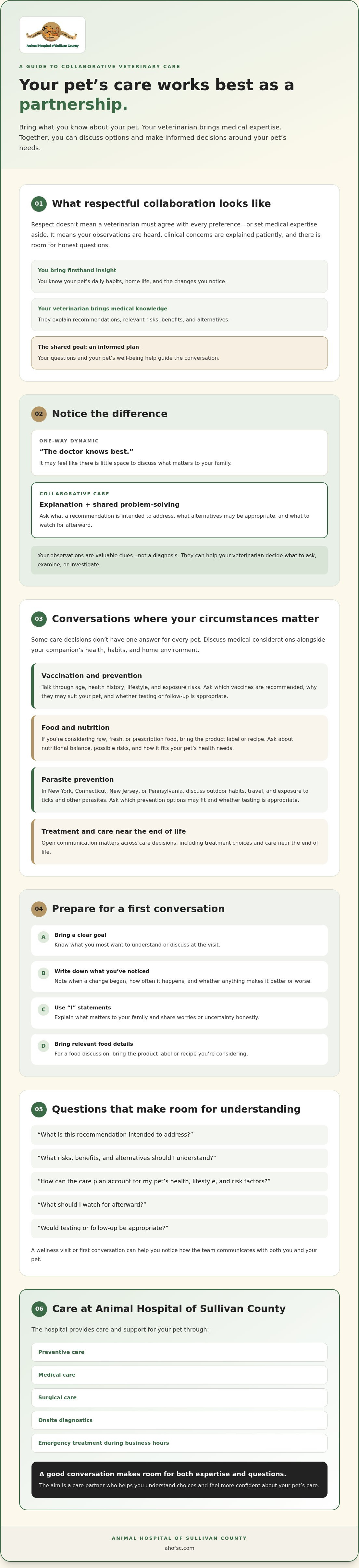
Speaking up for your pet doesn’t have to turn an appointment into a debate. A little preparation can help you explain what you’ve noticed, understand your veterinarian’s thinking, and work toward a plan that fits your companion’s needs.
Before the visit, jot down changes in behavior, appetite, mobility, or daily routine. Note when each change began and whether it has improved, worsened, or stayed the same. Bring a short list of questions and decide what you most want to understand. If you’re discussing a recommendation, it’s reasonable to ask, “What are we hoping this will tell us?” or “What are the benefits, risks, and alternatives?” Clear answers help you weigh your options.
Build Trust Through Honest, Respectful Conversation
Share the full picture of your pet’s life, including diet, activities, supplements, and any choices you worry might be judged. Those details can affect a veterinarian’s assessment. Try “I” statements to explain your perspective: “I’m concerned about how this may affect her comfort,” or “I’d like to understand whether there’s another option.” If you disagree, ask what risk the recommendation is meant to address and explain what gives you pause. Respectful honesty helps both of you focus on your pet, not on winning an argument.
For ongoing concerns, keep a simple record of symptoms, questions, and changes between appointments. Include relevant details such as when a symptom appears and what was happening at the time. Reviewing your notes together can make it easier to discuss patterns and decide whether the plan needs to change.
Navigate Difficult Decisions With Compassion
Emotions can run high when your pet’s health or comfort is at stake. Take a breath, return to the shared goal of supporting your companion’s quality of life, and ask for clarification if medical terms or next steps aren’t clear. If you need time to consider a recommendation, say so and ask whether waiting is medically appropriate. You can also request another professional perspective. For later-life conversations, explore this resource on senior pet care in Sullivan County.
Your veterinarian provides medical expertise and recommendations; you bring intimate knowledge of your pet and participate in decisions about their care. Finding a vet who respects my choices means being able to discuss those perspectives openly, even when you don’t immediately agree. If you’re looking for a place to begin that conversation, explore veterinary care at Animal Hospital of Sullivan County.
Partnering with Animal Hospital of Sullivan County
Finding a veterinary relationship that feels personal can bring comfort, especially when you’re making decisions for a cherished companion. Animal Hospital of Sullivan County provides preventive, medical, and surgical care for pets, supported by onsite diagnostics. For pet owners in the local area, including New York, Connecticut, New Jersey, and Pennsylvania, a first conversation can help clarify whether the practice’s services fit your pet’s needs.
When you contact a practice, explain what matters to you and ask how the team discusses recommendations, questions, and care options. You might ask how the veterinarian learns about your pet’s history, what to bring to a wellness visit, or how diagnostic findings are explained. Clear answers can help you decide whether you feel comfortable starting a care relationship.
A Legacy of Trust in Sullivan County
Animal Hospital of Sullivan County was established in 1953 and provides small-animal care. The hospital has onsite diagnostics, which can help the veterinary team investigate health concerns and discuss findings with you. It also has an onsite crematorium, a resource families may wish to ask about when discussing end-of-life decisions. These services can be part of care delivered with attention to pets and the people who love them.
Every family’s preferences and circumstances are different. If you’re considering a sensitive decision, ask the team to explain what options may be appropriate, what each could mean for your pet’s comfort, and what questions you should consider. You can also look for first-person testimonials in the practice’s available materials, while remembering that another family’s experience may not predict your own.
Next Steps for Your Pet’s Personalized Care
A wellness exam can be a practical starting point for discussing your pet’s history, daily routine, and health needs. Bring your questions and notes about changes you’ve observed. Ask how recommendations are chosen, how diagnostic results will be discussed, and what emergency treatment is available during business hours. If you need urgent care outside those hours, ask the practice where to seek help rather than assuming it offers round-the-clock emergency service.
A good partnership leaves room for honest questions and shared decisions at every life stage, including when your pet needs comfort-focused care. If you’re looking for a veterinarian in Ferndale, NY, contact Animal Hospital of Sullivan County to ask about your pet’s needs and the care options that may be right for them.
Take the Next Step Toward a Care Partnership
Finding a vet who respects my choices starts with open conversation. Look for a veterinarian who explains recommendations, welcomes your questions, and considers your observations when shaping a plan for your pet. You can speak up for your family’s priorities while staying open to medical guidance, then make informed decisions together.
That partnership matters through every stage of your companion’s life, from preventive care to difficult end-of-life choices. Animal Hospital of Sullivan County provides preventive, medical, and surgical care, along with onsite diagnostics, emergency treatment during business hours, and an onsite crematorium. The practice serves pet owners in its local area across New York, Connecticut, New Jersey, and Pennsylvania.
Ready to talk about your pet’s needs? Contact Animal Hospital of Sullivan County to discuss care options. A clear conversation can help you understand what services may fit your companion’s needs and how to take the next step.
Frequently Asked Questions
Is it okay to disagree with my vet's recommendation?
Yes, it’s okay to ask questions or share that you’re unsure about a recommendation. Explain your concern calmly and ask what the veterinarian hopes the treatment, test, or preventive step will accomplish, along with its risks and alternatives. Your vet provides medical guidance, while your input helps shape decisions for your pet. If you still feel uncertain, ask whether there’s time to consider the options or seek another professional opinion.
Can a vet refuse to see my pet if I don't follow their full vaccine schedule?
Clinic policies and circumstances can differ, so ask the practice directly rather than assuming what it will require. Explain your concerns and ask which vaccines the veterinarian recommends for your pet, why, and whether the schedule can be discussed in light of your pet’s health and lifestyle. If the clinic can’t provide care under your preferred plan, request clarification and your pet’s records so you can discuss next steps with another veterinarian.
How do I know if a vet is truly open-minded or just being polite?
Look for consistent, specific communication. An open-minded veterinarian listens to your questions, explains the medical reasoning behind recommendations, and discusses appropriate options without shaming you. They may not agree with every choice, but they should explain their concerns clearly and invite an honest conversation. Notice whether you leave understanding the next steps and feeling comfortable raising another question, rather than feeling brushed off or pressured to agree.
What should I do if I feel pressured by my current animal hospital?
Pause the conversation if your pet’s condition allows, and ask the veterinarian to explain the urgency, expected benefits, risks, and alternatives. You can say, “I need to understand my options before deciding.” If you remain uncomfortable, request your pet’s medical records and consider another veterinary opinion. If your pet may be in immediate danger, contact a veterinary provider promptly rather than delaying care while resolving a disagreement.
Are there vets in Sullivan County who specialize in collaborative care?
“Collaborative care” may describe a communication approach rather than a formal specialty, so ask practices how they involve owners in decisions. Animal Hospital of Sullivan County provides small-animal care, preventive and medical services, and surgical care. If you’re finding a vet who respects my choices in Sullivan County or nearby New York, Connecticut, New Jersey, or Pennsylvania, ask the team how it handles questions and individual care plans.
How can I find a vet who respects my choice for at-home or alternative treatments?
Be open about the treatment you’re considering, including what it involves and why it matters to you. Ask whether it could interact with other care, what evidence or safety concerns the veterinarian can explain, and what signs to monitor. A respectful vet can discuss your preference without judgment while being honest if an approach may be ineffective or harmful. Don’t stop prescribed treatment or use a new remedy without discussing your pet’s situation with a veterinarian.
What role does informed consent play in veterinary medicine?
Informed consent means you receive an understandable explanation of a proposed procedure or treatment before deciding whether to proceed. Ask the veterinarian to cover the purpose, likely benefits, material risks, and reasonable alternatives, including what may happen if you wait or decline. You can request clarification if anything is unclear. This conversation supports a decision based on your pet’s needs and your understanding, rather than agreement without explanation.
Can I ask for a 'meet and greet' before bringing my pet in for an exam?
Yes, you can ask whether the clinic offers a brief introductory visit, but availability and format vary by practice. If a meet and greet isn’t offered, ask what other way you can learn about the clinic’s communication style before choosing care. A wellness exam can also help you observe how the team interacts with you and your pet. Confirm visit requirements when contacting the practice, especially if your pet has an urgent health concern.


