

What if a calmer vet visit begins days before you reach the clinic? If you’re wondering how to make vet visits less stressful for my cat, start with the moments that often feel hardest: bringing out the carrier, taking the car ride, and entering a place filled with unfamiliar sounds and smells. It’s understandable to worry when your frightened cat resists, especially if you’re concerned that stressful visits could affect the trust you’ve built together. A difficult trip doesn’t mean you’ve let your cat down.
Small, gentle steps can make the carrier and journey more familiar, while a plan made with your veterinary team can address your cat’s individual needs. This guide covers what to do before an appointment, how to make travel and time at the clinic easier, and how to support your cat afterward. It also explains when ongoing anxiety is a reason to ask the veterinary team about a tailored approach. The goal isn’t to make your cat love vet visits. It’s to make necessary care more manageable, one reassuring step at a time.
Key Takeaways
- Learn how to make vet visits less stressful for my cat with gradual preparation that helps the carrier feel familiar before appointment day.
- Recognize signs of distress, such as hiding or freezing, and respond with patience rather than treating them as misbehavior.
- Help your cat travel securely by stabilizing the carrier and using a light cover only if it seems to help.
- If your cat still panics, note specific triggers and share them with the veterinary team to plan for future visits.
- Build a repeatable routine and keep a brief visit log to track what helped and how your cat recovered at home.
Why Vet Visits Can Feel Stressful for Cats, and What You Can Change
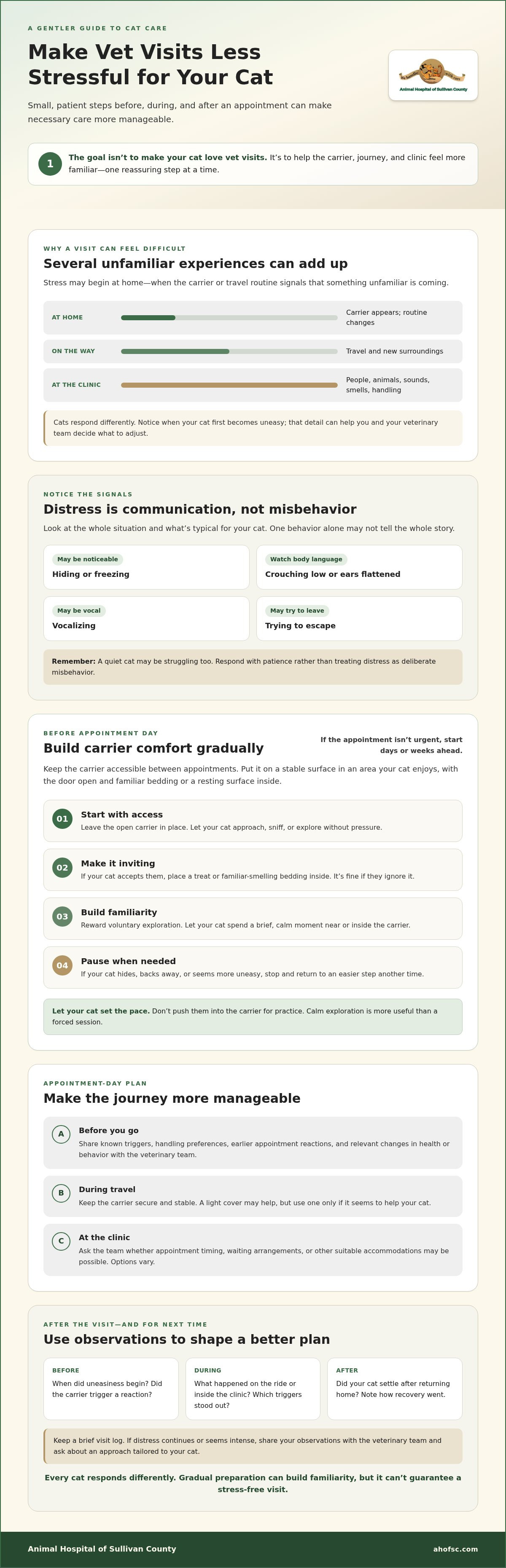
A veterinary visit can bring several unfamiliar experiences together: a disrupted routine, travel, new people, other animals, unfamiliar handling, and a busy environment with sounds and smells your cat doesn’t recognize. Even gentle care may feel unsettling when your cat can’t predict what will happen next. Regular routine veterinary care supports your cat’s health, so the goal is to make necessary visits more manageable, not to avoid them.
Stress may begin before you leave home, when the carrier or travel routine signals that an unfamiliar experience is coming. If you’re asking how to make vet visits less stressful for my cat, notice when your cat first becomes uneasy. That detail can help you and your veterinary team decide what to adjust.
This video offers another perspective on making veterinary visits easier for cats:
What can make a vet visit unsettling for a cat?
Cats often rely on familiar surroundings and predictable routines. A carrier that appears only before a trip may become a cue that travel is coming. At the clinic, unfamiliar people, animal sounds, and being handled in a new place can add to the strain. These experiences affect cats differently, so one behavior alone isn’t enough to identify anxiety. Share recurring patterns with your veterinarian, including what happens before you leave home.
How can you tell your cat is becoming stressed?
Some cats hide or freeze; others crouch low, flatten their ears, vocalize, or try to escape. These responses can signal distress, not deliberate misbehavior. A cat who goes quiet may be struggling too, while another may show only subtle changes. Consider the whole situation and what’s typical for your cat instead of relying on one sign.
Keep a brief note of what you observe before, during, and after each appointment. Did your cat react when the carrier appeared, during the ride, or once inside the clinic? Did they settle after returning home? Gradual preparation can build familiarity, but every cat responds differently, and it can’t guarantee a stress-free visit. If distress continues or seems intense, share your observations with the veterinary team and ask about an approach suited to your cat.
How to Prepare Your Cat for a Vet Visit Before Appointment Day
If the appointment isn’t urgent, start preparing days or weeks ahead. Small, low-pressure steps give your cat time to investigate at their own pace. This gradual approach is one way to make vet visits less stressful for your cat, without expecting them to feel comfortable all at once.
How can you help your cat feel comfortable with the carrier?
A carrier kept accessible between appointments can become a familiar resting place instead of a last-minute signal to leave. Set it on a stable surface in an area your cat already enjoys, with the door open. Add familiar bedding or a resting surface. Let your cat approach, sniff, or step inside voluntarily. Don’t push them in as practice.
Try this gentle progression, moving on only when your cat seems comfortable:
- Start with access. Leave the open carrier in place and let your cat explore without pressure.
- Make it inviting. If your cat accepts them, place a treat or familiar-smelling bedding inside. It’s fine if they ignore it.
- Build familiarity. Reward voluntary exploration, then let your cat spend a brief, calm moment near or inside the carrier.
- Pause when needed. If your cat hides, backs away, or seems more uneasy, stop and return to an easier step another time.
Let your cat set the pace. A little calm exploration is more useful than forcing a longer session that makes the carrier feel less safe.
What should you tell the veterinary team before the appointment?
Before the visit, share what you’ve noticed: known triggers, handling preferences, reactions during earlier appointments, and relevant changes in your cat’s health or behavior. Specific details, such as becoming distressed when the carrier appears or reacting strongly to certain handling, help the team understand your cat’s needs.
Ask whether the team can advise you about appointment timing, waiting arrangements, or other suitable accommodations. Options vary, so check rather than assume. If you’re considering medication, supplements, or calming products, ask the veterinarian first. What’s appropriate depends on your individual cat; don’t give a product or medication without veterinary guidance.
If you’re planning a visit in Sullivan County, sharing these observations with a veterinary team, such as Animal Hospital of Sullivan County, can help start a conversation about an appointment plan suited to your cat. The practice provides preventive, medical, and surgical care, supported by onsite diagnostics.
How to Make the Carrier, Car Ride, and Clinic Visit Easier
Preparation at home is only part of the journey. The way you carry, transport, and wait with your cat can also shape the experience. A steady routine helps you stay calm and gives your cat fewer unexpected changes to manage.
What can help during the car ride?
Before leaving, check that the carrier is closed securely and your cat is settled inside. Carry it level, supporting its base, and place it in a stable position in the vehicle. Secure it according to the carrier manufacturer’s instructions so it can’t slide or tip during travel. Never open the carrier in an unsecured area, even if your cat is vocalizing.
Keep the car environment as steady as practical. Avoid sudden movements and loud sounds, and follow any travel instructions provided by the clinic. A light cover may reduce visual stimulation for some cats, but use one only if your cat seems calmer with it. Keep the carrier well ventilated, and remove the cover if your cat appears more uncomfortable.
If your cat vomits, drools heavily, or shows intense distress during travel, make a note of what happened and tell the veterinarian before the next trip. These details can help the veterinary team consider appropriate adjustments.
How can you manage waiting and handling at the clinic?
Keep your cat inside the closed carrier in shared clinic spaces unless veterinary staff direct you otherwise. An unfamiliar room can make a cat feel exposed, and opening the carrier may create an opportunity to escape. Keep the carrier steady and discourage other animals or people from approaching it.
If nearby animals or activity seem to unsettle your cat, ask clinic staff where they recommend waiting. Don’t assume a particular arrangement is available; the team can explain what’s suitable at that time. During the appointment, use a gentle voice and let the veterinary team guide safe handling. Tell staff promptly if your cat’s distress escalates or their behavior changes suddenly.
For a local visit in Sullivan County, allow time to get your cat into the carrier without rushing and review the clinic’s travel instructions in advance. Your route will depend on where you’re starting, so plan ahead and focus on driving steadily while keeping the carrier secure. These steps can help make vet visits less stressful for your cat, though every cat responds differently.
What If Your Cat Still Panics at the Vet?
Preparation can make the carrier, trip, and clinic feel more familiar, but it can’t guarantee a stress-free visit. If your cat still hides, struggles to travel, or becomes very distressed during an examination, that doesn’t mean you’ve failed. Some cats need a different approach, planned with help from their veterinary team.
Before the next appointment, consider what could change. You might begin carrier practice earlier, slow down at a step that seemed difficult, or tell the clinic in advance about a specific trigger, such as the carrier being moved or nearby animals. Don’t skip necessary care because a previous visit was hard. Ask the veterinarian how to prepare and plan an appointment around your cat’s needs.
When should you ask your veterinarian for more help?
Ask for guidance if fear makes safe transport or a necessary examination difficult, or if distress is severe, persistent, or getting worse. Describe what you see and when it happens rather than relying only on labels like “difficult” or “scared.” For example, explain whether your cat resists before entering the carrier, vocalizes during the ride, or struggles when handled. Then ask whether a different preparation or appointment plan may be appropriate.
Clear details help the veterinary team understand what your cat experiences and consider next steps with you. Mention sudden behavior changes too, especially if they differ from your cat’s usual response to travel or handling.
Why should calming medication or supplements be discussed first?
Medication or supplements aren’t one-size-fits-all solutions. Whether an option is suitable depends on your cat’s health history and the planned visit. Don’t give human medication or try a calming product without first asking your veterinarian. If the veterinarian recommends an option, follow their specific instructions and report any unexpected response.
If you’re unsure how to make vet visits less stressful for my cat after trying gradual preparation, bring your observations and questions to the veterinary team. Together, you can discuss a plan that supports necessary care while taking your cat’s individual reactions into account.
Contact Animal Hospital of Sullivan County to discuss your cat’s ongoing distress and ask what next steps may be appropriate.
Build a Calmer Routine With Your Veterinary Team
A repeatable routine can help you learn what makes appointments easier for your cat, even if each visit doesn’t go perfectly. Prepare gradually, travel securely, share your observations with the veterinary team, then give your cat quiet time to recover at home. Over time, your notes can help shape a plan around your cat’s individual needs.
A brief visit log makes it easier to notice patterns. Write down what seemed to trigger distress, what changes helped, and how your cat behaved after returning home. For broader context on ongoing veterinary care, explore this Sullivan County guide to lifelong pet care.
What should you do after getting home?
Let your cat return to a familiar, quiet space and settle at their own pace. Some cats may seek a hiding spot or prefer to be left alone for a while. Observe without forcing contact, food, or play. Offer the chance to return to familiar routines when your cat is ready. If your cat is a senior or you have age-related care questions, this guide to senior pet care in Sullivan County offers additional reading.
How can you make the next appointment more manageable?
Once your cat has had time to decompress, note what went smoothly and what you might change next time. Perhaps the carrier was less alarming when left out beforehand, or a particular part of the trip seemed to upset your cat. Share those observations with the veterinary team before a future visit and ask whether a different preparation or appointment plan makes sense.
If you’re new to the practice, review the first visit guide for helpful context. A calm routine won’t guarantee an easy visit, but it gives you and the veterinary team a clearer starting point for deciding how to make vet visits less stressful for my cat.
If you’re arranging local veterinary care in New York, Connecticut, New Jersey, or Pennsylvania, keep a record of your cat’s appointment needs and discuss them with the veterinary team. For care questions in Sullivan County, contact the Animal Hospital of Sullivan County.
Take the Next Step Toward Calmer Vet Visits
Helping your cat feel safer starts with small, thoughtful changes. Keep the carrier familiar between appointments, make the journey steady and secure, and give your cat time to settle afterward. If distress continues, share what you’ve observed with your veterinarian and ask about a plan tailored to your cat. There’s no single approach that works for every cat.
If you’re still wondering how to make vet visits less stressful for my cat, remember that preparation doesn’t have to be perfect to be worthwhile. Each visit can offer useful clues about what helps and what may need to change next time.
Animal Hospital of Sullivan County provides preventive and comprehensive veterinary care, including medical and surgical care and onsite diagnostics. The veterinary team can help you discuss your cat’s individual care needs. Contact the Animal Hospital of Sullivan County to discuss your cat’s care.
With patience and a supportive plan, you can keep building a more reassuring path to the care your cat needs.
Frequently Asked Questions
Is it normal for my cat to be scared at the vet?
Yes, some cats feel frightened by unfamiliar travel, handling, sounds, smells, or other animals. That doesn’t mean your cat is misbehaving or that you’ve failed. Notice what happens before, during, and after the visit, then share those details with your veterinary team. If your cat’s reaction is intense, persistent, or worsening, ask the veterinarian for individualized guidance on making future appointments more manageable.
How can I get my cat into a carrier without a struggle?
When possible, leave the carrier open in a familiar room well before appointment day. Add bedding your cat already uses, and reward voluntary exploration with a treat if your cat enjoys treats. Gradual carrier practice can help make vet visits less stressful for your cat. Don’t force your cat inside. If the appointment is urgent or transport isn’t safe, call your veterinary team for advice.
Can I give my cat something to calm down before a vet visit?
Ask your veterinarian before giving your cat medication, supplements, or calming products. The right approach depends on your cat’s health, history, and the planned visit. Don’t give human medication or guess a dose. Tell the veterinary team what your cat has taken before and describe any unusual response. They can help you decide what’s appropriate instead of relying on a one-size-fits-all solution.
What should I do if my cat cries or hides during the car ride?
Keep the carrier securely positioned, and don’t open it in an unsecured place. Stay as calm as you can and follow any travel guidance from your veterinary team. Note when the distress begins and whether it happens on every trip. If your cat becomes extremely distressed or travel symptoms recur, discuss a plan with the veterinarian before another non-urgent appointment. Your observations can help the team consider how to make travel safer and more manageable.
Should I cover my cat’s carrier on the way to the vet?
A light cover may help some cats feel calmer by reducing visual activity, while others may become warmer or more distressed. Watch your cat’s response and keep airflow unobstructed. Secure the carrier in the vehicle and don’t open it during travel. If you’re unsure whether a cover is suitable for your cat or carrier, ask your veterinary team before the next trip.
What happens if my cat is still terrified after I practice with the carrier?
Carrier practice can build familiarity, but it can’t guarantee that every cat will feel calm at an appointment. If practice leads to escalating fear, pause and return to an easier step. Tell your veterinarian which behaviors you’re seeing and when they happen, then ask whether a different preparation or appointment plan may help. Don’t delay necessary care or try medication without veterinary advice.
How can I help my cat recover after a stressful vet visit?
Give your cat access to a familiar, quiet space and time to settle without forcing interaction. Let them return to normal routines at their own pace, and watch for behavior changes. If a new or persistent sign concerns you, contact the veterinary team and note what you observed. Whether you’re arranging care in New York, Connecticut, New Jersey, or Pennsylvania, these details can help your veterinarian plan for your cat’s next visit.


