
What if the clearest explanation is also the kindest? When you're explaining pet surgery to a child, it's natural to worry that honest details might frighten them, or that they’ll hear “surgery” and think their beloved pet might die. Your child deserves reassurance, but not promises no one can guarantee.
You don't need to know every answer about pain, anesthesia, or recovery. Children take in medical information differently, and simple, truthful words are often more reassuring than vague answers or confusing euphemisms.
This guide offers age-aware language, ways to respond to common worries, and ideas for including your child without making them responsible for the outcome. Before talking, ask your veterinary team what is planned, what remains uncertain, and what recovery may involve. Then you can share information that is both comforting and accurate.
Key Takeaways
- Use simple, truthful words to explain what surgery is and why the veterinarian recommends it.
- When explaining pet surgery to a child, consider their age, temperament, and questions rather than relying on age alone.
- Answer worries about pain, anesthesia, and whether the pet will come home with care, without making promises about the outcome.
- Help your child feel included with a small, comforting gesture, such as drawing a picture for your pet.
- Ask the veterinary team what to expect for your pet, including procedure details, updates, and recovery instructions.
Explaining Pet Surgery: What Kids Need to Know
A pet’s operation can worry the whole family. Your child may wonder what will happen, whether the pet will hurt, or if the pet will come home. Start with the basic reason for the procedure: surgery is treatment a veterinarian performs to help an animal’s health. The details depend on your pet’s condition and planned care, so ask the veterinary team what is confirmed before you explain it.
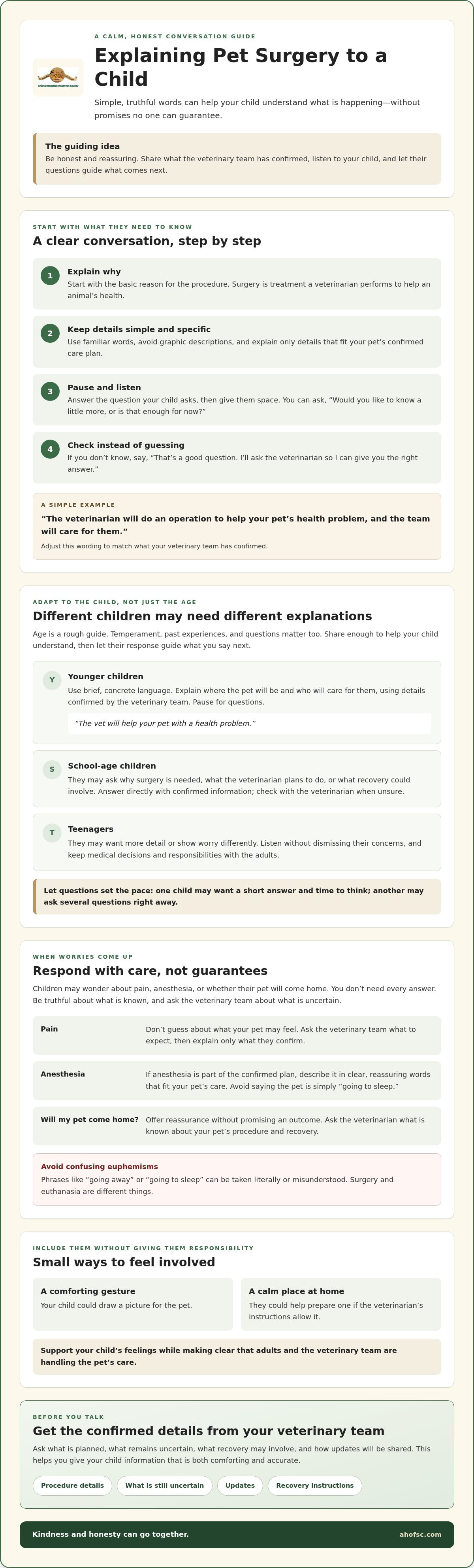
You don’t need to give your child every medical detail. Use honest, simple language without graphic descriptions. How much to share depends on your child’s age, temperament, and questions. If they ask something you can’t answer, tell them you’ll check with the veterinarian rather than guessing.
For a child-friendly look at what veterinarians do, watch this video:
Keep your explanation specific to your pet’s care. If the veterinarian confirms that your pet needs treatment for an injury, for example, you might say, “The veterinarian is going to do an operation to help your pet’s injured leg.” Use only details you’ve been given. Avoid dramatic descriptions or explanations of incisions that don’t help your child understand the plan.
How to describe surgery in simple, truthful words
Describe the veterinarian and veterinary team as the people caring for your pet during the procedure. You could say, “The veterinarian will do an operation to help with your pet’s health problem, and the team will care for them.” Adjust the wording to match what the team has confirmed.
Avoid phrases like “the pet is going away” or “the pet is going to sleep.” Children may take these expressions literally or misunderstand them. Surgery and euthanasia are different things. If your child has heard the term, you can clarify the distinction and, if helpful, read more about understanding animal euthanasia.
How much should a child know about a pet’s operation?
Begin with the reason for the procedure, then pause and listen. Let your child’s questions guide what you explain next instead of giving a long account all at once. A younger child may want a short, concrete answer; an older child may ask for more detail.
Be truthful, but don’t make your child feel responsible for medical decisions. Listen to their concerns and include them in supportive ways, while making clear that the adults and veterinary team are handling the pet’s care.
How to Explain a Pet’s Surgery at Different Ages
There isn’t one perfect script for explaining pet surgery to a child. Age can offer a rough guide, but temperament, past experiences, and questions matter too. Share enough to help your child understand what’s happening, then let their response guide what you say next.
Notice how your child prefers to take in information. One child may want a short answer and time to think; another may ask several questions right away. You can check in by asking, “Would you like to know a little more, or is that enough for now?” This gives them room to speak up without making the conversation feel like a test.
Explaining surgery to younger children
Use familiar, concrete words. You might say, “The vet will help your pet with a health problem,” or, “The vet will do an operation to help your pet’s body.” Explain where your pet will be and who will care for them, but only share details you’ve confirmed with the veterinary team. Keep it brief, then pause for questions.
Avoid saying your pet is simply “going to sleep.” A young child may take that literally or confuse it with a pet dying. If the veterinarian has explained that anesthesia will be used, describe it in clear, reassuring words that fit your pet’s plan. There’s no need to describe medical steps your child hasn’t asked about.
Talking with school-age children and teenagers
Older children may want to know why the operation is needed, what the veterinarian plans to do, or what recovery could involve. Answer directly using information the veterinary team has confirmed. If you’re unsure, say, “That’s a good question. I’ll ask the veterinarian so I can give you the right answer.” Checking is better than guessing.
Offer a manageable way to take part, such as drawing a picture for the pet or helping prepare a calm place at home if the veterinarian’s instructions allow it. These gestures can help a child feel included without making them responsible for care or decisions. Teenagers may want more detail or show worry differently. Listen without dismissing their concerns, and keep adult decisions and responsibilities with the adults.
For guidance specific to your pet’s procedure, ask the veterinary team about your pet’s surgery and what details are appropriate to share with your child.
Answering a Child’s Fears About Pet Surgery, Pain, and Anesthesia
A child may hear “surgery” and worry that their pet won’t come home. Explain gently that an operation doesn’t automatically mean a pet will die. The veterinarian has recommended a procedure for your pet’s health, but only the veterinary team can discuss your pet’s individual outlook and possible risks.
Offer comfort with what you know, and be honest about what you can’t promise. Separate confirmed information from questions you still need to ask. It’s okay to say, “I don’t know yet, but I’ll ask the veterinarian.”
What to say when a child asks whether the pet will be okay
Start by acknowledging the fear: “I can tell you’re worried because you love our pet.” Then share what the veterinary team has told you. For example: “The veterinarian thinks this operation may help, and the team will care for our pet. I don’t know exactly what will happen afterward, so I’ll ask the veterinarian what to expect.” Adjust this to your pet’s situation and the information you’ve received.
Avoid brushing off the question with “Everything will be fine” or making a prediction you can’t know. You can offer reassurance without certainty: remind your child that the adults are getting professional guidance and will keep them informed in a way they can understand. Ask the veterinarian about your pet’s outlook and what your family should prepare for.
How to discuss anesthesia and pain without frightening a child
Use simple words, and check procedure-specific explanations with the veterinarian. You might say, “Anesthesia is medicine the veterinary team uses during some operations so the pet isn’t aware of the procedure.” Make sure the explanation fits your pet’s plan. Don’t say anesthesia is completely safe or that surgery will be painless.
If your child asks, “Will it hurt?” don’t guess or promise there won’t be discomfort. Try: “The veterinarian can tell us what your pet might feel and what they’ll do to help with comfort.” Ask the veterinary team how your pet’s comfort will be addressed, what signs of discomfort to watch for, and how to explain the plan to your child. If you hear unfamiliar medical terms, ask for a plain-language explanation before discussing them together.
Preparing Your Child Before, During, and After a Pet’s Surgery
A simple plan can give your child a sense of what to expect, even though each pet’s care and recovery may differ. Before explaining pet surgery to a child, check the likely arrangements with the veterinary team. Share what’s confirmed and be clear about what is still unknown.
Before surgery: make a simple family plan
Explain what you know about the day, such as who will take the pet to the hospital and whether the veterinary team expects to provide an update. Don’t guess about drop-off, timing, or when the pet will return home. If your child asks the same question again, answer calmly. Familiar information can help them feel grounded.
Invite your child to show their care in a small way, such as drawing a picture or making a card. Ask the veterinary team whether it’s appropriate to send the item along. You can also ask what details are helpful to share about this specific procedure, so your explanation stays accurate. For practical information about getting ready, see this guide to preparing a pet for surgery.
During surgery: keep the day predictable
Children may wonder what to do while their pet is at the hospital. Set expectations based on the plan you’ve confirmed, including who will be with them and how you’ll share any updates. Keep usual routines where possible, and offer a simple activity or time together if they feel unsettled. Don’t promise when news will come or when the pet will be home unless the veterinary team has provided that information.
After surgery: help your child reconnect with the pet
Before your child approaches or helps with the pet, follow the veterinary team’s instructions. A recovering animal may need a quiet space, time to rest, or changes to familiar routines. Explain these needs in child-friendly terms: “The vet wants our pet to rest, so we’ll give them space and follow the care instructions.”
Let the veterinary team guide when gentle, supervised interaction is appropriate. Your child might sit quietly nearby or speak softly, if that fits the instructions. Don’t ask them to manage medication or watch for medical problems; those responsibilities belong to adults. If you’re unsure how to prepare your family or what to expect at home, contact the veterinary team with questions about your pet’s care.
How Your Veterinary Team Can Help You Explain Pet Surgery
You don’t have to answer every question about your pet’s operation alone. Your veterinarian can explain the procedure, likely care plan, and uncertainties specific to your pet. Knowing what is confirmed can help you decide what to tell your child and avoid filling gaps with guesses.
Before speaking with the veterinary team, write down your questions. It’s easy to forget them when you’re worried. Ask for clear, everyday language you can use at home, and check what the team can share about updates and aftercare. For more background, see the guide to surgical care linked above.
Questions parents can ask the veterinarian
Use your list to guide a practical conversation. You might ask:
- Why is this procedure recommended, and how can I explain its purpose simply?
- What should our family expect on the day of surgery, including any planned updates?
- What aftercare instructions will affect our child’s usual interactions with the pet?
- Which details are appropriate to share with my child, and what remains uncertain?
These questions can help you keep your explanation honest and specific to your pet. If an answer includes unfamiliar terms, ask the veterinarian to explain them in plain language. It’s also fine to tell your child, “I’m not sure yet. I’ll ask the veterinary team.”
When to seek extra support for a worried child
Children may show worry in different ways. Notice whether distress continues or affects sleep, school, or daily routines. Listen without dismissing their feelings, and offer calm, consistent reassurance. You don’t need perfect words; being available to talk can help your child feel heard.
If their distress continues or affects everyday life, consider asking their healthcare professional for guidance. The veterinary team can answer questions about your pet’s care, while your child’s healthcare professional can advise on their emotional well-being.
For families in Sullivan County and the surrounding communities in New York, Connecticut, New Jersey, and Pennsylvania, Animal Hospital of Sullivan County provides surgical care and diagnostics. Contact the hospital with pet-specific questions and ask what information may help your family prepare.
Help Your Child Feel Ready for What Comes Next
When explaining pet surgery to a child, focus on a few steady guideposts: use clear, age-appropriate words, make space for questions, and share only what the veterinary team has confirmed. You can reassure your child without promising a particular outcome or recovery timeline. Small ways to show care can help them feel included while adults remain responsible for decisions and follow-up.
Questions about your pet’s procedure, updates, or recovery instructions are worth bringing directly to the veterinary team. Animal Hospital of Sullivan County provides surgical care and onsite diagnostics to support pets and their families.
Contact Animal Hospital of Sullivan County to ask about your pet’s surgical care and what your family should expect. Honest answers, thoughtful support, and room for feelings can help your child face the experience with greater confidence.
Frequently Asked Questions
How do you explain pet surgery to a young child?
Use short, familiar words to explain why the veterinarian is helping your pet. You might say, “The vet is going to do an operation to help your pet’s body.” Add only details the veterinary team has confirmed, such as where your pet will be cared for. Pause for questions, and avoid confusing phrases like “going away” or “going to sleep.”
Should I tell my child that our pet is having surgery?
Yes. A simple, honest explanation is usually kinder than leaving your child to guess or hiding a change they may notice. Tell them what you know about the procedure and how the veterinarian plans to help. You don’t need to describe every medical detail. Match your explanation to your child’s age and questions, and let them know they can talk with you again if they feel worried.
What should I say if my child asks whether the pet will die?
Acknowledge the fear and answer with what the veterinarian has told you about your pet’s situation. You might say, “I know you’re worried. The vet has recommended this operation to help, but I can’t promise exactly what will happen. I’ll ask the vet what we should expect.” Don’t assure your child that everything will be fine unless you know that. It’s okay to say you need to find out more.
Will my pet be in pain after surgery?
Only your pet’s veterinary team can explain what discomfort may occur and how it will be managed for that specific procedure. Don’t promise your child that surgery will be painless or guess how the pet will feel. Ask the veterinarian what signs of discomfort to watch for and what instructions to follow at home. If you’re concerned about your pet after surgery, contact the veterinary team for guidance.
Can children visit a pet after surgery?
It depends on the pet’s condition, the procedure, and the veterinary team’s instructions. Ask whether a visit is appropriate before bringing your child to see the pet. After your pet comes home, check when and how your child can interact safely. The pet may need quiet, space, or a different routine while recovering. Explain these needs gently, and follow the care team’s guidance rather than assuming the pet is ready to play.
How can I help my child while our pet is at the veterinarian?
Keep your child’s day as predictable as possible, and explain what you know about the plan, including who will be with them and how you’ll share updates. Don’t guess about when the pet will return or when news will come. A drawing, card, or quiet activity can give your child a comforting way to express care. Make room for repeated questions and changing feelings.
What should I tell my child if the pet’s recovery takes longer than expected?
Explain the change simply and share only what the veterinarian has confirmed. You could say, “Our pet needs more time to recover, so we’re following the vet’s instructions and checking what to expect next.” Avoid promising a new recovery date until the veterinary team gives you guidance. If your pet is receiving care at Animal Hospital of Sullivan County, its veterinary team can answer questions about your pet’s instructions and progress.


