
The gentlest way to give a cat a pill without getting scratched may be to pause before you try. Stronger restraint can frighten a cat and make the next dose harder. A plan that fits the medication, paired with calm handling, can help protect you both.
If your cat hides at the sight of a tablet, spits it out, or wriggles when you reach for them, you’re not alone. Giving medication can feel stressful, especially when you’re unsure whether the pill can go in food, be split, or be crushed. Those details matter, so don’t change how a prescribed medication is given without checking with your veterinarian.
This guide covers practical ways to make pill time calmer, from preparing a quiet space to considering food or a pill-giving tool and using gentle support when needed. You’ll learn how to choose an approach that suits your cat and their prescription, reduce the chance of scratches, and recognize when it’s best to stop and ask your veterinary team for help. The goal isn’t to force a dose at any cost. It’s to give your cat their medication as directed while keeping both of you safe.
Key Takeaways
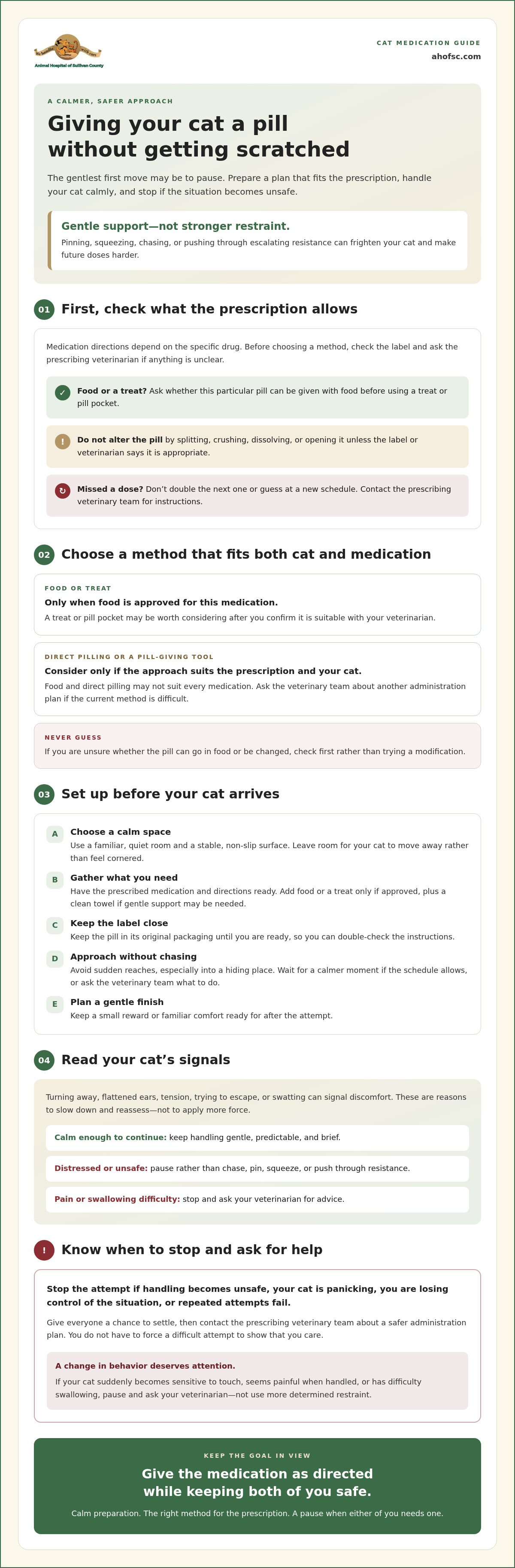
- Ask the prescribing veterinarian whether the specific pill can be given with food before choosing a treat or pill pocket.
- Don’t split, crush, dissolve, or open medication unless your veterinarian or the label says it’s appropriate.
- For how to give a cat a pill without getting scratched, use a calm setup and gentle support rather than pinning or squeezing your cat.
- Choose a method that fits both your cat’s comfort and the prescription. Food or direct pilling may not suit every medication.
- Pause if handling becomes unsafe or repeated attempts fail, then ask your veterinarian about another administration plan.
Why Cats Resist Pills, and How to Keep the First Attempt Safer
A cat who backs away, hides, or bats at your hand isn’t being bad, and struggling with a dose doesn’t mean you’ve failed. Medication can feel strange to a cat. The taste may be unfamiliar, handling may interrupt a comfortable routine, and restraint can make a wary pet feel trapped. A surprise approach or repeated attempts to catch a fleeing cat can add tension before the pill even appears.
Low-stress pill giving starts with calm preparation, gentle handling, and following the directions for the specific medication. A cat’s medication instructions depend on the specific drug. A method that works for one pill may not be safe or suitable for another. For context on how medication fits into a cat’s broader health, see this overview of preventive medicine for cats.
Why a cat may fight medication
Pay attention to what your cat is communicating rather than labeling them difficult. Turning away, flattening the ears, tensing, trying to escape, or swatting can signal discomfort. Some cats dislike being held; others react to a bitter taste or medication arriving at an unexpected moment. A calm routine may help, but it won’t resolve pain or a swallowing problem.
If your cat suddenly becomes sensitive to touch, seems painful when handled, or has difficulty swallowing, pause and ask your veterinarian for advice. A change in behavior may need attention, not more determined restraint.
What scratch prevention should, and should not, mean
To understand how to give a cat a pill without getting scratched, focus on reducing surprise and keeping your fingers away from the mouth. Prepare what you need first, approach without chasing, and use only gentle support your cat can tolerate. Calm, predictable handling helps protect your hands and maintain your cat’s trust.
Scratch prevention does not mean pinning your cat down, squeezing tightly, or pushing through escalating resistance. Rough restraint can increase fear, and repeated chasing may make your cat more anxious about future handling. If your cat is panicking, you’re losing control of the situation, or either of you may be hurt, stop and give everyone a chance to settle. Contact the prescribing veterinary team for guidance on a safer plan. You don’t have to force a difficult attempt to show that you’re caring for your cat.
Prepare the Pill, the Room, and Your Cat Before You Begin
A little preparation can make medication time feel less like a sudden interruption. Before bringing your cat over, check the prescription label and any directions from the prescribing veterinary team. If something is unclear, ask first rather than making a change and hoping it’s safe.
Check the medication instructions first
Ask whether this particular pill may be given with food or a treat, and whether its timing or spacing from other medicines matters. Don’t split, crush, dissolve, or open a pill unless the label or your veterinarian specifically says it’s appropriate. A tablet that looks easy to break may not be meant to be altered.
If you miss a dose, don’t double the next one or guess at a new schedule. Contact the prescribing veterinary team for instructions. These questions are routine, and clear directions can help you give the medication as prescribed.
Set up a calm, cat-friendly space
Choose a familiar, quiet room where you can work without rushing. Use a stable, non-slip surface at a comfortable height, with space for your cat to move away rather than feel cornered. Keep the session brief and predictable. If your cat is hiding, avoid chasing or reaching suddenly into their hiding place. Wait for a calmer moment if the medication schedule allows, or ask the veterinary team what to do.
Gather everything before your cat arrives:
- The prescribed medication and its directions
- Food, a treat, or another pill aid only if your veterinarian confirms food is suitable
- A clean towel, ready if gentle support is needed
- A small reward or familiar comfort for after the attempt
Keep the pill in its original packaging until you’re ready, so you can double-check the label. A quiet setup also helps you notice your cat’s response and pause if they become upset. The aim is not to trap your cat or make the process faster at any cost. It’s to reduce avoidable surprises and give yourself enough room to handle the medication carefully.
If you’re unsure about the label or how to prepare for a dose, ask your veterinary team for guidance. For medication questions, you can also learn more about Animal Hospital of Sullivan County and its veterinary care.
Choose a Pill-Giving Method That Fits Your Cat and the Prescription
There isn’t one best approach for every cat or medication. The right choice depends on the prescription’s instructions and what your cat can tolerate calmly. Before hiding a tablet or trying to place it by hand, check with the prescribing veterinary team about which methods are suitable.
Can the pill go in food or a treat?
A pill pocket or small treat may be easier for a cat who readily accepts food, but use one only if food is permitted with that medication. Confirm whether the full dose can be given this way, and make sure your cat reliably eats the entire portion. If they leave some behind, you may not know how much medicine they received.
Don’t crush or alter a pill to disguise its taste, or mix it into a full meal, unless the veterinarian or label specifically approves it. The pill’s form and instructions matter.
When direct pilling or a pill device may be considered
Direct pilling may be needed if the medication can’t be given with food or your cat refuses a treat. A pill-giving device can keep fingers away from the mouth, but it still requires careful handling. Ask your veterinarian to demonstrate the device and explain whether it’s appropriate for this pill. Practice the method before relying on it for a dose.
Use this comparison to guide your conversation with the veterinary team:
| Method | May suit a cat who | Confirm first |
|---|---|---|
| Food or pill treat | Comfortably eats a small treat or portion | Whether food is allowed and the entire dose can be given this way |
| Direct pilling | Can be gently supported for brief handling | How to administer this pill and whether any follow-up is needed |
| Pill-giving device | Needs an option that keeps fingers away from the mouth | Whether to use one and how to handle it safely |
For how to give a cat a pill without getting scratched, choose a method based on both the prescription and your cat’s response, not on which technique seems quickest. No method can guarantee a scratch-free attempt. If your cat becomes distressed or the approach doesn’t feel safe, stop and ask the veterinary team about another plan.
How to Give a Cat a Pill Step by Step Without Rushing
A steady routine can help keep pill time manageable for both of you. Use only the method your veterinarian has approved for this medication, and follow any technique they’ve demonstrated. If your cat is already frightened or struggling, don’t try to push through.
A calm routine for a willing cat
- Prepare first. Have the prescribed pill and any approved treat or tool within reach. Choose a quiet moment when your cat is settled, and speak softly.
- Approach from the side. Move slowly and let your cat see you coming. Support their body gently on a stable surface, without pinning, squeezing, or blocking their breathing.
- Give the medication as instructed. Use the food method or the veterinarian-demonstrated direct-pilling technique that’s appropriate for this prescription. Don’t improvise by forcing the pill into your cat’s mouth or throat.
- Let your cat settle. Once the dose is given, release them gently and give them a moment. Follow any medication-specific directions about food or water afterward.
- End on a positive note. Offer calm praise, affection, or a veterinarian-approved treat if appropriate. Keep your movements relaxed so the experience doesn’t become a chase.
If a towel wrap or second person might help
A towel may offer gentle support for a cat who already tolerates being wrapped. Keep the wrap loose, leave the head free, and never tighten it or restrict breathing. If your cat fights the towel, let them go rather than forcing them to stay bundled.
A calm adult can help only if their presence makes the process safer and less stressful. Agree on each person’s role before bringing your cat over. Too many hands or sudden movements can add confusion, not comfort.
Stop the attempt if your cat struggles intensely or either of you may be injured. Give your cat space, and contact the prescribing veterinary team for advice rather than repeatedly trying a technique that isn’t working. Learning how to give a cat a pill without getting scratched means choosing gentle, practiced handling, not expecting every dose to go smoothly.
Would a demonstration help you feel more prepared? Contact the veterinary team to ask about pill-giving guidance.
When to Stop Trying and Ask Your Veterinarian for Another Plan
Stopping is a responsible choice when the attempt is becoming unsafe. A cat who is escalating from pulling away to intense struggling, defensive biting, or repeated attempts to escape may be too distressed to handle safely. Don’t chase, pin, or keep forcing the pill. Give your cat space and contact the prescribing veterinary team for advice about what to do next.
Signs the attempt should stop
A difficult routine is different from an urgent problem. If your cat coughs or chokes during medication, has trouble breathing, or seems suddenly unwell, seek prompt veterinary advice. Breathing difficulty or choking needs urgent attention, not another pill attempt. Contact an emergency veterinary service if immediate care is needed, and check its availability rather than assuming a particular clinic is open.
If you’re unsure whether your cat swallowed the pill, or think the dose was incomplete or incorrect, don’t give another dose or double the next one unless a veterinary professional tells you to. The right next step depends on the medication and what happened.
What to ask the veterinary team
Explain what you tried, when it happened, and whether your cat swallowed all, part, or none of the dose. Ask whether another administration method or formulation, such as a different form or flavoring, is appropriate for this prescription. An alternative may not be available or suitable, but your veterinarian can advise you on the options and how to handle the next dose.
Clear guidance can make ongoing care feel more manageable. For a broader look at nurturing a pet’s health over time, read this guide to compassionate lifelong pet care.
Learning how to give a cat a pill without getting scratched includes knowing when not to continue. If giving medication at home feels unsafe or repeated attempts haven’t worked, local pet owners in New York, Connecticut, New Jersey, and Pennsylvania can contact the Animal Hospital of Sullivan County team for advice about the next step. The hospital offers emergency treatment during business hours. If your cat is choking or having breathing difficulty, seek urgent veterinary care rather than waiting for routine guidance.
Make the Next Dose a Calmer One
Giving a cat medication doesn’t have to become a struggle. The key to how to give a cat a pill without getting scratched is to follow instructions for the specific prescription, prepare a calm space, and choose a method your veterinarian says is suitable. Gentle handling matters, too. If your cat becomes highly distressed or you’re unsure whether the full dose was swallowed, pause and ask for professional guidance instead of guessing or forcing another attempt.
Every cat and medication is different, so asking questions is part of caring well. Animal Hospital of Sullivan County provides preventive, medical, surgical, and diagnostic care for small animals. If you need help thinking through a medication routine, contact our veterinary team for guidance.
With a thoughtful plan and support when you need it, you can protect your cat’s comfort, your safety, and the bond you share. Contact Animal Hospital of Sullivan County to ask about guidance for your cat’s medication routine.
Frequently Asked Questions
How can I give my cat a pill if they keep fighting me?
Pause if your cat is escalating from pulling away to intense struggling or defensive biting. Chasing or forcing repeated attempts can make medication time more stressful and increase the risk of injury. Check that you’re using a veterinarian-approved method for this specific pill, then ask the prescribing veterinary team for help if it still isn’t working. Learning how to give a cat a pill without getting scratched starts with keeping the experience calm, not pushing through distress.
Can I crush my cat’s pill or hide it in food?
Only hide the pill in food or a treat if the label or your veterinarian confirms that food is suitable for that medication. Ask whether the full dose can be given this way, and make sure your cat eats the whole portion. Don’t crush, split, dissolve, or open a pill unless the label or veterinary team says it’s appropriate. If your cat eats only part of the food, ask what to do rather than estimating the dose.
Is it safe to wrap a cat in a towel to give them a pill?
A towel wrap may help provide gentle support if your cat tolerates it, but it isn’t right for every cat. Keep the wrap loose, leave your cat’s head free, and never restrict their breathing or tighten the towel to stop struggling. If your cat becomes more distressed or you can’t handle them safely, stop. Ask your veterinarian to demonstrate a suitable approach rather than trying to hold your cat down.
What should I do if my cat spits out a pill?
Don’t automatically give another pill. You may not know how much of the dose was swallowed, and repeating it could mean your cat receives too much. Note when it happened and whether the pill came out whole or partly dissolved, then contact the prescribing veterinary team for instructions. If your cat coughs, chokes, or has difficulty breathing during the attempt, seek prompt veterinary advice instead of trying again.
Can I use a pill popper for my cat?
A pill popper, also called a pill-giving device, may be an option, but ask your veterinarian whether it’s appropriate for your cat and medication. Have the veterinary team show you how to use it safely before trying it at home. A device can keep fingers away from the mouth, but it doesn’t guarantee a smooth or scratch-free dose. Stop if your cat struggles intensely or the technique feels unsafe.
What happens if my cat misses a dose of medication?
Contact the prescribing veterinary team for advice, because what to do depends on the medication and when the dose was missed. Don’t double the next dose or change the schedule unless a veterinary professional instructs you to. If you’re unsure whether a dose was missed, partly swallowed, or given at the wrong time, share those details when you ask for guidance. Keep following the prescription directions while you wait for advice.
When should I call a veterinarian if I cannot give my cat a pill?
Contact the prescribing veterinarian if repeated attempts fail, handling becomes unsafe, or your cat is highly distressed. Ask whether another administration method or formulation might suit the prescription, and explain what happened and how much medication your cat may have swallowed. Coughing, choking, or difficulty breathing calls for prompt veterinary advice. Pet owners in New York, Connecticut, New Jersey, and Pennsylvania should check their veterinary team’s contact process and seek urgent care for breathing trouble.


