
Finding a vet you can trust is less about a clinic’s promises and more about how its team listens, explains, and plans care. It can be hard to judge a practice before you visit, and medical terms or a rushed conversation can make decisions feel daunting. Your pet is family, so wanting clear answers and compassionate care is natural.
Trust grows through observable moments: a team takes your concerns seriously, explains the purpose of a test or treatment, and gives you room to ask questions. This checklist will help you assess those signs, compare options, and choose a veterinary team that fits your pet and family.
You’ll find practical questions to ask before booking and at a first visit, including how the clinic discusses diagnostic and treatment choices, what follow-up may involve, and which services are available. You’ll also learn to confirm when emergency treatment is offered and where a practice’s limits are, so you can plan before care is urgently needed.
Key Takeaways
- When finding a vet you can trust, look for care that respects your pet’s needs and your family’s priorities.
- Check clinician credentials through reliable sources, and notice how the team answers questions during early conversations.
- Compare clinics side by side on services, access, follow-up, and practical logistics, guided by your pet’s needs.
- Prepare for a first visit with your pet’s health history, medication details, and specific concerns so you can clarify the care plan.
- Before booking, confirm which services and emergency options are available and when the practice can provide them.
What Does It Mean to Find a Vet You Can Trust?
Choosing a veterinarian can feel deeply personal. You’re asking someone to care for a much-loved member of your family, and you may need to make decisions when you’re worried or unsure. Finding a vet you can trust isn’t about choosing the clinic with the most polished website or one glowing online rating. Look instead for thoughtful care and a relationship where your concerns matter.
A veterinarian’s role includes protecting animal health and helping owners understand care options. For a basic overview of what is a veterinarian and the profession’s areas of work, see this introduction. In practice, trust also depends on how the team communicates and responds to your pet’s individual needs.
Here’s a short video related to choosing a veterinarian. Treat it as one perspective, then assess any practice with your own questions and observations.
In simple terms: A trustworthy vet listens to what you notice about your pet, explains care options clearly, and treats your animal with compassion. They’re candid about what they know, what remains uncertain, and what the next steps could be.
What should a trustworthy veterinary relationship feel like?
You should have room to describe changes you’ve noticed, ask questions, and raise concerns without feeling dismissed. If your dog has been eating less or your cat seems uncomfortable, for example, the team should take your observations seriously and ask clarifying questions. You know your pet’s everyday behavior, and those details can help guide the conversation.
Clear explanations help you take part in decisions. If a recommendation includes unfamiliar medical terms, ask what they mean, what a test is intended to clarify, and what choices you have. Compassion also means being honest when an answer isn’t certain. A caring team can discuss possibilities and next steps without promising an outcome.
Why the right fit can differ from one pet to another
A clinic that suits one household may not suit another. Your pet’s species, age, temperament, and medical history shape the care you’re seeking. A nervous pet may need a calm, patient interaction, while an animal with ongoing health concerns may need services suited to those needs. Ask what care is available and when, rather than assuming every practice offers the same options.
Your practical needs matter, too. Consider location, appointment access, follow-up communication, and what the clinic advises if your pet needs help outside its available hours. Whether you’re comparing options in New York, Connecticut, New Jersey, or Pennsylvania, the goal isn’t to find a universal “best” vet. It’s to find a team whose communication, services, and availability fit you and your pet.
How to Assess a Veterinarian’s Communication, Experience, and Care Approach
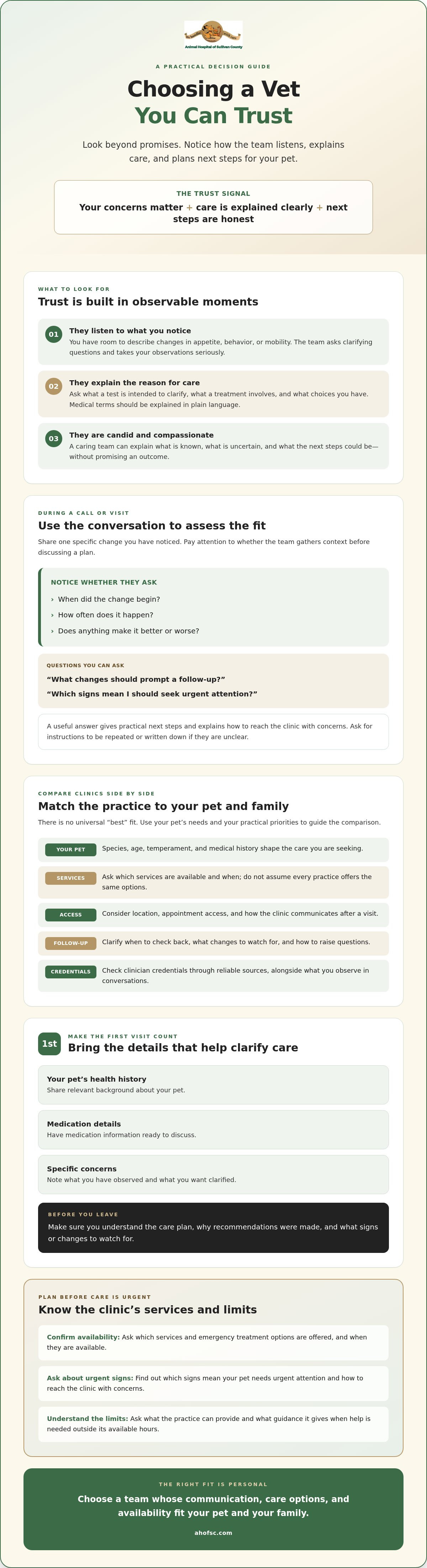
A veterinary team’s approach becomes easier to assess through small, observable moments. Notice whether staff listen without interrupting, ask follow-up questions, and explain what will happen next. A warm manner matters, as does clear information about recommendations, alternatives, and when to check back. These details help you judge whether the relationship will support your decisions over time.
Trust depends on sound clinical judgment and communication you can understand. You don’t need to know medical terminology to take part in your pet’s care. You should be able to ask for a plain-language explanation, understand the reason for a recommendation, and leave knowing what signs or changes to watch for.
Questions that reveal whether the veterinary team listens
During a call or appointment, describe a specific change, such as a shift in appetite, behavior, or mobility. Notice whether the team asks when it began, how often it happens, and whether anything makes it better or worse. These questions help gather context before discussing a plan, rather than jumping to conclusions.
You can also ask, “What changes should prompt a follow-up?” and “Which signs mean I should seek urgent attention?” A useful answer should give you practical next steps and explain how to reach the clinic with concerns. If instructions aren’t clear, ask the team to repeat them or write them down.
How to evaluate credentials and professional experience
Credentials are another part of your assessment. In New York, veterinarians must hold a state license to practice. You can check licensing information through the New York State Education Department (NYSED), the state agency responsible for professional licensing. If you’re considering care across New York, Connecticut, New Jersey, or Pennsylvania, verify the veterinarian’s license with the relevant state authority.
Ask whether the clinician has experience relevant to your pet’s species, age, or health concern. Experience can provide context, but years in practice alone don’t prove that a team is the right fit. If a practice mentions a specialty, certification, or advanced-care capability, confirm what the claim means and whether it applies to your pet’s needs.
To compare answers, note whether the team explains the purpose of a proposed test or treatment, discusses reasonable alternatives, and outlines what happens after you decide. This can reveal more than a polished introduction. If you’re learning about a local practice, review the Animal Hospital of Sullivan County website for information about its services, then confirm any details that matter to your pet directly with the clinic.
A Vet-Selection Checklist for Comparing Clinics in Sullivan County
Comparing clinics around Sullivan County, including Ferndale, is easier when you use the same questions for each practice. If you’re also considering clinics elsewhere in New York, Connecticut, New Jersey, or Pennsylvania, the same checklist can help you compare practical details consistently. The goal isn’t to assign every clinic a universal score. It’s to see which team’s services, communication, and access fit your pet and household.
A clinic’s listed services show what it may provide; your pet’s needs determine which services matter. A practice may offer diagnostics or surgical care, for example, but you’ll still want to ask whether it can address your pet’s specific concern or recommends care elsewhere.
- Communication: Does the team invite questions, explain recommendations in plain language, and tell you whom to contact with concerns?
- Services: Is the preventive, medical, or surgical care your pet may need available? Which diagnostic options are offered?
- Access: How do you request an appointment, and what are the clinic’s current hours and communication channels?
- Follow-up: How will you receive test results or care instructions, and when should you check back?
- Logistics: Is the location practical for your household, and what should you do if your pet needs care outside the clinic’s available hours?
Keep brief notes under each clinic’s name as you call or research. A clear answer is more useful than a vague promise. Ask what happens if a recommended test isn’t available at the practice, whether an outside provider or referral may be needed, and how that next step is arranged. Diagnostic equipment can help inform care, but it can’t guarantee a diagnosis or a particular outcome.
Which services and diagnostic options should you ask about?
Describe your pet’s needs, then ask whether relevant preventive, medical, or surgical care is available. Ask what diagnostics the clinic offers and when it may recommend an outside provider. Animal Hospital of Sullivan County provides preventive, medical, and surgical care for small animals, supported by diagnostics. Confirm directly whether its current services suit your pet’s situation.
How to compare access, follow-up, and urgent-care arrangements
Confirm each clinic’s appointment process, hours, follow-up practices, and preferred way to communicate. Ask specifically what emergency treatment is available during business hours and where after-hours cases should go. Animal Hospital of Sullivan County provides emergency treatment during business hours, not 24/7 emergency care. Include that distinction in your comparison, and check current arrangements with any practice you’re considering.
For additional local context, read Animal Hospital of Sullivan County: A Guide to Compassionate, Lifelong Pet Care. Use your notes to identify the clinic that matches your pet’s needs, rather than choosing by location or a single online rating alone.
Using the First Visit to Decide if a Vet Is a Good Fit
A first appointment lets you see how the veterinary team works with you and your pet. It doesn’t have to feel like a test. Prepare a few notes, notice how the conversation unfolds, and make sure you understand the plan. Afterward, take a moment to consider whether the experience felt right.
What to bring and ask at an introductory appointment
Before the visit, write a concise health history, list current medications, and note the concerns you most want to discuss. Include when a change began and how it has affected your pet’s usual routine. This helps you share important details even if you feel nervous or the conversation moves quickly.
During the appointment, ask how the veterinarian prioritizes your concerns and what a proposed test or treatment is meant to clarify or address. If there are options, ask what each involves and what the next steps might be. You can say, “Could you explain that in simpler terms?” A caring team should welcome the question and help you understand your choices.
What to notice after the appointment
Consider whether the veterinarian listened to your observations and handled your pet thoughtfully. Before you leave, make sure you understand the care plan, any instructions to follow at home, when follow-up is recommended, and how to contact the clinic with questions. If something remains unclear, ask for clarification rather than relying on memory.
Afterward, reflect on whether you felt included in decisions and whether the plan seems practical for your pet and family. One appointment may not answer everything, but it can show whether the team communicates with patience and respect. For more preparation guidance, look for the article Your First Visit to Our Ferndale Animal Hospital.
If your pet has symptoms that may need urgent attention, contact a veterinary professional promptly instead of postponing care to compare clinics. Ask where to seek help if your usual practice is unavailable. Animal Hospital of Sullivan County provides emergency treatment during business hours; it does not provide 24/7 emergency care.
For a first-visit option to consider, learn about Animal Hospital of Sullivan County and confirm directly whether its services and appointment process fit your needs. Finding a vet you can trust means more than having a reassuring first impression: you should leave with a clearer understanding of your pet’s care and what happens next.
Finding a Vet You Can Trust Near Ferndale: Choosing Your Next Step
You don’t need to make a perfect decision from a website or a brief phone call. For a non-urgent appointment, use a short checklist to see whether a clinic’s care, communication, and practical arrangements match your pet and family.
- Care fit: Does the clinic provide care relevant to your pet’s species, health needs, and life stage?
- Clear answers: Can the team explain services, recommendations, and follow-up in language you understand?
- Practical details: Have you confirmed current hours, appointment availability, and how to get in touch?
- Urgent-care planning: Do you know what the clinic can handle and where to seek help when it’s unavailable?
These points can focus your search around Ferndale and elsewhere in Sullivan County without assuming that every clinic serves every location or need. If you’re comparing practices across New York, Connecticut, New Jersey, or Pennsylvania, check each clinic’s location, services, and availability directly. Finding a vet you can trust is about identifying a good fit for your household, not choosing a practice based on history or one appealing feature alone.
When Animal Hospital of Sullivan County may fit your needs
Animal Hospital of Sullivan County is one local option to consider. Established in 1953, the practice provides preventive, medical, and surgical care for small animals, supported by diagnostics. Its history offers context, but it can’t guarantee that the practice will be right for every pet. Ask the clinic whether its current diagnostic services and care options fit your animal’s specific needs.
The hospital also provides emergency treatment during business hours. It does not offer 24/7 emergency care, boarding, professional grooming, or livestock services. If your pet needs care beyond the services or hours available, ask what options the clinic recommends.
How to take a low-pressure next step
A brief call can help you decide whether to book a non-urgent appointment. Ask which services may be appropriate for your pet, how to request an appointment, what the current hours are, and how follow-up questions are handled. You can also describe any urgent or after-hours concerns and ask where to seek appropriate care. Confirm details directly with the clinic, since hours and appointment availability can change.
If the answers suit your needs, you can take the next step at your own pace. Contact Animal Hospital of Sullivan County with questions about its services, current hours, or appointment process.
Take the Next Step Toward Confident Pet Care
Finding a vet you can trust starts with noticing how a team listens, explains care choices, and responds to your pet’s individual needs. Compare clinics using practical questions about services, communication, follow-up, and access, then use a first visit to see whether the care plan feels clear and respectful.
Animal Hospital of Sullivan County is one option for small-animal care near Ferndale. Established in 1953, the practice provides preventive, medical, and surgical care, supported by diagnostics. Emergency treatment is available during business hours, not around the clock, so confirm current services, hours, and appointment details directly with the clinic.
If you’re considering the practice, contact Animal Hospital of Sullivan County with questions about your pet’s needs and the care available. You deserve clear answers, and your pet deserves a team that treats them with compassion. Take the next step when you feel ready.
Frequently Asked Questions
How can I tell if a veterinarian is trustworthy?
Look for clear communication, thoughtful handling of your pet, and honest explanations of recommendations and uncertainty. A trustworthy veterinarian listens to your observations, answers questions without making you feel rushed, and explains possible next steps in language you understand. You can also verify current licensing through the appropriate state authority. If you’re comparing clinics in New York, Connecticut, New Jersey, or Pennsylvania, check the veterinarian’s credentials with the state where they practice.
What questions should I ask when choosing a vet?
Ask whether the clinic provides care relevant to your pet, what diagnostic options are available, and whether a referral may be needed for certain concerns. Find out how to request an appointment, how follow-up is handled, and what to do if your pet needs urgent attention outside the clinic’s available hours. You can also ask how the team explains treatment choices and what information to bring to a first visit.
Should I visit a veterinary clinic before choosing it?
If the clinic allows it, a visit can help you understand the setting and ask practical questions before booking routine care. Ask about appointment procedures, communication, and services relevant to your pet’s needs. A tour or brief conversation can’t establish clinical fit on its own, but it may help you decide what to explore during an appointment. Confirm directly whether the practice can accommodate a pre-appointment visit.
Can online reviews help me find a vet I can trust?
Yes, reviews can offer useful context, but they shouldn’t be your only measure. Look for details about communication, responsiveness, and how owners describe their experience, while remembering that reviews reflect individual situations. They can’t confirm a veterinarian’s credentials or tell you whether a clinic’s services match your pet’s needs. Use reviews alongside direct questions, a credentials check, and your own observations during an appointment.
What should I do if I am not comfortable with my current vet?
Start by identifying what feels wrong, such as unclear explanations, difficulty arranging follow-up, or uncertainty about the care plan. If it feels appropriate, ask the clinic to clarify your concerns or explain the next steps. You can seek another veterinary opinion and request copies of relevant medical records to support continuity of care. If your pet’s symptoms may be urgent, contact a veterinary professional promptly rather than delaying care while comparing clinics.
Does a trusted vet need to offer every service in one clinic?
No. A trusted veterinary relationship doesn’t require every service to be available in one place. The key is knowing whether the clinic can meet your pet’s needs and how it handles care outside its services, including referrals or outside providers. Ask directly about relevant preventive, medical, surgical, and diagnostic care. A practice’s service list is a starting point, not a promise that every option suits your pet.
Is Animal Hospital of Sullivan County open for emergencies 24 hours a day?
No. Animal Hospital of Sullivan County provides emergency treatment during business hours, but it does not offer 24-hour emergency care. Ask the clinic directly about its current hours and what to do if your pet needs urgent attention when it’s closed. This is important to confirm before an emergency arises, whether you’re arranging care in Sullivan County or comparing practices elsewhere in New York, Connecticut, New Jersey, or Pennsylvania.


