
The closest veterinary clinic isn’t always the best fit for your pet. If you’ve moved, figuring out how to choose a vet in a new town can feel daunting, especially when you don’t yet have trusted local recommendations and your pet’s care history is somewhere else.
It’s natural to want a kind, capable team nearby and to know what to do when something feels wrong. A good choice depends on more than distance. Look for a practice that suits your pet’s needs, communicates clearly, and has emergency arrangements you understand.
This guide offers a practical checklist for comparing veterinary practices and deciding what to ask before booking. You’ll learn how to check services and hours, transfer medical records and prescriptions, and discuss ongoing care. We’ll also cover urgent treatment during business hours and where to turn when a practice is closed, so you can make a plan before you need one.
Key Takeaways
- When considering how to choose a vet in a new town, start with your pet’s species, age, health history, and everyday care needs.
- Look beyond directory listings. Check qualifications through the appropriate state authority and notice how clearly the team answers your questions.
- Compare practices on access, confirmed services, communication, and how they handle medical records and ongoing prescriptions.
- Ask what urgent care is available during business hours and identify where to seek help when the practice is closed.
- Use your notes to choose a practice that feels right for your family, then ask whether it can accommodate an introductory appointment.
How to choose a vet in a new town: start with your pet’s needs
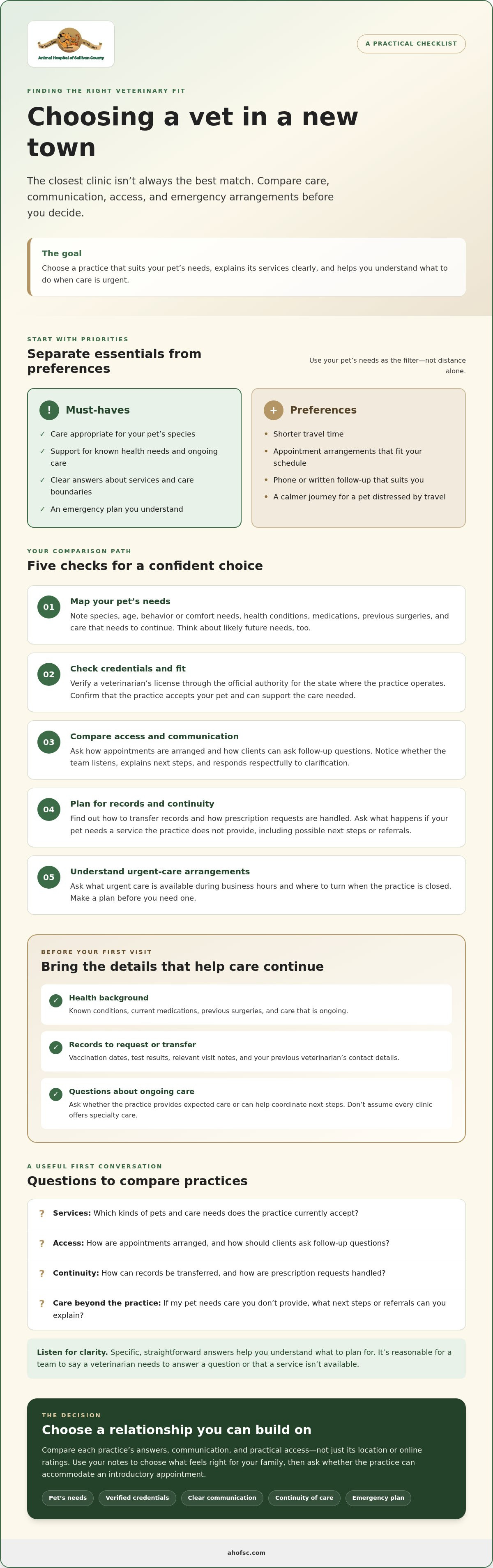
Choosing a new vet doesn’t have to happen all at once. Start with what your pet needs now, then use that list to compare local practices. The right fit for a young cat needing routine wellness care may differ from the right practice for an older dog with ongoing medical needs.
As you consider how to choose a vet in a new town, separate must-haves from preferences. Appropriate care for your pet’s species and known health needs is essential. A shorter drive or appointment times that suit your schedule may also matter, but weigh those preferences against the care available.
List your pet’s care needs before searching
Write down the details a new veterinary team will need to understand your pet’s health. Having them ready can make your first conversation more useful and help you ask about ongoing care.
- Basic details: Species, age, and any needs related to your pet’s size, behavior, or comfort during travel.
- Health history: Known conditions, current medications, previous surgeries, and care that needs to continue.
- Records: Vaccination dates, test results, relevant visit notes, and your previous veterinarian’s contact details. Ask how records can be transferred.
- Likely future needs: Care you expect may be needed as your pet ages or manages a condition. Ask whether a practice provides it or can help coordinate next steps. Don’t assume every clinic offers specialty care.
For background on the profession and its areas of work, see what to look for in a veterinarian. Your pet’s particular needs can help you turn that general information into questions for local practices.
Define what a good local fit means for your household
Consider the whole experience, not just the clinic’s location. Think about travel time, how your pet handles car rides, how appointments are arranged, and whether you prefer phone or written communication. If your pet becomes distressed during travel, a nearby practice may make routine visits easier, but first confirm it can provide the care your pet needs.
Routine wellness visits and ongoing medical or surgical needs call for different questions. List the care your pet receives now, then ask whether a practice can support those needs and how it handles care outside its scope. This is especially useful if treatment requires coordination or follow-up.
Online ratings can offer clues about other clients’ experiences, but they can’t tell you whether a practice suits your pet. Use your checklist to guide your search, then compare each practice’s answers, communication, and practical access. A clear list of must-haves gives you a solid starting point.
How to assess a veterinarian’s qualifications, communication, and approach
A directory listing can help you find nearby practices, but it can’t tell you whether a veterinary team is a good fit or how clearly it will guide you through care. As you decide how to choose a vet in a new town, look beyond a polished website or star rating. Check professional credentials, then pay attention to how the practice answers your questions.
Verify a veterinarian’s license through the official authority for the state where the practice operates. This is commonly a state veterinary board or professional licensing agency, though its name and website vary. Start from the state government’s website and make sure you’re using the official resource, rather than relying only on a directory or search result. The American Veterinary Medical Association guide to finding a veterinarian offers additional questions to consider.
Questions to ask before scheduling
A brief call can help you decide whether a practice might be a match. Share your pet’s species and main care needs, then ask:
- Which kinds of pets and care needs does the practice currently accept?
- How are appointments arranged, and how should clients ask follow-up questions?
- How can medical records be transferred, and how are prescription requests handled?
- If my pet needs care the practice doesn’t provide, what next steps or referrals can you explain?
Listen for specific, straightforward answers. It’s reasonable for a team to say that a question needs a veterinarian’s input or that a service isn’t available. Clear boundaries help you understand what to plan for.
Look for a communication style that builds trust
Notice whether staff listen, explain what happens next, and respond respectfully when you ask for clarification. You might ask how the veterinarian discusses treatment choices, diagnostic recommendations, and the reasons for considering one option over another. You should feel able to understand the conversation and raise concerns, even if you need something repeated or explained in everyday language.
A veterinarian-client-patient relationship (VCPR) is the professional relationship among the veterinarian, the client, and the animal receiving care. State rules determine how this relationship is established. It’s required for a veterinarian to diagnose or prescribe medication, and rules for establishing it through telemedicine vary. If remote care matters to your family, ask the practice what it can provide and check the requirements that apply in your state.
Warmth matters, but friendliness, an attractive website, or high ratings alone can’t establish medical quality. Look for respectful communication alongside verified credentials and clear answers about records and care. For a local example, you can learn about Animal Hospital of Sullivan County, then confirm current services and availability directly with the practice.
Compare veterinary practices by access, services, and continuity of care
Once you have a shortlist, compare how each practice fits your routines and your pet’s needs. Distance matters, but it’s only one part of how to choose a vet in a new town. Appointment processes, confirmed services, communication, and the handling of existing records can all shape your experience.
Ask each practice about the care you expect to need, such as preventive visits, medical care, surgery, or diagnostics. Confirm current hours, how appointments are arranged, and how follow-up questions are handled. Services and availability can change, so don’t rely on an old directory listing or assume a service is offered because it appears on a general clinic profile.
Compare services and practical access, not just proximity
Use the table to compare a short list. Fill it in with answers from each practice, not assumptions. If you live in Sullivan County, verify a practice’s current location and availability directly rather than assuming it serves a particular town.
| What to compare | Practice A | Practice B | Practice C |
|---|---|---|---|
| Travel time and appointment logistics | ________ | ________ | ________ |
| Confirmed services your pet needs | ________ | ________ | ________ |
| Current hours and follow-up communication | ________ | ________ | ________ |
| Record-transfer process and care continuity | ________ | ________ | ________ |
For example, Animal Hospital of Sullivan County provides preventive, medical, and surgical care, diagnostics, and emergency treatment during business hours. Confirm current services and availability with the practice before relying on them. Keep this distinction in mind: a practice’s stated services are the care it provides; needs beyond that scope may require a referral or another care arrangement.
Plan for continuity when your pet changes veterinarians
Ask your previous veterinarian how to send records, including test results, vaccination history, surgery notes, and current medication details. Check with the new practice about its preferred transfer method and whether the team can review those records before your pet’s first visit. This can help avoid gaps in the history and make it easier to discuss ongoing care plans.
During your first conversation, clarify who to contact with medication or follow-up questions. For more about the practice’s approach to ongoing care, see Animal Hospital of Sullivan County: A Guide to Compassionate, Lifelong Pet Care.
How to check emergency arrangements and prepare for the first appointment
A clear plan can make a stressful moment easier to manage. As you decide how to choose a vet in a new town, find out what support your selected practice provides during its current business hours and what to do when it’s closed. Urgent treatment during business hours is not the same as 24/7 emergency coverage, so don’t assume one includes the other.
Make an emergency plan before a crisis
Ask the practice these questions and save the answers somewhere easy to find:
- Does the practice handle urgent cases during its current business hours, and how should I contact the team?
- What instructions should I follow at night, on weekends, or during holidays?
- If the practice is closed, which emergency provider should I call, and where is it located?
- Should I call ahead before travelling for urgent care?
Animal Hospital of Sullivan County provides emergency treatment during business hours, not 24/7 emergency care. Confirm its current hours and emergency arrangements directly before relying on them. If your pet needs urgent help while the practice is closed, follow the after-hours instructions you’ve confirmed or contact an appropriate emergency provider. Don’t wait for your regular practice to reopen if your pet needs immediate attention.
Make the first visit easier for your pet
A little preparation helps the veterinary team understand your pet’s history and your concerns. Before the appointment, check what the practice wants you to bring and gather:
- Available medical records, including vaccination dates, test results, and surgery history.
- Medication names, strengths if known, how they’re given, and when they were last administered.
- A short list of current concerns, when they began, and any changes you’ve noticed in eating, drinking, energy, or behavior.
- Questions about preventive care, recommended follow-up, and how to contact the practice with concerns after the visit.
Consider your pet’s comfort, too. Tell the team if travel, handling, or unfamiliar settings are difficult, and ask whether there are steps you can take before arriving. This gives staff a chance to explain what may help without assuming every pet has the same needs.
For another overview of preparing for a first visit, see Your First Visit to Our Ferndale Animal Hospital. To check current hours, emergency arrangements, or appointment procedures, contact Animal Hospital of Sullivan County and confirm the details directly.
Choose a vet you can build a lasting relationship with
You’ve gathered information and compared practical details. Now look for the practice that can meet your pet’s confirmed needs and makes you comfortable asking questions over time. The goal isn’t to find a perfect promise. It’s to choose a veterinary team whose care, communication, and arrangements make sense for your family.
Use a simple decision checklist
Review your notes and consider whether each practice:
- Currently accepts your pet and can address the care needs you’ve confirmed.
- Explains recommendations clearly and responds respectfully to questions.
- Offers practical access for your household, including workable appointment procedures.
- Can explain how records, medication questions, and ongoing care are handled.
- Has clearly described what to do if your pet needs urgent help during business hours or when the practice is closed.
Give the most weight to your essentials. A convenient location may matter, but it shouldn’t outweigh whether the practice can support your pet’s needs. Confident marketing or a long list of services isn’t a substitute for direct answers about what’s currently available. Choose the option that feels like a workable partnership, not simply the one with the most persuasive claims.
If a practice seems promising, ask whether it currently has availability and is suitable for your pet before booking an introductory call or appointment. Use that conversation to confirm how the team will review your pet’s history and what to expect from ongoing communication. You don’t have to make every decision at once. A thoughtful first step is enough.
Explore local care with clear expectations
Animal Hospital of Sullivan County is one local option for small-animal families to consider. The practice provides preventive, medical, and surgical care, as well as diagnostics. It also provides emergency treatment during business hours, not 24/7 emergency care. Its services and current availability may not suit every pet or situation, so confirm your needs directly before relying on the practice as your source of care.
Choosing how to choose a vet in a new town ultimately means finding a team you can speak with openly and a plan you understand. If the hospital may fit your family, ask about your pet’s care needs, current services, appointment availability, hours, and emergency arrangements. Contact Animal Hospital of Sullivan County to ask about care for your pet and confirm the details that matter to you.
Take the next step toward dependable care
Choosing how to choose a vet in a new town starts with your pet’s needs. Comparing practices on more than distance or online ratings makes the decision easier. Look for clear communication, confirmed services, a reliable record-transfer process, and practical access for your household. Before you need urgent help, make sure you understand where to turn during business hours and when the practice is closed.
Animal Hospital of Sullivan County has cared for small animals since 1953 and provides preventive, medical, and surgical care, along with diagnostics. Emergency treatment is available during business hours; the practice is not a 24/7 emergency facility. Confirm current services, hours, and appointment availability directly to see whether it’s suitable for your pet and family.
If you’re considering the hospital, contact Animal Hospital of Sullivan County to ask about care for your pet. Taking time to ask a few thoughtful questions can help you feel more prepared and confident about your pet’s care in your new community.
Frequently Asked Questions
How do I choose a vet when I move to a new town?
Start by listing your pet’s species, age, health conditions, medications, and ongoing care needs. As you work out how to choose a vet in a new town, compare practices that confirm they can care for your pet, then weigh travel time, appointment access, and communication. Ask how records are transferred and reviewed. If you’re moving within New York, Connecticut, New Jersey, or Pennsylvania, confirm the practice’s current services and emergency arrangements directly before deciding.
What questions should I ask a new veterinarian before making an appointment?
Ask whether the practice currently accepts your pet’s species and can support its known care needs. Confirm how appointments are arranged, how follow-up questions are handled, and how to transfer records. Check which services are currently available and what the practice recommends if your pet needs care it doesn’t provide. If you’re choosing a practice in New York, Connecticut, New Jersey, or Pennsylvania, verify its current hours and urgent-care instructions, too.
How can I check whether a veterinarian is licensed in a new state?
Use the official veterinary licensing authority for the state where the veterinarian practices. Search the state government website for its veterinary board or professional licensing agency, then verify the correct lookup tool and any requirements there. The authority’s name and process can differ between New York, Connecticut, New Jersey, and Pennsylvania. Online reviews may describe client experiences, but they don’t verify a veterinarian’s license or professional standing.
Can I transfer my pet’s records to a new vet?
Yes. Ask your previous veterinary practice how to share your pet’s records with the new team, and confirm the preferred transfer method with the new practice. Useful information can include vaccination history, test results, surgery notes, known conditions, and current medications. Ask whether the new team can review the records before or during the first appointment, and bring any details you have if the records haven’t arrived yet.
What should I do if my new vet is closed and my pet needs urgent care?
Check the practice’s written after-hours instructions before an urgent situation arises, and confirm which number to call and where you may need to go. Keep those details easy to find. If your pet needs urgent attention while the practice is closed, follow its instructions or contact an appropriate emergency veterinary provider for guidance. Don’t assume a practice offering urgent treatment during business hours also provides 24/7 emergency care.
Should I choose a veterinarian based on online reviews?
Use online reviews as one source of information, not as the deciding test. Look for recurring themes rather than relying on one unusually positive or negative account. Then contact practices directly to discuss your pet’s needs, confirm services, ask about appointment access, and understand how records and follow-up questions are handled. For a practice in New York, Connecticut, New Jersey, or Pennsylvania, verify current details with the team.
How do I know if a veterinary practice is a good fit for my pet?
A good fit combines appropriate care for your pet with communication and access that work for your household. The team should explain next steps clearly, answer reasonable questions, and describe how it handles records and follow-up. You should also understand what urgent care is available during business hours and what to do when the practice is closed. Confirm the practice can meet your pet’s needs before scheduling an appointment.


