
What if annual checkups leave too much time between chances to notice a quiet change in your dog’s health? If you’re asking how often should a senior dog see a vet, a wellness exam every six months is a practical starting point. The 2023 AAHA Senior Care Guidelines recommend twice-yearly exams for senior dogs, but the right schedule should reflect your dog’s health, not age alone.
More frequent visits may sound stressful if your dog is anxious or uncomfortable traveling. Still, regular check-ins give you and your veterinarian opportunities to discuss gradual changes in appetite, mobility, behavior, or comfort, and decide whether your dog needs attention sooner.
This guide covers the usual checkup schedule, what to discuss during a senior wellness visit, and how to prepare. Whether you’re arranging care in Sullivan County or comparing options in New York, Connecticut, New Jersey, or Pennsylvania, use your dog’s health history and daily needs to shape the conversation with a veterinarian.
Key Takeaways
- When discussing how often should a senior dog see a vet, ask your veterinarian to tailor the schedule to your dog’s health history and needs.
- A senior wellness visit is a chance to review your dog’s health and discuss which screenings, if any, make sense.
- Don’t rely on a healthy appearance alone to decide when to book a checkup. Known conditions or new concerns may call for follow-up sooner.
- Track changes at home, gather your dog’s records, and discuss outdoor routines and seasonal prevention during the visit.
- Before you leave, agree on when to schedule the next checkup, what to monitor, and whom to contact with concerns.
How often should a senior dog see a vet? Start with a twice-yearly check-in
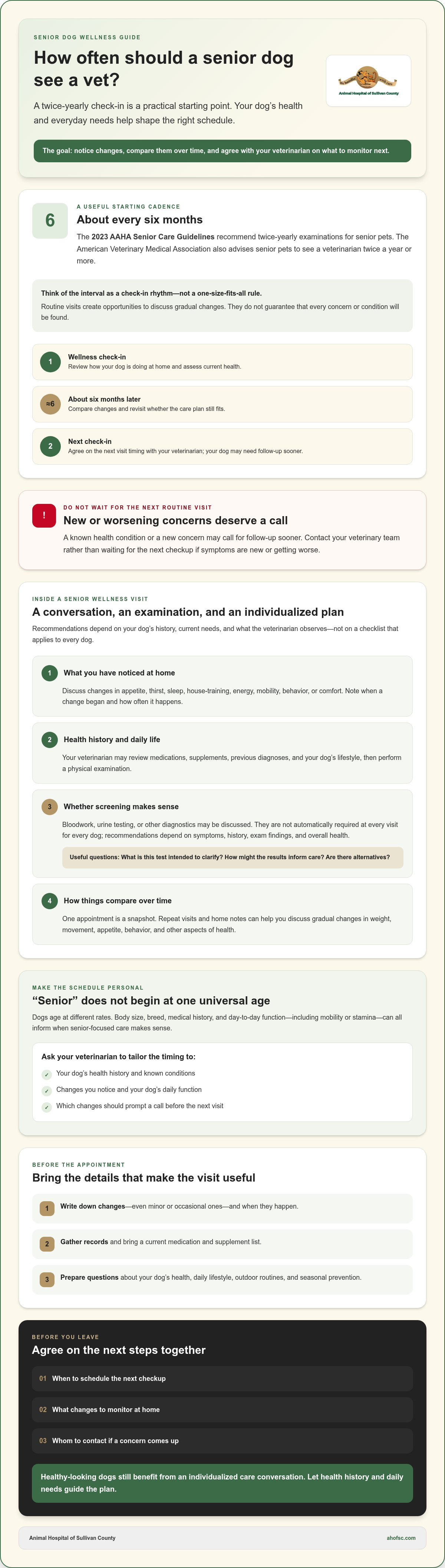
If you’re wondering how often should a senior dog see a vet, a wellness exam about every six months is a practical starting point. The 2023 AAHA Senior Care Guidelines for Dogs and Cats recommend twice-yearly examinations for senior pets. This is general guidance, not a rule for every dog or a substitute for your veterinarian’s advice. Your dog’s health, medical history, and day-to-day function can all affect the right schedule.
Routine wellness visits are for monitoring over time. If symptoms are new or getting worse, contact your veterinary team rather than waiting for the next checkup.
A home health check can help you notice changes between visits. This video offers a practical demonstration:
What counts as a senior dog?
There isn’t one birthday that makes every dog a senior. Dogs age at different rates, and body size and breed can influence their aging profile. A veterinarian may also consider medical history and function, including changes in mobility or stamina. Ask when senior-focused care makes sense for your dog rather than relying on a single age cutoff.
Why twice-yearly visits are a useful starting point
A six-month interval gives you and your veterinarian a chance to check in more often than once a year and compare changes over time. Regular visits make it easier to discuss shifts in weight, movement, appetite, or behavior and review whether the care plan still fits. They don’t guarantee that every concern will be found early, but they create opportunities to talk about what to monitor.
Twice-yearly visits are a starting point, not a rigid requirement. A dog with a known health condition or new concerns may need follow-up sooner. Your veterinarian can help determine an appropriate routine if your dog’s needs differ. Ask what interval fits, which changes should prompt a call, and when to revisit the plan.
What happens at a senior-dog veterinary checkup?
A senior wellness visit pairs a conversation about how your dog is doing at home with an examination to assess their current health. Recommendations may change from one visit to the next because they should reflect your dog’s history and current needs, not a one-size-fits-all checklist.
Preventive monitoring helps you and your veterinarian track health over time and discuss changes. It can guide care, but it can’t guarantee that every condition will be found.
What the veterinarian may ask and examine
Before the appointment, jot down changes you’ve noticed, even if they seem minor or happen only occasionally. Consider appetite, thirst, sleep, house-training, energy, and ease of moving around. Notes about when a change began and how often it happens can make it easier to explain.
Your veterinarian may review medications, supplements, previous diagnoses, and your dog’s daily lifestyle. The physical examination and recommendations will depend on your dog’s history and what the veterinarian observes. Bring a current medication list and the questions you want to cover.
When screening tests may enter the conversation
Bloodwork, urine testing, or other diagnostics may be considered as part of senior care. They aren’t automatically required at every visit for every dog. The veterinarian can explain whether testing may be useful based on your dog’s symptoms, medical history, examination findings, and overall health.
For each recommended test, ask what it is intended to clarify and how the results might inform care. You can also ask whether there are alternatives. This helps you make an informed decision without assuming every possible test is mandatory.
How repeat visits add context
One appointment offers a snapshot. Comparing visits can help you and your veterinarian discuss changes in weight, mobility, appetite, behavior, and other aspects of health. Home notes provide useful context, especially when a change has happened gradually.
The American Veterinary Medical Association advises senior pets to see a veterinarian twice a year or more, while the right care plan remains individual. To discuss preventive care for your dog, you can learn about veterinary care at Animal Hospital of Sullivan County.
Does every senior dog need vet visits every six months?
No single schedule fits every older dog. A twice-yearly wellness visit is a useful starting point, but a dog who seems healthy at home may still benefit from regular veterinary assessments. Some changes develop gradually and aren’t easy to spot in everyday routines. Your veterinarian can tailor the timing to your dog’s age, health, and history rather than relying on appearance alone.
Routine wellness visits are planned check-ins. Follow-up appointments may be recommended to review a known condition, medication, or new examination finding. If something changes between routine visits, contact your veterinary team for guidance instead of assuming it can wait.
When a veterinarian may recommend more frequent follow-ups
A dog with a chronic illness, a medication that needs monitoring, or a recent finding that warrants reassessment may need visits more often than the routine schedule. Timing depends on the individual situation and the veterinarian’s judgment. Ask what each follow-up is intended to check, when to return, and which changes at home should prompt an earlier call. Not every senior dog needs the same tests or appointment frequency.
When to call before the next wellness visit
Trust your knowledge of your dog. A clear change in appetite or thirst, breathing, mobility, comfort, or behavior is worth discussing with a veterinarian, especially if it is sudden, worsening, or concerning. New confusion or a shift in sleep and daily habits, for example, can have several possible explanations. Cornell University College of Veterinary Medicine explains cognitive dysfunction, one potential consideration in older dogs. This information isn’t a diagnosis, so share what you’ve observed and let your veterinarian advise you.
- Note when the change began and whether it’s getting better, staying the same, or worsening.
- Describe what’s different from your dog’s usual behavior or routine.
- Call your veterinary team and ask how soon your dog should be assessed.
If you think your dog may be experiencing a life-threatening emergency, seek help from an appropriate emergency veterinary service promptly. Check its availability and instructions directly, since not every clinic provides care around the clock. For other new concerns, a call can help you decide what to do next. You don’t have to determine the cause on your own.
Plan senior-dog vet visits around your dog's needs in Sullivan County
A little preparation can make a wellness visit more useful and help you leave with a clear next step. Bring notes and records so your veterinarian can discuss a schedule that fits your dog instead of relying on a routine that may not match their needs.
For dog owners in Sullivan County and the Catskills area, include your pet’s usual outdoor activities in the conversation. Ask whether those routines or seasonal changes affect the preventive care your veterinarian recommends. If you’re looking for care in New York, Connecticut, New Jersey, or Pennsylvania, confirm directly with the clinic that its location and appointment arrangements work for you.
Keep a simple health log between appointments
A short note on your phone or calendar can help you remember what’s changed and when. Track eating, drinking, weight, movement, sleep, bathroom habits, and mood. If something seems different, record when it began, how often it happens, and whether it appears to be getting worse. These details give your veterinarian helpful context.
Before the appointment, gather medication and supplement details, previous veterinary records, and a short list of questions. Put your main concern first so you remember to mention it during the visit.
Make the visit calmer and more useful
If your dog has trouble getting around, feels anxious during visits, or needs special consideration for transportation, ask the clinic how to prepare. The team can tell you what arrangements may be possible. Share what tends to comfort your dog and which parts of a visit are most difficult.
Before you leave, make sure you understand the next steps. Ask which changes at home should prompt a call, when to schedule the next check-in, and whether follow-up is recommended. A written plan can help you know what to monitor between visits.
Confirm appointment availability and urgent-care arrangements directly with the clinic, including where to seek help if a serious concern arises outside its business hours. Check rather than assume, since details can change.
For guidance shaped around your senior dog’s needs, contact Animal Hospital of Sullivan County to discuss preventive care and an individualized visit plan.
Build a reassuring long-term care plan with your veterinarian
Senior care works best as an ongoing conversation, not a fixed calendar that never changes. Start with regular wellness visits, then adjust the timing and monitoring plan as your dog’s health, comfort, and daily abilities evolve. A written plan makes the next steps easier to remember and helps everyone involved in your dog’s care stay on the same page.
Questions to bring to your dog's next appointment
Use your visit to agree on a plan that fits your companion. You might ask:
- How often should this specific dog be examined, and what factors shape that interval?
- Which changes at home should prompt me to call before the next scheduled visit?
- Based on the current examination and history, do you recommend monitoring, screening, or follow-up?
Ask what to track, when to check back, and whom to contact if a concern comes up. Write down the agreed schedule and monitoring priorities, such as watching appetite or noting changes in movement. A clear plan can ease uncertainty without asking you to interpret every small change alone.
Keep care connected through every life stage
Animal Hospital of Sullivan County has served the community since 1953. The clinic provides preventive care and diagnostics that can support a veterinarian-guided approach to your dog’s changing needs. Your dog’s care plan should be based on their individual health and the veterinarian’s assessment.
For a broader view of care through an animal’s life stages, ask the clinic whether it can direct you to its lifelong-care guide. A guide doesn’t replace a conversation about your dog, but helpful resources can give you questions to bring to the veterinary team. Confirm appointment availability and current instructions for contacting the clinic with concerns.
If you’re still asking how often should a senior dog see a vet, discuss a regular wellness schedule with a veterinarian and revisit it as your dog’s needs change. Sullivan County owners can contact Animal Hospital of Sullivan County to talk about preventive care and appointment availability.
Make your dog’s next care step a confident one
There’s no single calendar that suits every aging dog. A twice-yearly wellness check is a helpful starting point, and your veterinarian can adjust the schedule to your companion’s health, history, and changing needs. Keep track of concerns between visits, and contact a veterinary team rather than waiting if something worries you.
Animal Hospital of Sullivan County provides preventive care and diagnostic services for small animals, along with emergency treatment during business hours. It isn’t a 24/7 emergency service, so confirm urgent-care arrangements directly.
Talk with Animal Hospital of Sullivan County about your dog's preventive care and ask about a wellness schedule that fits your dog’s needs.
Frequently Asked Questions
How often should a senior dog see a vet if they seem healthy?
A wellness exam about every six months is a useful starting point for a senior dog, even if they seem well at home. Veterinary guidance commonly recommends twice-yearly checkups for senior pets, while your veterinarian can adjust the interval to your dog’s health, history, and needs. A healthy appearance doesn’t replace an examination. Keep routine visits on the calendar and contact your veterinary team sooner if you notice a change.
Is every six months too often for an older dog to have a checkup?
No, a six-month wellness visit isn’t generally considered too frequent for an older dog. Regular check-ins give you and your veterinarian opportunities to discuss changes that may be subtle or gradual. The schedule should still fit your individual dog. If travel or clinic visits are stressful, tell the veterinary team and ask how to make appointments more manageable rather than changing the schedule without advice.
At what age should a dog start seeing the vet more often?
There isn’t one age that applies to every dog. Breed, body size, health history, and changes in mobility or daily function can all shape when senior-focused care is appropriate. Ask your veterinarian when to begin a more frequent wellness schedule and what signs they consider. This personalized guidance is more useful than relying on a single birthday as a cutoff.
What happens during a senior dog wellness exam?
A senior wellness exam typically includes a conversation about your dog’s health and behavior, along with a physical assessment. Be ready to discuss appetite, thirst, movement, sleep, bathroom habits, medications, and changes at home. The veterinarian may recommend screening or diagnostics based on your dog’s history and examination. The assessment and next steps vary, so ask what the veterinarian is checking and why.
Can a senior dog wait until its next checkup if its behavior changes?
Don’t assume a behavior change can wait for the next routine visit. Contact your veterinarian to describe what’s different, when it began, and whether it’s getting worse. Changes in sleep, confusion, activity, or interaction can have different causes and need professional assessment. If signs are sudden, worsening, or seem life-threatening, seek advice promptly from a veterinarian or an appropriate emergency veterinary service.
Do senior dogs need bloodwork at every vet visit?
No, bloodwork isn’t automatically necessary at every appointment for every senior dog. Your veterinarian may discuss bloodwork, urine testing, or other diagnostics based on your dog’s medical history, current medications, symptoms, and examination findings. Ask what a suggested test may help assess and how its results could affect the care plan. Testing recommendations and timing should be individualized, not treated as a universal requirement.
How can I prepare my older dog for a veterinary appointment?
Bring a list of medications and supplements, relevant veterinary records, and notes about changes in eating, drinking, movement, sleep, or behavior. Write down your main questions so you can raise them during the visit. If your dog has mobility, anxiety, or transportation needs, ask the clinic how to prepare. For pet owners in New York, Connecticut, New Jersey, and Pennsylvania, confirm appointment availability and urgent-care arrangements directly with the chosen clinic.


