
A warm bedside manner matters, but trust is built in the details. The clearest way to know if a vet is right for you is to notice whether they explain care clearly, handle your pet patiently, and make follow-up and emergency plans easy to understand. In the United States, veterinary practice accreditation is voluntary, so your own experience of the clinic matters too.
It’s natural to want a veterinarian who cares for your pet with skill and treats your family’s concerns with respect. Assess communication, the clinic environment, access to care, emergency arrangements, and continuity from one visit to the next. Together, these signs can help you decide whether a veterinary team feels like a steady, supportive partner in your pet’s care.
Key Takeaways
- Notice whether the veterinarian listens to your concerns and explains care options in clear, understandable language.
- Use the clinic environment as one clue: observe whether shared spaces look orderly and whether staff handle your pet with care.
- Consider how location, appointment access, and emergency instructions would work for your household.
- Ask for a clear explanation of treatment costs, payment options, and how pet insurance may fit into your planning.
- Look for consistent communication and care over time, so your pet’s history and changing needs stay in view.
1. Clear communication and understandable explanations
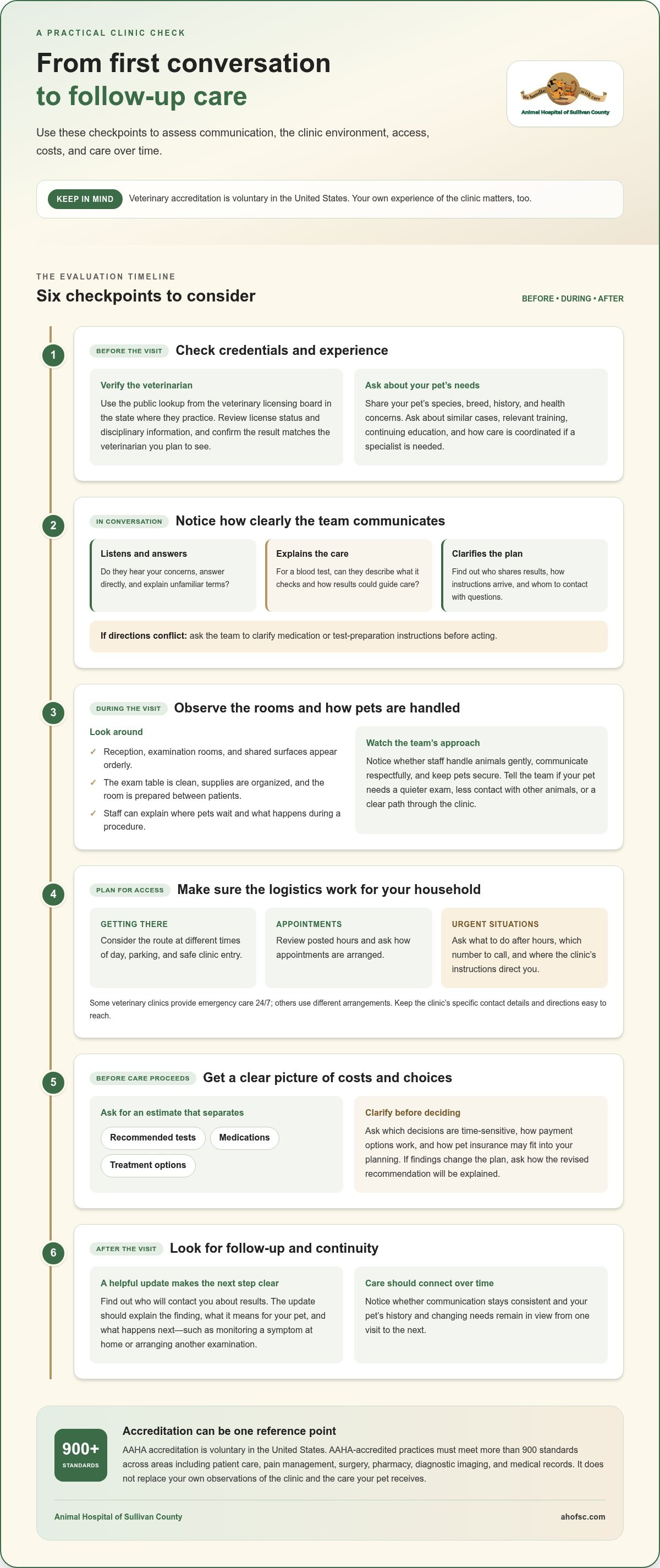
A clear conversation helps you understand what your pet needs and why. To know if a vet is right for you, notice whether they listen without interrupting, answer directly, and explain unfamiliar terms. After discussing a blood test, for example, the veterinarian should describe what it checks and how the results could guide care. You should leave knowing what to watch for at home and whom to contact with follow-up questions.
Communication involves the whole veterinary team, not just the veterinarian. A veterinary technician may explain how to prepare your pet for a test, while reception staff can clarify appointment procedures and pass along messages. Ask who will update you about results and how the clinic shares care instructions. If team members give conflicting directions about medication or preparation, ask them to clarify the plan before acting.
AAHA accreditation is voluntary in the United States. AAHA-accredited practices are evaluated on nearly 50 mandatory standards and must pass re-evaluation every few years. Accreditation can offer one point of reference, but your conversation about your pet’s needs matters too. Licensed veterinarians should pursue continuing education to stay current with advances in animal medicine. Ask how new evidence informs a diagnosis or treatment recommendation.
To check a veterinarian’s license and credentials in the U.S., use the public lookup provided by the veterinary licensing board in the state where they practice. Search by the veterinarian’s name, review the license status and disciplinary information, and confirm the result matches the person you plan to see. Ask the clinic to explain professional credentials or specialty training in plain language.
For experience with your pet’s species, breed, or health needs, describe your pet’s history and ask about similar cases. A senior cat with kidney concerns, for example, may need a discussion focused on monitoring and treatment options. Ask how the team coordinates care if a condition calls for a specialist in cardiology or dermatology. These details can help you know if a vet is right for you as your pet’s needs evolve.
Clear cost communication starts before care proceeds. Ask for an estimate that separates recommended tests, medications, and treatment options, and clarify which decisions are time-sensitive. If findings change the plan, ask how the clinic will explain the revised recommendation. Find out who will contact you about test results and what happens next. A helpful update explains the finding, what it means for your pet, and the follow-up step, such as monitoring a symptom at home or arranging another examination.
2. Clinic cleanliness and environment
Assess cleanliness by observing the reception area, examination room, and shared surfaces during your visit. Notice whether staff keep spaces orderly and prepare the examination area between patients. These visible details help you evaluate the clinic’s day-to-day environment.
Look closely at the room where your pet is examined. Check whether the exam table appears clean, supplies are organized, and waste is handled appropriately. Notice whether staff make space for your pet and explain what they’re doing. For example, a calm approach can help a nervous dog feel less overwhelmed during an examination.
Pay attention to how the team moves through the clinic. Staff should handle animals gently and communicate respectfully with people, even during busy moments. Observe whether pets are kept secure while entering or leaving examination areas. If your cat is frightened by dogs, ask how the team can reduce close contact during the visit.
Facilities matter because they shape what can happen during an appointment. Ask which diagnostic services are available onsite and how results are shared. Some veterinary practices offer diagnostic imaging, such as X-rays or ultrasounds, and in-house laboratory testing. Knowing what equipment and services are available helps you understand whether your visit may involve additional steps or arrangements.
AAHA-accredited veterinary practices must meet more than 900 standards across patient care, pain management, surgery, pharmacy, diagnostic imaging, and medical records. Accreditation is voluntary in the United States, so it can serve as one reference point when reviewing a clinic. It doesn’t replace your own observations of the staff, rooms, and care your pet receives.
During a visit, take a few moments to notice practical details. Are directions to the exam room clear? Can staff explain where your pet will wait during a procedure? Does the room have enough space for you to stay nearby while the veterinarian examines your pet? These examples help you judge whether the setting supports a calm, organized visit.
Consider your pet’s individual needs, too. A senior dog with limited mobility may need a clear path through the clinic, while a shy cat may benefit from a quieter examination. Describe those needs to the team and observe how they respond. A clinic environment should work for your pet, not simply look polished.
3. Convenience, accessibility, and emergency protocols
Distance affects routine appointments and urgent trips. In Hopewell Junction, NY, a nearby veterinarian can make travel less stressful for pets and families. Consider the route at different times of day, parking, and whether your pet can enter the clinic safely. For example, a cat carrier or a dog with limited mobility may make a long walk from the car difficult. Choose access that works for your household, not just a location that looks close on a map.
Review the clinic’s posted hours and how appointments are arranged. Ask what to do if your pet becomes ill outside those hours, which number to call, and where the instructions direct you. Some veterinary clinics provide emergency care 24/7, while others use different arrangements. Know the clinic’s specific process before an urgent situation arises. Keep the contact details and directions somewhere easy to reach, such as your phone’s contacts.
Ask how urgent cases are prioritized. Emergency medical pet care is generally handled on a first-come, first-served basis, except for life-threatening emergencies. A pet’s condition can affect the order of care. If your pet has trouble breathing, collapses, or suffers a serious injury, describe the signs clearly when calling. The clinic can explain the next step based on the situation and its emergency protocol.
Clarify what treatment the clinic can provide during its operating hours and what happens if your pet needs care beyond that setting. Ask how staff guide families during an emergency, whether they share records with the next care team, and what information to bring. A concise history of symptoms, medications, and known conditions can help clinicians understand your pet’s needs. For example, note when vomiting began and whether your dog may have eaten something unusual.
Accessibility also includes communication and practical arrangements. If you need a ramp, help carrying a large pet, or a quieter arrival for an anxious animal, explain that before the visit. Confirm how to alert staff when you arrive with an urgent concern. A clinic that offers emergency treatment during business hours can be part of your plan for sudden health needs, but it’s still useful to understand what to do when the clinic is closed. Write down the steps now, so you’re not trying to find them under pressure.
4. What should I look for in a veterinary clinic?
Compare the care plan, payment information, and follow-up process, not just the first estimate. Ask what each recommended service is intended to address and which options are available. An estimate depends on the case and follows a quote request; factors can include diagnostic tests, medications, procedures, and follow-up visits. Clear itemization helps you understand what is included and make informed decisions for your pet.
Independent practices and corporate clinics can be assessed using the same practical criteria: how they explain recommendations, organize routine care, and communicate ongoing costs. Ask who will coordinate your pet’s records and whether the proposed plan suits your pet’s health needs. Ownership alone doesn’t tell you what an individual clinic’s care or communication will be like.
Warning signs include pressure to approve a service without an explanation, repeated difficulty getting a clear estimate, or reluctance to discuss reasonable alternatives. If a clinic dismisses questions about your pet’s needs or leaves you uncertain about the next step, consider whether that approach works for your family.
For a useful cost comparison, request written estimates for the same proposed care. Check whether each estimate includes the examination, diagnostic work, medication, and recommended follow-up. Ask which parts are essential now and which can be discussed later. If test results change the plan, ask how the clinic will explain any new recommendation before proceeding.
Pet insurance can affect how you plan for veterinary expenses, but policy terms differ. Review your policy’s coverage, exclusions, deductible, and reimbursement process with the insurer. Ask the clinic what documentation it can provide for a claim, such as an invoice or medical record. CareCredit is a financing option accepted by most veterinary practices, according to the available market information; review its terms before relying on it.
Preventive care also deserves a place in your budget. Plan for a preventive-care appointment annually; it can include a wellness exam, vaccination updates, parasite control, and possibly standard bloodwork. Ask how recommendations are tailored to your pet’s age, health, and lifestyle, then keep the plan with your pet’s records.
Some veterinary clinics offer wellness plans that bundle routine services to support consistent care and help manage costs. Compare the services included, payment schedule, and exclusions before deciding whether a plan suits your household. For example, check whether the routine visits your pet needs are included, rather than assuming every test or treatment is covered.
5. Staff stability and continuity of care
Continuity means your pet’s medical history informs each new decision, even when different team members are involved. During visits, notice whether staff review earlier diagnoses, medications, and test results before recommending a change. For example, a veterinarian discussing a new treatment should account for a medication your pet already takes. Familiar faces can help, but organized handoffs and accurate records matter too.
Ask how the clinic keeps your pet’s records current and shares them among the care team. Confirm that details such as allergies, prior reactions, ongoing symptoms, and medication changes appear in the record. If your pet sees another veterinarian during a follow-up, the new clinician should have the context needed to continue care. You can help by bringing updated medication details and noting changes since the previous appointment.
Staff changes happen, so look for a clear process when your usual veterinarian is unavailable. Ask who reviews pending test results, how urgent messages are routed, and how the covering veterinarian can access your pet’s history. For example, after a diagnostic test, you should know who will explain the result and how the next step will be recorded.
Use each visit to check whether the care plan connects with previous conversations. Before leaving, summarize the instructions in your own words: the medication schedule, signs to monitor, and when follow-up is due. If the veterinarian adjusts a plan, ask what changed and why. This simple recap can show whether team members share the same guidance and whether you understand your part in your pet’s care.
For a pet with a long-term condition, consistency becomes especially important. Keep a simple home log of symptoms, appetite, behavior, and medication changes between appointments. Bring it to the next visit so the veterinarian can compare your observations with earlier records. For example, noting when a dog’s limping worsens gives the team a clearer timeline than relying on memory alone.
Continuity also includes thoughtful transitions when a veterinarian leaves or your pet needs another level of care. Ask how records and current treatment plans are transferred within the clinic or shared with the next care team. Clear answers help you understand who is responsible for follow-up and prevent important details from getting lost. For ongoing wellness, explore preventive care as part of your pet’s care plan.
Animal Hospital of Sullivan County: Preventive Care
Animal Hospital of Sullivan County can make preventive care a practical next step for your pet’s ongoing health. The practice provides routine care, medical treatment, diagnostic evaluation, and surgery for pets. Preventive visits give you an opportunity to discuss your pet’s changing needs and build a plan around their health history, age, and daily life.
As you assess a veterinary relationship, consider whether you feel heard, understand the care plan, and know what comes next. Those conversations can support confident decisions for your cherished companion, from a wellness visit to addressing a new concern.
For a conversation about your pet’s care, contact Animal Hospital of Sullivan County.
Take the Next Step Toward Confident Care
Choosing a veterinarian is not a decision you have to make all at once. Let your next conversation help you understand what a partnership could look like for your pet, especially as their needs change over time. Knowing if a vet is right for you means considering not only today’s appointment, but also the care relationship you want to build.
Animal Hospital of Sullivan County offers preventive, medical, and surgical care for pets. If you’re ready to discuss your pet’s health or plan ongoing care, reach out and share what matters most to your family. A thoughtful conversation can help you take a clear next step for your cherished companion.
Contact Animal Hospital of Sullivan County to start the conversation. Your pet deserves care that supports a healthy, happy life, and you deserve to feel confident moving forward.
Frequently Asked Questions
How do I know if my vet is trustworthy?
A useful starting point for knowing if a vet is right for you is to notice whether recommendations are explained in terms of your pet’s needs. Ask why a test or treatment is being suggested and what the result could change. You can also use the veterinary licensing board’s public lookup for the state where the veterinarian practices. Compare the listing with the veterinarian’s name and license status.
What are the signs of a good vet?
A good veterinarian connects your pet’s symptoms with their medical history and daily life. They may ask about changes in eating, drinking, sleep, or activity before suggesting a plan. Notice whether they explain which changes matter and what you can record at home. For example, a brief symptom diary can help describe patterns that aren’t obvious during a clinic visit.
What questions should I ask a new vet?
Ask how the clinic handles prescription refills, follow-up questions, and updates to your pet’s records. If your pet has a chronic condition, ask how the team tracks changes between appointments. Bring medical records, vaccination history, and a current medication list so the veterinarian can review relevant details. You can also write down your main concerns beforehand, especially if several symptoms have changed.
What should I look for in a veterinary clinic?
Look for practical arrangements that suit your pet and household. Consider whether your pet can enter and move through the clinic comfortably, and how appointment procedures work with your schedule. Ask how records from outside providers are added to your pet’s history. If your pet becomes anxious around unfamiliar animals, describe that concern so the team can plan for the visit.
What qualities should you look for in a veterinarian?
If you’re considering whether a vet is right for you, look for patience, thoughtful questions, and respect for your observations. A veterinarian should explain the reasoning behind a recommendation and make room for your concerns. If your pet is fearful during an examination, notice whether the veterinarian adapts their approach and explains each step. That can help you judge whether their style suits your pet.
What questions should you ask when choosing a veterinarian?
Ask how the clinic handles care when your usual veterinarian is unavailable and how records are shared with another clinician. If your pet needs a specialist, find out how referrals and medical information are coordinated. Before the first appointment, ask what records to bring and whether the clinic needs details about past test results. These answers reveal how the practice organizes care across visits.
What signs show that a veterinarian communicates well and respects your concerns?
A respectful veterinarian responds to the concern you raise rather than brushing it aside. Try explaining one specific change, such as your pet hiding more often, and notice whether the veterinarian asks relevant follow-up questions. They should explain their reasoning in language you understand. You can also ask them to recap the plan, which helps reveal whether you both understand the next steps.
Does the vet offer emergency care, and what happens after hours?
Animal Hospital of Sullivan County provides emergency treatment during regular business hours, not 24/7 emergency care. Learn the clinic’s instructions for urgent concerns during open hours and what steps to take when it’s closed. Save those directions with your pet’s medication details on your phone. If symptoms suddenly worsen, note what changed and when it began so you can describe the situation clearly.


